Main Facts: Elevating Homemade Breakfast with Real Fruit Infusions
Breakfast enthusiasts and home bakers searching for a superior morning crunch have a new standard to aim for. A breakthrough recipe from culinary creator Nicole Hunn of Gluten Free on a Shoestring redefines what breakfast cereal can be by introducing a concentrated, real-fruit strawberry syrup into every batch of baked oats, nuts, and seeds.
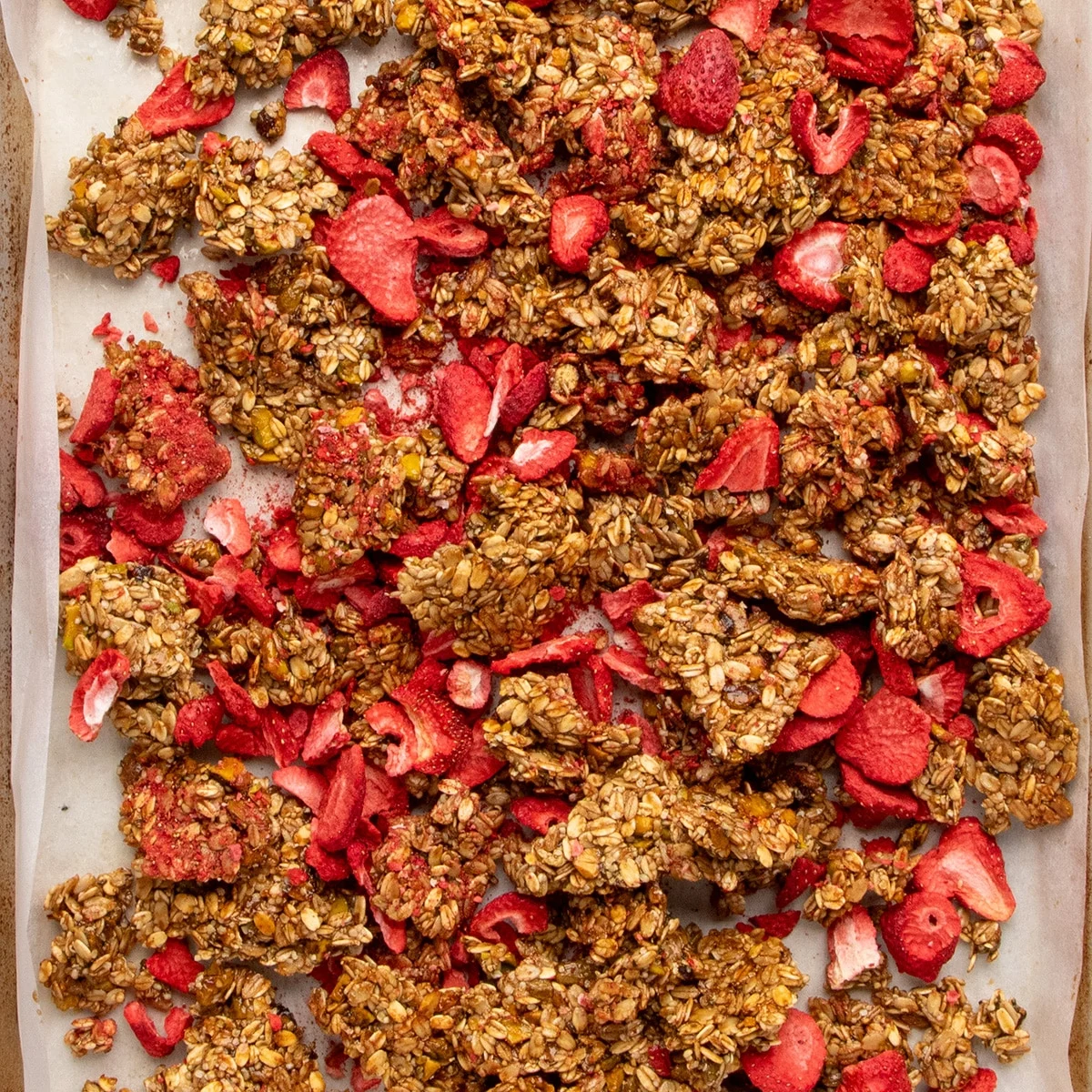
Unlike conventional store-bought granolas or standard DIY recipes that rely solely on freeze-dried fruit for flavor, this method incorporates a reduced stovetop strawberry puree directly into the binding agent. The result is a deeply aromatic, naturally vibrant, and ultra-crispy cluster-style granola. Naturally gluten-free, dairy-free, egg-free, and free of refined sugars, the recipe balances robust nutrition with exceptional flavor, delivering 19 grams of protein and 10 grams of fiber per serving alongside a decadent, bakery-style taste profile.
Chronology: The Step-by-Step Evolution of Strawberry Granola
Achieving the perfect balance of a chewy-yet-crisp cluster without making the oats soggy requires a deliberate, multi-stage culinary process.
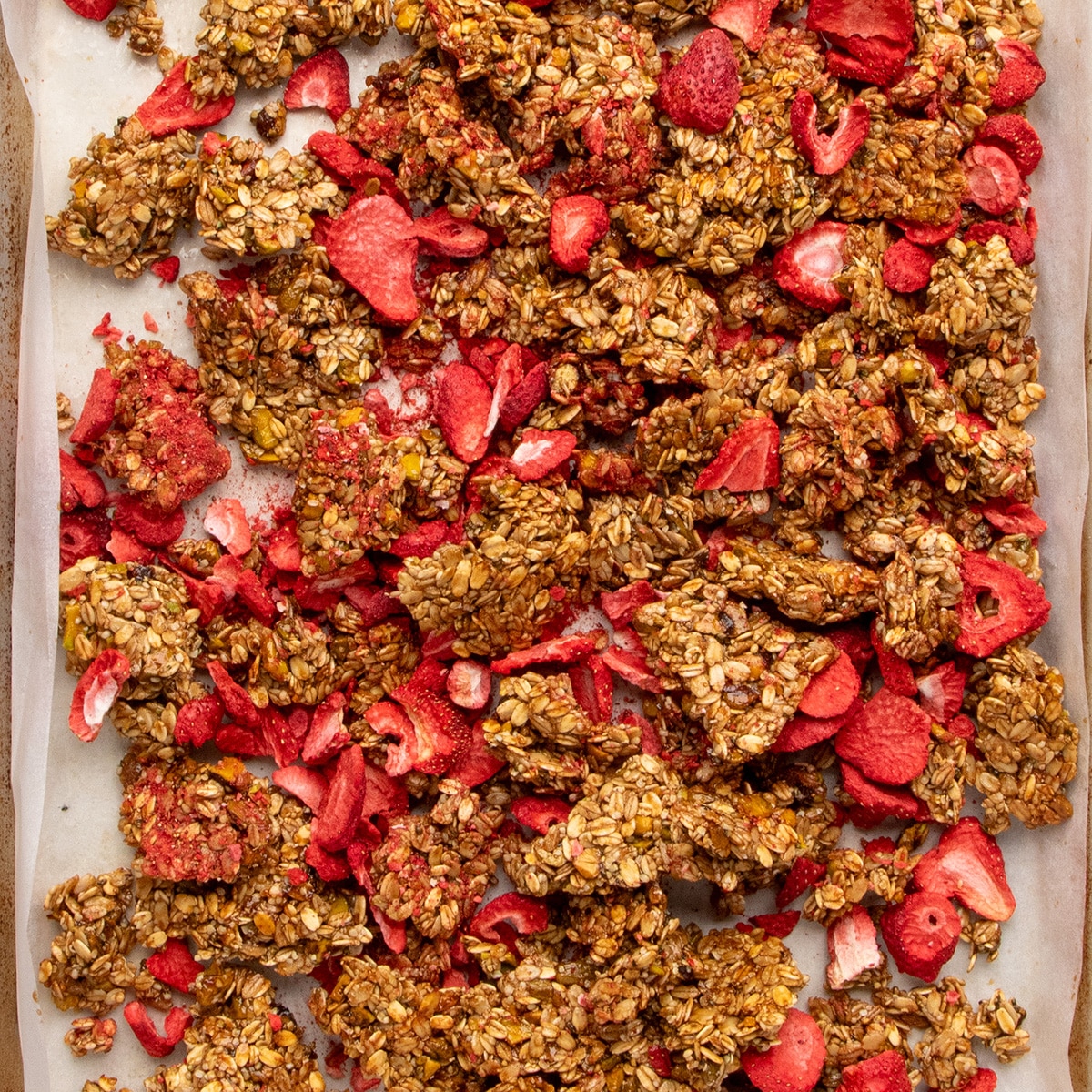
1. Constructing the Strawberry Base
The journey begins on the stovetop. Frozen strawberries are combined with water, a pinch of salt, and maple syrup, then gently simmered until the fruit breaks down completely. Utilizing an immersion blender right in the cooking vessel creates a smooth puree without the safety hazards of blending boiling liquids in an enclosed blender. For those desiring an ultra-smooth finish, a fine-mesh sieve removes any lingering seeds.
2. Formulating the Dry Mix
While the puree simmers, a large mixing bowl serves as the foundation for the dry components. Rolled oats—certified gluten-free for dietary restrictions—are tossed alongside chopped pistachios, hemp seeds, and a measured amount of salt to ensure uniform distribution of flavors.
3. Creating the Reduction Syrup
The secret to deep fruit flavor without excess moisture lies in the wet binding mixture. Half a cup of the fresh strawberry puree is married with honey, maple syrup, coconut sugar, a splash of vinegar, and coconut oil. Heated over medium, this mixture reduces by roughly one-quarter. As moisture escapes, the syrup thickens into a jammy consistency, shifting to a darker hue that signals concentrated flavor.

4. The Binding and Initial Bake
The piping-hot strawberry syrup is poured directly over the dry oat and nut mixture, stirring thoroughly to coat every microscopic crevice. The raw batter is transferred to a parchment-lined half-sheet pan, pressed into a thin, uniform layer, and subjected to an initial 10-minute bake at 325°F.
5. Redistribution and Dehydration
After a quick mid-bake stir to equalize heat distribution across the pan, the granola bakes for another 10 minutes until lightly golden and intensely fragrant. To combat humidity and guarantee a shelf life that spans weeks rather than days, the oven temperature is then dropped to a low 175°F. The granola stays in the warm oven for an hour, effectively acting as a dehydrator that locks in a maximum crunch.
6. The Final Flourish
Only after the pan has cooled entirely at room temperature are the freeze-dried strawberries introduced. Folding them in post-cooling prevents residual heat from degrading their bright pink color or introducing unwanted moisture that would soften their signature crisp texture.

Supporting Data: Nutritional Breakdown and Yield Analysis
Designed to yield dense, nutrient-dense clusters, a standard one-cup serving of this homemade strawberry granola delivers a robust profile of macronutrients and micronutrients:
- Serving Size: 1 cup
- Calories: 767 kcal
- Total Carbohydrates: 99 g
- Dietary Fiber: 10 g
- Sugars: 50 g
- Protein: 19 g
- Total Fat: 35 g
- Saturated Fat: 12 g
- Polyunsaturated Fat: 12 g
- Monounsaturated Fat: 9 g
- Sodium: 441 mg
- Potassium: 734 mg
- Vitamins & Minerals: Vitamin A (173 IU), Vitamin C (166 mg), Calcium (130 mg), Iron (9 mg)
Note: Nutritional information is automatically calculated and should be treated as a close approximation based on standard ingredient metrics.
Expert Tips and Customization Strategies
Master the Low-Temperature Dehydration
While waiting an extra hour for the oven to dry out the granola at 175°F can test a baker’s patience, culinary experts emphasize that this step is non-negotiable. Removing every trace of lingering moisture from the fruit puree prevents the granola from turning sticky in humid environments and ensures the crunch lasts for weeks in storage.

Capture the Strawberry Dust
When incorporating the freeze-dried strawberries at the final stage, home cooks are advised to dump the entire bag into the mix—including the powdery fragments at the bottom. This "strawberry dust" coats the clusters uniformly, enhancing both the tart berry flavor and the visual aesthetic with a dusting of natural pink color.
Safe Blending Practices
Safety is paramount when processing hot liquids. Cooks without an immersion blender must allow the strawberry puree to cool significantly before transferring it to a standard upright blender, mitigating the risk of steam pressure forcing the lid loose.
Flexible Substitutions for Dietary Needs
The recipe’s architecture accommodates numerous dietary adjustments without compromising quality:

- Oats: Can be replaced with flattened buckwheat, millet, or beaten rice for those avoiding oats entirely.
- Pistachios: Easily swapped for walnuts, almonds, pecans, cashews, or pumpkin seeds by weight.
- Honey: Can be substituted with Lyle’s Golden Syrup or additional coconut sugar to maintain binding properties.
- Fats: Solid fats like non-dairy or standard shortening can stand in for coconut oil if necessary.
Implications: The Shift Toward Functional, Nutrient-Dense Home Baking
The popularity of recipes like Hunn’s strawberry granola points to a broader shift in modern consumer behavior. Today’s home cooks increasingly reject the compromise historically associated with specialized diets—such as "good, for gluten-free"—in favor of scratch-made alternatives that rival or exceed commercial products in taste, texture, and transparency of ingredients.
By utilizing whole-food reduction techniques rather than artificial flavorings or excessive preservatives, this recipe demonstrates that dietary inclusivity does not require sacrificing sensory satisfaction. As home kitchens continue to adopt techniques traditionally reserved for professional bakeries, the boundary between everyday home cooking and artisan food production continues to blur.