CULINARY ARTS — In the vast pantheon of comforting American side dishes, few items evoke the nostalgia and warmth of a traditional corn casserole. Often described as a cross between a traditional cornbread and a rich, spoonable corn pudding, the dish has long been a staple of Thanksgiving tables, potlucks, and Sunday family dinners.
For generations, the standard preparation of this beloved comfort food relied heavily on convenience products: a boxed commercial cornbread mix (most notably Jiffy), a can of creamed corn, and a can of whole-kernel corn. While undeniably delicious and reliably fast, these packaged iterations often leave culinary purists wishing for a fresher flavor profile and a more robust texture.
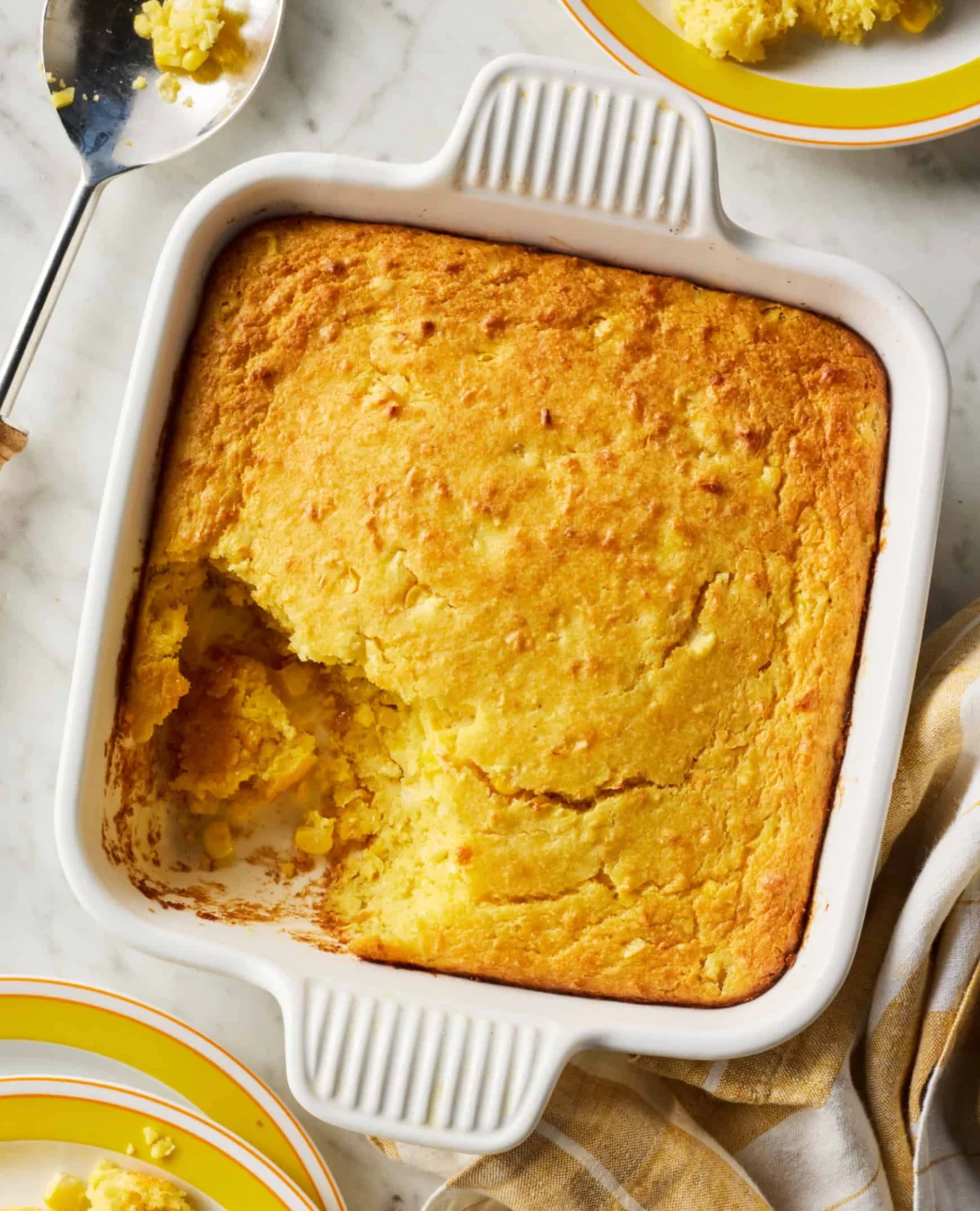
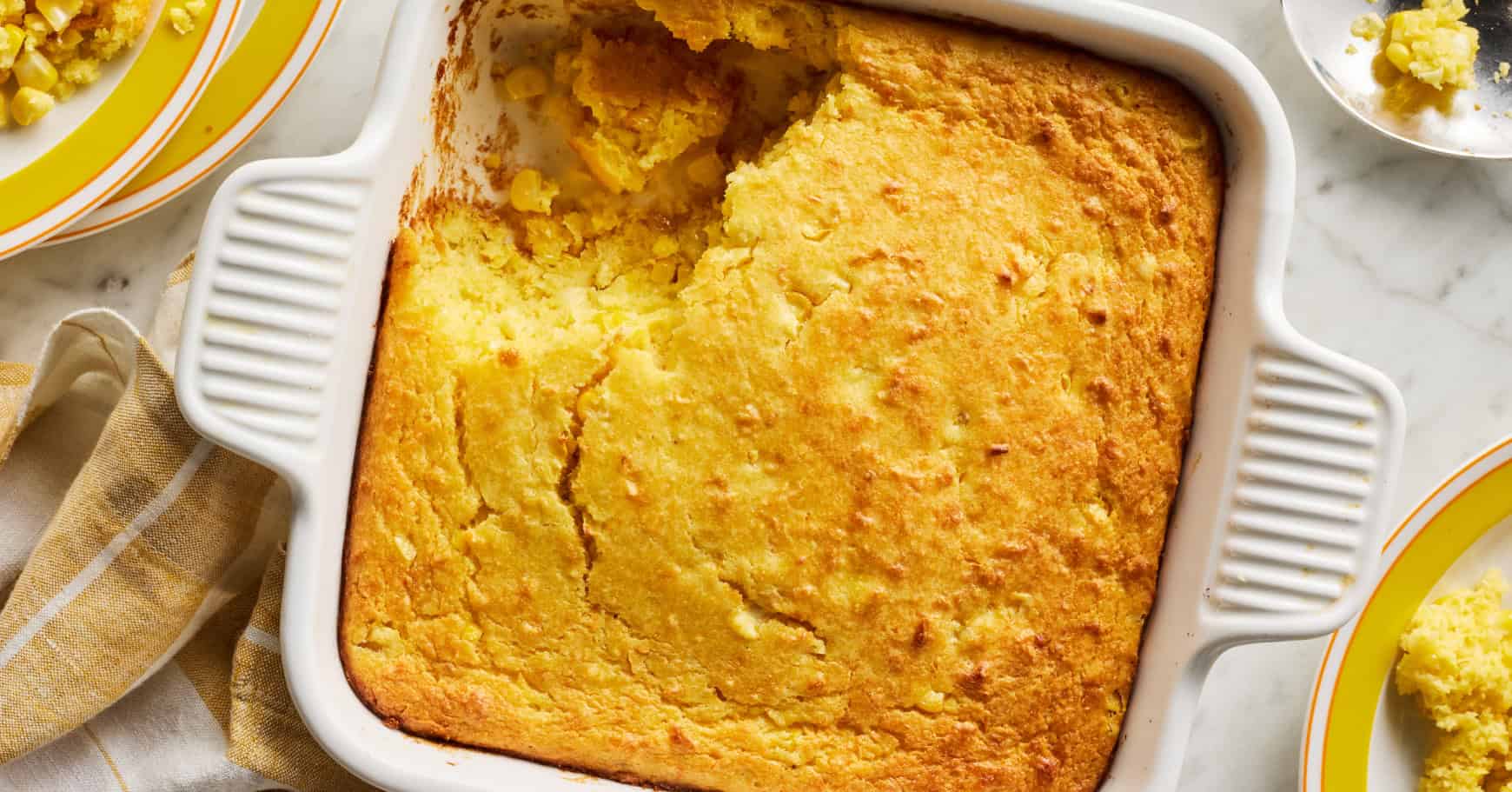
Enter a modernized, from-scratch interpretation that bridges the gap between traditional convenience and artisanal baking. By utilizing fresh corn kernels, a homemade blend of flour and cornmeal, and simple wholesome dairy, home cooks can elevate this humble side dish into a show-stopping centerpiece. Featuring golden-brown, caramelized edges and an ultra-creamy, custard-like center, this refined recipe proves that comfort food can be both deeply nostalgic and elevated.
Main Facts: Deconstructing the Modern Corn Casserole
At its core, this updated recipe honors the structural integrity of the classic version while dramatically upgrading the ingredient list.
- The Flavor Profile: A delicate balance of sweet and savory notes, enhanced by natural sugars from fresh corn and richness from butter and sour cream.
- The Texture: Unlike dry, crumbly cornbread, this casserole achieves a decadent, spoonable, and creamy center flanked by desirable golden-brown edges.
- The Technique: Instead of opening a can of commercially prepared creamed corn, this method purées fresh corn kernels in a food processor to replicate that velvety moisture while retaining whole kernels for structural crunch.
- Flexibility: While designed for fresh, seasonal corn—making it an early fall favorite—the recipe is fully adaptable to frozen or canned alternatives, and can even be modified to incorporate classic boxed mixes if time is of the essence.
- Nutritional Overview: Per standard serving (one slice out of nine), the casserole contains approximately 292 calories, 17 grams of fat, 33 grams of carbohydrates, and 6 grams of protein, making it a satisfying, energy-dense addition to any spread.
Chronology: Step-by-Step Culinary Execution
Crafting this from-scratch corn casserole requires minimal culinary equipment and follows a straightforward, logical progression. Total preparation time is approximately 15 minutes, with a bake time of 45 to 50 minutes, resulting in a total turnaround of roughly one hour.
Phase 1: Dry Ingredients and Harmonization
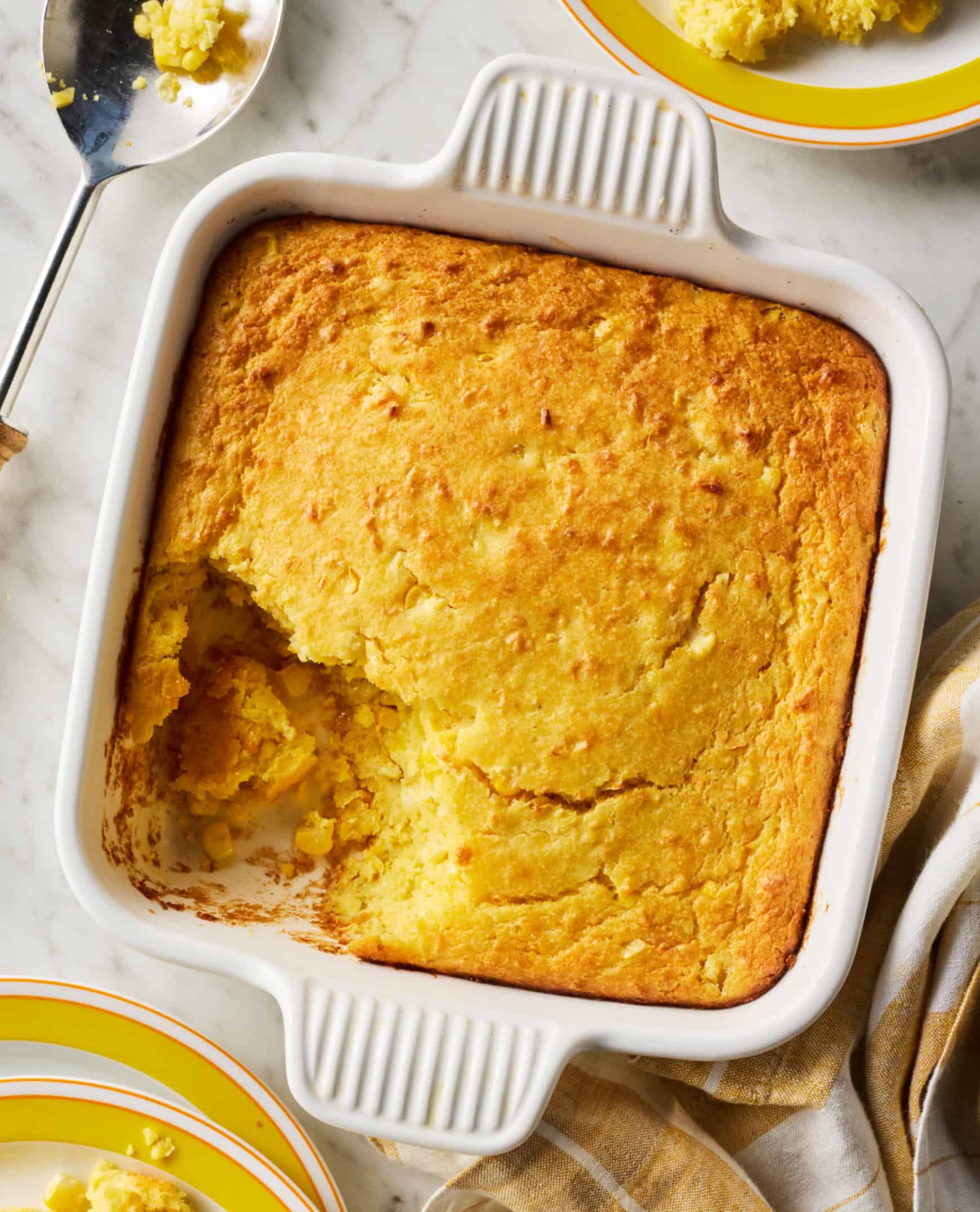
The process begins in a medium mixing bowl, where the dry components are whisked together to ensure an even distribution of leavening agents and flavorings. Bakers combine all-purpose flour, fine cornmeal, granulated sugar, baking powder, and fine sea salt. Thorough whisking at this stage prevents pockets of baking powder or salt from forming in the final batter.
Phase 2: Processing the Star Ingredient
To achieve the characteristic creaminess of traditional corn pudding without relying on canned creamed corn, the recipe utilizes fresh produce. Three cups of fresh corn kernels are transferred to a food processor and pulsed until smooth. This purée acts as a natural binding agent and moisture reservoir. The remaining one and a half cups of corn kernels are left completely whole, ensuring that every bite delivers a pleasant, authentic pop of texture.
Phase 3: Emulsifying the Wet Components
In a separate, larger bowl, large eggs are beaten thoroughly before being whisked together with melted, high-quality unsalted butter. Once the fat and eggs are fully emulsified, the freshly prepared corn purée and thick sour cream are folded into the wet mixture. The sour cream introduces a subtle tang that cuts through the sweetness of the corn while contributing to the velvety interior crumb.
Phase 4: Unifying Batter and Pan Preparation
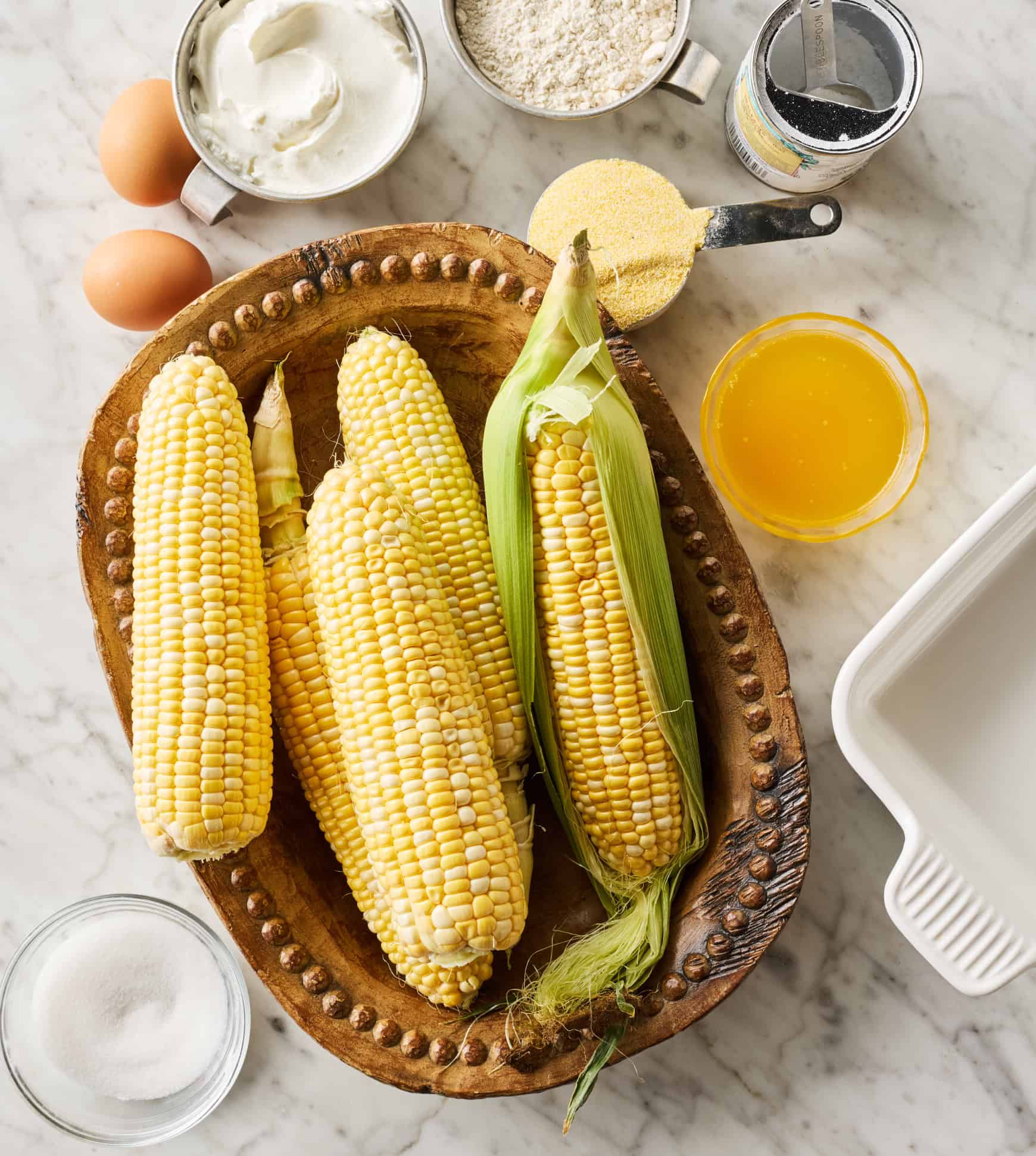
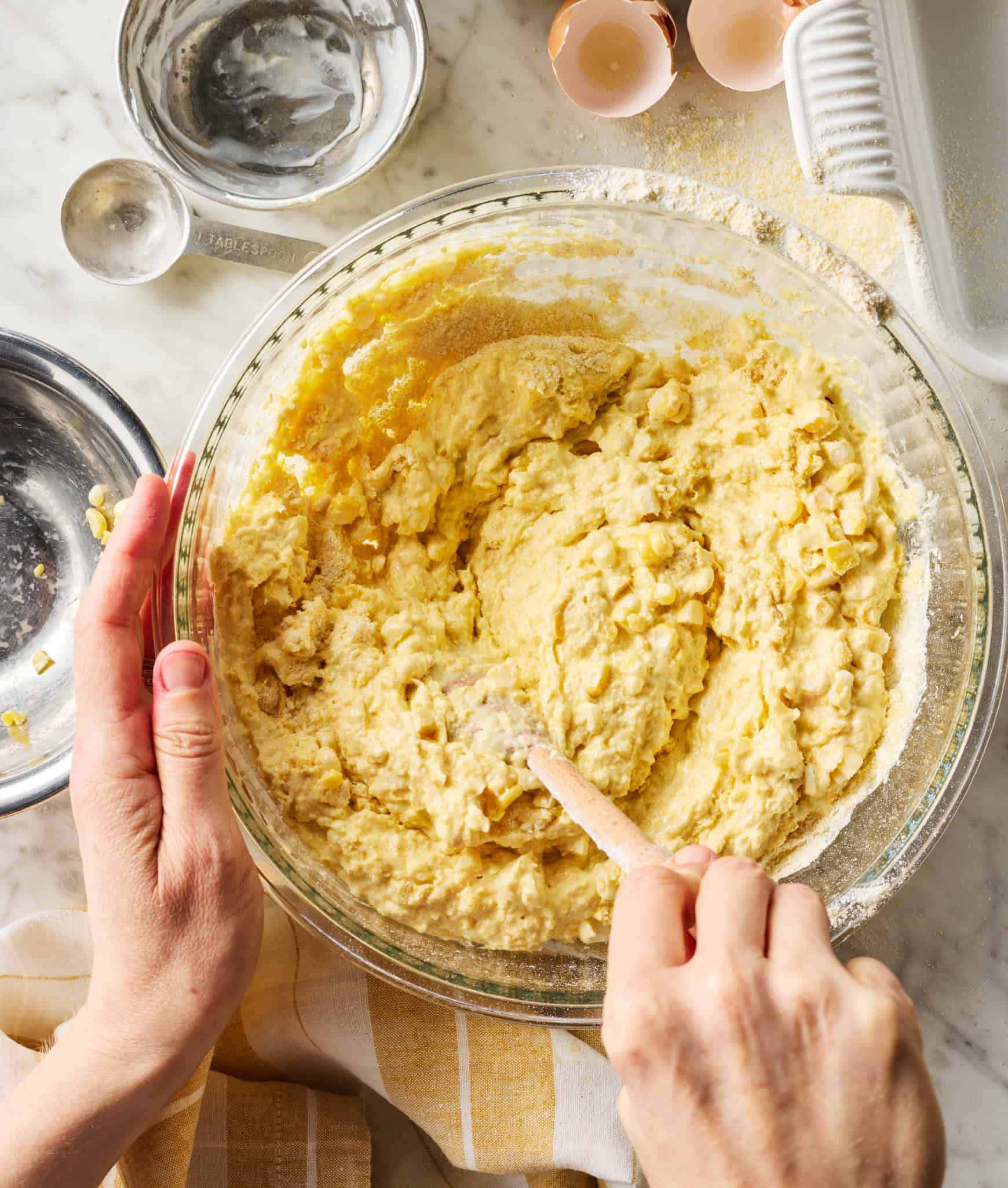
The dry ingredient mixture is gently folded into the wet ingredients just until combined. Culinary experts stress the importance of restraint here: much like preparing pancakes or muffins, overmixing the batter activates excess gluten, leading to a tough, dense result. A few lingering lumps are not only acceptable; they are encouraged. Finally, the reserved whole corn kernels are gently folded throughout the batter.
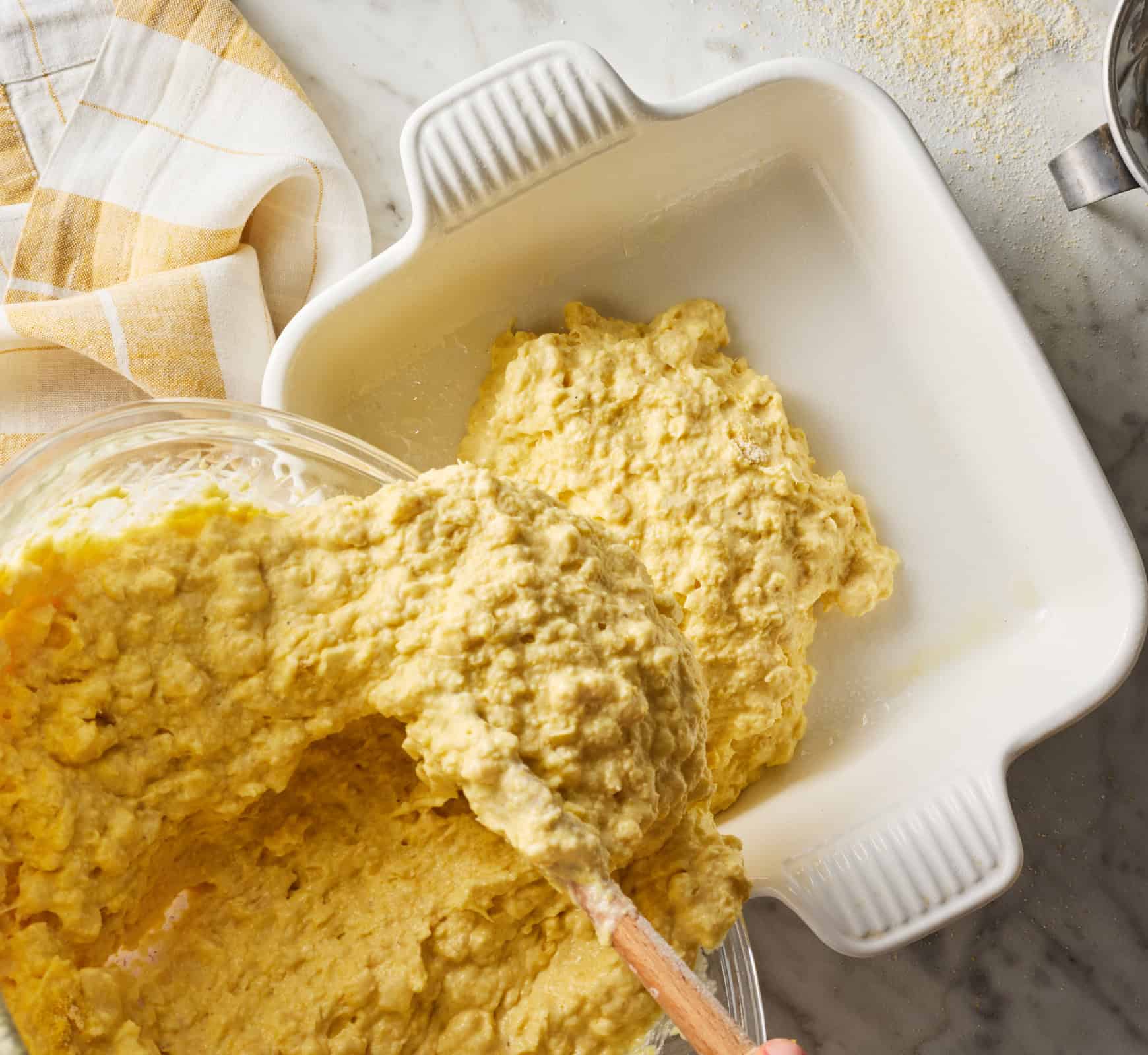
The batter is then poured into a greased 9×9-inch baking dish and smoothed evenly across the top. An efficient chef’s tip involves greasing the pan using a small amount of the melted butter set aside from the recipe before incorporating it into the wet base, streamlining the workflow.
Phase 5: Baking and Resting
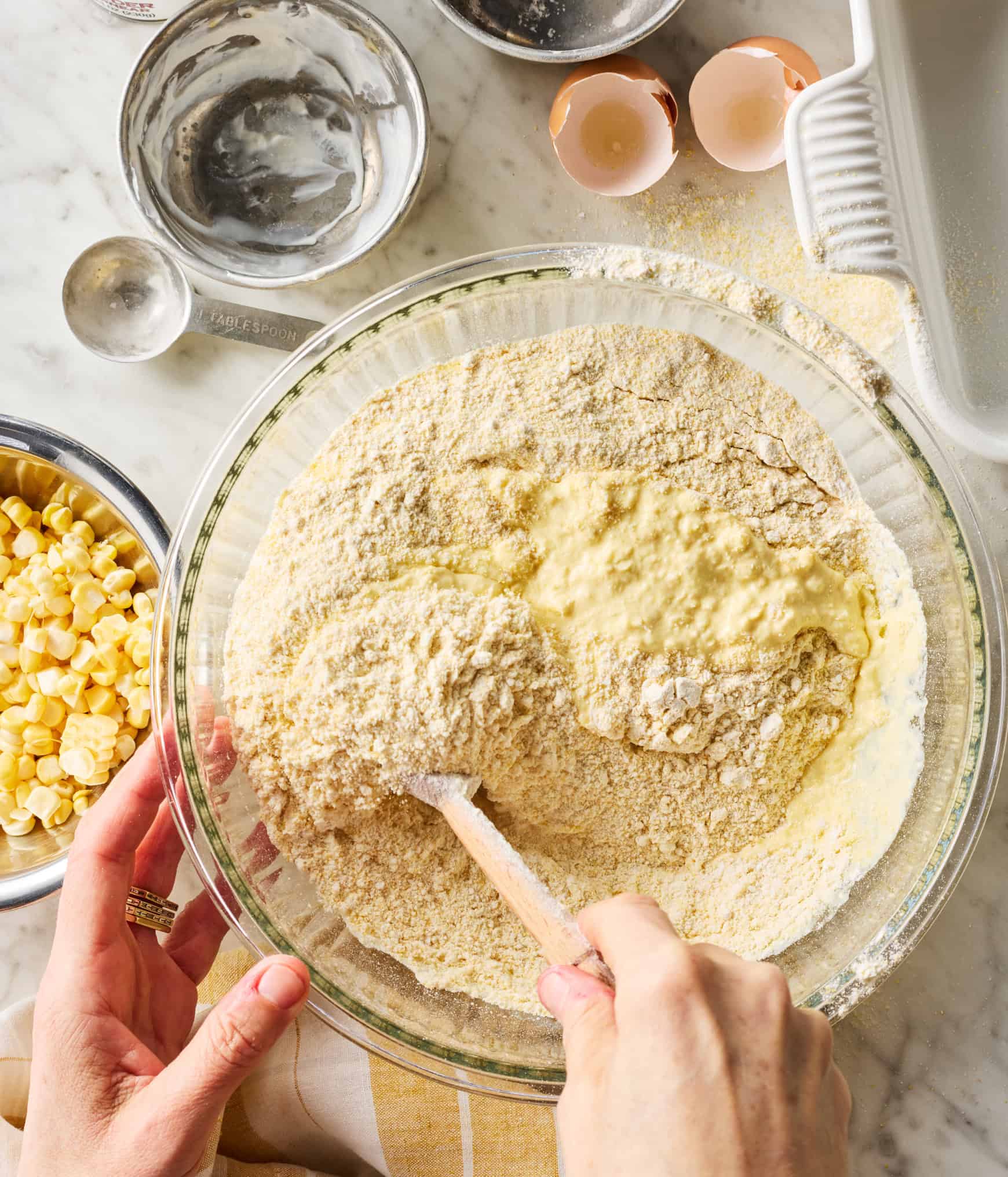
The casserole is baked in a preheated oven at 350°F (175°C) for 45 to 50 minutes. Visual cues are key here: the edges should pull slightly away from the pan and turn a deep, caramelized golden-brown, while the center should remain just slightly soft and trembling.
Crucially, the recipe mandates a 10-minute resting period upon removal from the oven. This brief pause allows the starches to set and the internal custard to firm up just enough to make clean, structurally sound slices possible.
Supporting Data & Nutritional Breakdown
Understanding the nutritional composition of holiday side dishes helps home cooks balance heavy menus. Below is the complete nutritional profile per single serving (calculated on a 9-serving yield based on a standard 2,000-calorie daily diet):
- Calories: 292
- Calories from Fat: 153
- Total Fat: 17g (26% Daily Value)
- Saturated Fat: 9g (56% Daily Value)
- Trans Fat: 0.4g
- Polyunsaturated Fat: 1g
- Monounsaturated Fat: 4g
- Cholesterol: 75mg (25% Daily Value)
- Sodium: 368mg (16% Daily Value)
- Potassium: 287mg (8% Daily Value)
- Total Carbohydrates: 33g (11% Daily Value)
- Dietary Fiber: 3g (13% Daily Value)
- Sugars: 10g (11% Daily Value)
- Protein: 6g (12% Daily Value)
- Vitamins & Minerals:
- Vitamin A: 631 IU (13% Daily Value)
- Vitamin C: 5mg (6% Daily Value)
- Calcium: 110mg (11% Daily Value)
- Iron: 1mg (6% Daily Value)
Culinary Adaptability & Make-Ahead Strategies
Modern home cooks value efficiency and adaptability, particularly during high-stress holiday seasons like Thanksgiving, Christmas, or Easter. This recipe addresses those demands through robust make-ahead guidelines and versatile ingredient substitutions.
Advance Preparation and Storage
For those looking to minimize day-of kitchen chaos, this corn casserole can be fully baked up to two days in advance.
- Cooling: Allow the freshly baked casserole to come down completely to room temperature.
- Refrigeration: Cover the baking dish tightly with plastic wrap or foil and store it in the refrigerator for up to 48 hours.
- Reheating: To serve, remove the covering and warm the casserole through in a 300°F oven for 10 to 20 minutes until heated evenly to the center.
Long-Term Freezing
The dish also holds up exceptionally well to freezing. Wrapped tightly in heavy-duty aluminum foil or transferred to an airtight freezer-safe container, the baked casserole can be frozen for up to three months. For optimal texture, it should be thawed overnight in the refrigerator before being gently reheated in the oven.
Ingredient Substitutions and Flexibility
While the from-scratch approach utilizing fresh corn, flour, and cornmeal yields superior gourmet results, the recipe accommodates alternative pantries seamlessly:
- Frozen Corn: Thaw and drain thoroughly before measuring. Use 3 cups for the purée and 1.5 cups for the whole kernel addition.
- Canned Corn: Standard whole-kernel canned corn works exceptionally well; ensure it is thoroughly drained to prevent excess liquid from compromising the custard’s structural integrity.
- Boxed Mix Integration: For cooks attached to the nostalgic flavor of commercial cornbread boxes (such as Jiffy), a single 8.5-ounce box can be substituted for the dry flour, cornmeal, sugar, and baking powder blend, adjusting liquid and dairy metrics accordingly.
Implications: The Evolution of Comfort Food
The popularity of elevating classic convenience dishes reflects a broader cultural shift in home cooking. As consumers increasingly prioritize ingredient transparency, farm-to-table freshness, and culinary skill development, traditional comfort foods are undergoing a renaissance.
By deconstructing packaged meals—such as swapping a chemically stabilized boxed mix for simple pantry staples like flour, cornmeal, and baking powder—cooks reclaim control over flavor, sodium levels, and nutritional quality. At the same time, recipes that retain flexibility for canned or frozen goods ensure that traditional cooking remains accessible to busy families regardless of seasonal availability or budget constraints.
Ultimately, this elevated corn casserole serves as a bridge between generations. It respects the beloved, sweet-and-savory flavor profile that families have cherished for decades while introducing modern techniques that guarantee superior texture, presentation, and taste. Whether gracing an elaborate Thanksgiving buffet or accompanying a simple weeknight chili, this dish stands as a testament to the enduring appeal of thoughtfully prepared comfort food.