WASHINGTON — As the holiday season approaches and traditional tables groan under the weight of heavy roasts, rich gravies, and buttery starches, a quiet culinary revolution is taking place across dining rooms nationwide. For generations, the winter side dish lineup has been dominated by beige, heavy comfort foods. Today, however, home cooks and professional chefs alike are turning toward a brighter, fresher, and visually striking alternative: the festive winter Christmas salad.
At the intersection of seasonal produce and holiday aesthetics, this vibrant dish—featuring ruby-red pomegranates, roasted winter squash, candied pecans, and crisp greens—has rapidly evolved from an afterthought into the crown jewel of the holiday spread.
Main Facts: Anatomy of the Ultimate Holiday Salad
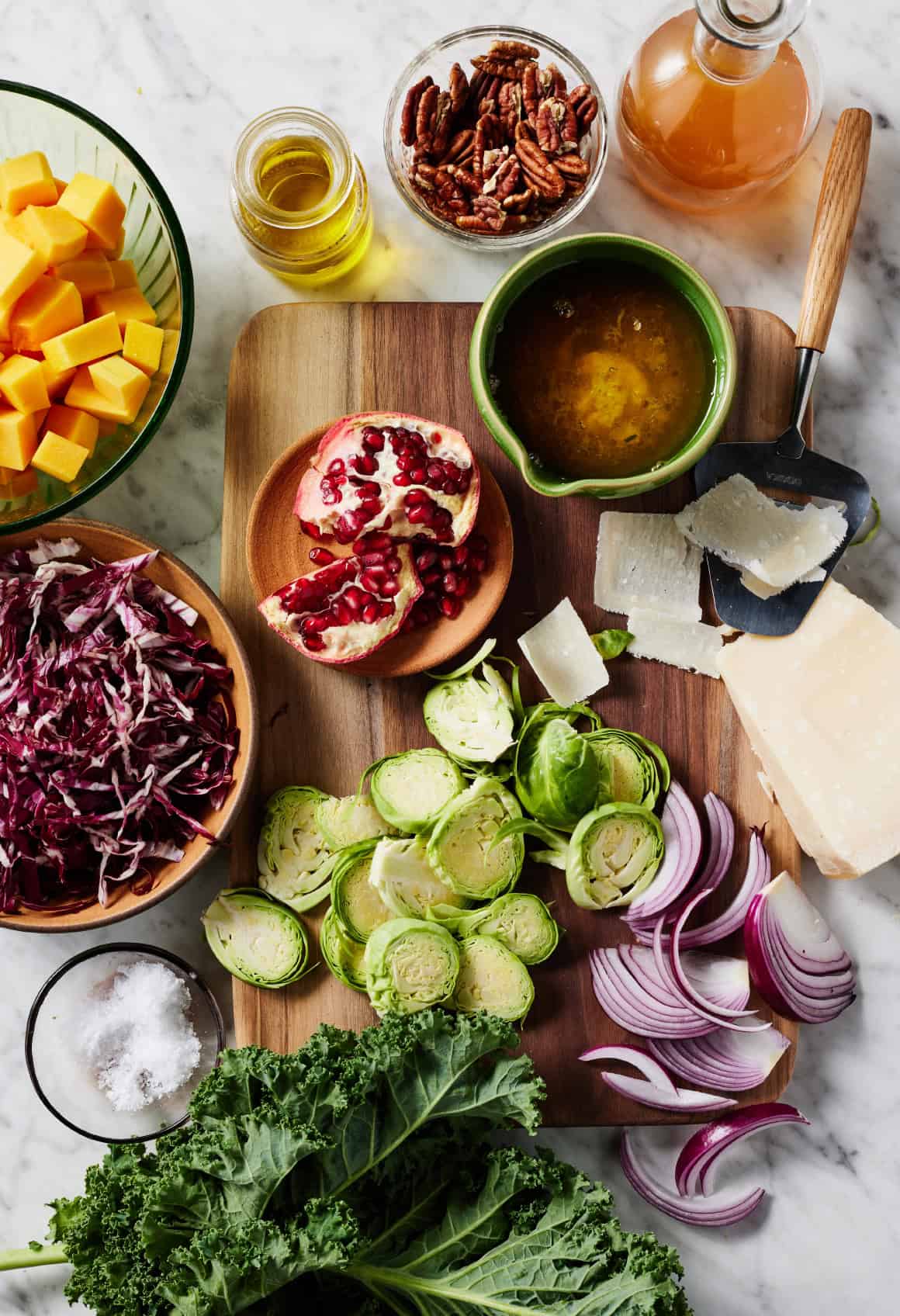
The modern Christmas salad is not merely a collection of leafy greens tossed with bottled dressing; it is a meticulously engineered culinary experience designed to balance contrasting flavors, textures, and colors.
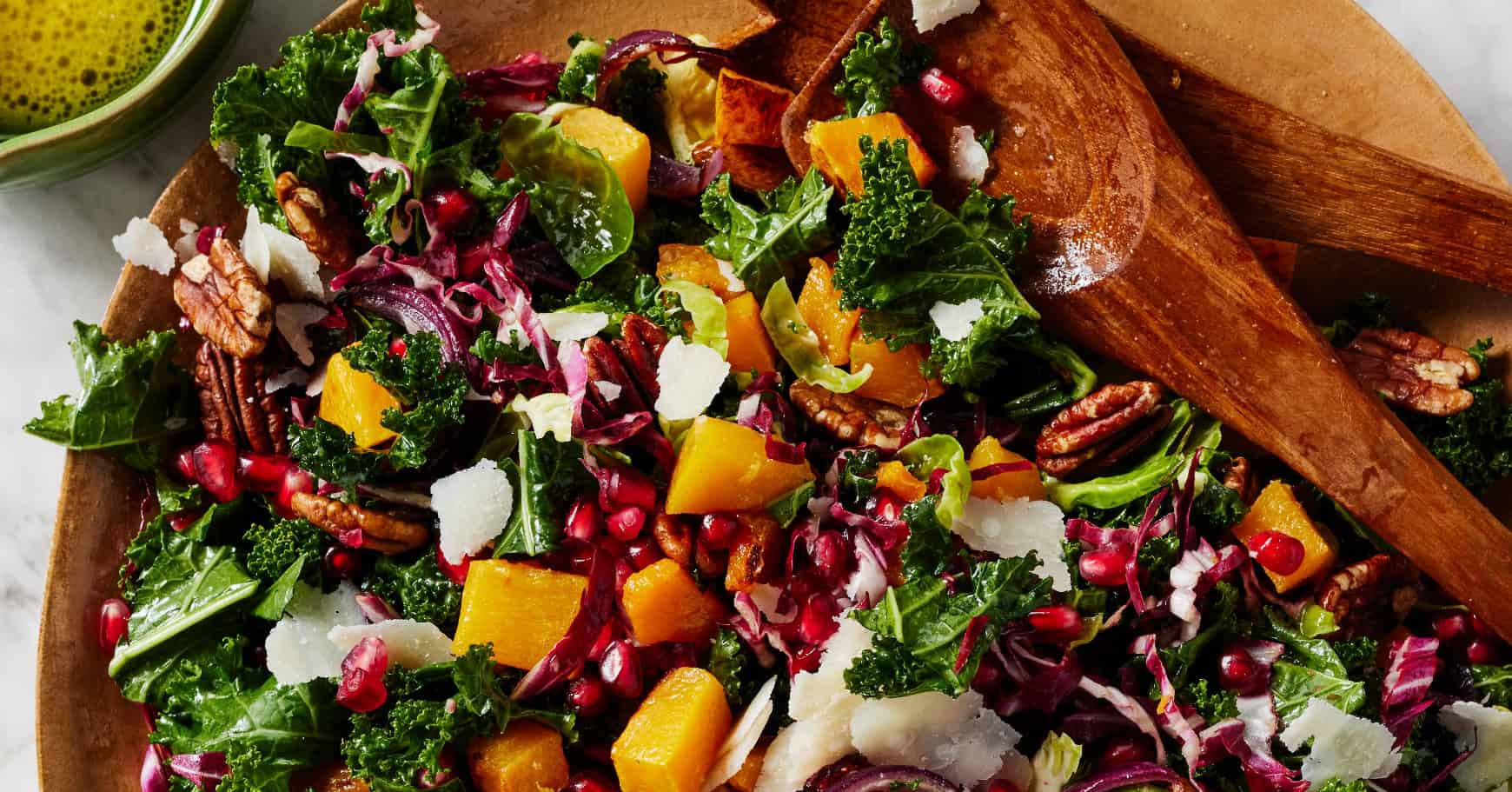
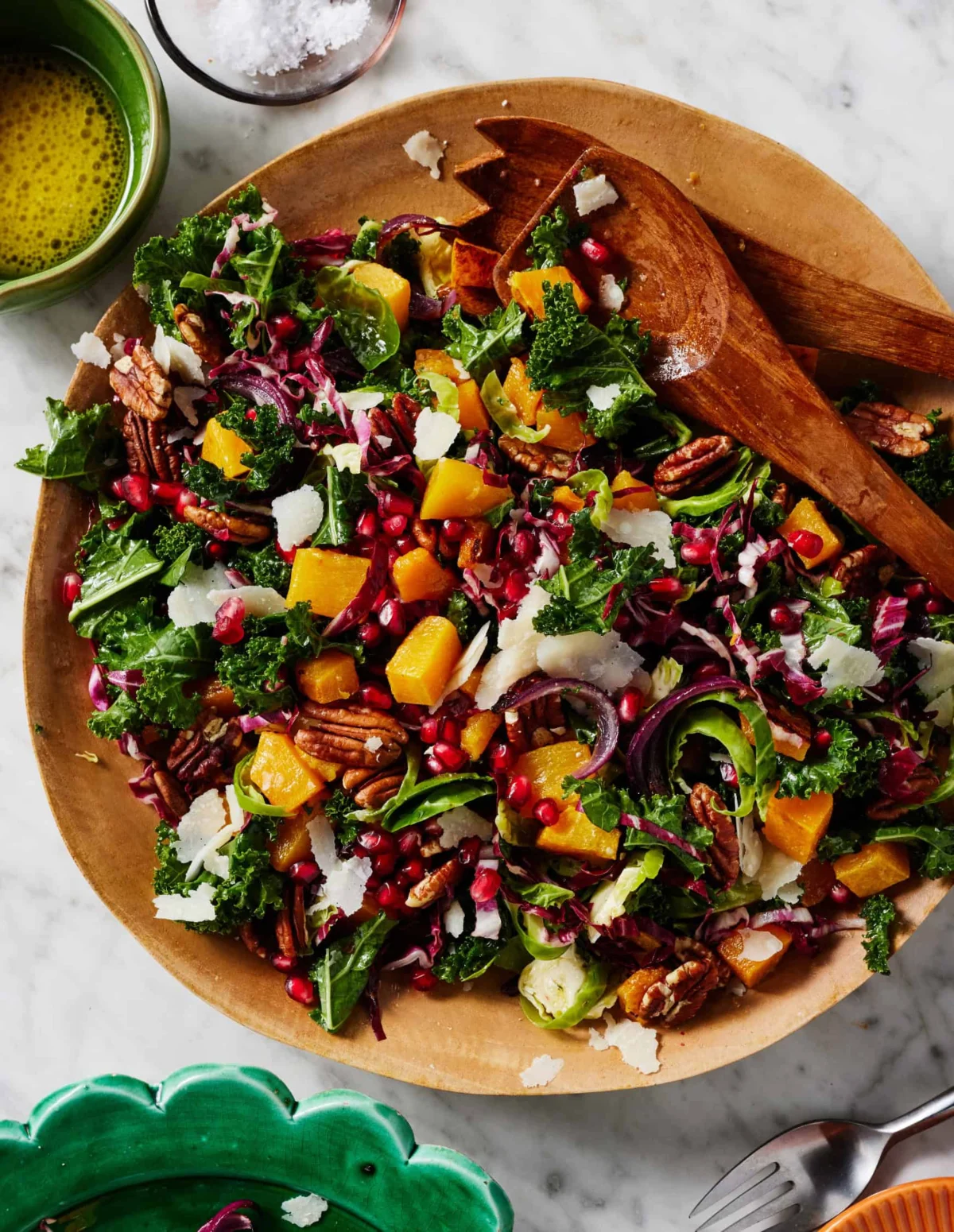
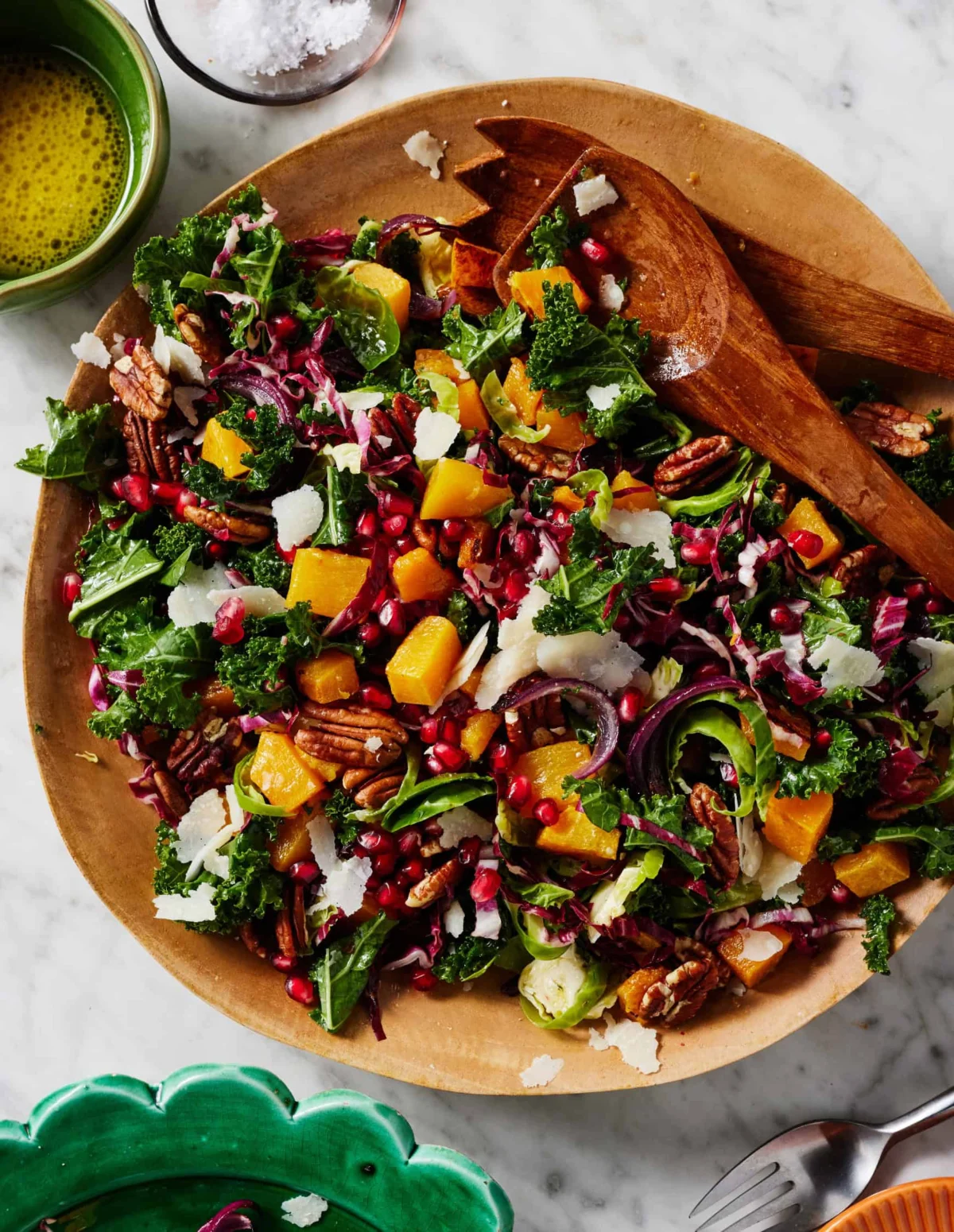
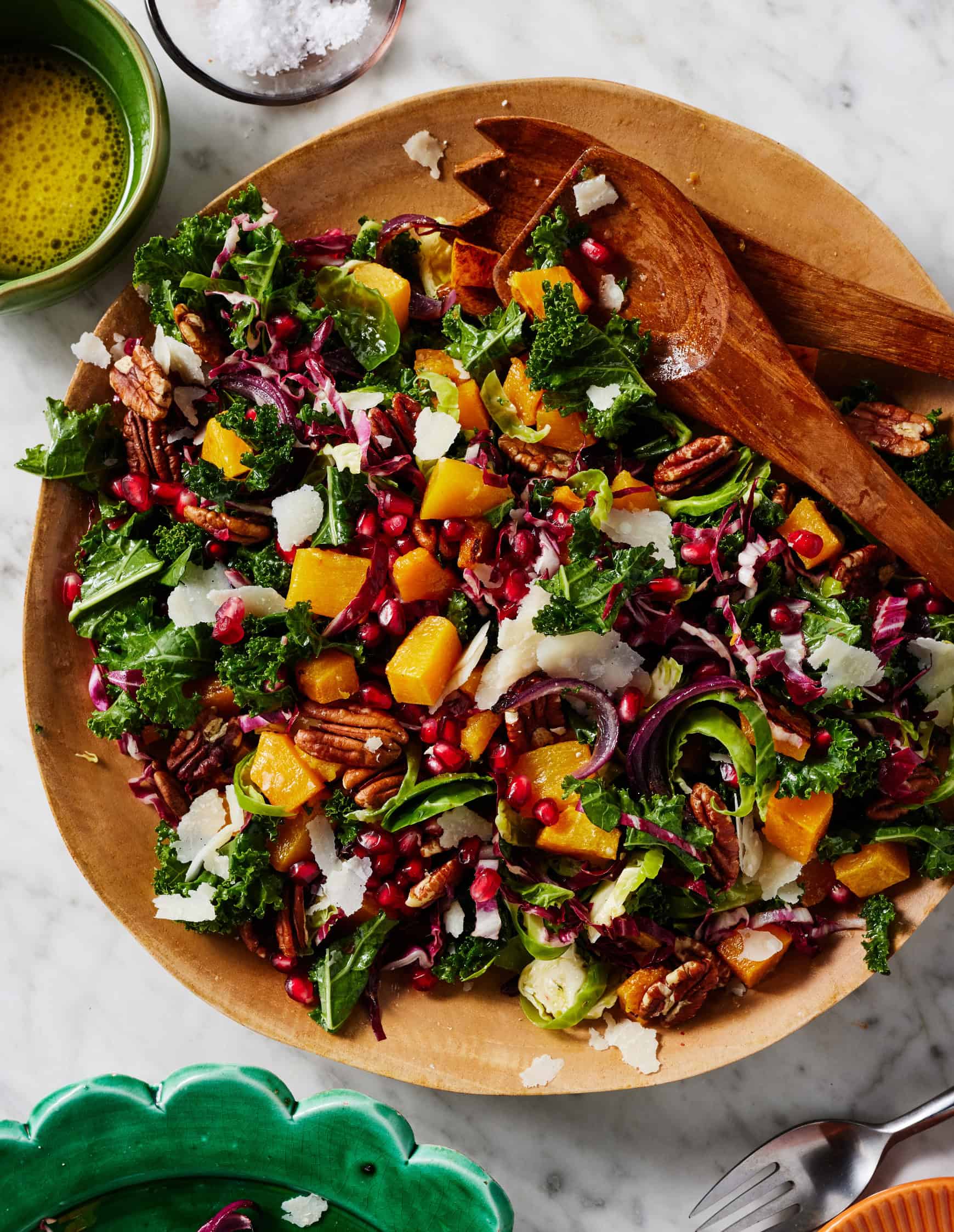
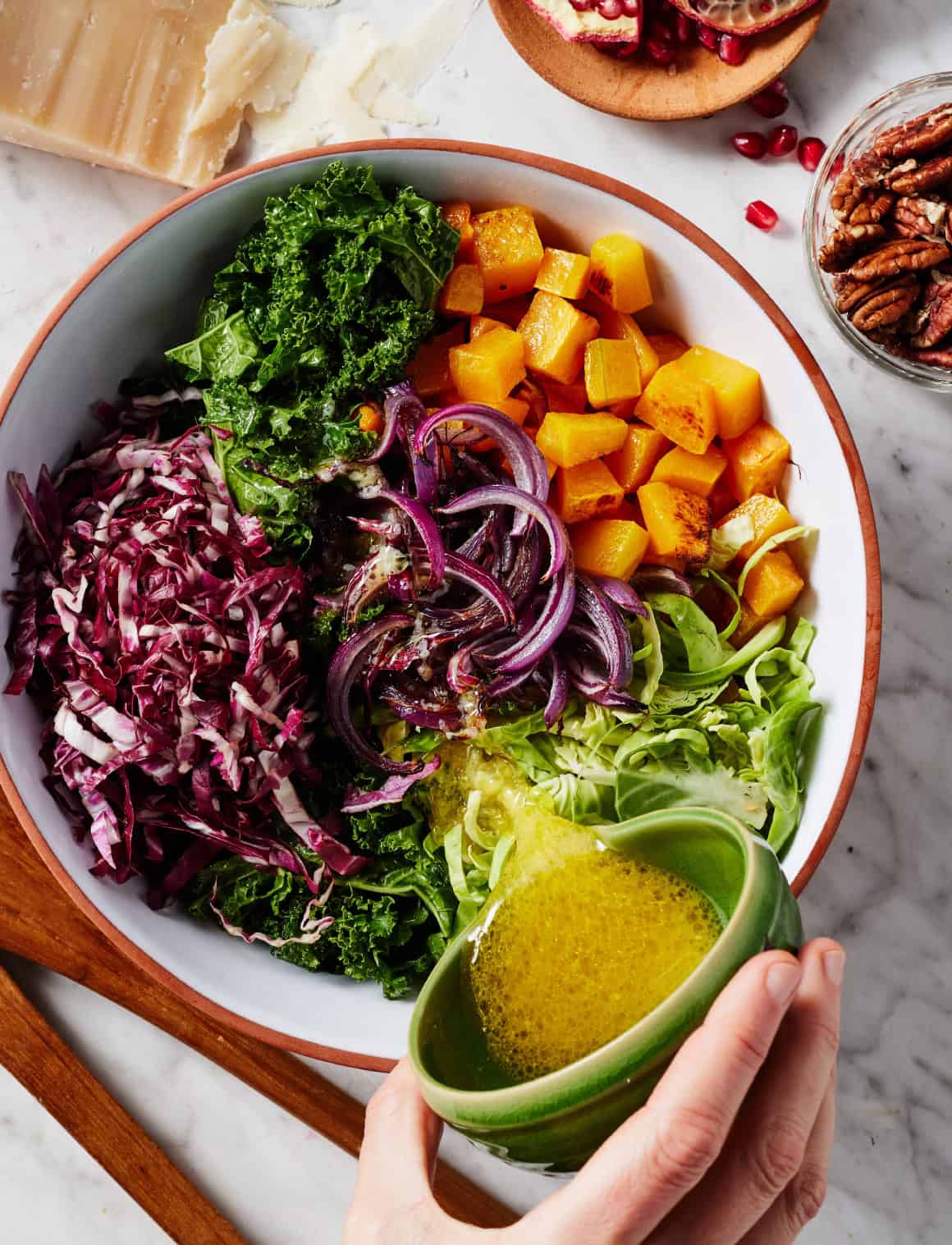
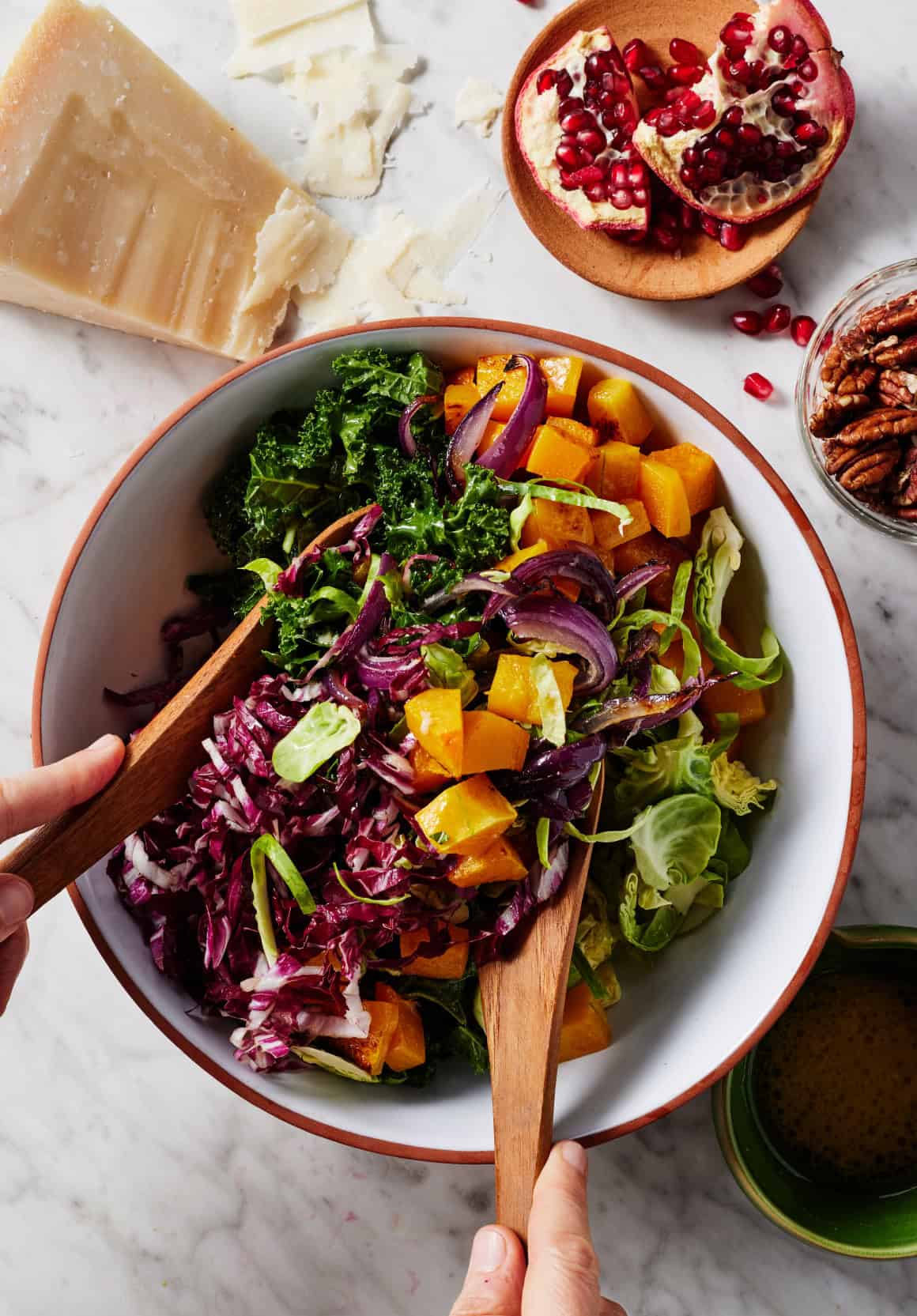
At its core, the recipe relies on a foundation of robust winter greens—predominantly nutrient-dense kale, bitter radicchio, and shaved Brussels sprouts. This earthy base is then elevated by the addition of sweet, caramelized roasted butternut squash and onions, which introduce a comforting warmth to the dish.
The true magic, however, lies in the interplay of toppings:
- The Crunch: Candied pecans provide a decadent, sugary crunch that contrasts sharply with the tender vegetables.
- The Pop: Juicy pomegranate seeds (arils) act as edible jewels, offering bright bursts of tart sweetness that cut through the richness of heavy holiday meals.
- The Finish: Shaved pecorino cheese adds a savory, umami depth, while a tangy apple cider vinegar dressing—whisked with honey, garlic, Dijon mustard, and extra virgin olive oil—ties every element together.
Nutritionally, the salad offers a welcome reprieve from holiday indulgence. Clocking in at approximately 141 calories per serving (minus dressing), it delivers 125% of the recommended daily value of Vitamin A and nearly half of your daily Vitamin C, along with 3 grams of dietary fiber.
Chronology: The Evolution of the Winter Salad Tradition
The journey of the Christmas salad from an obscure concept to a mainstream holiday staple mirrors changing consumer attitudes toward seasonal eating.
Pre-November: Conceptualization and Sourcing
Culinary developers and food writers typically begin conceptualizing holiday recipes months in advance. For seasonal food creators, the planning for a winter-centric salad starts as summer crops fade. The goal is to identify produce that peaks during the coldest months of the year—specifically squashes, brassicas, and pomegranates.
Early December: Recipe Testing and Standardization
Weeks before the holiday rush, formulations are finalized. Test kitchens focus heavily on structural integrity: unlike delicate spring lettuces, winter greens like kale and shaved Brussels sprouts possess the structural fortitude to withstand heavy dressings and ingredients without wilting into unappealing mush. This durability makes them ideal candidates for make-ahead holiday prep.
Mid-December: The Preparation Timeline
For the home cook executing the recipe on or just before Christmas Day, the timeline is streamlined to minimize day-of stress:
- Day Before (T-24 Hours): The apple cider vinegar dressing can be whisked and stored in the refrigerator. Candied pecans can be prepared and kept in an airtight container. Squash and onions can be pre-chopped.
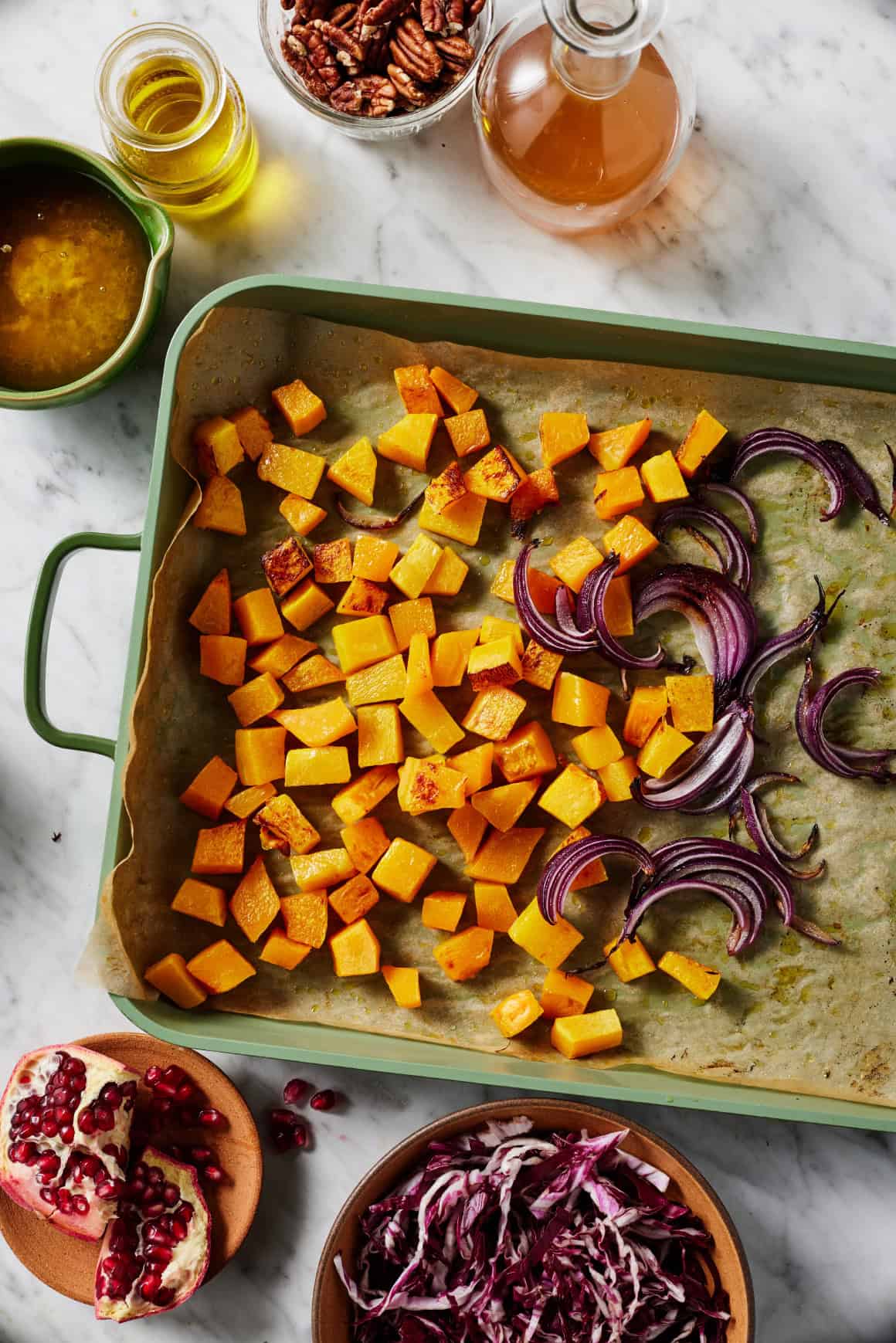
- Hours Before (T-2 Hours): The butternut squash and onions are roasted on a parchment-lined baking sheet at high heat until tender and caramelized (roughly 20 to 35 minutes).
- Minutes Before (T-15 Minutes): The kale is massaged with a portion of the dressing to soften its texture. Radicchio, Brussels sprouts, and warm roasted squash are folded in, followed by a final flourish of pomegranates, pecans, and pecorino cheese right before plating.
Christmas Day: Presentation and Consumption
Served at room temperature or slightly warm from the freshly roasted squash, the salad hits the table as both a visual centerpiece and a functional palate cleanser between bites of rich ham, turkey, or prime rib.
Supporting Data: The Science of Seasonal Produce and Flavor Pairing
To understand why this specific combination of ingredients works so well, culinary scientists point to the principles of sensory perception and seasonal food availability.
Flavor and Texture Matrix
| Component | Ingredient | Flavor Profile | Textural Role |
|---|---|---|---|
| Base | Kale, Radicchio, Brussels Sprouts | Earthy, Bitter, Peppery | Chewy, Crisp |
| Warmth | Roasted Squash & Red Onion | Sweet, Earthy, Savory | Tender, Soft |
| Crunch | Candied Pecans | Sweet, Nutty | Crunchy, Rich |
| Burst | Pomegranate Arils | Tart, Sweet | Juicy, Pop |
| Umami | Shaved Pecorino | Salty, Sharp | Firm, Creamy |
| Binder | Apple Cider Vinegar Dressing | Tangy, Balanced | Emulsifying |
Nutritional Breakdown Per Serving (Without Dressing)
- Calories: 141 kcal
- Total Fat: 7g (11% DV)
- Carbohydrates: 16g (5% DV)
- Dietary Fiber: 3g (13% DV)
- Sugars: 8g
- Protein: 4g (8% DV)
- Vitamin A: 6,230 IU (125% DV)
- Vitamin C: 38mg (46% DV)
- Calcium: 137mg (14% DV)
- Iron: 1mg (6% DV)
These metrics highlight the salad’s unique ability to deliver high micronutrient density without contributing excessively to the heavy caloric load typical of traditional holiday feasts.
Official Responses and Culinary Expert Perspectives
Food editors, registered dietitians, and professional chefs have increasingly championed the inclusion of raw and roasted winter salads on holiday menus.
"People often think of salads as cold-weather deterrents, but when you anchor a dish in robust winter produce like hearty greens, sweet roasted squash, and jewels of pomegranate, it feels entirely appropriate for December," says a leading culinary lifestyle publisher. "It changes the conversation around holiday side dishes from ‘an obligation’ to ‘something I am genuinely excited to eat.’"
Nutritional experts point out that the inclusion of bitter greens—such as radicchio and endive—plays an important physiological role during heavy holiday meals. Bitters stimulate digestive enzymes, making a complex salad an effective complement to rich, high-fat proteins.
Furthermore, culinary instructors emphasize the flexibility of the formula. "The beauty of a winter salad is its adaptability," notes one veteran cookbook author. "If you don’t have butternut squash, swap it for sweet potatoes or roasted beets. If pecorino isn’t your preference, goat cheese or gorgonzola provides a wonderful alternative. It is a forgiving, high-reward recipe."
Implications: Changing Holiday Food Culture
The rising popularity of sophisticated winter salads speaks to broader shifts in modern food culture. As consumers increasingly prioritize seasonal eating, aesthetic presentation, and nutritional balance, traditional holiday menus are undergoing a gentle modernization.
1. Aesthetic Dining and Social Media Influence
In an era where food presentation is heavily shared across digital platforms, the visual impact of a Christmas salad cannot be overstated. The deep crimson of pomegranate seeds against dark green kale and golden roasted squash creates an inherently festive color palette that photographs well and elevates the overall presentation of the holiday table.
2. Streamlining Holiday Stress
The emphasis on make-ahead components—such as pre-made dressings, roasted vegetables that hold their quality, and durable greens that do not wilt instantly—addresses a major pain point for holiday hosts. By designing recipes that can be prepped in stages, culinary creators are helping home cooks reclaim time to spend with family rather than being trapped in the kitchen on Christmas Day.
3. Redefining Comfort Food
Comfort food is no longer restricted to heavy, starch-laden dishes. Warm roasted vegetables tossed with crisp greens and sweet-tart fruits demonstrate that lighter fare can deliver the deep, satisfying flavors craved during the colder months.

As families gather around tables this holiday season, the vibrant Christmas salad stands as proof that tradition and innovation can coexist deliciously on the same plate.