CULINARY ARTS — In the ever-evolving landscape of modern home cooking, few dishes evoke the nostalgic warmth of a classic corn casserole. Often recognized as a softer, spoonable cousin to traditional cornbread, this beloved staple has long been a fixture at potlucks, autumn gatherings, and holiday tables.
However, a contemporary culinary shift is transforming how home cooks approach the dish. By moving away from heavily processed, box-mix shortcuts and embracing fresh, seasonal produce alongside scratch-made pantry blends, culinary creators are breathing new life into a mid-century comfort food favorite.
This comprehensive report examines the anatomy of the ultimate corn casserole, exploring its ingredients, chronological preparation, nutritional breakdown, make-ahead logistics, and its enduring place in American comfort food culture.
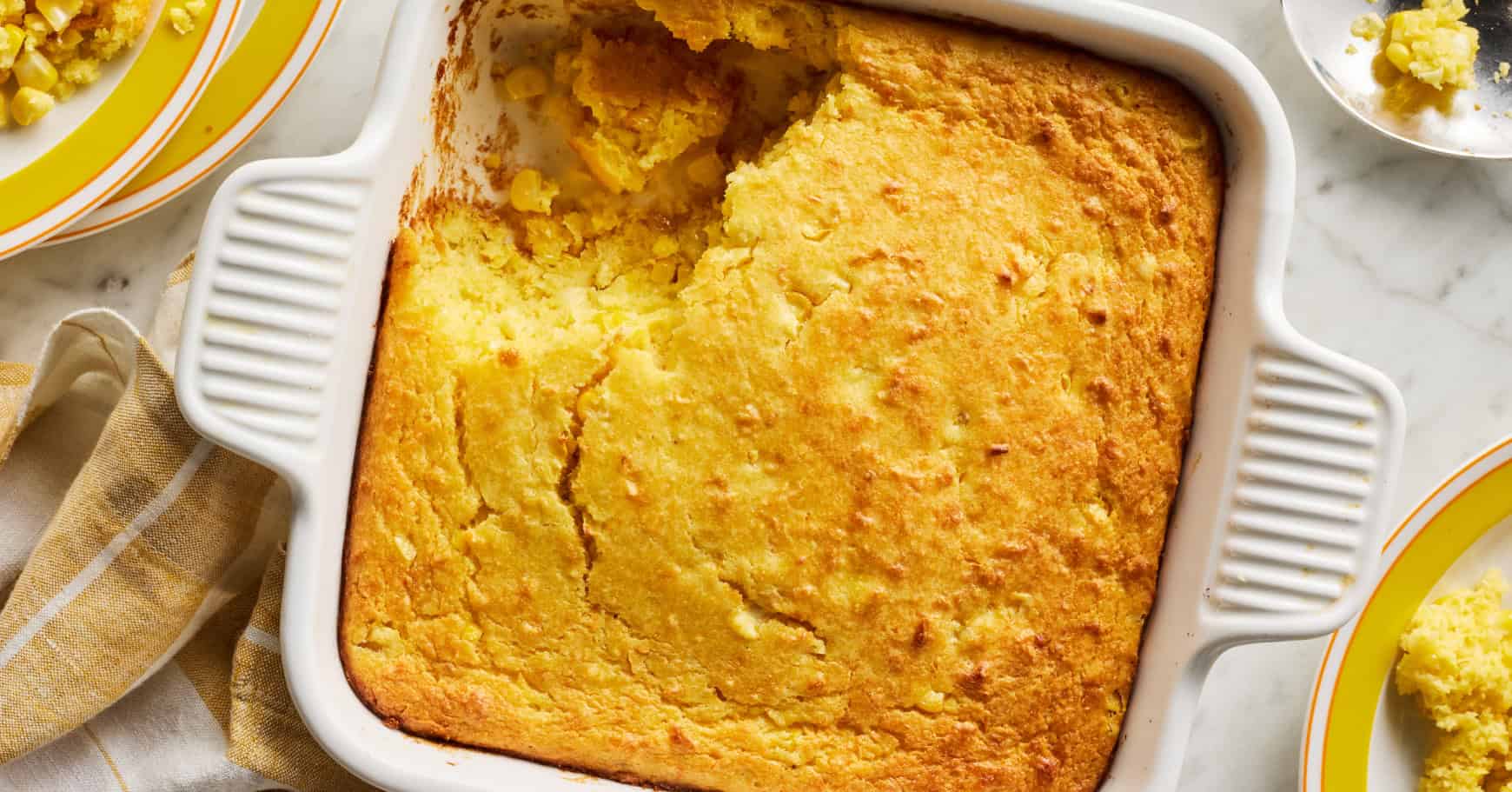
Main Facts: Deconstructing the Modern Corn Casserole
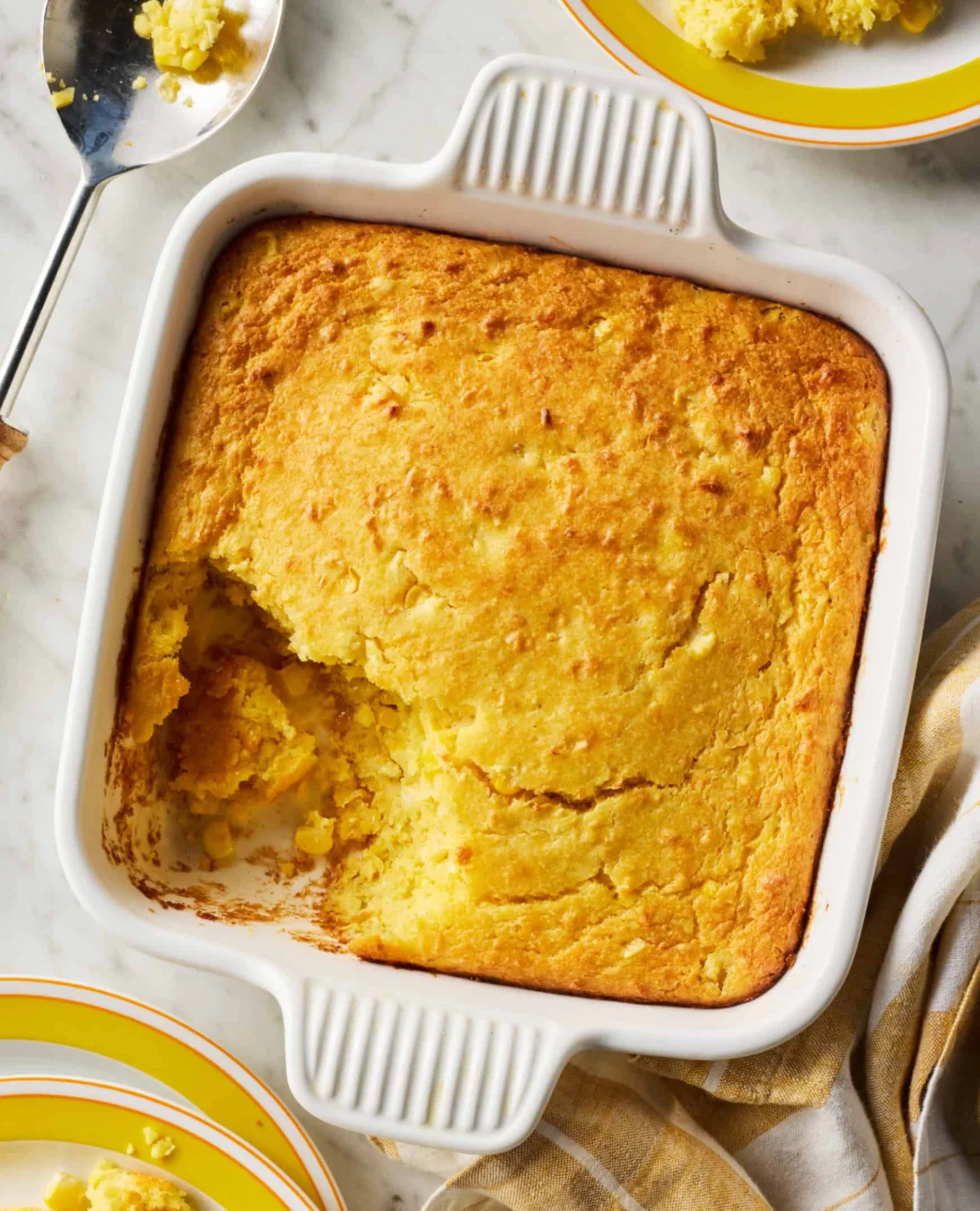
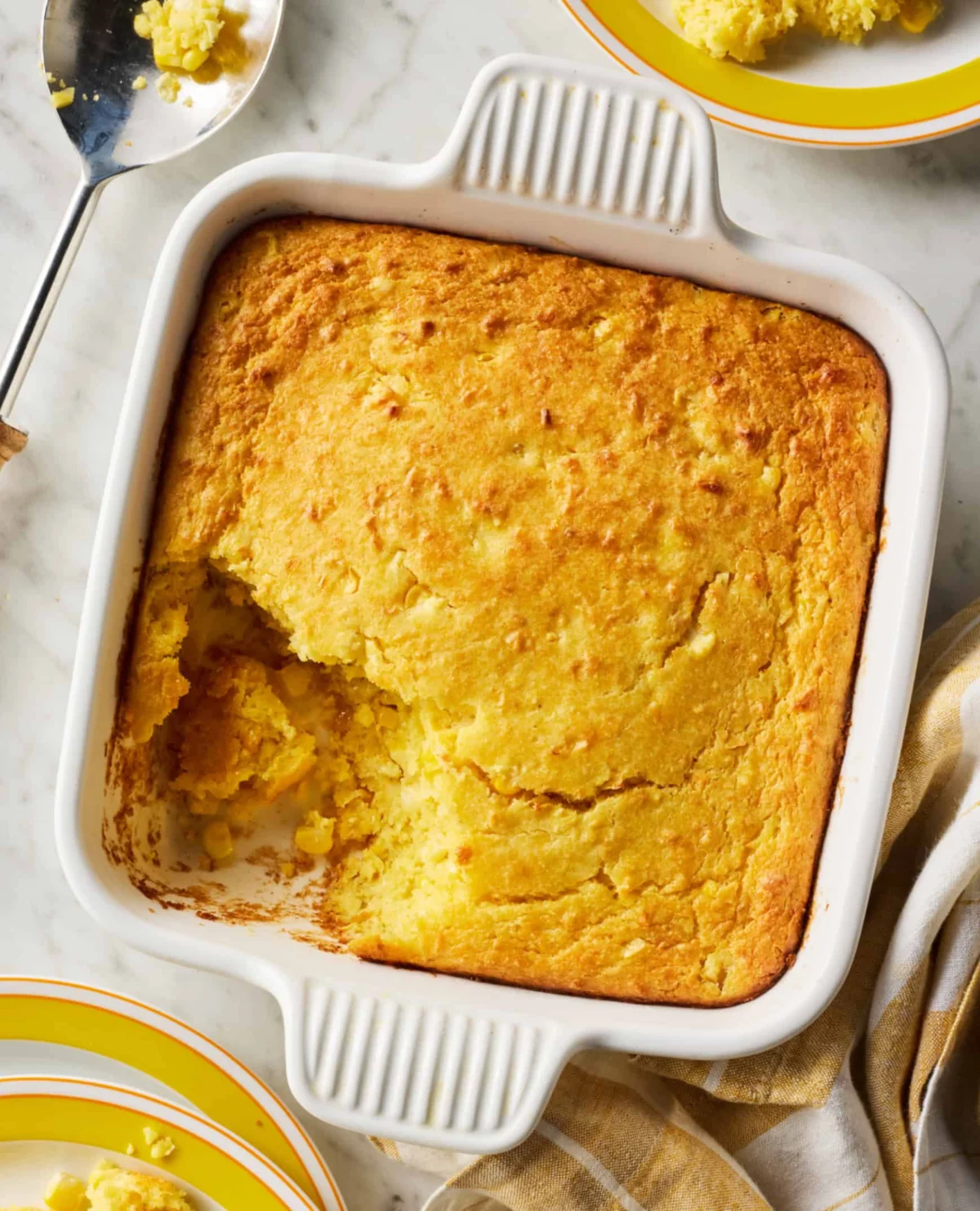
At its core, corn casserole is celebrated for its irresistible textural contrast: golden-brown, slightly crisp edges that yield to a rich, custard-like, creamy center. Bursting with whole corn kernels that offer a satisfying crunch, the dish achieves a delicate balance between sweet and savory flavor profiles.
Traditional iterations of the recipe—popularized in the latter half of the 20th century—frequently relied on commercial boxed cornbread mixes (such as Jiffy) combined with canned creamed corn and whole kernel corn. While undeniably convenient, these shortcut versions often sacrifice depth of flavor and structural nuance.
The modern reimagining bridges the gap between convenience and culinary craftsmanship. Rather than relying exclusively on processed shortcuts, this upgraded recipe utilizes a custom blend of all-purpose flour, yellow cornmeal, sugar, baking powder, and salt. Most importantly, it introduces a clever technique: pureeing a portion of fresh corn kernels to naturally mimic the rich, velvety moisture of canned creamed corn without the excess sodium and preservatives.
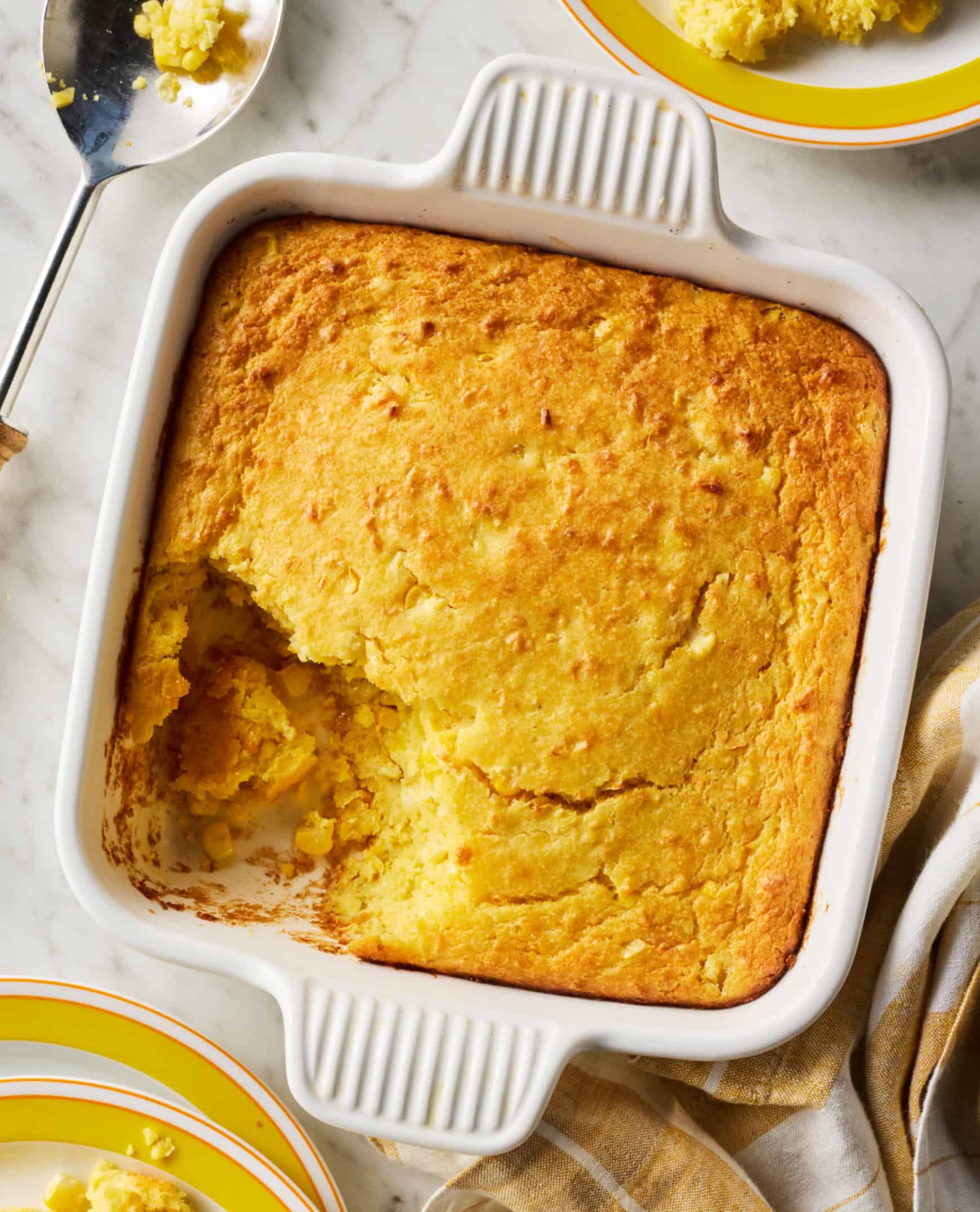
Key Nutritional Profile (Per Serving)
Based on a standard 9-inch square casserole yielding 9 servings, the nutritional breakdown is as follows:
- Calories: 292 (Calories from Fat: 153)
- Total Fat: 17g (26% DV)
- Saturated Fat: 9g (56% DV)
- Trans Fat: 0.4g
- Cholesterol: 75mg (25% DV)
- Sodium: 368mg (16% DV)
- Carbohydrates: 33g (11% DV)
- Dietary Fiber: 3g (13% DV)
- Sugars: 10g (11% DV)
- Protein: 6g (12% DV)
- Key Micronutrients: Vitamin A (13% DV), Calcium (11% DV), Iron (6% DV)
Chronology: Step-by-Step Preparation Guide
Crafting a phenomenal corn casserole from scratch requires minimal active kitchen time—roughly 15 minutes of prep and 45 minutes of baking. Follow this chronological breakdown to achieve flawless results every time.
Phase 1: Assembling the Dry Ingredients (Minutes 0–3)
Begin by selecting a medium-sized mixing bowl. Whisk together the dry foundation: unbleached all-purpose flour, medium-grind yellow cornmeal, granulated sugar, baking powder, and a pinch of fine sea salt. Whisking thoroughly ensures that the leavening agent is evenly distributed, preventing dense spots in the finished bake.
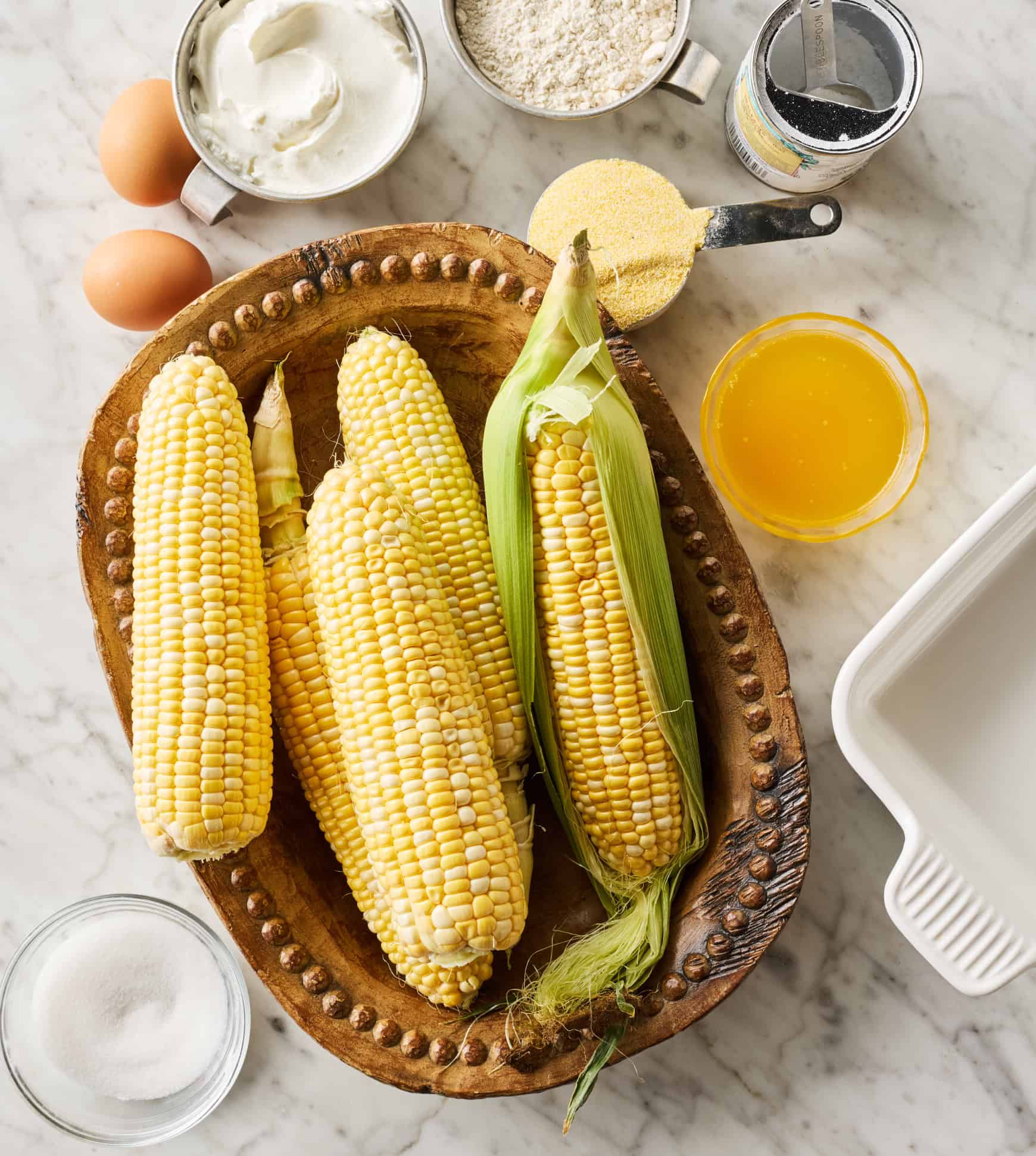
Phase 2: Processing the Corn (Minutes 3–7)
The secret to the casserole’s signature velvety center lies in how the corn is handled. Measure out fresh corn kernels (approximately 4.5 cups total). Transfer 3 cups of the kernels into a food processor and pulse until completely smooth. This step replicates the role of canned cream-style corn, infusing the batter with natural starches and abundant moisture. Reserve the remaining 1.5 cups of kernels completely whole to guarantee a satisfying textural pop in every bite.
Phase 3: Unifying the Wet Ingredients (Minutes 7–10)
In a separate, larger mixing bowl, whisk together farm-fresh eggs and melted butter. Once emulsified, pour in the freshly pureed corn and rich sour cream. Whisk vigorously until the wet mixture is completely smooth and uniform in color.
Phase 4: Batter Integration (Minutes 10–12)
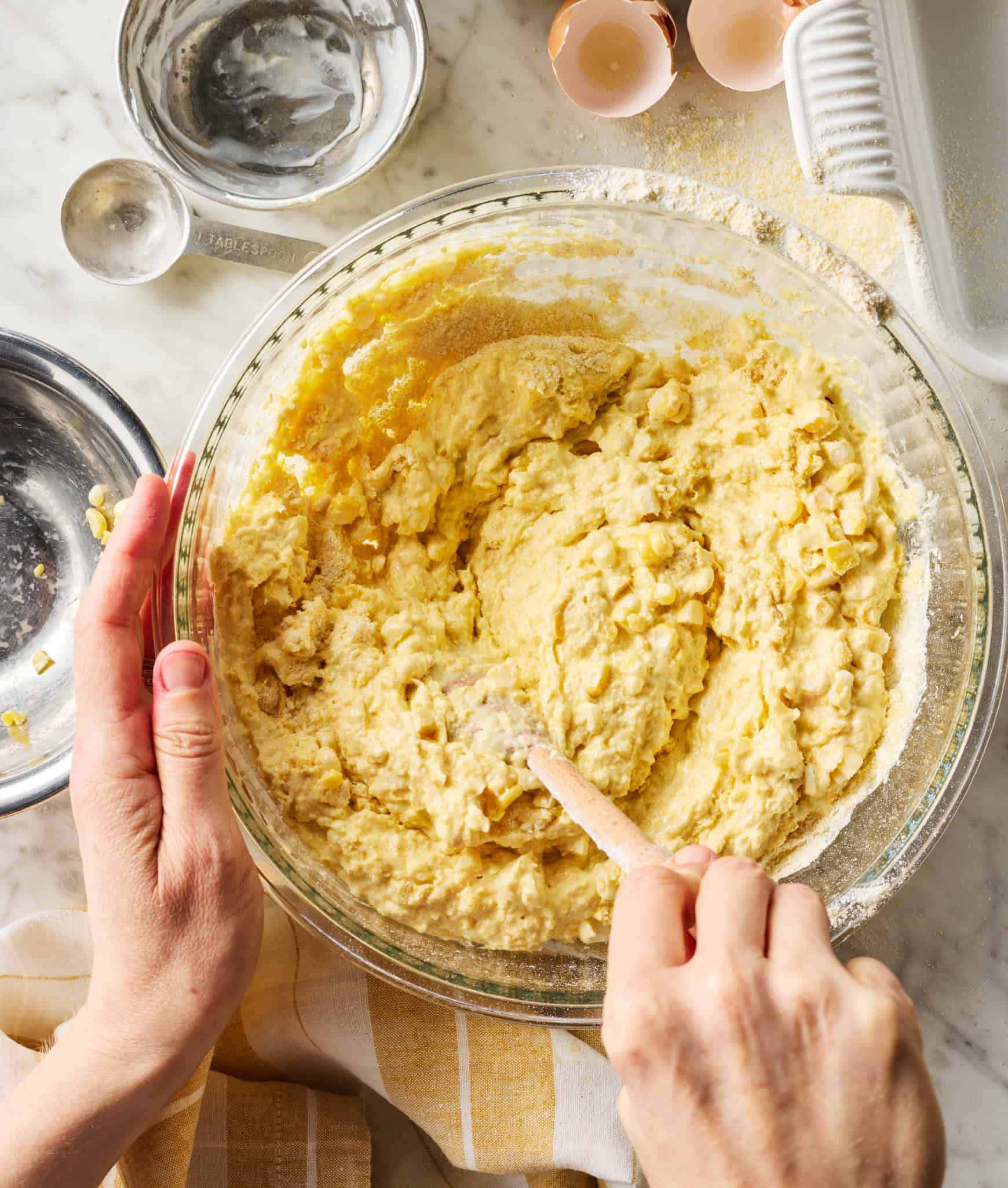
Gently fold the dry ingredients into the wet mixture using a spatula. Mix only until the flour pockets disappear; over-mixing will develop the gluten and result in a tough, rubbery texture. Much like preparing pancake batter, a few minor lumps are entirely acceptable. Finally, gently fold in your reserved whole corn kernels.
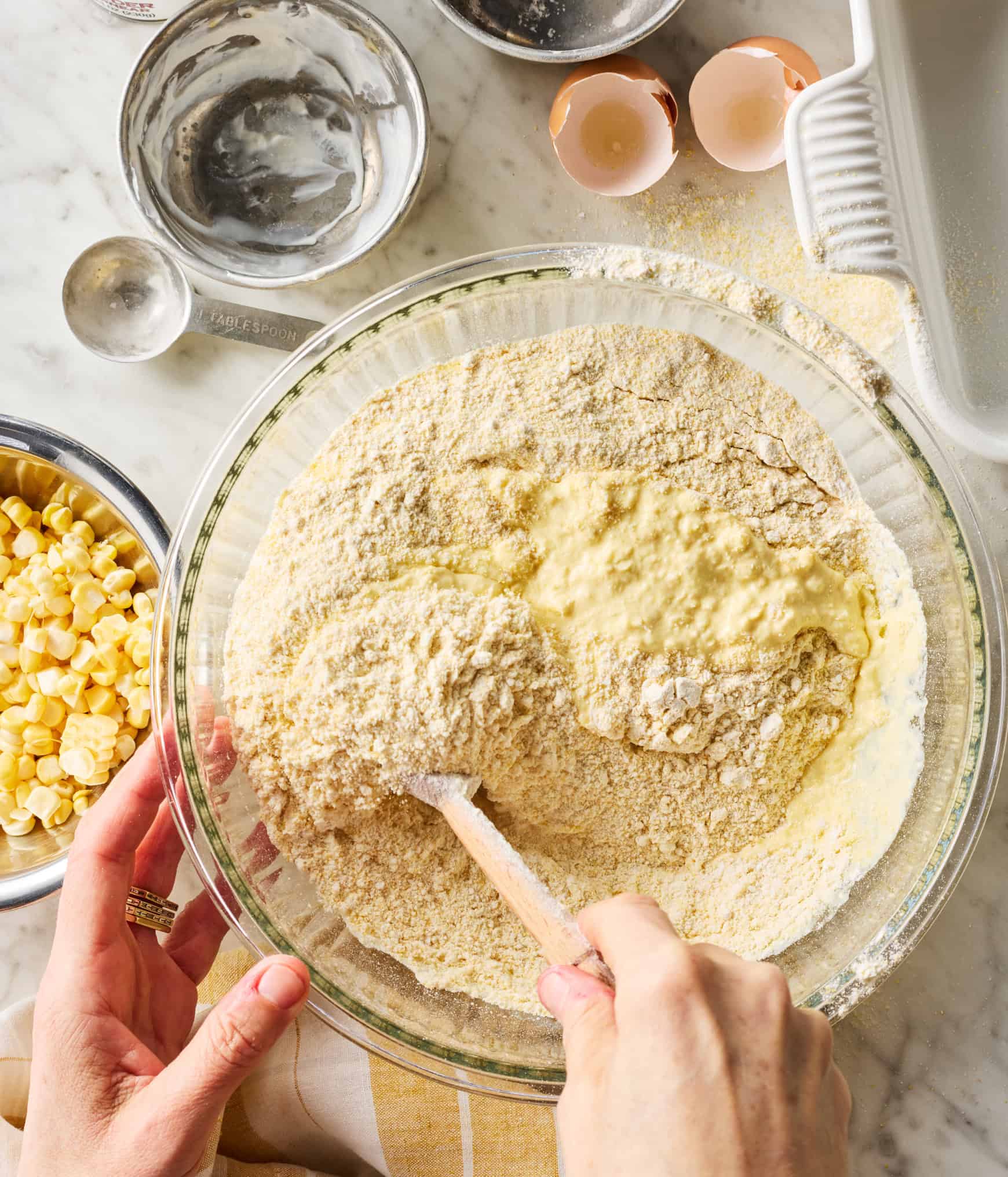
Phase 5: Pan Preparation and Baking (Minutes 12–60)
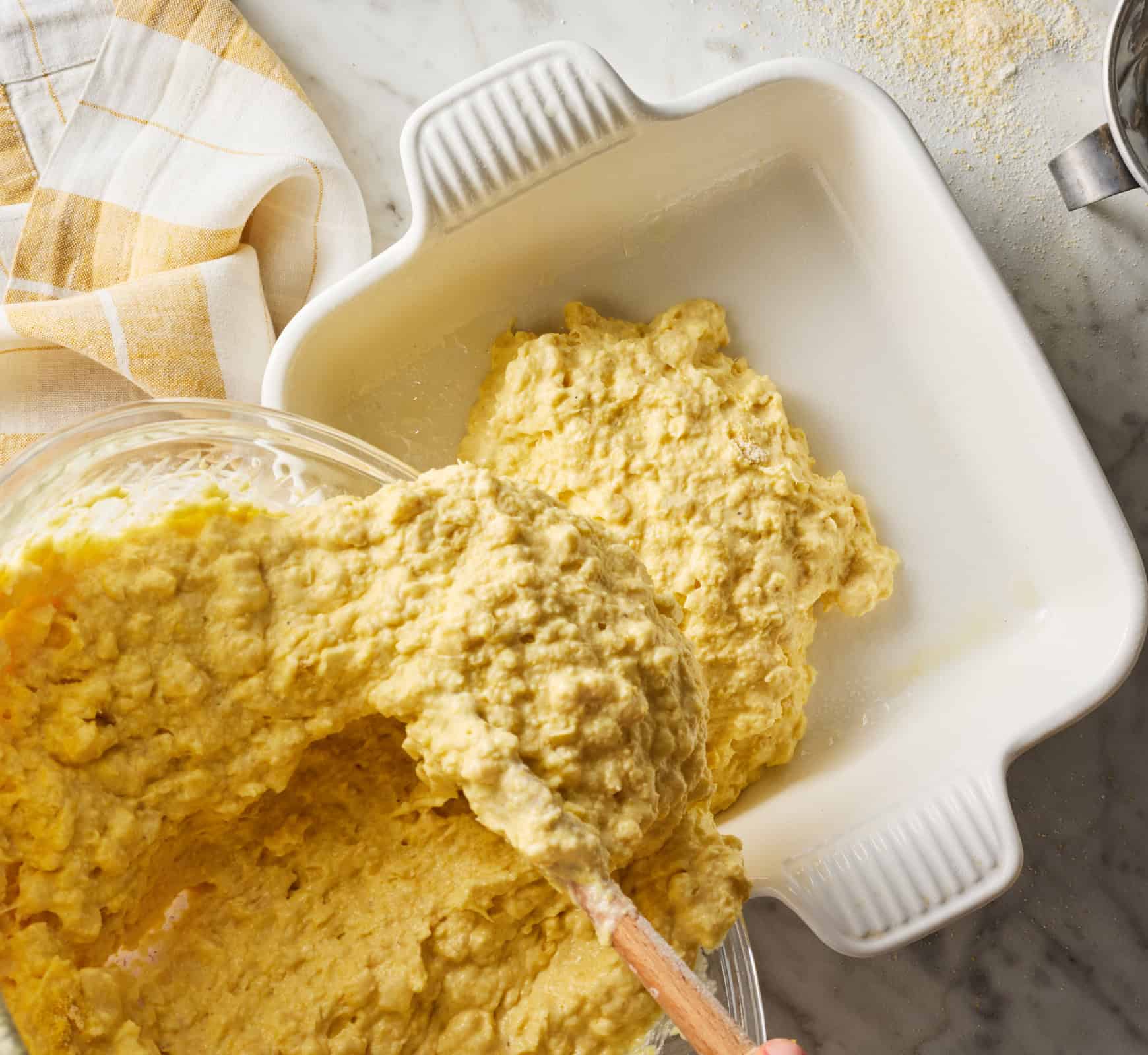
Grease a standard 9×9-inch baking dish. (Pro tip: You can easily grease the pan using a small amount of the melted butter before mixing it into the wet ingredients). Pour the thick batter into the dish, smoothing the top with a spatula to ensure even baking.
Place the dish into a preheated oven at 350°F (175°C). Bake for 45 to 50 minutes. You will know the casserole is ready when the outer edges turn a deep, caramelized golden brown and the center remains slightly soft and jiggly.
Phase 6: Resting and Serving (Minutes 60–70)
Remove the casserole from the oven and allow it to rest undisturbed for 10 minutes. This critical cooling period allows the starches and dairy proteins to set, transforming a loose pudding into sliceable, spoonable squares.
Supporting Data & Adaptability: Fresh, Frozen, or Canned?
While early autumn is the optimal window for utilizing crisp, sweet ears of fresh summer corn cut straight from the cob, modern culinary tests confirm that the recipe is remarkably forgiving.
Seasonal Adjustments
- Fresh Corn: Yields the brightest flavor profile, crispest kernels, and purest natural sweetness. Ideal for late summer and early fall harvests.
- Frozen Corn: A phenomenal year-round alternative. Thaw and thoroughly pat dry with paper towels to prevent excess moisture from diluting the batter.
- Canned Corn: If using canned whole-kernel corn, drain thoroughly. If substituting canned cream-style corn entirely, simply omit the food processor step and reduce the added dairy slightly to balance the liquid ratios.
- The "Jiffy" Shortcut: Cooks pressed for time can substitute the homemade flour-cornmeal-sugar-baking powder dry blend with a standard 8.5-ounce box of commercial corn muffin mix, adjusting liquid levels accordingly.
Official Responses & Culinary Insights
Culinary experts and home economists frequently highlight corn casserole as one of the most reliable, foolproof dishes in American home cooking. Food scientists note that the high fat content from the butter and sour cream, paired with the structural integrity of eggs and cornmeal, creates a stable emulsion that resists burning or curdling during prolonged baking times.
Furthermore, nutritionists point out that incorporating whole corn kernels provides a respectable amount of dietary fiber (3 grams per serving), making it a relatively wholesome indulgence compared to heavily refined holiday side dishes laden with processed cheeses and heavy syrups.
Implications: Make-Ahead Logistics, Storage, and Holiday Planning
One of the primary reasons corn casserole remains a Thanksgiving and holiday favorite is its exceptional adaptability to advance meal prep. Home cooks face immense scheduling pressure during major holidays, making make-ahead dishes invaluable.
Make-Ahead Instructions
- Fully Bake and Store: You can completely bake the casserole up to 2 days in advance.
- Cool and Cover: Allow the dish to cool entirely to room temperature, then wrap tightly in plastic wrap or foil and store in the refrigerator.
- Reheat: Prior to serving, remove the plastic wrap, cover the dish securely with foil to prevent drying out, and warm in a 300°F oven for 10 to 20 minutes until heated completely through.
Freezing Guidelines
For long-term storage, corn casserole freezes remarkably well.
- Freezer Prep: Wrap the cooled, baked casserole tightly in heavy-duty aluminum foil or transfer individual portions to airtight freezer-safe containers.
- Duration: It can be safely stored in the freezer for up to 3 months.
- Thawing and Reheating: Transfer the frozen casserole to the refrigerator and allow it to thaw overnight. Reheat in a 325°F oven until warmed to the center, or microwave individual slices on medium power.
As home cooking continues to prioritize comforting, customizable, and stress-free recipes, the elevated scratch-made corn casserole stands out as a timeless triumph—bridging the gap between nostalgic comfort food and thoughtful, modern culinary execution.