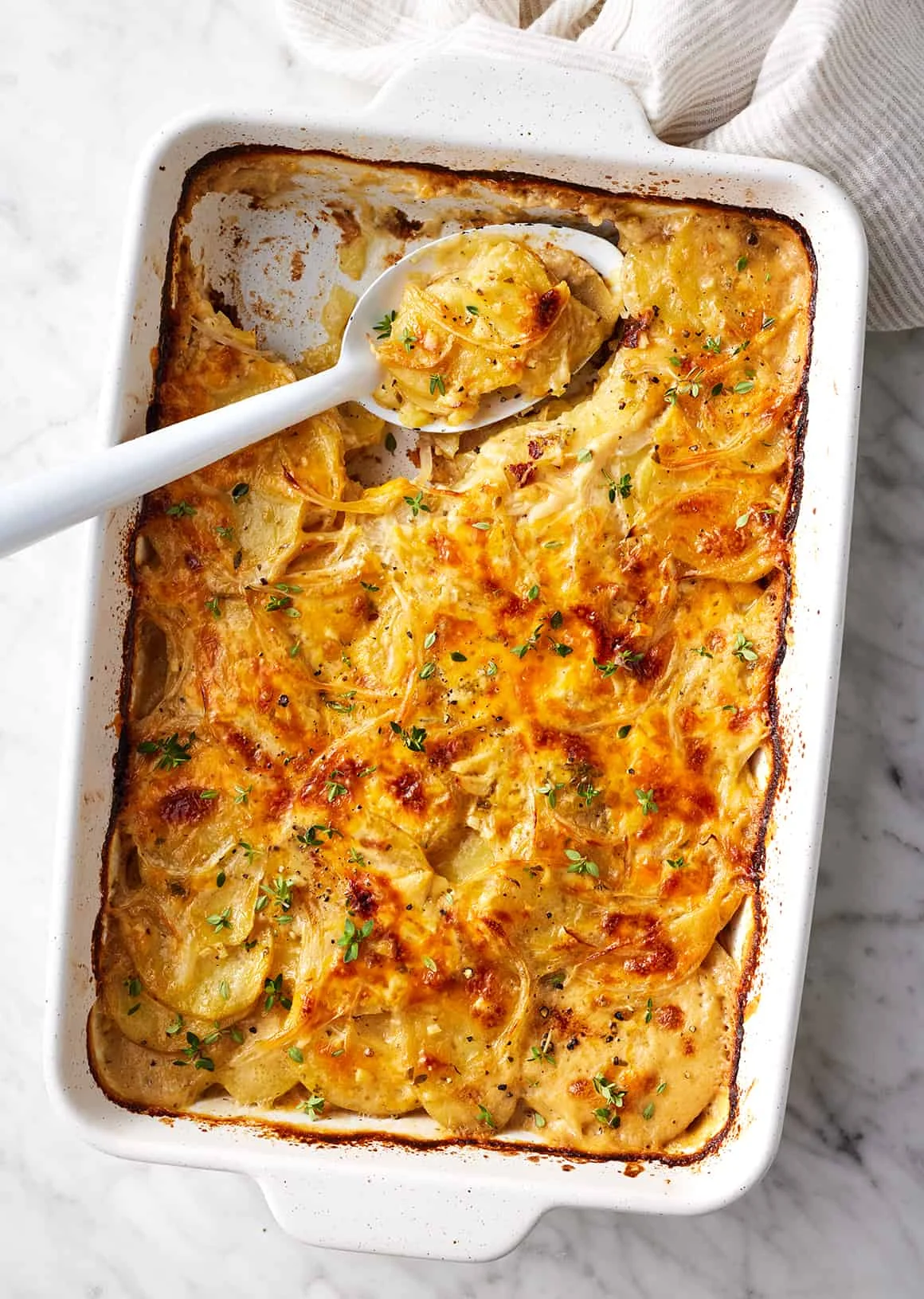
In the pantheon of comfort food, few dishes command as much reverence as the classic scalloped potato. It is a dish defined by its simplicity—tender, thinly sliced potatoes bathed in a rich, velvety sauce—yet it possesses an architectural elegance that makes it a perennial star of holiday spreads. Whether gracing the table at Easter, anchoring a Thanksgiving feast, or serving as the centerpiece of a cozy Christmas dinner, this recipe has evolved into a quintessential symbol of home-cooked hospitality.
With over 150 five-star reviews from a devoted readership, this specific interpretation of the classic dish has been meticulously refined to balance nostalgic flavor with modern culinary precision. By incorporating aromatic onions, fresh garden thyme, and a sharp, melty cheddar cheese, this recipe elevates the humble potato into a show-stopping side dish that transcends its modest roots.
The Core Fundamentals: Anatomy of a Classic
At its heart, this recipe relies on the interaction of starch, fat, and heat. The choice of potato is paramount; using a reliable variety like Yukon Gold ensures a buttery, consistent texture that holds its shape under the weight of the sauce without becoming overly starchy.
The Debate: Scalloped Potatoes vs. Potatoes Au Gratin
A frequent point of contention among culinary historians and home cooks alike is the distinction between "scalloped" and "au gratin." Strictly speaking, traditional scalloped potatoes were historically defined by their preparation in a milk or cream-based sauce, devoid of cheese. The term "au gratin," conversely, refers to the French technique of topping a dish with cheese or breadcrumbs and browning it in the oven.

However, in the evolution of American comfort food, these definitions have blurred. For many, the "scalloped potatoes" of their childhood were always synonymous with a layer of gooey, golden cheese. This recipe embraces that evolution, offering the best of both worlds: the creamy, slow-cooked tenderness of a scalloped potato combined with the savory, sharp crust of a classic gratin.
Chronology: From Prep to Perfection
The success of this dish lies in its methodical preparation. While it is undeniably comforting, achieving the perfect texture requires attention to detail, specifically in the uniformity of the cuts and the patience shown during the sauce-making process.

Phase 1: The Precision Slice
The journey begins with the knife work. To ensure that every layer cooks evenly, the potatoes must be sliced to a consistent 1/8-inch thickness. While a mandoline slicer is a popular tool for this task, traditionalists often prefer a sharp chef’s knife, which allows for greater control. Consistency here is not merely aesthetic; it is structural. If slices vary too wildly in thickness, the dish will suffer from uneven tenderness, with some pieces turning to mush while others remain unpleasantly firm.
Phase 2: The Roux and the Sauce
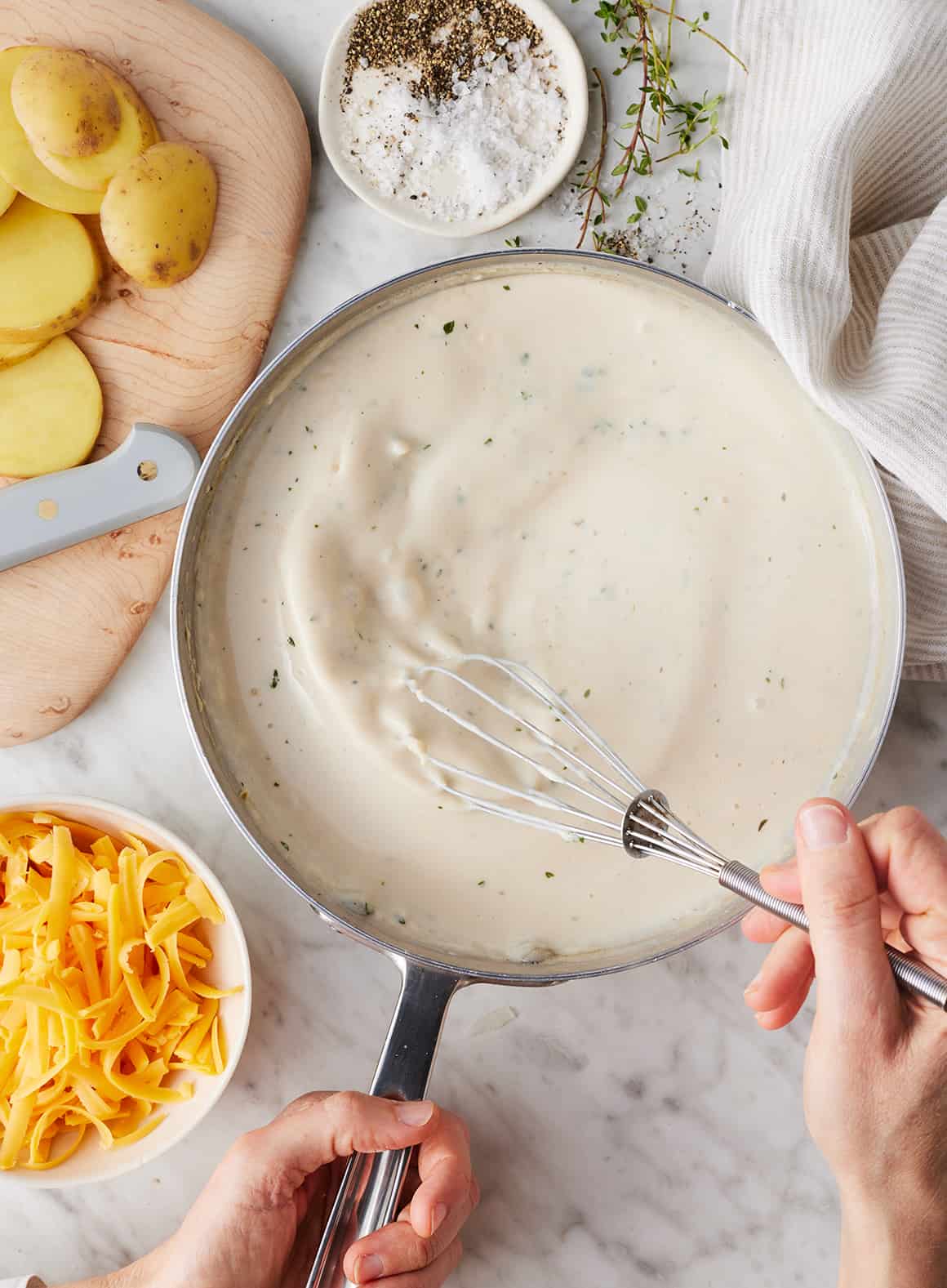
The soul of the dish is the béchamel-style sauce. The process begins with a classic roux—melting butter and whisking in flour to create a thickening base. The introduction of milk and vegetable broth, added slowly while whisking, creates a smooth, emulsified liquid. The addition of fresh garlic and thyme provides the savory aromatics that cut through the richness of the dairy. It is crucial to monitor the heat carefully; the sauce should never reach a rolling boil, which could cause it to split, resulting in a grainy texture.
Phase 3: The Assembly and The Bake
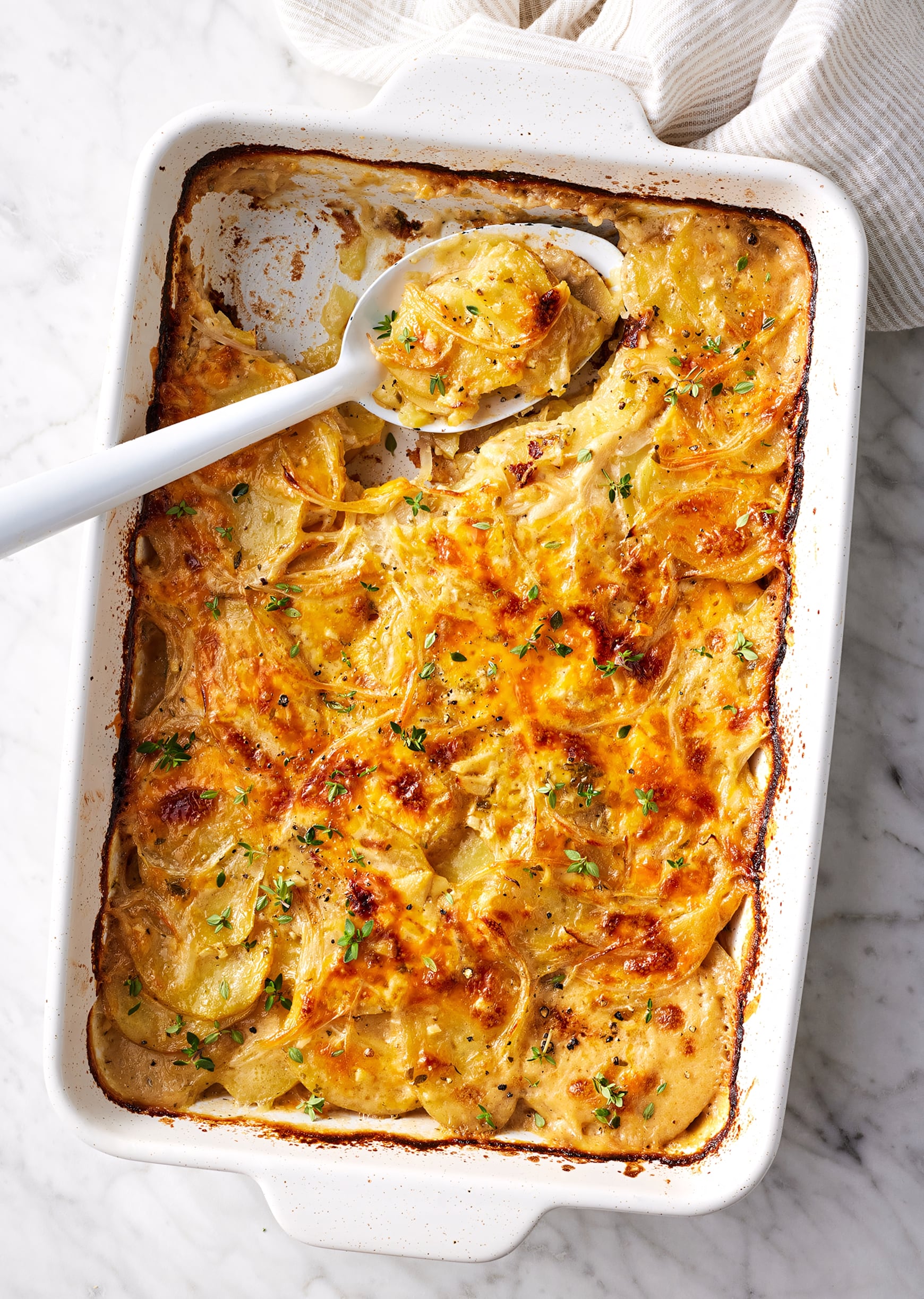
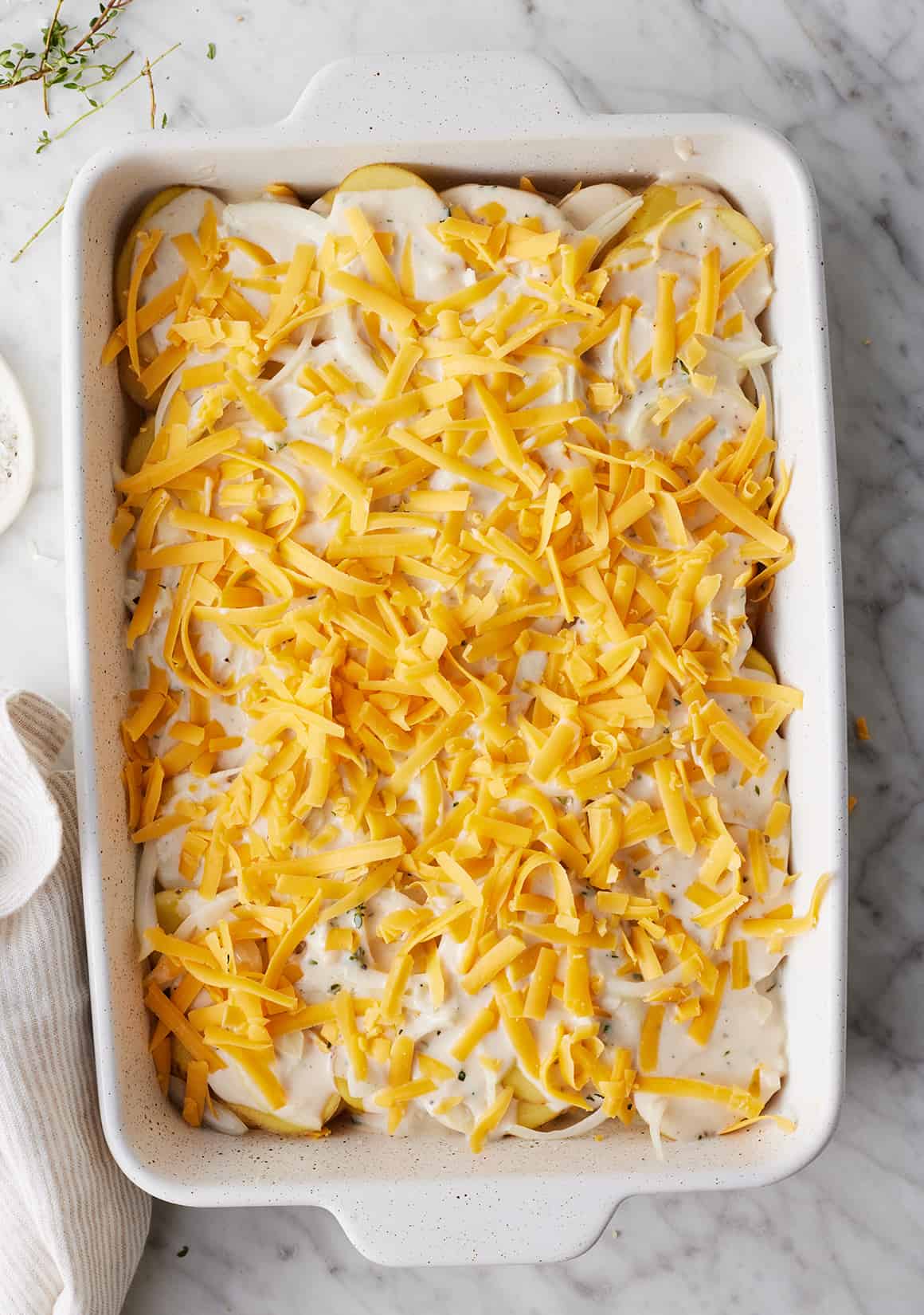
Layering is an art form. By distributing the potatoes and onions in distinct stages—interspersed with generous handfuls of cheddar cheese—the flavor profile becomes integrated throughout the dish. The initial bake, covered with aluminum foil, serves to steam the potatoes in the liquid, ensuring they become fork-tender. The final uncovered phase is where the magic happens: the cheese undergoes a Maillard reaction, turning golden, bubbly, and fragrant.
Supporting Data: Why This Recipe Succeeds
The enduring popularity of this dish is backed by its nutritional balance and its structural integrity. While often categorized as a "decadent" side, a single serving remains approachable, coming in at approximately 209 calories.

Nutritional Profile (Per Serving)
- Calories: 209
- Total Fat: 9g (14% DV)
- Sodium: 581mg (25% DV)
- Carbohydrates: 25g (8% DV)
- Protein: 7g (14% DV)
- Key Micronutrients: 29% DV Vitamin C, 17% DV Calcium, 16% DV Potassium
These figures confirm that while the dish is rich, it provides significant nutritional value, particularly in potassium and Vitamin C, inherent to the potato itself. The use of whole ingredients—real butter, fresh herbs, and quality cheddar—ensures that the satiety factor is high, making it a satisfying component of a balanced meal.
Expert Perspectives: The Make-Ahead Advantage
One of the most common questions regarding this dish is its viability as a "prepare-ahead" component for busy holiday schedules. Culinary experts and seasoned home cooks agree: scalloped potatoes are a rare example of a dish that can actually improve with time.

When prepared a day in advance, the starches in the potatoes have time to absorb the flavors of the thyme, garlic, and cream, resulting in a more cohesive dish. To execute this, simply bake the potatoes until they are mostly tender, allow them to cool completely, and refrigerate. When the time comes to serve, a short stint in a 350°F oven will restore the golden crust and ensure the center is perfectly heated. This "rest period" also allows the sauce to thicken further, providing a superior mouthfeel upon reheating.
Implications for Modern Entertaining
In an era where convenience often overrides quality, the resurgence of interest in scratch-made scalloped potatoes signifies a broader shift in home entertaining. There is a psychological comfort in the "slow food" nature of this dish. It requires the host to stand at the stove, to monitor the oven, and to wait for the crucial 20-minute standing period before serving.
The Social Value of the Casserole
The scalloped potato is, by nature, a communal dish. It is rarely cooked for one; it is a dish designed for the 9×13-inch pan, intended to be shared among family and friends. Its presence on a table signals a celebration of tradition.
As we look at the evolution of modern dining, the "show-stopping" nature of this side dish serves a vital role: it bridges the gap between the formal requirements of a holiday meal and the informal, hearty nature of comfort food. It remains a staple because it is forgiving, highly customizable—substitutions such as Gruyère or leeks are common variations—and undeniably delicious.

A Legacy Dish
Whether you are a novice cook looking to impress at your first solo holiday gathering or a seasoned veteran of the kitchen, this recipe offers a reliable framework. It proves that with the right technique—careful slicing, a patient roux, and the right bake time—one can create a dish that is not only a highlight of the dinner but a memory in the making. As evidenced by its widespread acclaim, the scalloped potato is not merely a side dish; it is a testament to the enduring power of simple, well-executed comfort.