Introduction: Beyond the Brisket Kingdom
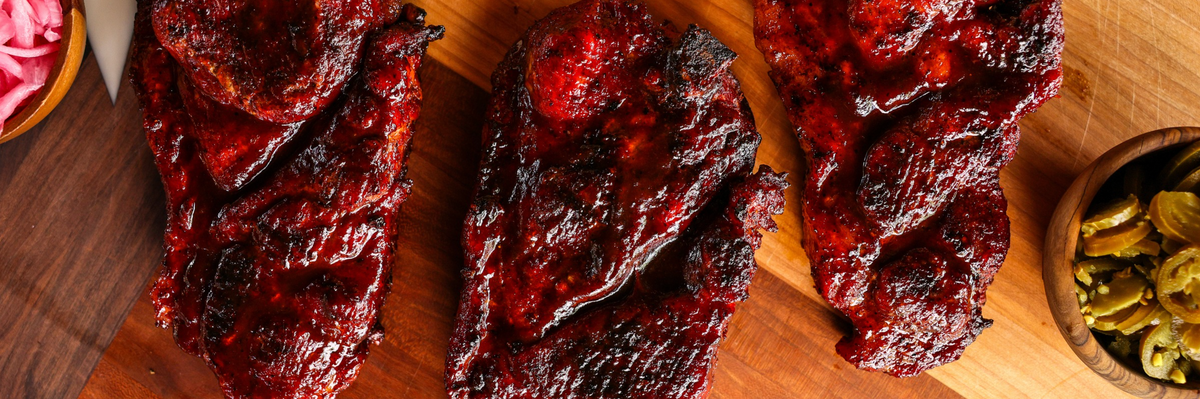
While beef brisket undeniably wears the crown as the undisputed king of Texas barbecue, a rich, smoky, and deeply nostalgic underdog has been quietly stealing the spotlight across the Lone Star State’s backyard pits and legendary smokehouses. Enter the Texas BBQ pork steak: a thick-cut, bone-in masterpiece carved straight from the pork shoulder (Boston butt), slow-smoked and fire-kissed until it achieves a state of transcendent tenderness.
Though pork steaks are historically associated with the industrial grit of St. Louis backyard culture, the Texas iteration—championed fiercely by culinary royalty like legendary pitmaster Tootsie Tomanetz at Snow’s BBQ—carries a distinct southwestern soul. These are not your average weeknight pork chops. Measuring a whopping 1.5 to 2 inches thick, laden with richly marbled fat, and cooked low and slow over live fire, Texas pork steaks offer a masterclass in regional barbecue craftsmanship.
In this comprehensive guide, we break down the history, anatomy, preparation, and step-by-step smoking methodology of this barbecue delicacy, drawing inspiration from top-tier pitmasters and outdoor cooking authorities like Meat Church.
Main Facts: Anatomy and Heritage of the Texas Pork Steak
To understand why the pork steak is gaining rapid momentum among modern pitmasters, one must first examine its anatomy.
The Cut: Why the Boston Butt Rules
Unlike a standard loin chop, which is lean and prone to drying out under high heat, the pork steak is sliced directly from the pork shoulder, specifically the Boston butt. This primal cut contains a complex network of hardworking muscles, connective tissue, and intermuscular fat.
When preparing traditional Texas pork steaks, butchers slice the shoulder perpendicular to the bone, yielding thick 1.5- to 2-inch slabs. This precise cutting angle ensures that every single steak contains a generous portion of the prized "money muscle"—the ultra-tender, cylindrical muscle group (the pork coxcomb or strip loin) known for melting in your mouth.

Flavor Profiles and Cooking Dynamics
Because the Boston butt is naturally fatty, it acts as a sponge for wood smoke and dry rubs. As the steak cooks slowly over live coals, the internal fat renders out, basting the meat from the inside out. This creates a deeply savory interior contrasted by a dark, caramelized bark on the outside.
Unlike brisket, which demands a grueling 12-to-16-hour commitment, pork steaks bridge the gap between quick-cooking steaks and all-day barbecue, making them an accessible yet profoundly rewarding project for weekend pitmasters.
Chronology: The Evolution of Live-Fire Pork Steaks
While live-fire cooking has been a cornerstone of Texas culture for over a century, the mainstream elevation of the thick-cut pork shoulder steak has a distinct timeline rooted in rural smokehouse traditions and modern digital barbecue media.

The Roots of Rural Texas Pit Culture
In the early days of central Texas meat markets, whole-hog and shoulder cooking were practical methods for utilizing every part of the animal. Pitmasters realized that slicing a shoulder into steaks allowed the heat to penetrate the dense meat faster than a whole roast while maintaining the moisture retention characteristic of bone-in cuts. Over decades, rural legends like Tootsie Tomanetz popularized these cuts at establishments like Snow’s BBQ in Lexington, Texas, serving them to lines of eager patrons looking for something beyond beef.
The Modern Craft Barbecue Renaissance
In recent years, outdoor cooking influencers and brands like Meat Church have democratized these regional secrets. By demonstrating how to utilize specialized equipment—such as whole-hog cookers and premium lump charcoal—pitmasters have brought the backyard Texas pork steak into homes nationwide. Through instructional video content and step-by-step digital recipes, the pork steak has evolved from an obscure regional secret into a viral sensation embraced by competitive circuit cooks and backyard enthusiasts alike.
Supporting Data & Equipment Specifications
Executing an authentic Texas pork steak requires more than just meat and fire; it demands precise temperature management and deliberate equipment choices. Below is the technical breakdown required to replicate this cook.

Equipment Checklist
- The Pit: A whole-hog cooker, offset smoker, or heavy-duty charcoal grill capable of maintaining indirect or offset-style heat zones.
- Fuel: Premium lump charcoal (such as Meat Church lump charcoal) to provide a clean, steady, wood-fire flavor without chemical additives.
- Cutting Tools: A long, ultra-sharp butcher’s knife for slicing through the soft tissue, paired with an electric hand saw to cut cleanly through the dense shoulder bone.
- Seasoning & Finishing Agents: An all-purpose Texas-style BBQ rub (such as The Gospel) and a sticky finishing glaze or mop sauce (such as Meat Church Holy Cola).
Environmental and Thermal Metrics
- Cooking Temperature: 275°F (135°C) chamber temperature.
- Target Internal Temperature: 185°F (85°C). At this threshold, the collagen has broken down sufficiently to yield a tender bite while retaining sliceability.
- Total Cook Time: Approximately 2.5 to 3 hours, depending on thickness and pit fluctuations.
- Resting Period: 15 to 20 minutes before slicing and serving.
Official Recommendations: Step-by-Step Preparation Guide
For those looking to bring authentic Texas flavor to their patio, follow this professional blueprint adapted from leading pitmasters.
Step 1: Preparing the Cooker
Begin by lighting your pit and allowing it to stabilize at a steady 275°F. When utilizing a whole-hog cooker or barrel grill, arrange your charcoal—such as premium lump hardwood charcoal—to create a direct fire source that sits far enough below the cooking grate to prevent direct, scorching flames from touching the meat. The goal is radiant, convective heat infused with clean smoke.
Step 2: Prepping and Cutting the Steaks
Take a whole, bone-in pork shoulder (Boston butt) and position it on a clean cutting board.

- Using a sharp butcher’s knife, slice downward perpendicular to the money muscle, measuring roughly 1.5 to 2 inches per steak.
- When your knife blade hits the shoulder bone, switch to an electric hand saw to make a clean cut through the bone without shredding the surrounding meat.
- Repeat this process to yield as many thick-cut steaks as needed.
Step 3: Seasoning
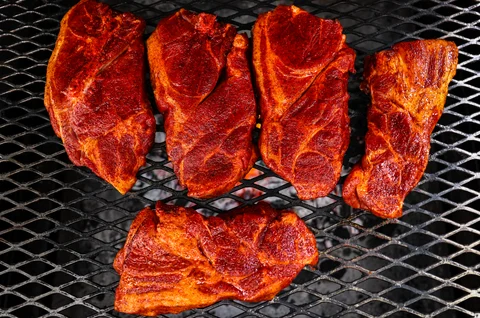
Generously apply an all-purpose Texas barbecue rub (such as The Gospel) to all sides of each pork steak. Ensure complete coverage along the edges and fat caps. Pro Tip: Let the seasoned steaks rest at room temperature for roughly 15 minutes. This allows the salt in the rub to draw out a small amount of surface moisture and dissolve into the meat, creating a secure bond for the smoke and spices (known as osmosis).
Step 4: The Smoking Process
Place the thick pork steaks directly onto the cooking grate over your preheated pit. Maintain a consistent chamber temperature of 275°F.
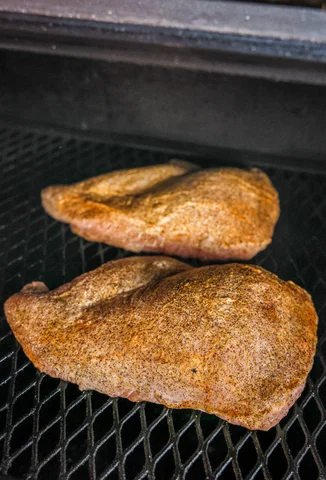
- Let the steaks smoke undisturbed for the first 1.5 hours to build a rich mahogany color and a solid bark.
- Carefully flip each steak halfway through the cooking process to ensure even rendering and heat distribution.
Step 5: Glazing and Finishing
Approximately 1.5 hours into the cook, take a basting brush and coat both sides of the pork steaks generously with a sweet, acidic finishing sauce straight from the bottle (such as Meat Church Holy Cola). The sugars in the cola-based sauce will interact with the smoke and existing rub to create a sticky, caramelized lacquer.

- Let the sauce "tack up" and set for roughly 30 minutes.
- Monitor the internal temperature using a digital probe thermometer. Once the steaks reach an internal temperature of 185°F, remove them from the pit.
Step 6: Rest, Slice, and Serve
Transfer the pork steaks to a cutting board or warming tray and let them rest for 15 minutes. This allows the muscle fibers to relax and the juices to redistribute evenly throughout the thick cut. Slice into individual portions, serve alongside traditional sides like pickled onions, jalapeños, and potato salad, and enjoy a true taste of Texas tradition.
Implications: The Cultural and Culinary Future of Pork Steaks
The resurgence and modernization of the Texas pork steak carry significant implications for both home cooks and the broader culinary landscape.
Economic and Sustainability Benefits
In an era where premium beef cuts—particularly prime briskets and ribeyes—face fluctuating market prices and rising costs, the pork shoulder remains an exceptionally economical protein. By transforming an affordable, undervalued cut into a gourmet centerpiece, pitmasters demonstrate how traditional barbecue wisdom maximizes value without sacrificing flavor or quality.

Bridging Regional Barbecue Divides
For decades, American barbecue has been rigidly compartmentalized: brisket and beef ribs in Texas, pork shoulder and whole hog in the Carolinas, and pork steaks strictly in the Midwest. The modern cross-pollination of regional techniques—applying central Texas live-fire methodology and gourmet rubs to Midwestern-style pork cuts—creates a unified American barbecue culture where boundaries blur in favor of pure culinary excellence.
Conclusion
The Texas BBQ pork steak is far more than a trend; it is a celebration of fire, smoke, and patience. By mastering the delicate balance between thick-cut meat, clean hardwood smoke, and a sticky, caramelized finish, backyard chefs can elevate their culinary repertoire and bring a legendary piece of Lone Star history straight to their dinner tables.