In the fast-paced landscape of modern home cooking, the challenge remains consistent: how to deliver a meal that rivals the quality of a local takeout spot while maintaining the nutritional integrity and time-efficiency required by a busy lifestyle. Enter the classic combination of shrimp and broccoli. While it may seem like a humble staple, achieving the elusive "tender-crisp" vegetable texture and succulent, perfectly cooked shellfish is an art form that many home cooks find elusive.
Cookbook author Erin Clarke, the visionary behind Well Plated, has recently spotlighted this dish as the ultimate solution for 30-minute weeknight dining. By focusing on precision in heat management and aromatics, this recipe elevates a simple stir-fry into a sophisticated, flavor-forward culinary experience.

Main Facts: The Anatomy of a Superior Stir-Fry
At its core, a successful shrimp and broccoli stir-fry is a lesson in thermodynamics. The primary obstacle for the home cook is the disparity in cooking times between the two main ingredients. Shrimp are delicate, prone to becoming rubbery if subjected to even a minute of excess heat, while broccoli requires enough time to soften its fibrous structure without losing its vibrant green hue or structural integrity.
The "Well Plated" methodology solves this by decoupling the cooking processes. Instead of crowding the wok or skillet with both ingredients simultaneously—a common mistake that leads to uneven cooking—the shrimp are seared first to develop a golden, opaque exterior. They are then removed from the heat, allowing the broccoli to take center stage.

The dish is anchored by a potent garlic-ginger sauce. Unlike heavy, sugar-laden takeout sauces, this version relies on a balance of savory depth and aromatic brightness. When finished, the sauce is reduced until it reaches a glossy consistency that clings to the ingredients, ensuring that every bite is as flavorful as the first.
Chronology: A Step-by-Step Culinary Workflow
To achieve restaurant-quality results in under half an hour, organization is paramount. The following workflow outlines the professional approach to executing this dish.

Phase 1: Preparation and Mise en Place
Before the stove is turned on, every ingredient must be prepped. The sauce should be whisked in a separate vessel and placed within arm’s reach. This preparation ensures that the high-heat cooking phase is not interrupted by searching for ingredients, which prevents the burning of aromatics.
Phase 2: Searing the Protein
The skillet or wok must be brought to medium-high heat with a high-smoke-point oil, such as canola. The shrimp should be arranged in a single, non-overlapping layer. This promotes a proper sear rather than a steam. Once the shrimp begin to curl into a "C" shape—the universal sign of perfect doneness—they are promptly removed from the pan.

Phase 3: The Broccoli Transformation
Using the same pan captures the residual flavor of the shrimp. The broccoli is added to the hot oil and left undisturbed for roughly two minutes. This technique, known as browning, provides a nutty depth of flavor that steaming alone cannot achieve. After the initial sear, a small amount of water is added to the pan, which is then covered to steam the florets. This creates a tender-crisp texture that is the hallmark of professional stir-fry.
Phase 4: Aromatic Infusion
With the broccoli cooked, the heat is lowered slightly to introduce the garlic, ginger, and the white/light green parts of green onions. It is crucial to move quickly here; the goal is to release the essential oils of the aromatics without allowing the garlic to darken, as burnt garlic turns acrid and bitter.

Phase 5: Emulsification and Service
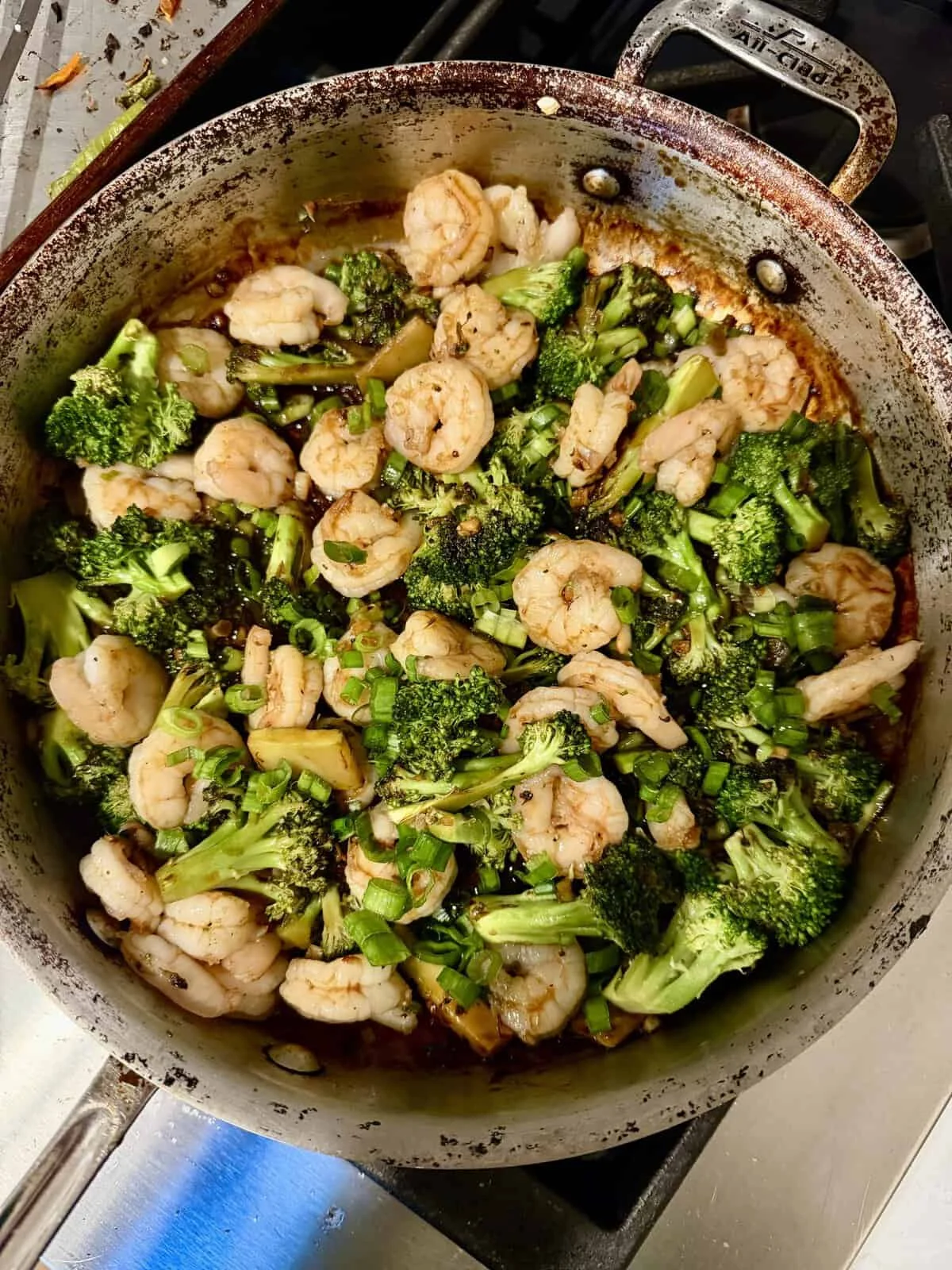
Finally, the sauce is introduced to the pan, followed immediately by the cooked shrimp. As the sauce bubbles and reduces, it thickens, coating the ingredients in a glossy glaze. The final touch is the addition of the dark green onion tops, which provide a fresh, sharp contrast to the savory sauce.
Supporting Data: Nutritional and Practical Insights
For those balancing health-conscious eating with the demands of a busy household, this recipe provides a robust nutritional profile. A single serving contains approximately 35 grams of protein, making it an excellent post-workout or muscle-recovery meal.

Nutritional Snapshot (Per Serving)
- Calories: 469 kcal
- Protein: 35g
- Fiber: 11g
- Sodium: 2,112mg (Note: This can be adjusted by using low-sodium soy sauce or reducing the total salt addition).
- Vitamin C: 366mg (Providing a significant boost to immune health).
The recipe’s efficiency is further bolstered by its flexibility. For households with "big eaters," scaling the protein to 1.5 pounds of shrimp is a simple, effective adjustment. Furthermore, the sweetness level of the sauce is highly customizable. While the base recipe favors a savory profile, increasing the honey content to three tablespoons can cater to those who prefer a more traditional, sweet-and-savory takeout flavor profile.
Official Perspectives: The Philosophy of "Well Plated"
Erin Clarke’s approach to this recipe is rooted in her broader culinary philosophy: removing the friction from healthy cooking. Her testing notes reveal that this dish was inspired by her personal affinity for Beef and Broccoli. The transition to shrimp serves as a "lighter" alternative that retains the comforting, savory essence of the classic original.

Clarke emphasizes that the "snag" in cooking shrimp and broccoli together is a common point of failure for home cooks. By explicitly addressing the timing mismatch through the "remove-and-return" technique, she empowers the home cook to bypass the common pitfalls of overcooked seafood or raw, unpalatable vegetables. This attention to detail reflects her wider mission to help home cooks save time, reduce the number of dishes created during the process, and ultimately, feel more confident in their culinary output.
Implications: The Future of Weeknight Dining
The enduring popularity of the stir-fry method speaks to its versatility and efficiency. As the cost of dining out continues to rise and the desire for nutrient-dense, home-cooked meals grows, the importance of "restaurant-at-home" recipes becomes increasingly significant.

The implications of mastering a dish like this are twofold:
- Economic Efficiency: By replacing $20-plus takeout orders with high-quality, supermarket-sourced shrimp and fresh produce, families can significantly reduce their food expenditure without sacrificing the pleasure of a diverse, flavorful menu.
- Nutritional Agency: Cooking at home allows for the total control of ingredients. The ability to manage sodium levels, choose high-quality oils, and adjust sugar content is a vital tool for those managing chronic health conditions or simply aiming for a more balanced diet.
Furthermore, the rise of "30-minute meals" is not merely a trend; it is a necessary adaptation to the modern work-life balance. As more individuals seek to reclaim their evenings from the kitchen, techniques that prioritize "quick-cook" proteins and rapid-steaming vegetables will remain the gold standard.

By deconstructing the stir-fry, the home cook is no longer a passive consumer of restaurant food but an active participant in a centuries-old culinary tradition. Whether served over a bed of jasmine rice or enjoyed as a low-carb main, this shrimp and broccoli recipe stands as a testament to the fact that excellence in the kitchen is often found in the simplest, most thoughtfully executed steps.
As we look toward the future of home gastronomy, it is clear that the most successful recipes will be those that honor tradition while adapting to the realities of contemporary time constraints—a balance that this shrimp and broccoli stir-fry achieves with effortless grace.