Introduction: The Evolution of a Holiday Staple
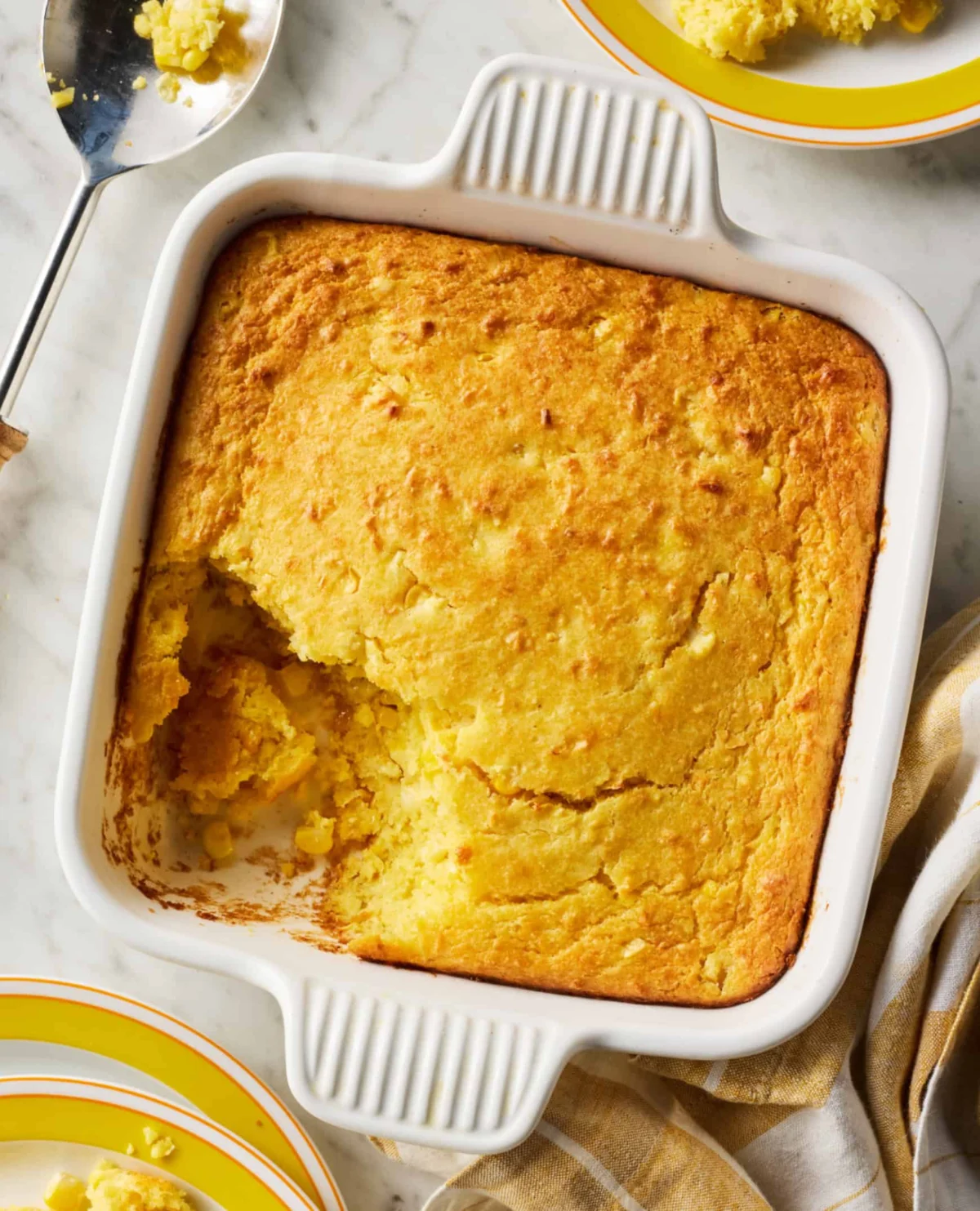
Few dishes evoke the cozy, rustic warmth of American home cooking quite like corn casserole. Often associated with the bustling kitchens of autumn holidays, family reunions, and Sunday suppers, the traditional casserole has long been a staple of comfort food culture. Traditionally, the dish’s heritage is deeply intertwined with convenience products—most notably, boxed Jiffy cornbread mix and canned creamed corn. While this classic iteration has earned its place in culinary history for its sheer simplicity and reliability, modern home cooks and culinary enthusiasts are increasingly seeking ways to elevate nostalgic favorites using fresh, wholesome, and scratch-made ingredients.
Recent culinary trends point toward a renaissance of comfort classics. Home cooks are no longer content with relying solely on processed shortcuts; instead, they are looking to capture the authentic, vibrant flavors of seasonal produce while maintaining the comforting textures that made the original dishes famous. Enter the elevated, from-scratch corn casserole: a dish that retains the golden-brown edges, rich buttery aroma, and spoonable, creamy center of the original, but replaces boxed mixes with a hand-blended base of flour, cornmeal, and baking powder, and substitutes canned additives with fresh corn kernels.
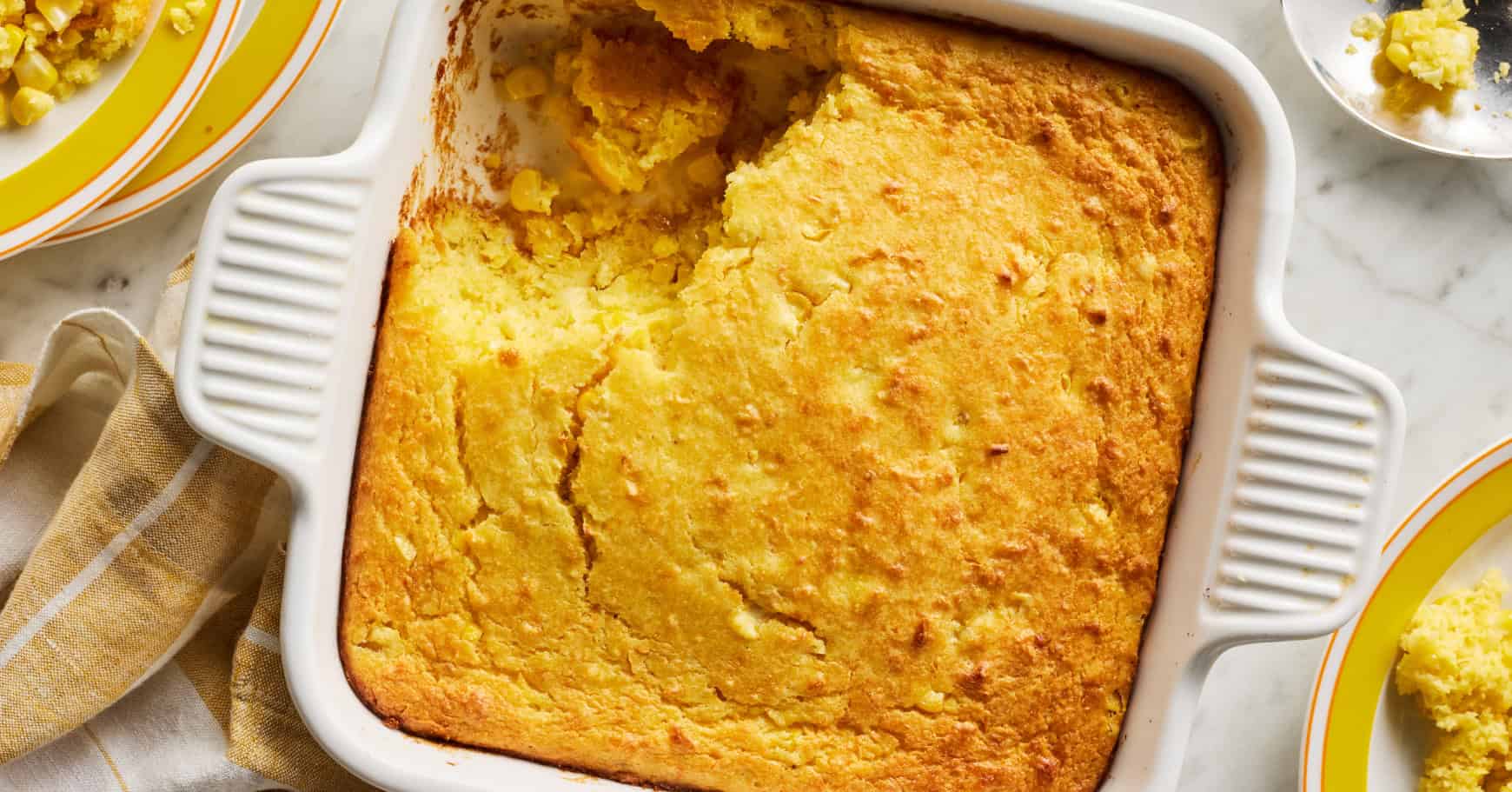
This comprehensive report examines the anatomy of this reimagined comfort food, tracing its preparation chronology, analyzing its nutritional profile, exploring its versatility through ingredient substitutions, and assessing its broader implications for modern holiday entertaining and everyday cooking.
Main Facts: What Defines the Modern Corn Casserole?
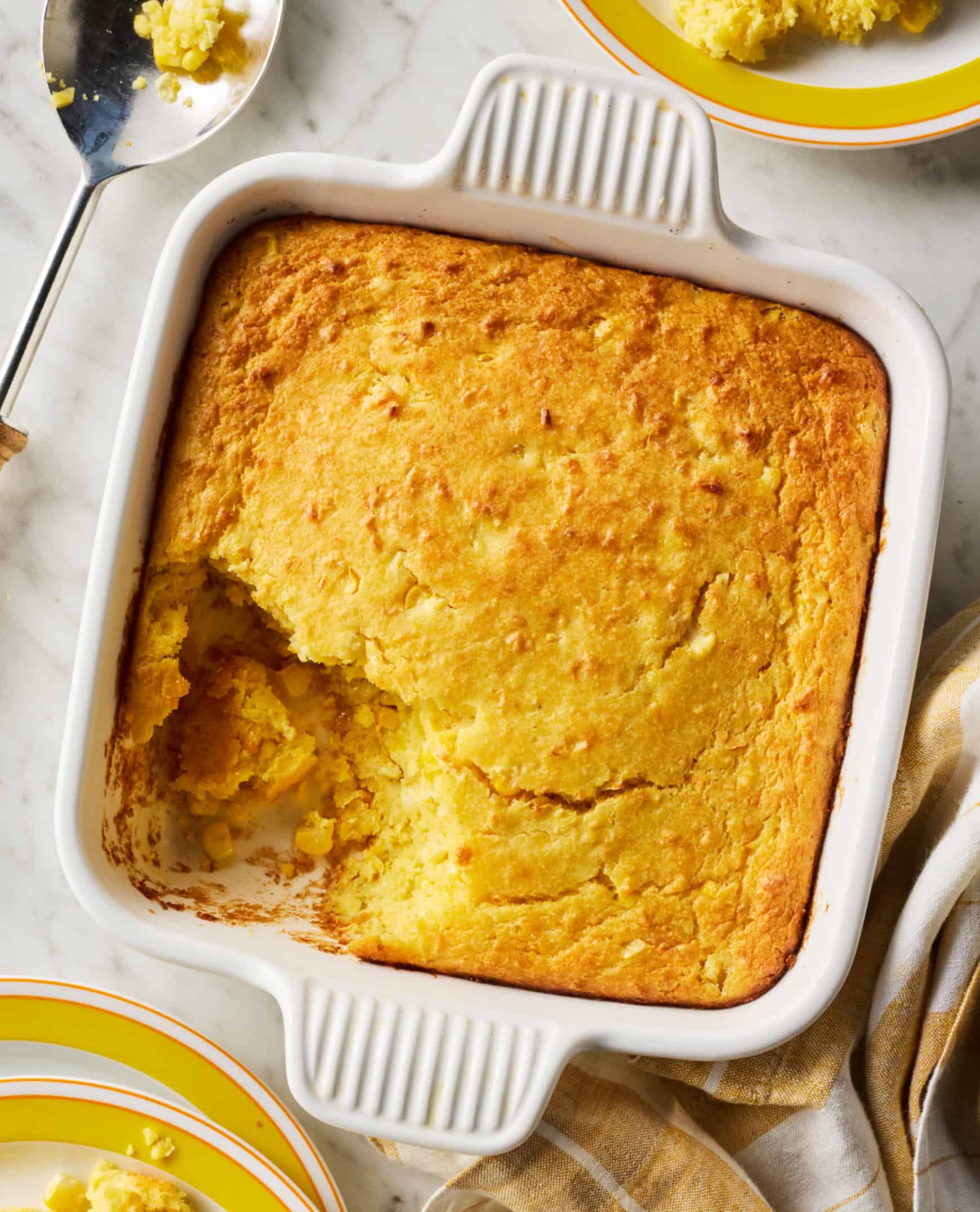
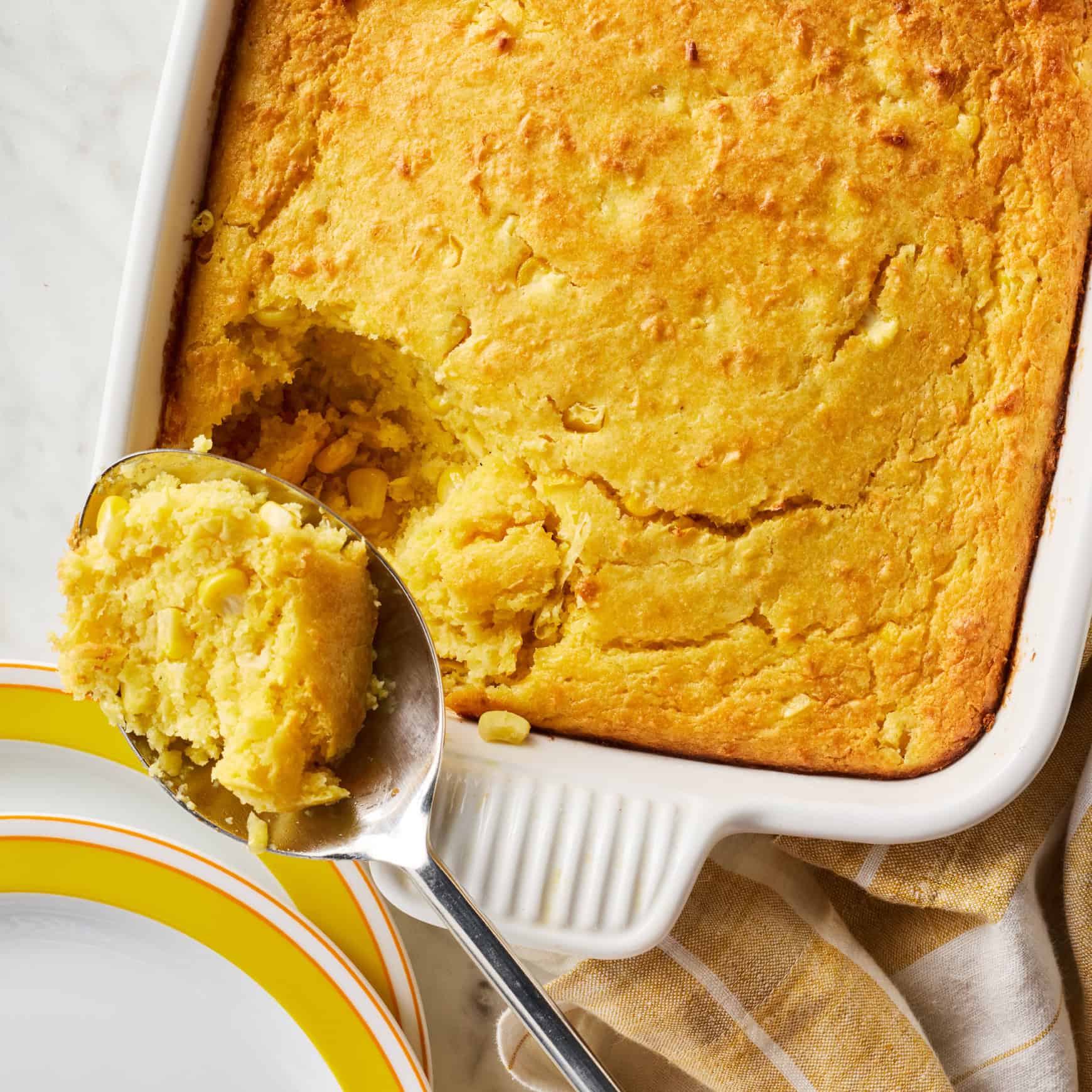
At its core, a well-executed corn casserole bridges the gap between traditional cornbread and rich, savory corn pudding. It is characterized by a distinct textural duality: the exterior bakes into a delightful, golden-brown crust with crisp edges, while the interior remains wonderfully soft, moist, and spoonable.
The Flavor Profile
The flavor profile is a delicate balancing act of sweet and savory notes. The natural sugars in the corn, complemented by a modest touch of granulated sugar, provide a gentle sweetness that is cut and balanced by the rich, savory undertones of melted butter, farm-fresh eggs, and tangy sour cream.
From–Scratch Innovation vs. Tradition
While inspired by the classic boxed-mix casseroles of the mid-20th century, the contemporary scratch-made version elevates the recipe through deliberate ingredient choices:
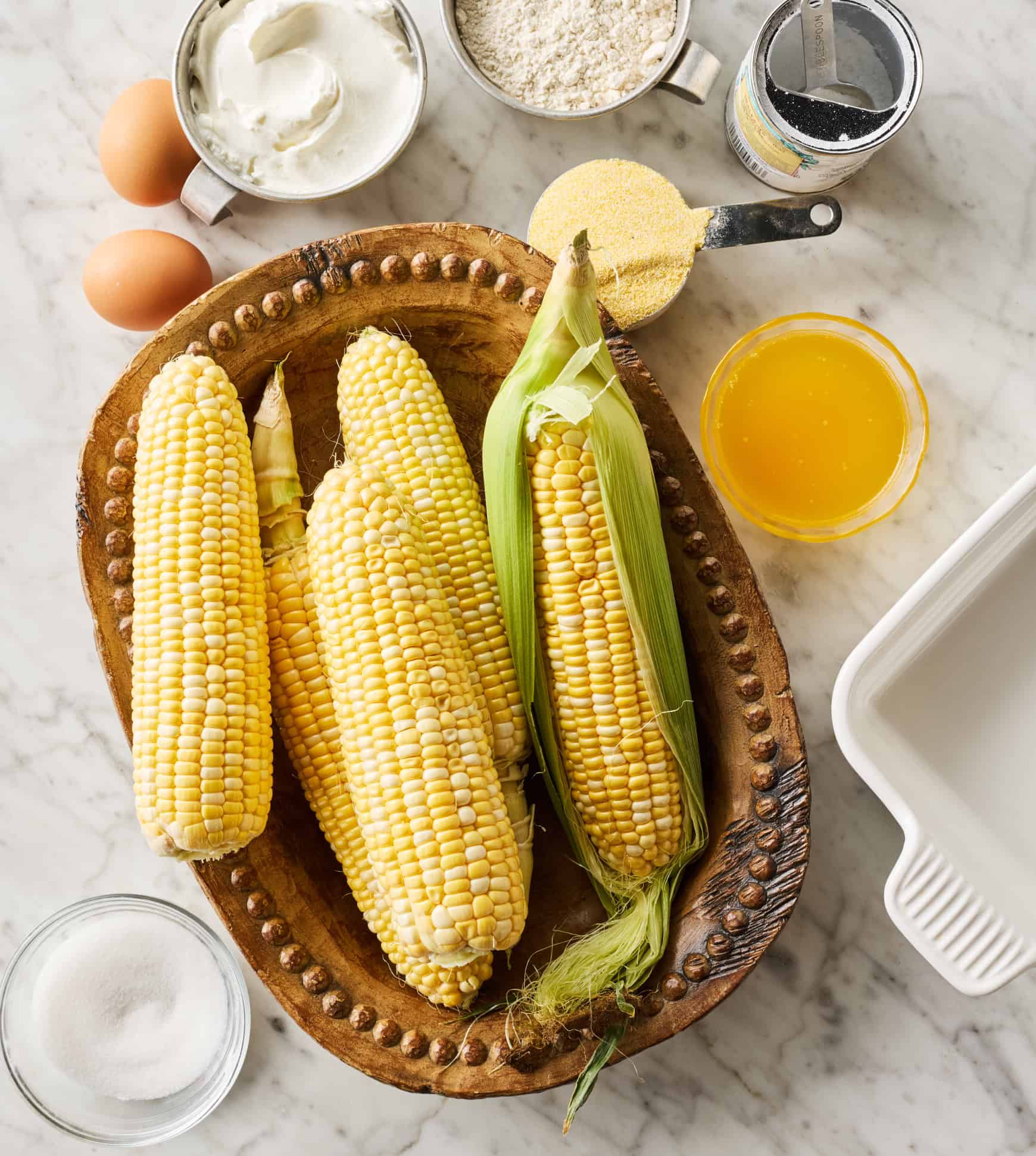
- The Corn Base: Rather than relying exclusively on canned creamed corn, this recipe utilizes fresh corn kernels. A portion of these kernels is puréed in a food processor to replicate the velvety moisture and dense starchiness of creamed corn naturally, while the remaining whole kernels are folded directly into the batter to provide a satisfying, juicy crunch.
- The Dry Blend: A custom mixture of all-purpose flour, yellow cornmeal, baking powder, and a pinch of salt replaces pre-packaged mixes, giving the cook total control over texture, leavening, and sodium levels.
- Adaptability: Recognizing that fresh corn is a seasonal luxury, culinary testers have rigorously optimized the recipe to accommodate frozen or canned corn, ensuring year-round viability without sacrificing quality.
Chronology: Step-by-Step Preparation Guide
Crafting a phenomenal corn casserole from scratch is surprisingly straightforward, requiring roughly 15 minutes of active preparation time and 45 minutes in the oven. For home cooks looking to execute this dish flawlessly, the process unfolds in a precise, logical sequence.
Phase 1: Preparing the Dry Ingredients
The foundation of the casserole’s structure begins in a medium-sized mixing bowl.
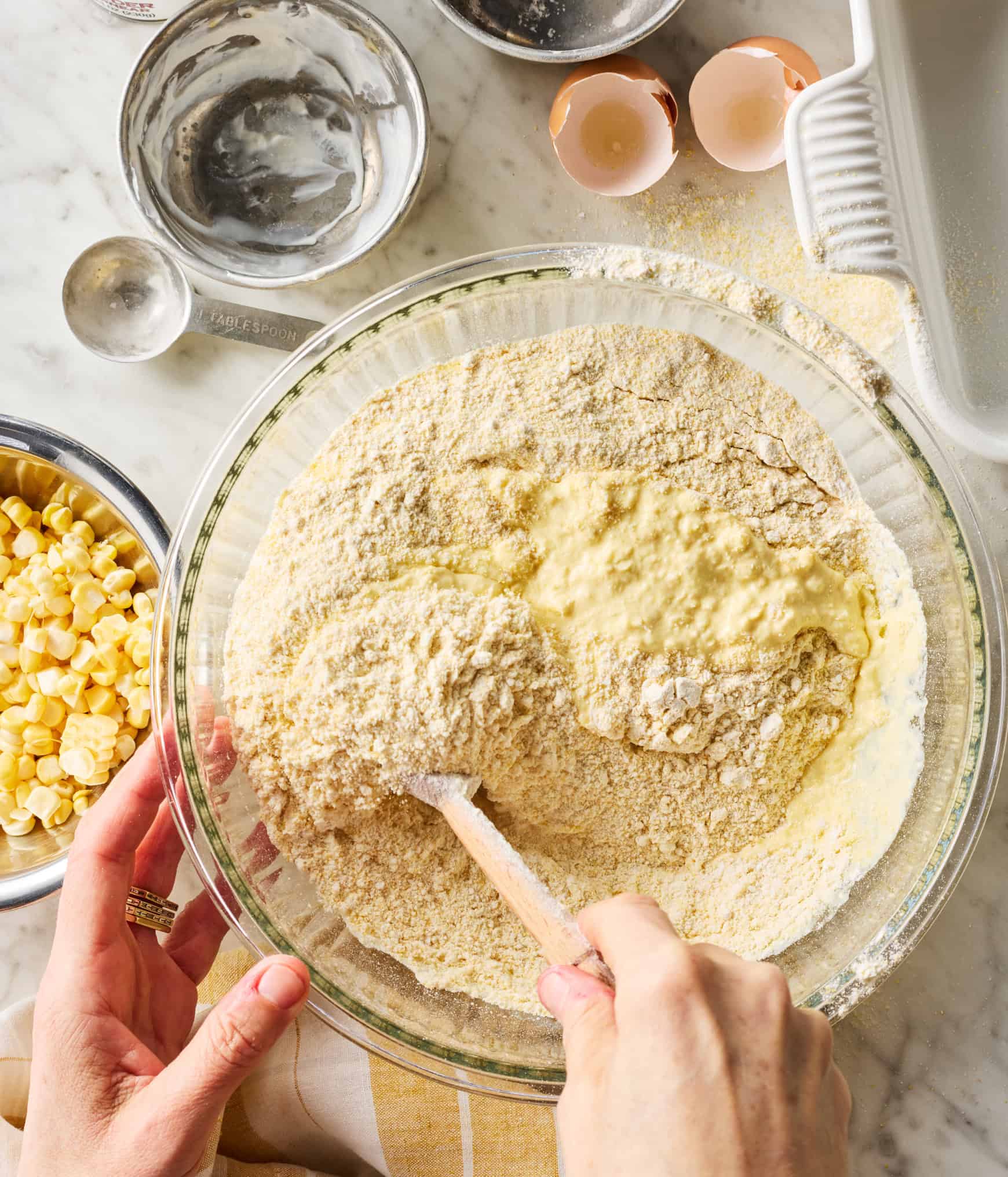
- Whisk together the all-purpose flour, yellow cornmeal, granulated sugar, baking powder, and salt.
- Ensure the leavening agent (baking powder) and salt are evenly distributed throughout the dry mixture to promote uniform rising and seasoning during the baking process.
Phase 2: Processing the Corn
To achieve the signature creamy center without opening a can of processed cream-style corn:
- Measure out 3 cups of fresh, frozen, or drained canned corn kernels.
- Transfer these kernels to a food processor and pulse or process until smooth. This purée acts as the primary moisture-binding agent, infusing the batter with fresh corn flavor and creating the characteristic pudding-like interior texture.
- Reserve the remaining 1½ cups of corn kernels in their whole, unaltered state.
Phase 3: Unifying the Wet Ingredients
In a separate, larger bowl:
- Whisk the eggs thoroughly until light and homogeneous.
- Whisk in the melted butter, ensuring it has cooled slightly so it does not scramble the eggs.
- Incorporate the corn purée and the sour cream, whisking continuously until a smooth, uniform liquid base is established.
Phase 4: Combining Wet and Dry
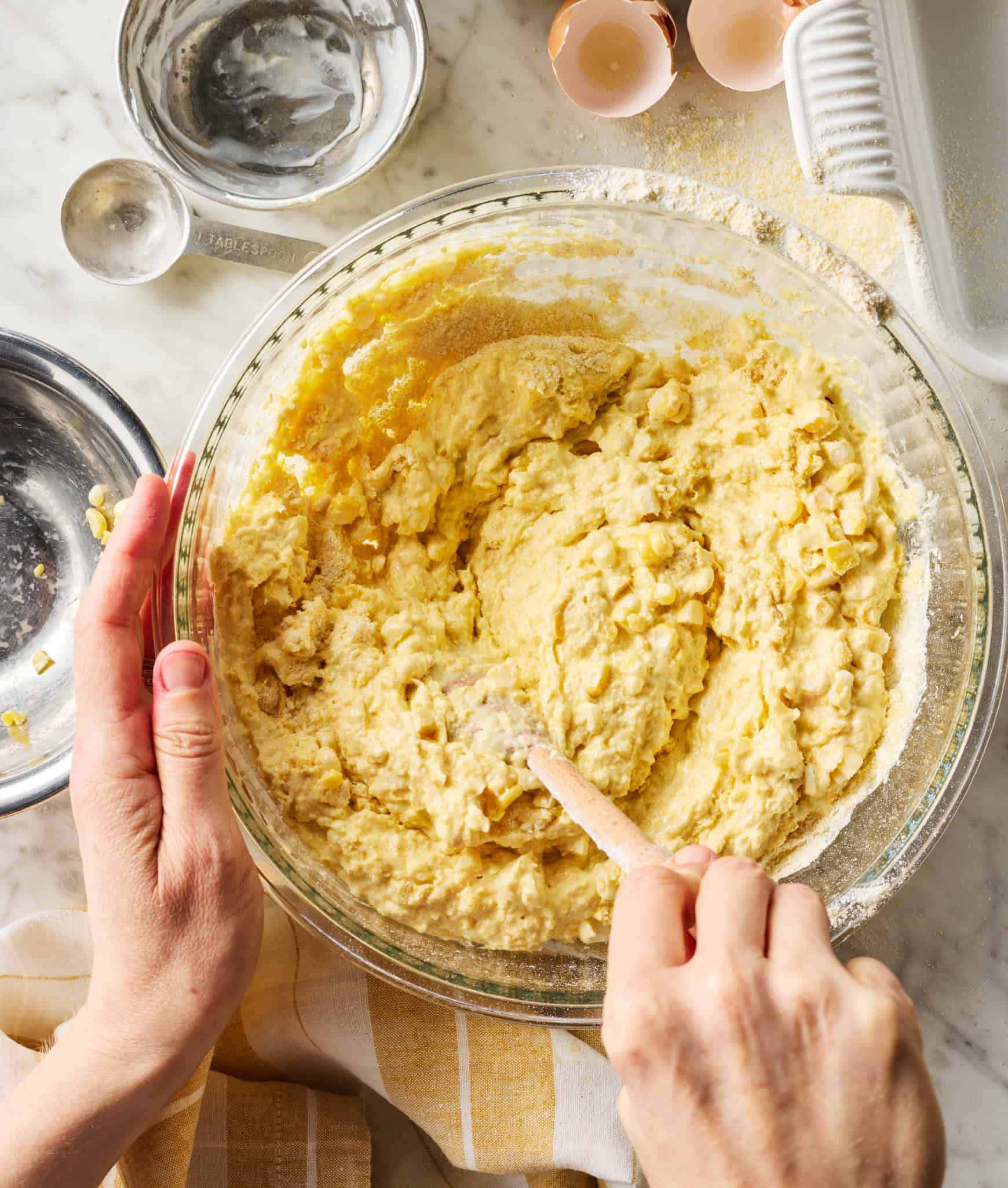
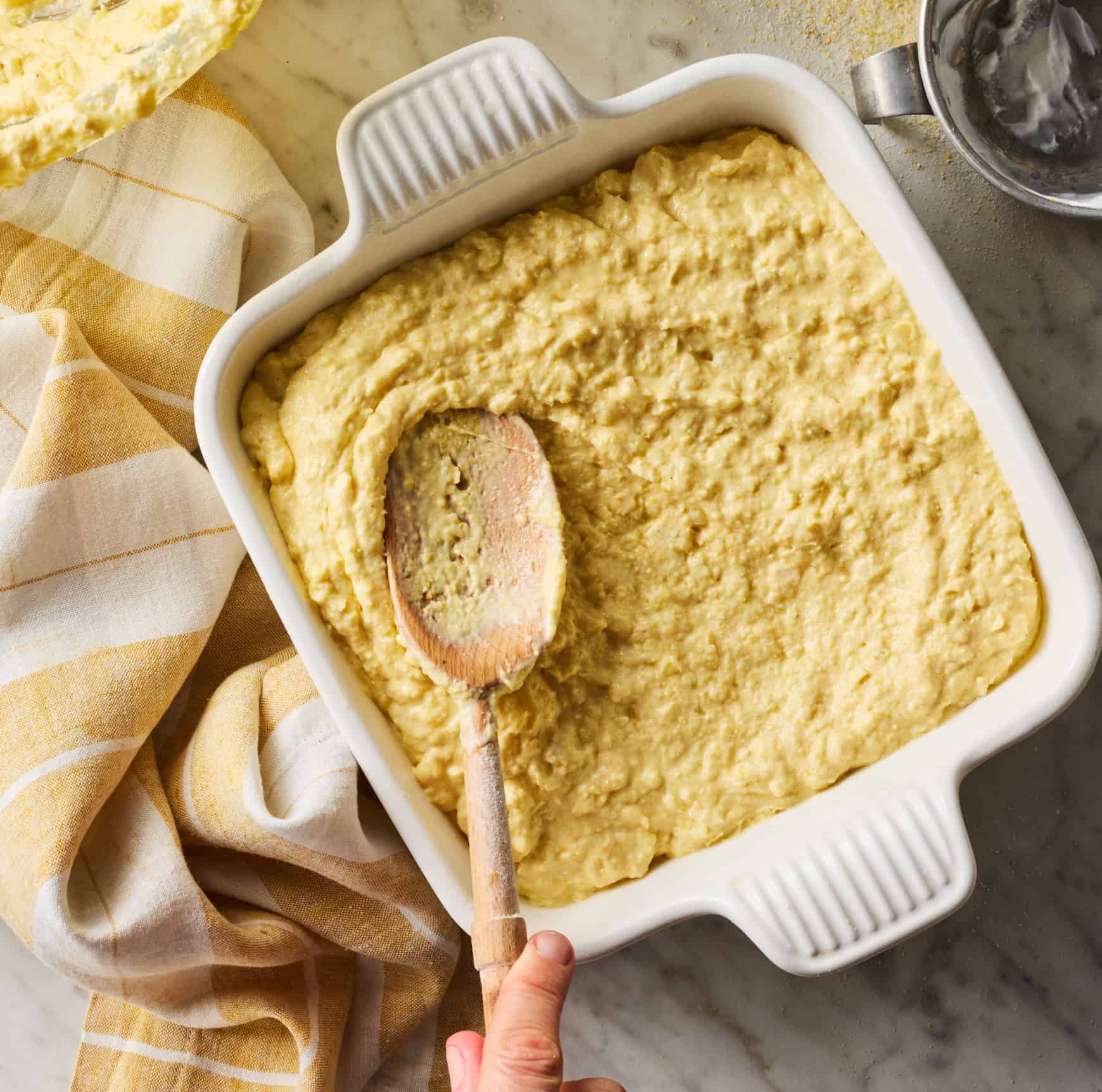
- Gently fold the dry ingredient mixture into the wet ingredients using a spatula or wooden spoon.
- Mix only until the flour disappears. Crucial Rule: Just like making pancakes, overmixing will develop the gluten in the flour, resulting in a dense or rubbery texture. A few small lumps are entirely acceptable and desirable.
- Gently fold in the reserved whole corn kernels to distribute the textural elements evenly throughout the batter.
Phase 5: Pan Preparation and Baking
- Grease a standard 9×9-inch baking dish. (Pro tip: You can easily grease the pan using a small amount of the melted butter set aside before mixing your wet ingredients).
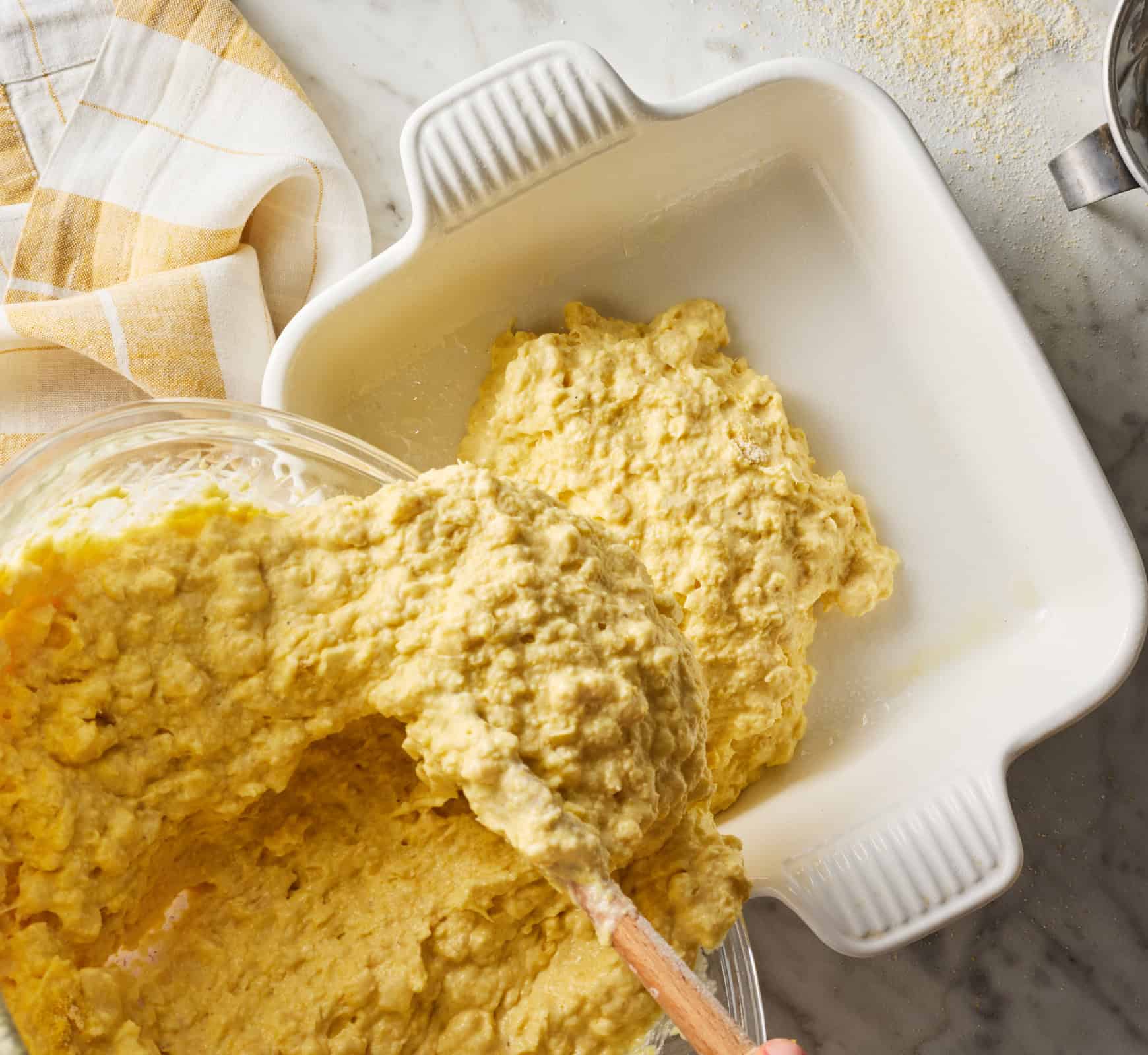
- Pour the thick batter into the prepared dish, using a spatula to smooth the top into an even layer.
- Bake in a preheated oven at 350°F (175°C) for 45 to 50 minutes. The casserole is done when the edges turn a deep, rich golden brown and the center remains slightly soft and jiggly (not completely set), indicating a creamy interior.
- Remove from the oven and allow the casserole to rest for 10 minutes before slicing and serving. This resting period allows the starches to settle, ensuring clean slices that hold their shape on the plate.
Supporting Data & Nutritional Breakdown
Understanding the nutritional content of a rich, comforting dish like corn casserole helps home cooks plan balanced menus—particularly during holiday seasons when heavy side dishes abound.
Recipe Yield and Timing Specifications
- Prep Time: 15 minutes
- Cook Time: 45 minutes
- Total Time: 1 hour
- Standard Yield: 9 generous servings (baked in a 9×9-inch pan)
Nutritional Profile (Per Serving / 1 Slice)
Based on standard nutritional analysis for a 9-serving yield, a single slice of this scratch-made corn casserole contains:
- Calories: 292 kcal
- Calories from Fat: 153 kcal
- Total Fat: 17g (26% Daily Value)
- Saturated Fat: 9g (56% Daily Value)
- Trans Fat: 0.4g
- Polyunsaturated Fat: 1g
- Monounsaturated Fat: 4g
- Cholesterol: 75mg (25% Daily Value)
- Sodium: 368mg (16% Daily Value)
- Potassium: 287mg (8% Daily Value)
- Total Carbohydrates: 33g (11% Daily Value)
- Dietary Fiber: 3g (13% Daily Value)
- Sugars: 10g (11% Daily Value)
- Protein: 6g (12% Daily Value)
- Vitamins & Minerals:
- Vitamin A: 631 IU (13% DV)
- Vitamin C: 5mg (6% DV)
- Calcium: 110mg (11% DV)
- Iron: 1mg (6% DV)
(Note: Percent Daily Values are based on a standard 2,000-calorie daily diet. Individual nutritional metrics may vary slightly depending on specific ingredient brands and whether fresh, frozen, or canned corn is utilized.)
Flexibility and Ingredient Substitutions
One of the greatest strengths of this corn casserole recipe is its adaptability. While the from-scratch method using fresh corn yields exceptional gourmet results, modern lifestyles demand convenience. Home cooks can easily modify the recipe based on pantry inventory and time constraints.
1. The Corn Component
- Fresh Corn: Ideal for late summer and early fall when sweet corn is at its peak sugar content and crispness.
- Frozen Corn: Thawed and thoroughly drained frozen corn works exceptionally well year-round, offering a consistent texture and flavor profile remarkably close to fresh produce.
- Canned Corn: If using canned whole-kernel corn, ensure it is thoroughly drained of packing liquid to prevent the batter from becoming waterlogged.
- The "Jiffy" Shortcut: For those who cherish the nostalgic flavor of traditional boxed mixes, the homemade dry base (flour, cornmeal, sugar, and baking powder) can be swapped out for two boxes of commercial corn muffin mix (such as Jiffy). When using boxed mixes, maintain the core wet ingredients (eggs, melted butter, sour cream, and corn purée) to preserve the ultra-creamy center.
2. Dairy Substitutions
- Sour Cream Alternative: Full-fat Greek yogurt makes a seamless substitute for sour cream, offering a comparable tang and moisture level with a slight protein boost.
- Butter: Unsalted butter is recommended to control the overall sodium content, but salted butter can be used simply by omitting the added salt in the dry ingredient blend.
Implications: Make-Ahead Strategies, Storage, and Holiday Entertaining
In the realm of domestic culinary management—especially during high-stress cooking events like Thanksgiving, Christmas, and large family gatherings—time management is everything. The ability to prepare dishes ahead of time is a game-changer for home chefs.
Make-Ahead Convenience
This corn casserole is exceptionally well-suited for advance preparation. Cooks can fully bake the casserole up to two days in advance, allow it to cool completely to room temperature, cover it tightly, and store it in the refrigerator.
- Reheating Instructions: To serve, place the covered casserole in a preheated 300°F (150°C) oven for 10 to 20 minutes, or until warmed through to the center. This low-temperature reheat prevents the edges from over-browning or drying out while restoring the fresh-baked texture.
Storage and Freezing Guidelines
- Refrigeration: Leftovers can be stored safely in an airtight container in the refrigerator for up to 4 days.
- Freezing: For long-term meal planning, the casserole freezes remarkably well. Wrap the cooled casserole tightly in multiple layers of heavy-duty aluminum foil or seal individual portions in airtight freezer-safe containers. It can be stored in the freezer for up to 3 months.
- Thawing and Reheating: For optimal texture, allow frozen casserole to thaw overnight in the refrigerator before reheating gently in the oven or microwave.
Conclusion
The evolution of the corn casserole from a shortcut-dependent holiday side dish into a sophisticated, scratch-made masterpiece demonstrates the enduring power of comfort food in modern gastronomy. By balancing the rustic charm of fresh corn kernels with a velvety, pudding-like crumb and a buttery crust, this recipe delivers on every sensory level. Whether prepared during the peak corn harvest of early autumn or served as a comforting centerpiece alongside holiday roasts, this versatile casserole proves that simple ingredients, when treated with care and culinary intention, can yield extraordinary results.