CULINARY ARTS — In the vast pantheon of American comfort food, few side dishes evoke the nostalgia, warmth, and culinary reliability of corn casserole. Often heralded as a bridge between traditional cornbread and sweet corn pudding, this beloved dish has long been a staple of Sunday suppers, potlucks, and holiday spreads. However, while the traditional iterations of the mid-20th century relied heavily on convenience products—namely, boxed cornbread mixes and canned creamed corn—a modern culinary evolution is underway.
Home cooks and professional chefs alike are revisiting these comfort-food classics, breathing new life into them with scratch-made ingredients, fresh seasonal produce, and adaptable techniques that honor the past while refining the flavor profile.
This comprehensive report explores the anatomy of the ultimate corn casserole, tracing its culinary evolution, detailing a foolproof, scratch-made recipe, evaluating nutritional data, and offering expert strategies for holiday meal planning and make-ahead execution.
Main Facts: Deconstructing the Modern Corn Casserole
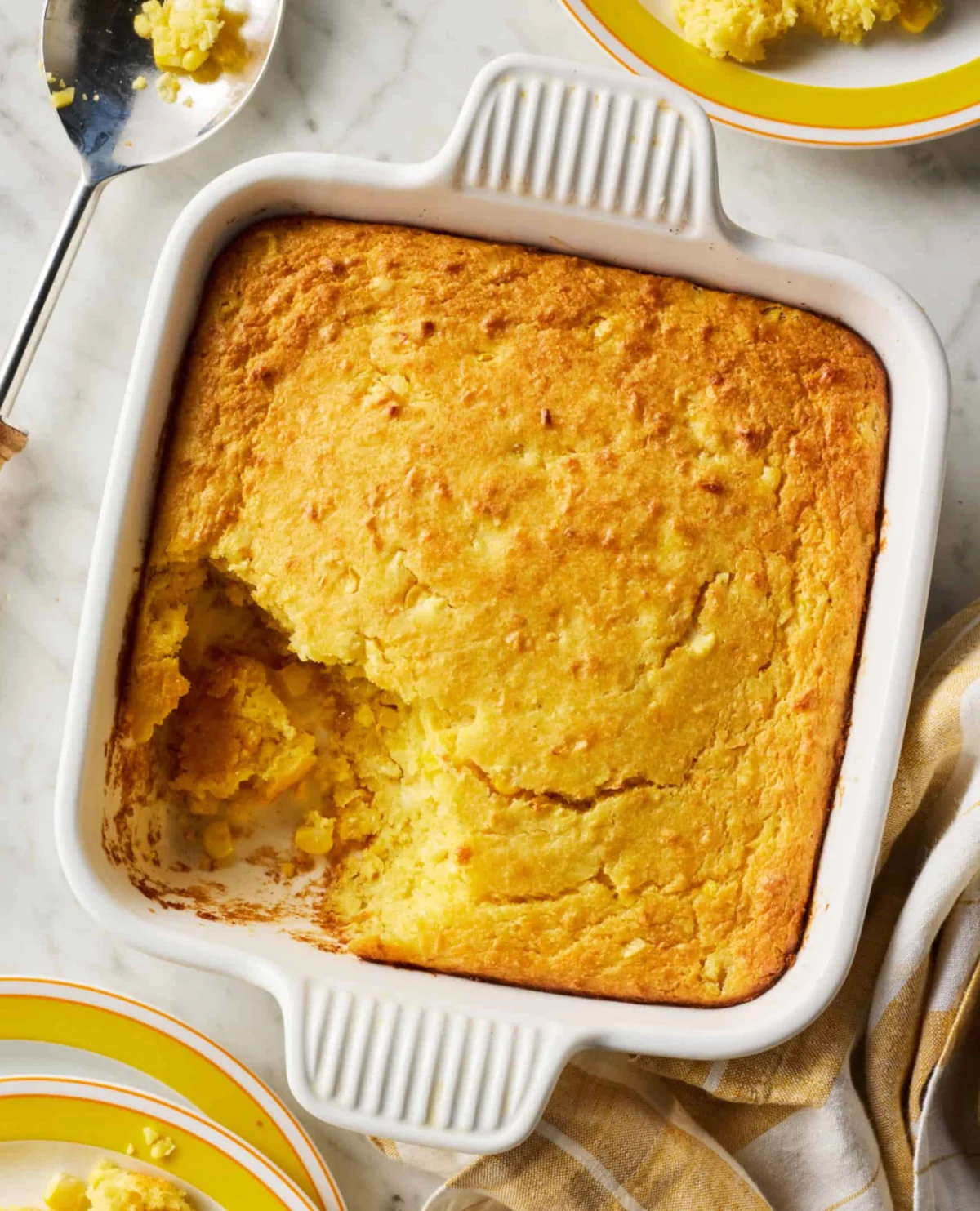
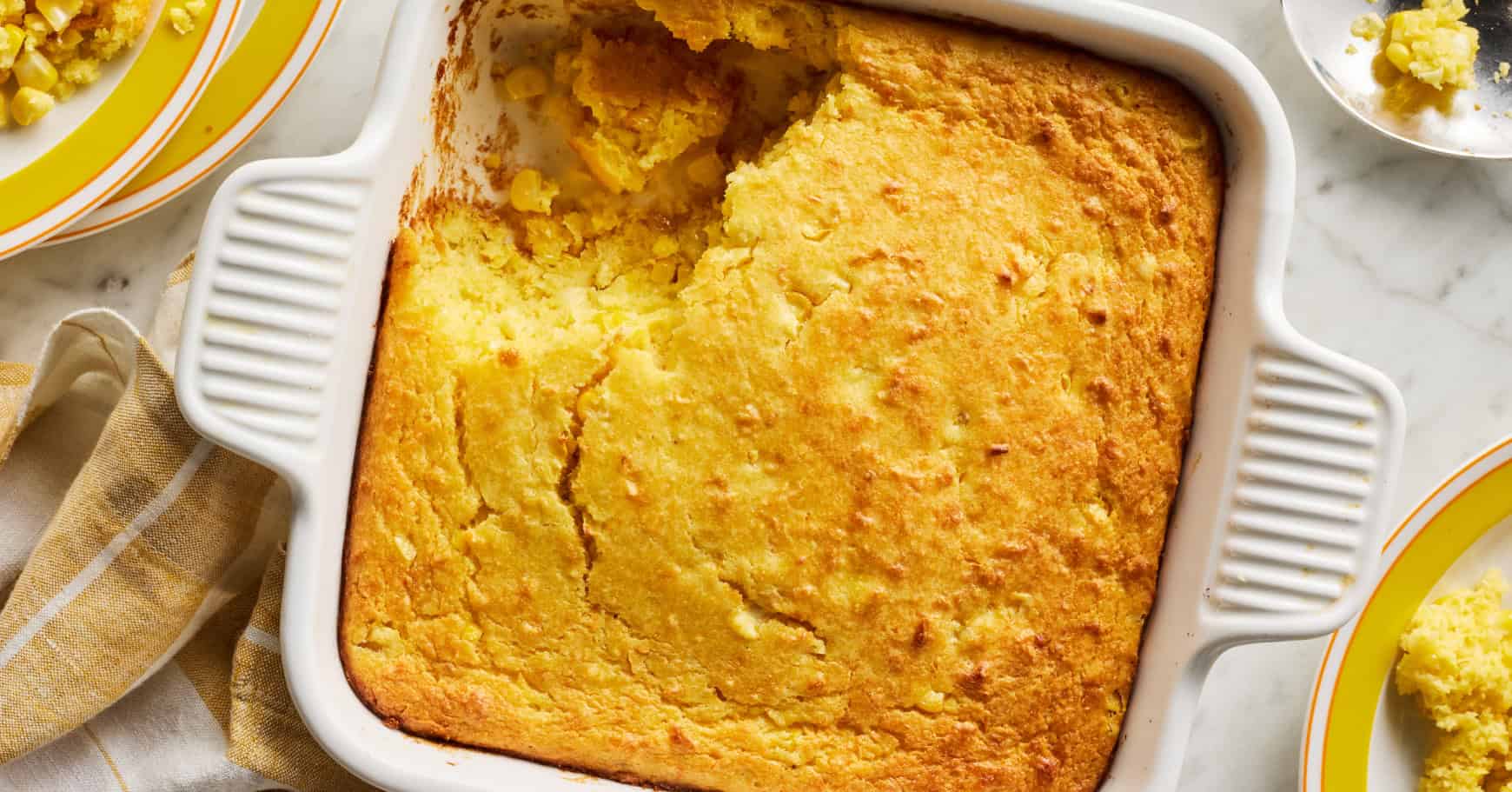
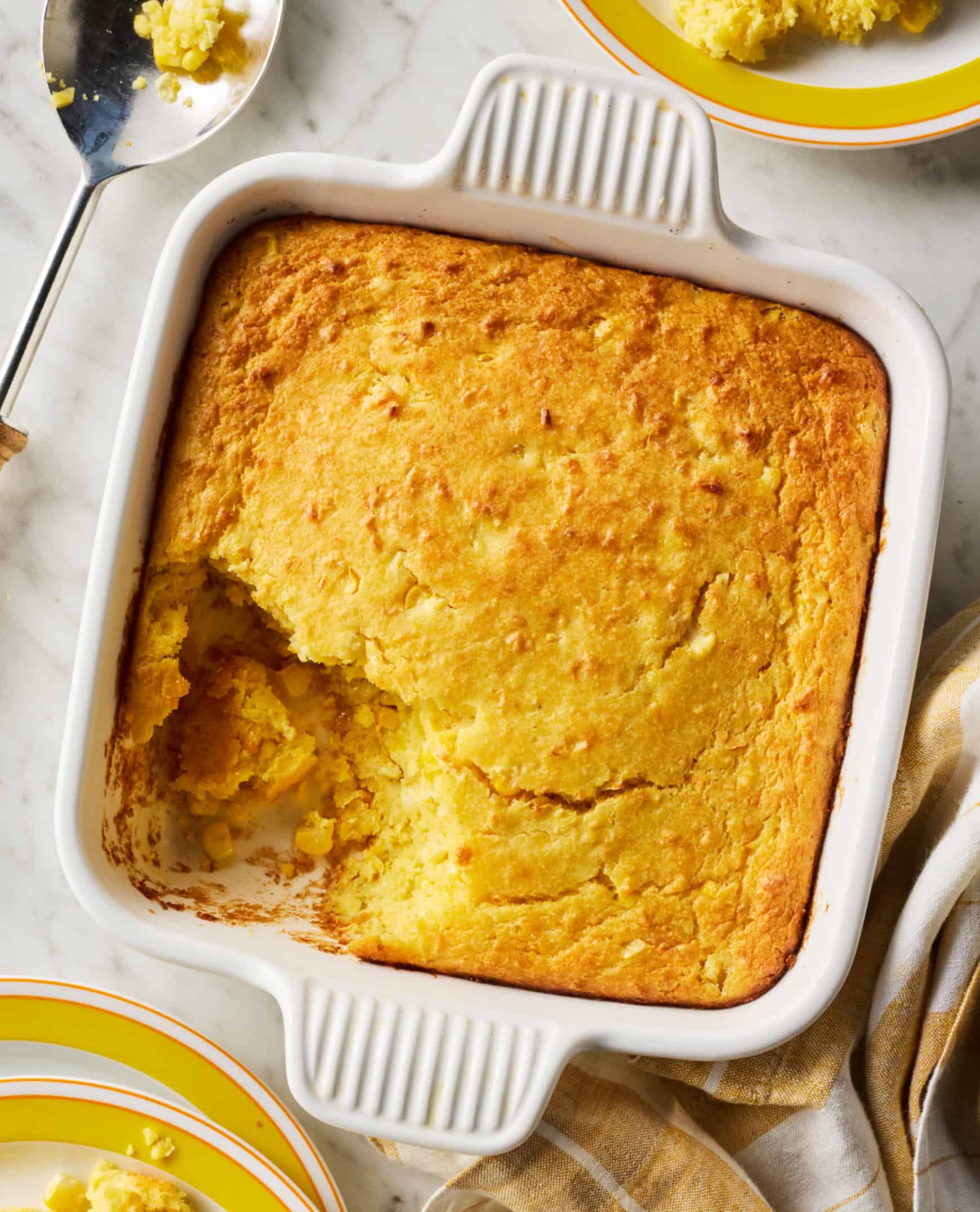
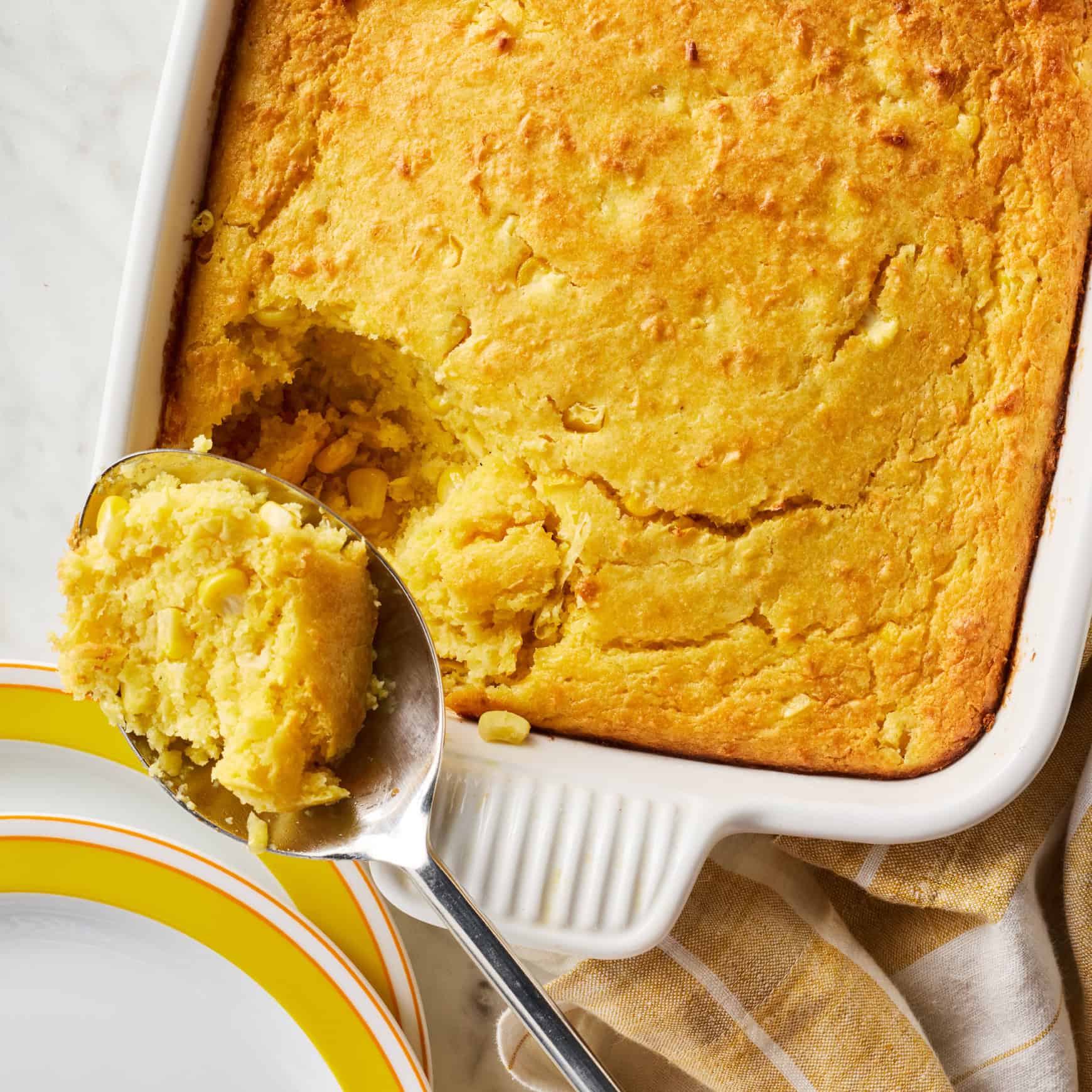
At its core, a successful corn casserole achieves a delicate textural balance: it features a set, golden-brown crust with slightly crisp edges, cradling a decadent, spoonable, and custard-like center. Whole corn kernels are folded into the batter to provide intermittent bursts of structural crunch, contrasting delightfully with the rich, velvety crumb.
The Problem with Convenience (And How to Fix It)
The classic mid-century iteration of this dish typically combined a box of Jiffy corn muffin mix, a can of whole kernel corn, a can of creamed corn, eggs, sour cream, and a stick of melted butter. While undeniably delicious, this formulation often suffers from excessive sweetness, artificial additives, and a uniform texture that lacks the robust, earthy flavor of authentic corn.
The updated approach reimagines the blueprint:
- The Corn Base: Instead of relying on canned cream-style corn, this recipe utilizes fresh corn kernels—puréeing a portion of them to naturally mimic the moisture and starch of creamed corn while leaving the rest whole.
- The Dry Blend: A homemade ratio of all-purpose flour, yellow cornmeal, sugar, baking powder, and salt replaces the boxed mix, allowing the cook to control the sugar content and avoid unwanted chemical aftertastes.
- The Binder: Rich sour cream, eggs, and high-quality unsalted butter form the wet foundation, ensuring a luxurious, pudding-like center that holds its shape without becoming dense or dry.
Chronology: The Evolution from Box to Bowl
To understand how corn casserole became a staple of modern American dining, it is helpful to trace its lineage from regional southern spoonbreads to the convenience-driven innovations of the post-war era, and finally to today’s scratch-made Renaissance.
Phase 1: The Historical Roots (Pre-1950s)
Long before commercial baking mixes dominated grocery store aisles, home cooks utilized indigenous cornmeal to create various forms of "spoonbread," "corn pudding," and "custard corn." These dishes were born out of necessity and resourcefulness, blending ground corn with eggs, milk, and butter to create a rich, comforting side dish that could stretch limited pantry staples into a satisfying meal for a large family.
Phase 2: The Convenience Revolution (1950s–1990s)
With the advent of mass-produced packaged foods in the mid-20th century, recipes shifted toward maximum efficiency. The Jiffy corn muffin mix, introduced by the Chelsea Milling Company, became a household icon. Combined with canned creamed corn and sour cream, it gave birth to the ubiquitous "5-ingredient corn casserole" that graced countless Thanksgiving tables and neighborhood potlucks for decades. It was fast, foolproof, and universally loved.
Phase 3: The Artisan Revival (Present Day)
In recent years, the culinary landscape has experienced a strong push toward whole foods, seasonal cooking, and from-scratch preparation. Culinary enthusiasts have begun applying artisanal techniques to nostalgic comfort foods. By sourcing fresh sweet corn during peak harvest season and substituting processed shortcuts with wholesome pantry staples, home cooks have elevated the humble corn casserole from a quick weeknight fallback to a sophisticated holiday centerpiece.
Supporting Data & Recipe Specifications
For those looking to replicate this elevated comfort food in their own kitchens, precision is key. Below are the structural specifications, ingredient metrics, timing breakdowns, and nutritional profiles associated with a standard 9-by-9-inch scratch-made corn casserole.
Recipe Overview
- Prep Time: 15 minutes
- Cook Time: 45 minutes
- Total Time: 1 hour
- Yield: 9 generous servings (baked in a 9×9-inch casserole dish)
Ingredient Breakdown
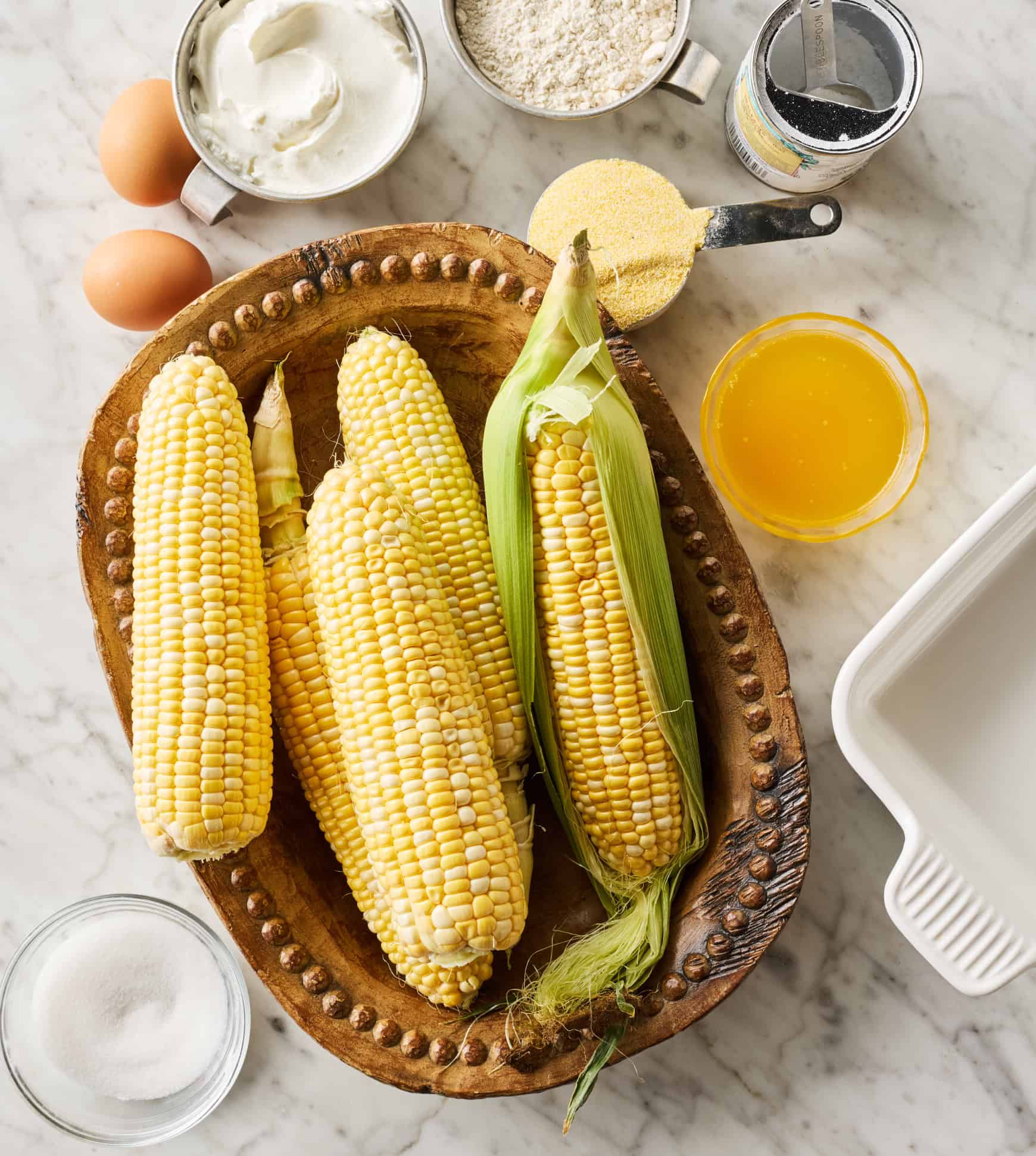
- Corn: 4 ½ cups total corn kernels, divided (3 cups puréed in a food processor to mimic creamed corn; 1 ½ cups kept whole for texture). Note: Fresh corn is ideal in early fall, but frozen or thoroughly drained canned corn works exceptionally well out of season.
- Dry Ingredients:
- 1 cup all-purpose flour
- ½ cup yellow cornmeal (medium or fine grind)
- 3 tablespoons granulated sugar (adjust based on the natural sweetness of your corn)
- 2 teaspoons baking powder
- ¾ teaspoon kosher salt
- Wet Ingredients:
- ½ cup (1 stick) unsalted butter, melted (reserve a small amount to grease the baking dish)
- 2 large eggs, lightly beaten
- 1 cup full-fat sour cream
Step-by-Step Preparation Guide
Executing this recipe requires careful attention to mixing techniques to ensure the interior remains tender and moist.
Step 1: Prepping the Oven and Pan
Preheat your oven to 350°F (175°C). Take a small amount of your melted butter and thoroughly grease a standard 9×9-inch baking dish, ensuring the sides and corners are well-coated to prevent sticking.
Step 2: Combining the Dry Ingredients
In a medium mixing bowl, whisk together the all-purpose flour, yellow cornmeal, granulated sugar, baking powder, and kosher salt until thoroughly combined and free of lumps.
Step 3: Processing the Corn
Transfer 3 cups of the corn kernels into a food processor. Pulse and blend until the corn is mostly smooth, creating a fresh, chemical-free corn purée that will supply vital moisture and starch to the casserole. Leave the remaining 1 ½ cups of corn kernels entirely whole.
Step 4: Mixing the Wet Ingredients
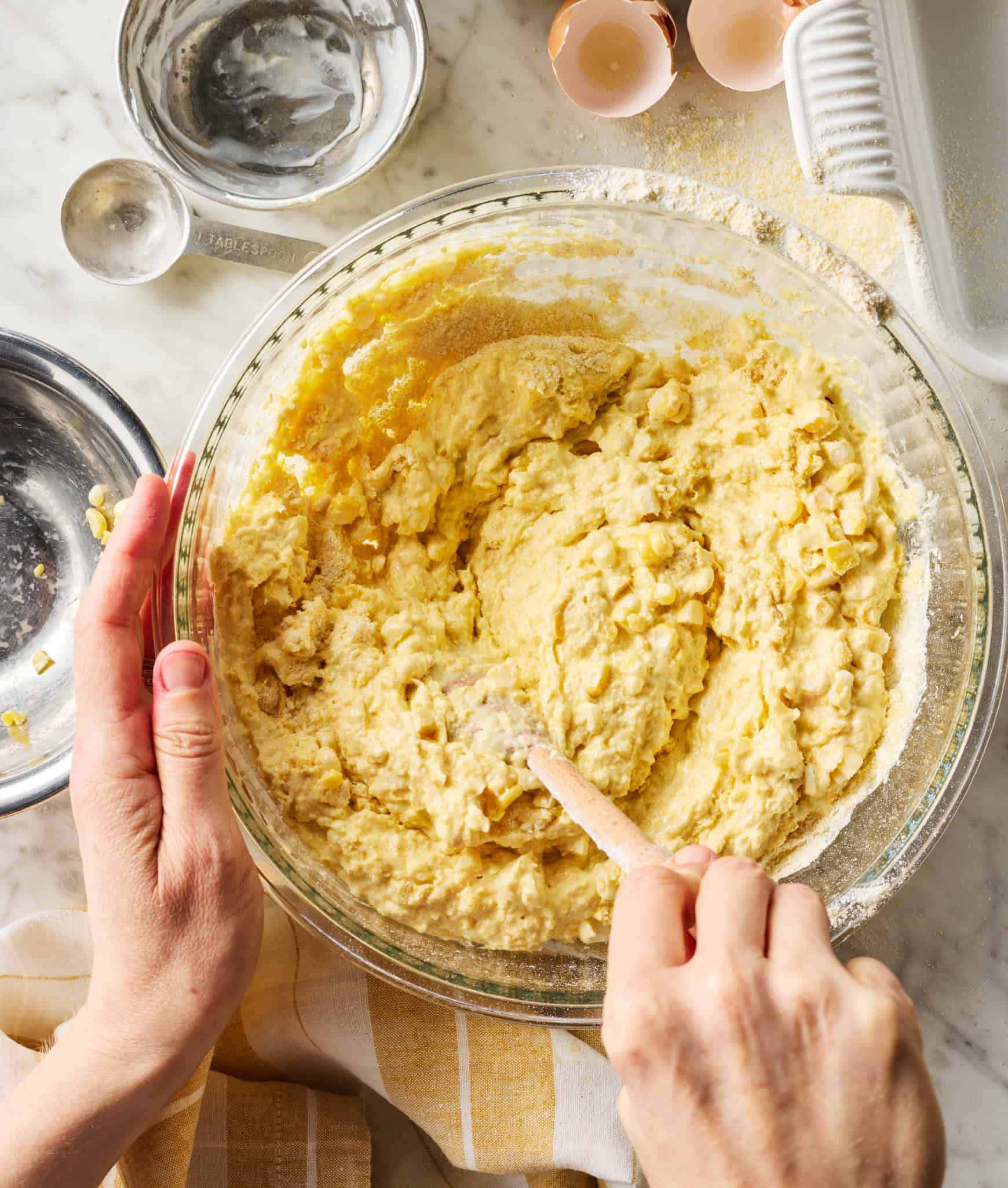
In a large bowl, whisk together the melted butter and the beaten eggs. Add the freshly made corn purée and the full-fat sour cream, whisking vigorously until the mixture is uniform and smooth.
Step 5: Uniting Wet and Dry
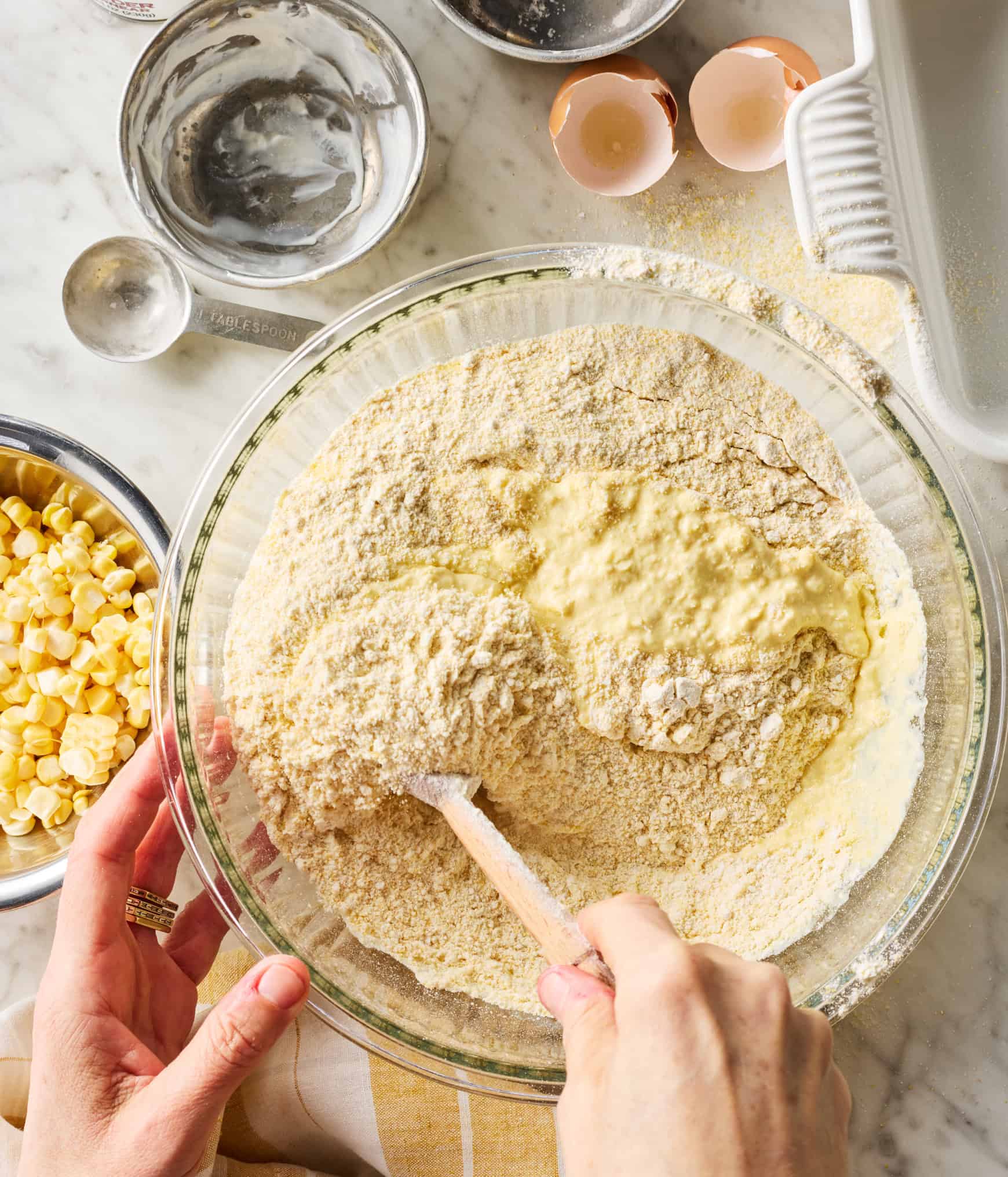
Gently pour the dry ingredient mixture into the wet ingredients. Using a spatula, fold the ingredients together just until a thick batter forms. Crucial Tip: Do not overmix. Just like preparing pancake batter, a few minor lumps are entirely acceptable and actually prevent the final product from becoming tough. Gently fold in the reserved whole corn kernels.
Step 6: Baking and Resting
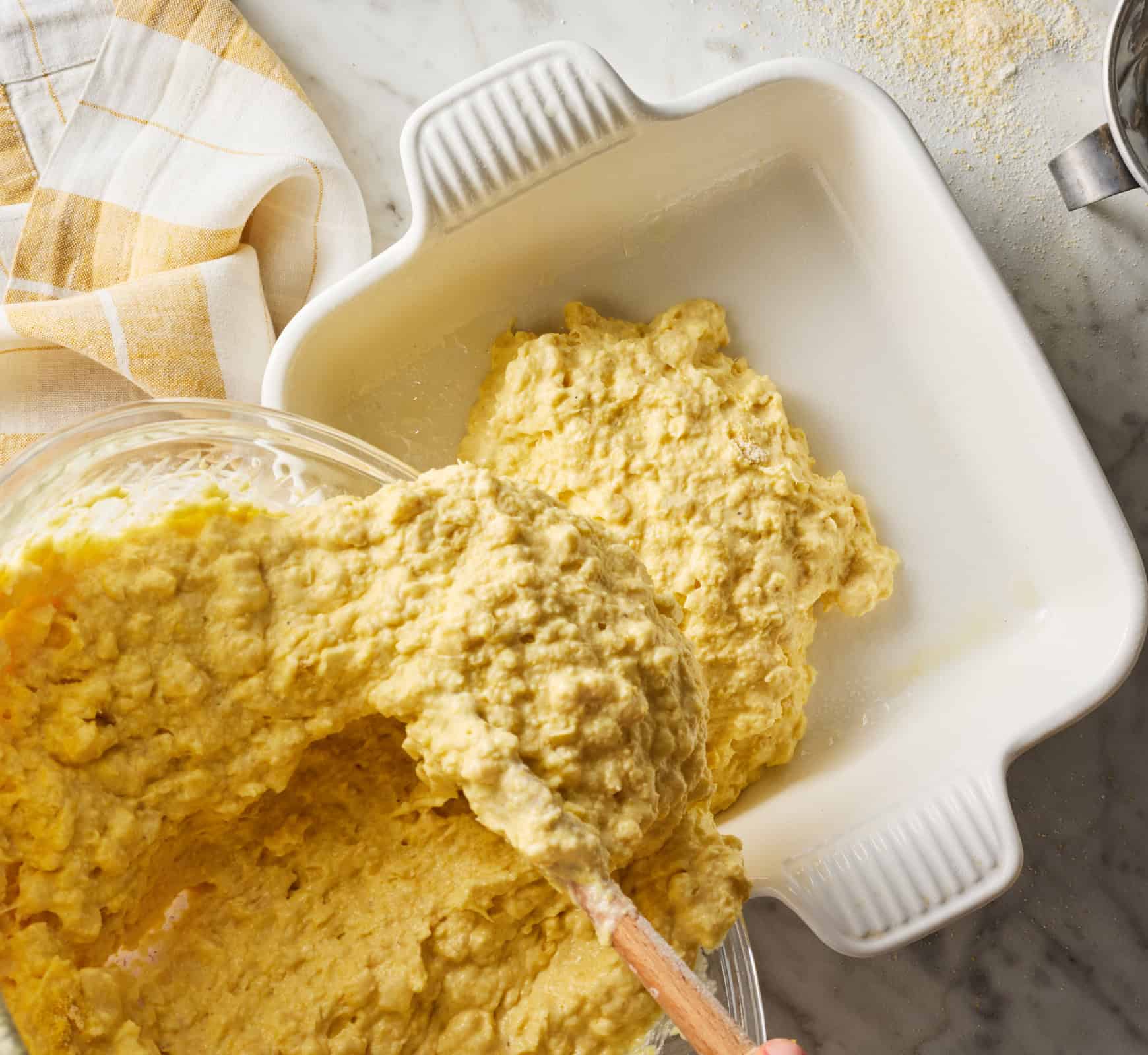
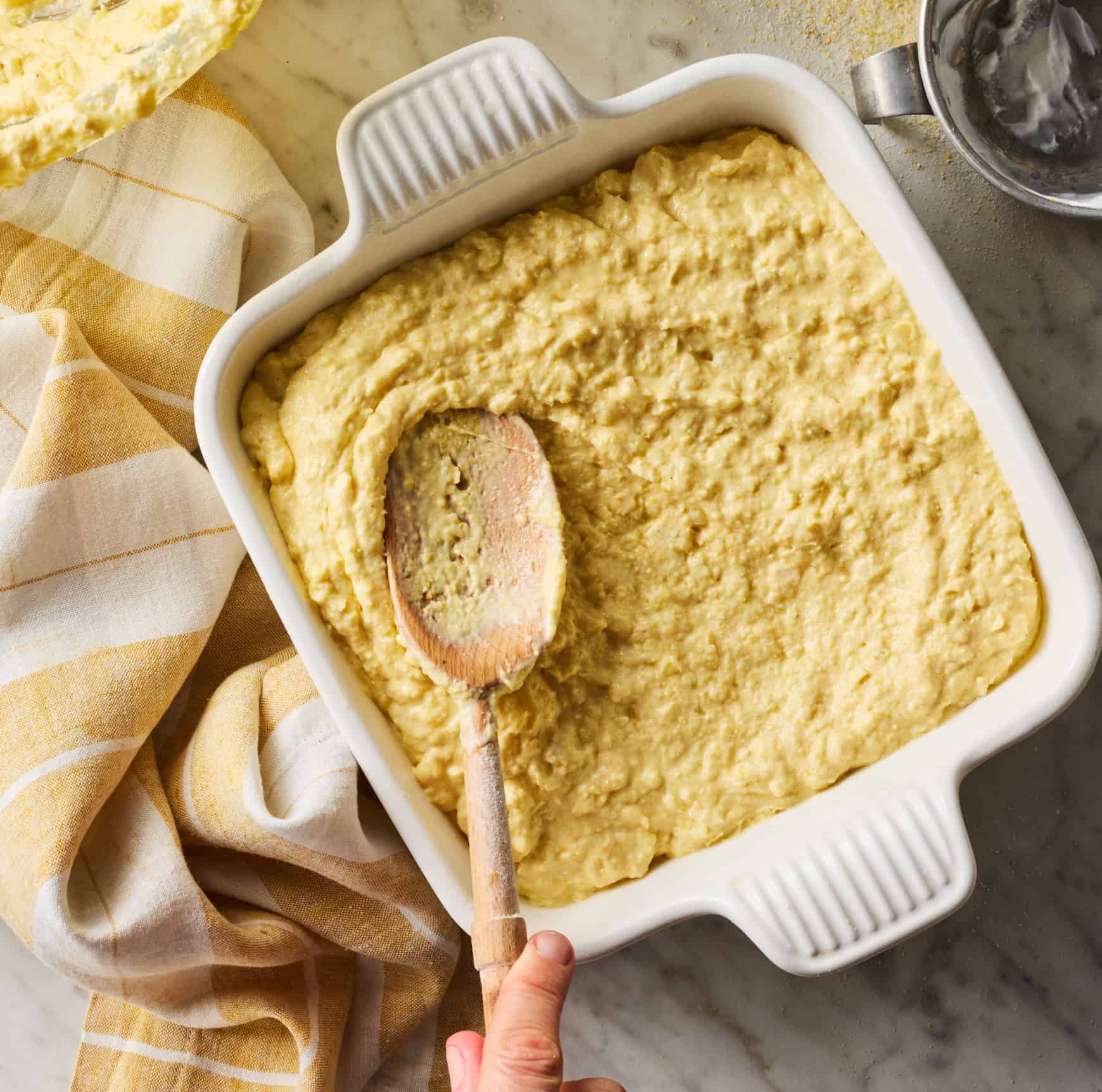
Pour the batter into your prepared 9×9-inch casserole dish, using an offset spatula to smooth the top into an even layer.
Bake uncovered at 350°F for 45 to 50 minutes. You are looking for the edges to turn a deep, golden brown and pull slightly away from the sides of the dish, while the very center should still possess a slight, custard-like wobble.
Remove from the oven and let the casserole rest for 10 minutes before slicing and serving. This resting period allows the starches to set and ensures clean, structurally sound portions.
Implications: Culinary Versatility and Dietary Adaptations
The true mark of a great recipe is its adaptability. While the traditional formula relies on specific dairy and grain products, modern kitchens frequently require modifications to accommodate dietary restrictions, seasonal availability, and personal taste preferences.
Seasonal Flexibility: Fresh vs. Frozen vs. Canned
While fresh sweet corn harvested in the late summer or early autumn yields the absolute best flavor and natural sugar balance, the logistics of holiday meal preparation often dictate otherwise.
- Frozen Corn: Thaw completely and pat dry with paper towels before use to prevent excess moisture from diluting the batter.
- Canned Corn: Ensure the canned kernels are thoroughly drained in a colander for several minutes before folding them into the batter.
Dietary Adjustments
- Gluten-Free Variations: The all-purpose flour in this recipe can be successfully swapped for a 1-to-1 baking gluten-free flour blend. Ensure your baking powder is certified gluten-free.
- Vegetarian Status: Naturally vegetarian, this dish contains no meat products, making it an inclusive side dish for mixed-diet gatherings.
- Low-Sodium Modifications: The salt content can be reduced slightly, though kosher salt is recommended over table salt for a cleaner flavor profile.
Nutritional Profile (Per Serving)
Based on a 9-serving yield, a single slice of scratch-made corn casserole delivers a comforting, energy-dense profile suitable for celebratory meals:
- Calories: 292
- Calories from Fat: 153
- Total Fat: 17g (26% DV)
- Saturated Fat: 9g (56% DV)
- Cholesterol: 75mg (25% DV)
- Sodium: 368mg (16% DV)
- Total Carbohydrates: 33g (11% DV)
- Dietary Fiber: 3g (13% DV)
- Sugars: 10g
- Protein: 6g (12% DV)
Make-Ahead Strategies, Storage, and Freezing
For home cooks orchestrating complex holiday dinners—such as Thanksgiving or Christmas feasts—oven space and time management are premium commodities. Fortunately, corn casserole is exceptionally well-suited for advance preparation.
Making Ahead (Refrigeration)
You can fully bake the corn casserole up to two days in advance.
- Allow the baked casserole to cool completely to room temperature.
- Cover the dish tightly with plastic wrap or aluminum foil and store it in the refrigerator.
- To Reheat: Remove the plastic wrap, cover securely with foil, and warm in a preheated 300°F (150°C) oven for 10 to 20 minutes, or until heated completely through to the center.
Long-Term Storage (Freezing)
For meal preppers planning far ahead, this casserole freezes remarkably well.
- Bake and cool the casserole completely.
- Wrap the entire baking dish tightly in multiple layers of heavy-duty aluminum foil, or transfer individual portions to airtight freezer-safe containers.
- Freeze for up to 3 months.
- To Serve: Thaw the casserole overnight in the refrigerator before reheating gently in the oven at 300°F until warmed through.
Conclusion: A Timeless Tradition Refined
The enduring popularity of corn casserole speaks to its unique ability to comfort, satisfy, and bring people together around the dining table. By stepping away from processed shortcuts and embracing a from-scratch methodology that highlights the pure, unadulterated flavor of corn, home cooks can elevate a humble childhood favorite into an artisanal masterpiece. Whether served alongside a festive holiday roast or a casual weeknight chicken dinner, this golden, creamy, sweet-and-savory casserole is destined to remain a cherished fixture in American home cooking for generations to come.