By Paul Clarke
Published: September 24, 2026
Photography by John Valls
Main Facts: The Eternal Appeal of the Three-Ingredient Icon
As thousands of bars across the globe mobilize for another landmark iteration of Negroni Week, and as a staggering, innumerable tally of crimson-hued drinks—ranging from the traditional standard to boundary-pushing contemporary riffs—cross wooden bar tops, the drink of choice for this week’s celebration could hardly be up for debate.
Yet, it is vital to draw a distinct line in the sand. We are not merely discussing a Negroni. We are talking about THE Negroni: a cocktail so structurally profound, yet deceptively simple, that it functions as a foundational load-bearing pillar for the entire modern cocktail canon.
Alongside titans like the Manhattan, the Martini, the Old Fashioned, and the Daiquiri, the classic Negroni anchors the civilization of mixology. However, the Negroni brings something fundamentally essential to the table that sharply distinguishes it from its peers. For generations before the Negroni’s rise, bitterness was treated purely as an accent note—a fleeting dash of aromatic bitters judiciously splashed into an Old Fashioned, or a subtle botanical bitterness riding quietly alongside sweetness in a Manhattan’s measure of vermouth.
The Negroni changed everything by elevating bitterness from a background player into an equal co-star. By demanding that bitterness share the spotlight on equal footing, the drink permanently rewired how bartenders formulate flavors and how drinkers approach the palate, expanding the utility and universal relevance of bitter profiles across the global hospitality landscape.
Chronology: From Florentine Origins to a Global Phenomenon
To understand the enduring dominance of the Negroni, one must trace its lineage backward through time, noting how a simple aperitif evolved into an international cultural touchstone.
The 1919 Genesis
While beverage historians occasionally debate the minute details, the prevailing narrative places the invention of the Negroni in Florence, Italy, in 1919. At the historic Caffè Casoni (later known as Caffè Giacosa), Count Camillo Negroni reportedly asked his bartender, Fosco Scarselli, to strengthen his favorite drink—the Americano (composed of Campari, sweet vermouth, and club soda)—by replacing the soda water with a healthy splash of gin. The bartender obliged, swapping the soda garnish for an orange slice rather than the traditional lemon of an Americano to signal the new creation’s distinct identity.
Mid-Century Silence to Global Resurgence
For decades, the drink remained a beloved European classic, quietly enjoyed by expatriates, Italians, and discerning travelers. It trickled into classic American cocktail books during the mid-20th century, though it often played second fiddle to the martini or the whiskey-forward heavyweights of the era. Its true renaissance began at the turn of the 21st century, riding the coattails of the craft cocktail revival. Bartenders rediscovered the elegance of equal-parts balancing acts, utilizing the rich history of Italian amaros and vermouths to breathe new life into forgotten recipes.
The 2013 Launch of Negroni Week
The trajectory of the cocktail shifted dramatically in 2013 with the launch of Negroni Week, presented in partnership with Imbibe magazine. What started as a relatively modest charitable initiative involving a few hundred participating venues quickly snowballed into a massive global movement. Bars, restaurants, and drinkers worldwide began utilizing the week-long celebration not only to explore endless variations of the drink—ranging from the whiskey-heavy Boulevardier to the rum-forward Kingston Negroni—but also to raise millions of dollars for charitable organizations, chief among them Slow Food.
Supporting Data: The Anatomy of a Modern Movement
The numbers surrounding the Negroni economy and its cultural footprint paint a picture of an unyielding global obsession:

- The Core Ratio: At its heart, the classic template relies on a strict, equal-parts 1:1:1 ratio: 1 oz. gin, 1 oz. Campari, and 1 oz. sweet vermouth. While modern craft bartenders frequently tweak these proportions—such as bumping the gin up to 1.5 ounces to give the spirit backbone more real estate—the symmetry remains the benchmark.
- Global Participation: During peak years of Negroni Week, participation regularly exceeds thousands of venues spanning dozens of countries, proving that the appetite for bitter-forward cocktails has transcended its European roots to conquer North America, Asia, South America, and beyond.
- Economic and Charitable Impact: Since its inception, Negroni Week has raised well over several million dollars for global charities, proving that high-end drinking culture and localized philanthropic activism can successfully merge on an unprecedented scale.
- The Evolution of Riffs: The cocktail has inspired countless variations documented across mixology archives. Whether it is substituting mezcal for gin to create a smoky Oaxacan Negroni, or swapping out vermouth for a split-base amaro, the drink’s canvas remains endlessly adaptable.
Official Responses and Perspectives
Industry leaders, historians, and bartenders continually reflect on how the Negroni reshaped modern drinking habits.
"What we’re talking about here isn’t A Negroni. It’s THE Negroni, a cocktail so iconic (yet so simple!) that it functions as a key supporting structure for the entire cocktail canon," notes Imbibe contributor Paul Clarke.
Reflecting on the flavor profile shift, mixologists frequently emphasize the courage it took historically to market a drink centered around unmasked bitterness.
"Before the Negroni, bitterness was considered an accent," industry veterans note. "The Negroni recipe bumped up bitterness to make it an essential co-star. No longer playing a supporting role, bitterness was now spending more or less equal time in the spotlight. In so doing, the Negroni changed the way we think about cocktails."
Furthermore, representatives from charitable partners like Slow Food have repeatedly lauded the hospitality industry’s dedication. Through the platform provided by Negroni Week, grassroots organizations receive vital international funding to support sustainable agriculture, biodiversity preservation, and equitable food access across the globe.
Implications: The Future of the Bitter Profile in Mixology
The legacy of the Negroni extends far beyond a single week of celebratory toasts or charitable fundraising. Its enduring success has fundamentally altered consumer palates, paving the way for a broader acceptance of bitter, complex, and herbaceous flavors in everyday dining and drinking.
1. The Death of the "Symmetric Sweetness" Monopoly
For generations, commercial beverage development leaned heavily on sugar masking or diluting bitter notes. The mainstream triumph of the Negroni proved that consumers actively crave friction on the palate—the interplay between the dry, juniper-forward bite of gin, the citrus-and-root bitterness of Campari, and the rich, oxidative sweetness of vermouth. This cultural shift directly fueled the modern explosion of amari, aperitivos, and craft vermouth production worldwide.
2. The Rise of Low-ABV and Apéritif Culture
As drinking habits trend toward mindfulness and sessionability, the DNA of the Negroni has heavily influenced the low-ABV (alcohol by volume) movement. Bartenders regularly lean on the structural principles of the drink to craft complex, lower-proof cocktails that mimic the depth and mouthfeel of spirit-forward drinks without the heavy intoxicating toll, maintaining the ritual of the classic European apéritif hour.
3. A Blueprint for Hospitality Activism
Negroni Week established a pioneering model for how the global bar community can unite under a single banner for social good. By tying consumer pleasure directly to charitable giving through partners like Slow Food, the movement has permanently elevated the social consciousness of the hospitality industry, proving that cocktails can serve as a powerful vehicle for environmental and social change.
Classic Negroni Recipe
This is the old-school, equal-parts version. This is how the purists like ’em, and how many mixologists prefer to toss them together at home. But perhaps you lean toward a more contemporary take, stepping up the gin to 1 ½ oz., or tweaking the proportions of vermouth and Campari to suit your personal palate. In that case, as the adage goes, you do you.
Ingredients:
- 1 oz. dry gin
- 1 oz. Campari
- 1 oz. premium sweet vermouth
Equipment & Glassware:
- Tools: Barspoon, jigger, cocktail strainer
- Glassware: Heavy rocks glass (Old Fashioned glass)
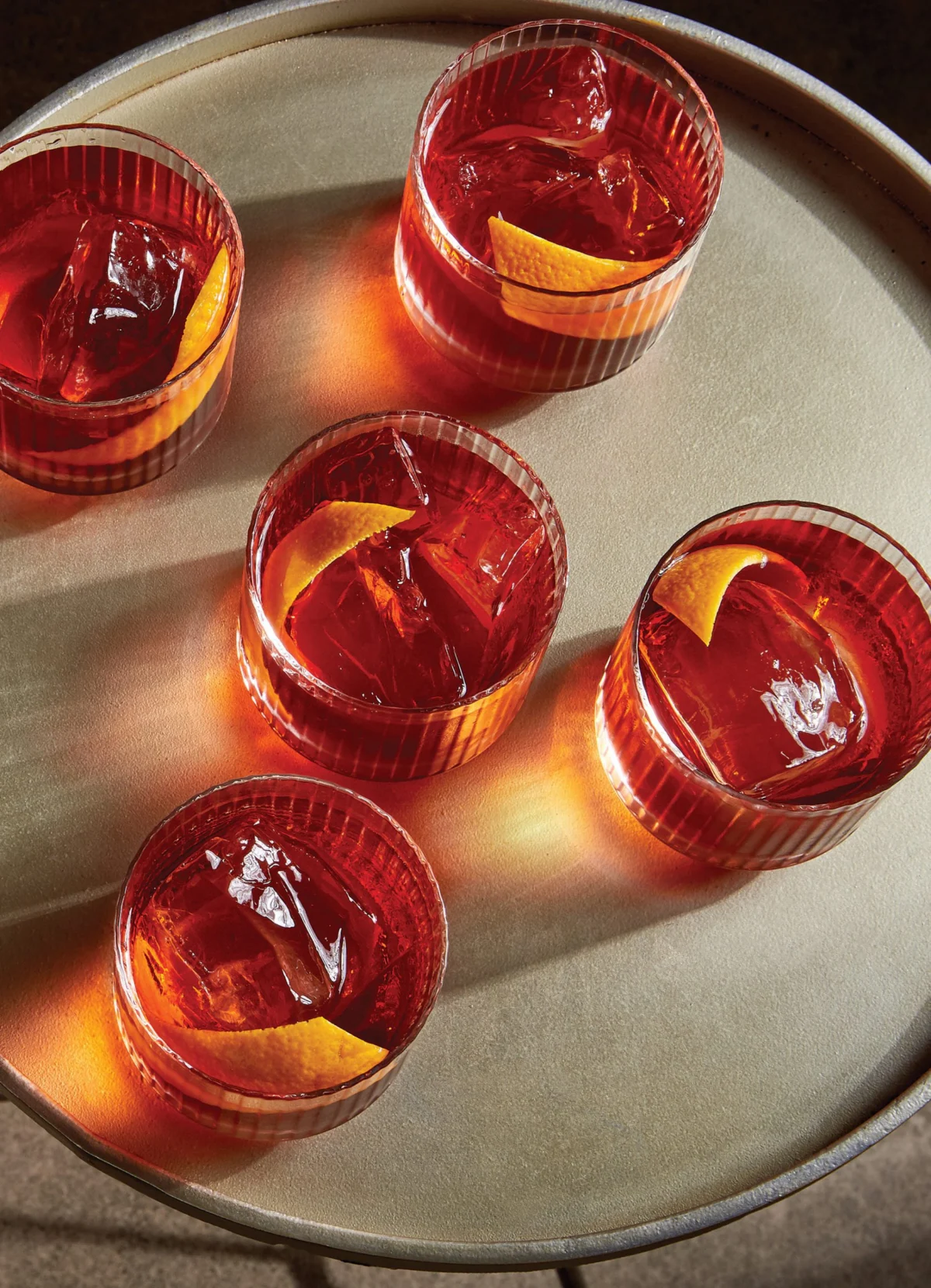
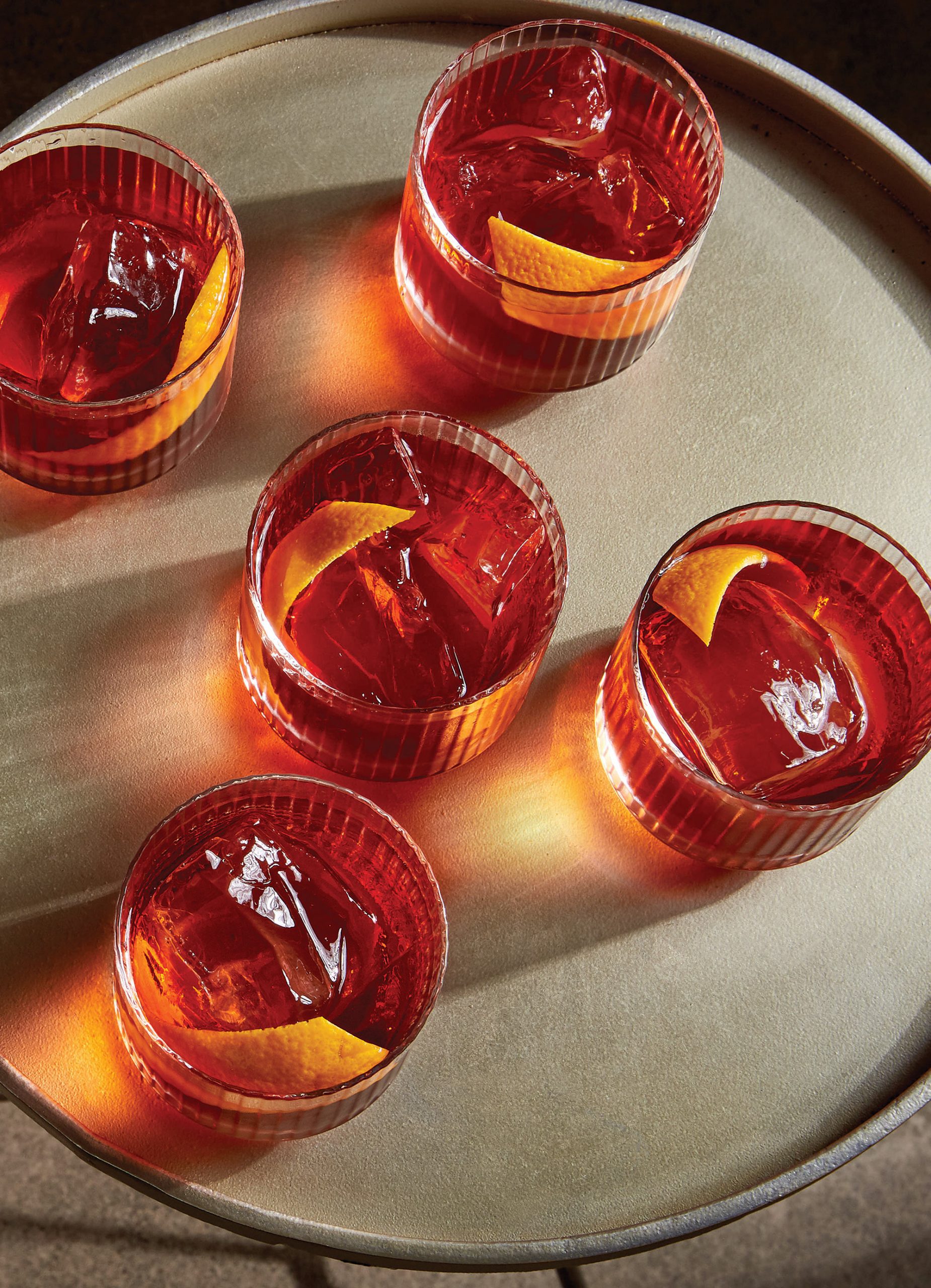
- Garnish: Fresh orange slice or a bright orange peel twist
Preparation Method:
- Combine the gin, Campari, and sweet vermouth in a mixing glass filled with high-quality, dense ice cubes.
- Stir the ingredients continuously and smoothly for approximately 20 to 30 seconds to achieve optimal dilution and chilling.
- Strain the liquid mixture into a rocks glass filled with fresh, crystal-clear ice (or pour it directly over a single, large-format artisanal ice cube).
- Express the oils of the orange peel over the surface of the drink, tuck the garnish into the glass (or rest an orange wheel against the side), and sip slowly while exploring the ongoing initiatives of Negroni Week’s charitable partner, Slow Food.