Main Facts: The Anatomy of Minimalist Culinary Design
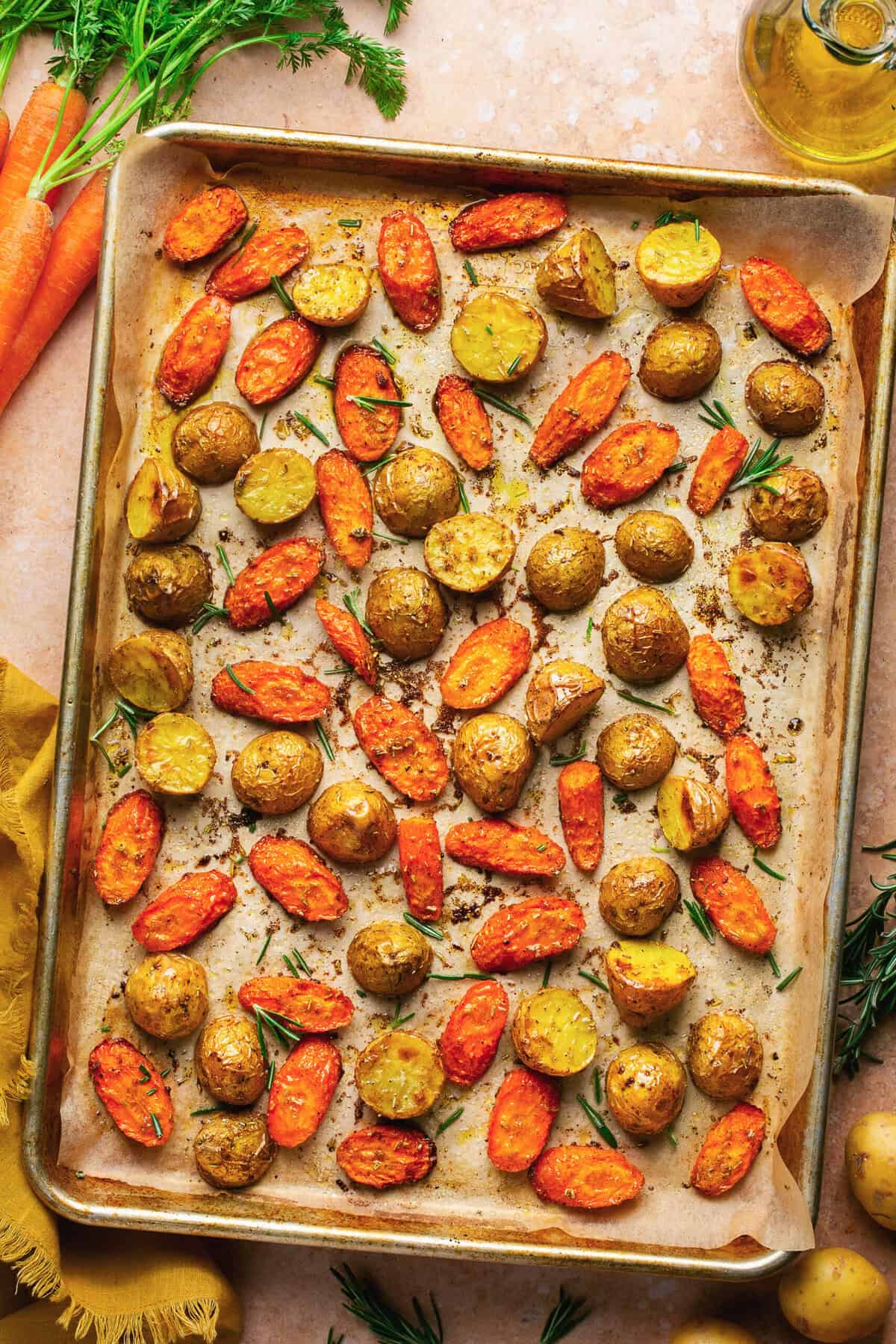
In an era of culinary experimentation often dominated by complex techniques and exotic ingredients, a growing movement of chefs and home cooks is advocating for a return to minimalist gastronomy. At the forefront of this philosophy is the structural optimization of simple root vegetables. A prime case study of this trend is the roasted baby gold potato and carrot sheet-pan dish developed by culinary developer Tiffany, creator of the widely followed platform Crème de la Crumb.
The dish relies on a calculated assembly of just seven ingredients—four of which are basic household seasonings—to achieve a stark contrast in textures: ultra-crispy exterior edges paired with pillowy, tender centers. According to culinary metrics, the recipe requires a preparation window of just ten minutes, yielding a highly nutritious, allergen-friendly side dish that services four people in under an hour.
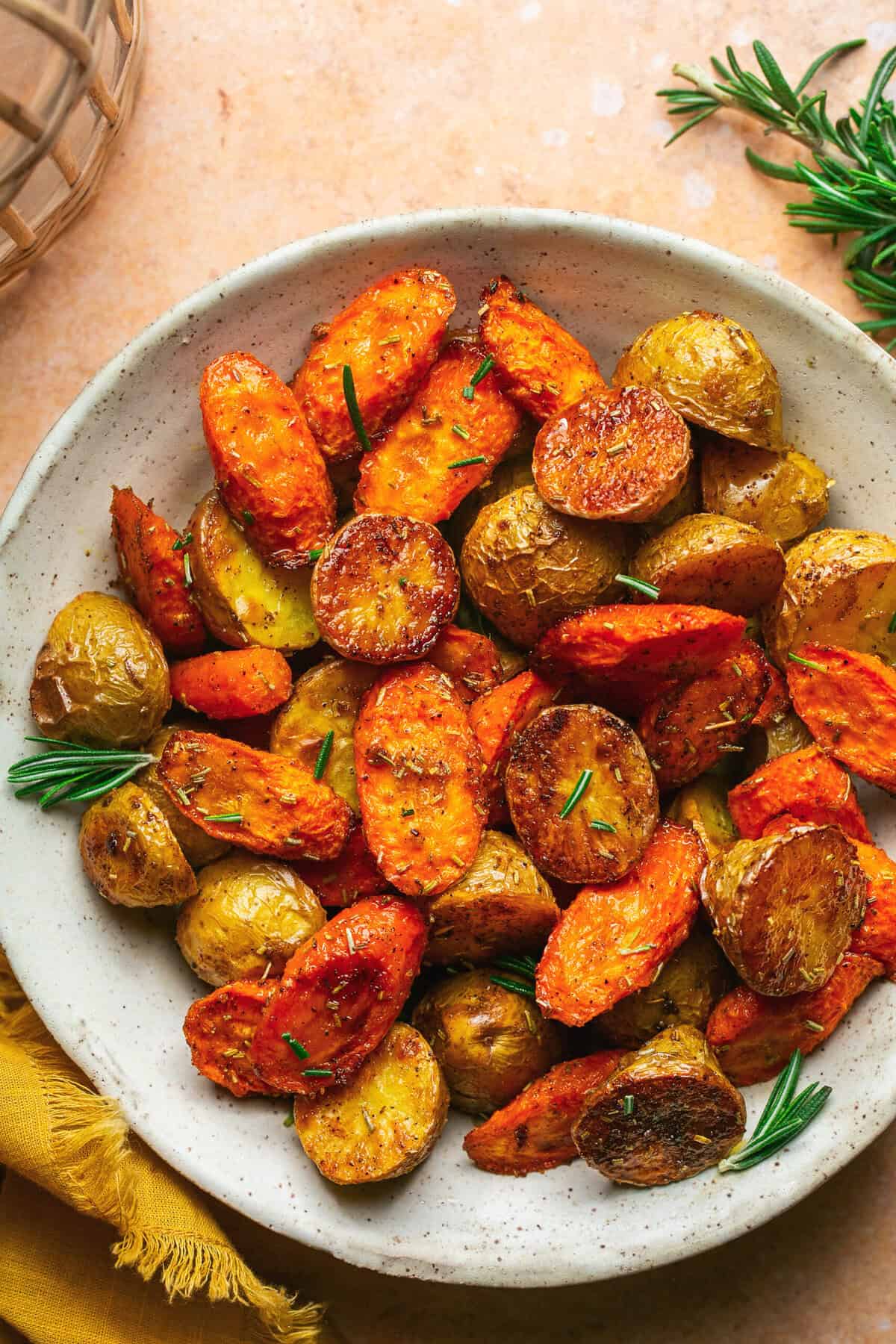
The foundational components of this dish are:
- Whole Carrots: Peeled and strategically sliced to maximize surface-area-to-volume ratio.
- Baby Gold Potatoes: Selected for their thin, delicate skins and high starch-to-moisture ratio, which eliminates the need for peeling or parboiling.
- Extra Virgin Olive Oil (EVOO): Serving as both a heat-conduction medium and a binder for seasonings.
- Aromatic Blend: A precise dry seasoning mix consisting of garlic powder, dried rosemary, sea salt, and coarsely cracked black pepper.
By stripping away unnecessary culinary variables, this preparation highlights how thermodynamic control and precise knife work can elevate humble ingredients into a centerpiece of texture and flavor.
Chronology: The Step-by-Step Thermodynamics of Roasting
To successfully execute this dish, the cooking process must follow a precise chronological sequence. This timeline ensures that both the dense, fibrous carrots and the starch-heavy baby potatoes reach their peak structural integrity simultaneously.
[00:00] Prep & Preheat (400°F) ──> [00:05] Knife Work (Diagonal Cuts) ──> [00:10] Seasoning Emulsion (EVOO Coating) ──> [00:12] Sheet Pan Layout ──> [00:12-00:52] Thermodynamic Roasting (400°F) ──> [00:52] Cool & ServePhase 1: Thermal Calibration and Mise en Place (Minutes 0 to 5)
The process begins with the preheating of a standard conventional oven to 400°F (approx. 204°C). This specific temperature is critical; it is high enough to trigger rapid moisture evaporation and surface browning without burning the delicate dried rosemary and garlic powder. During this phase, the chef prepares the baking sheet by lining it with professional-grade parchment paper.
Phase 2: Precision Knife Work (Minutes 5 to 10)
Proper vegetable geometry is essential for even cooking:
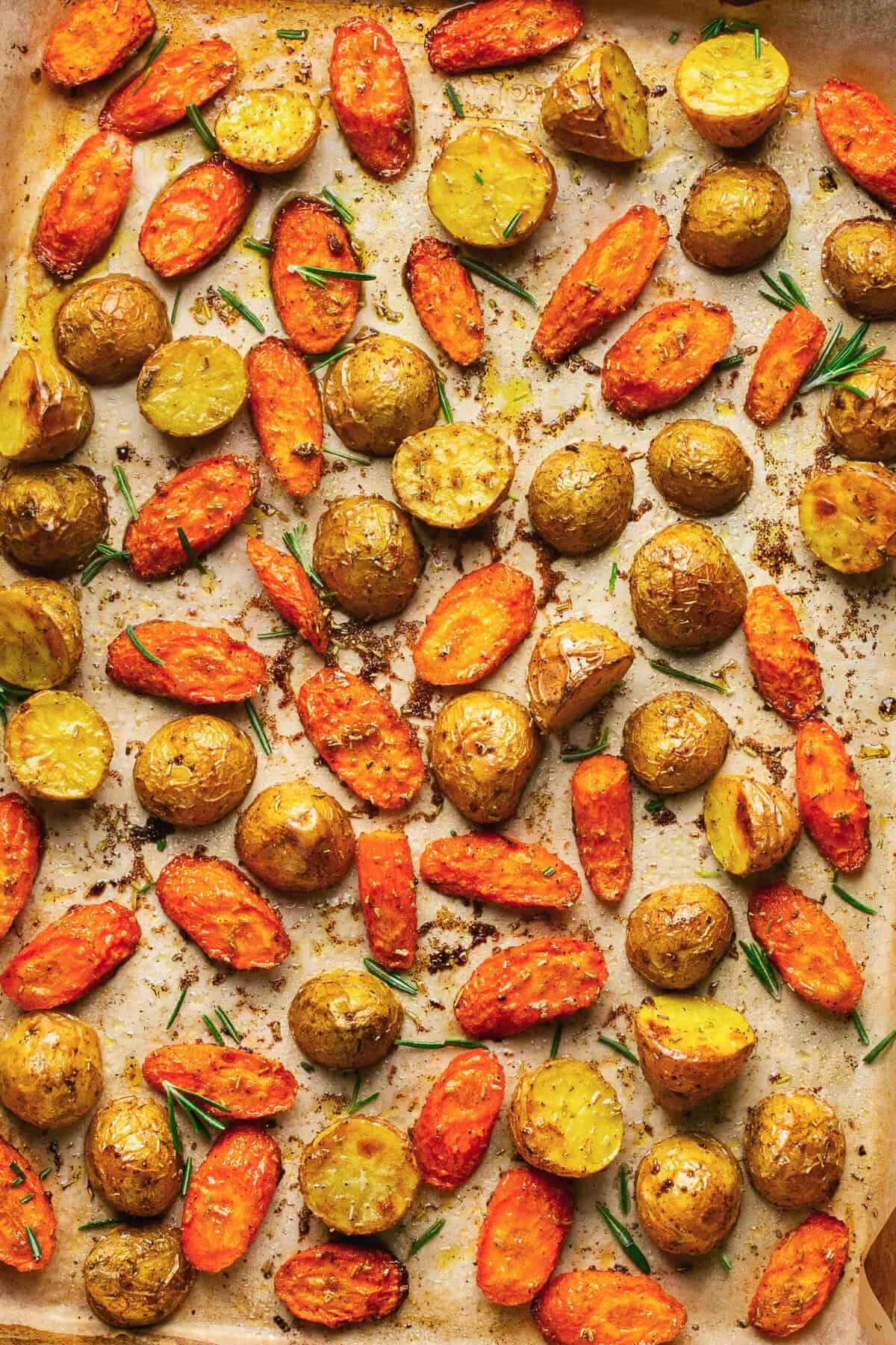
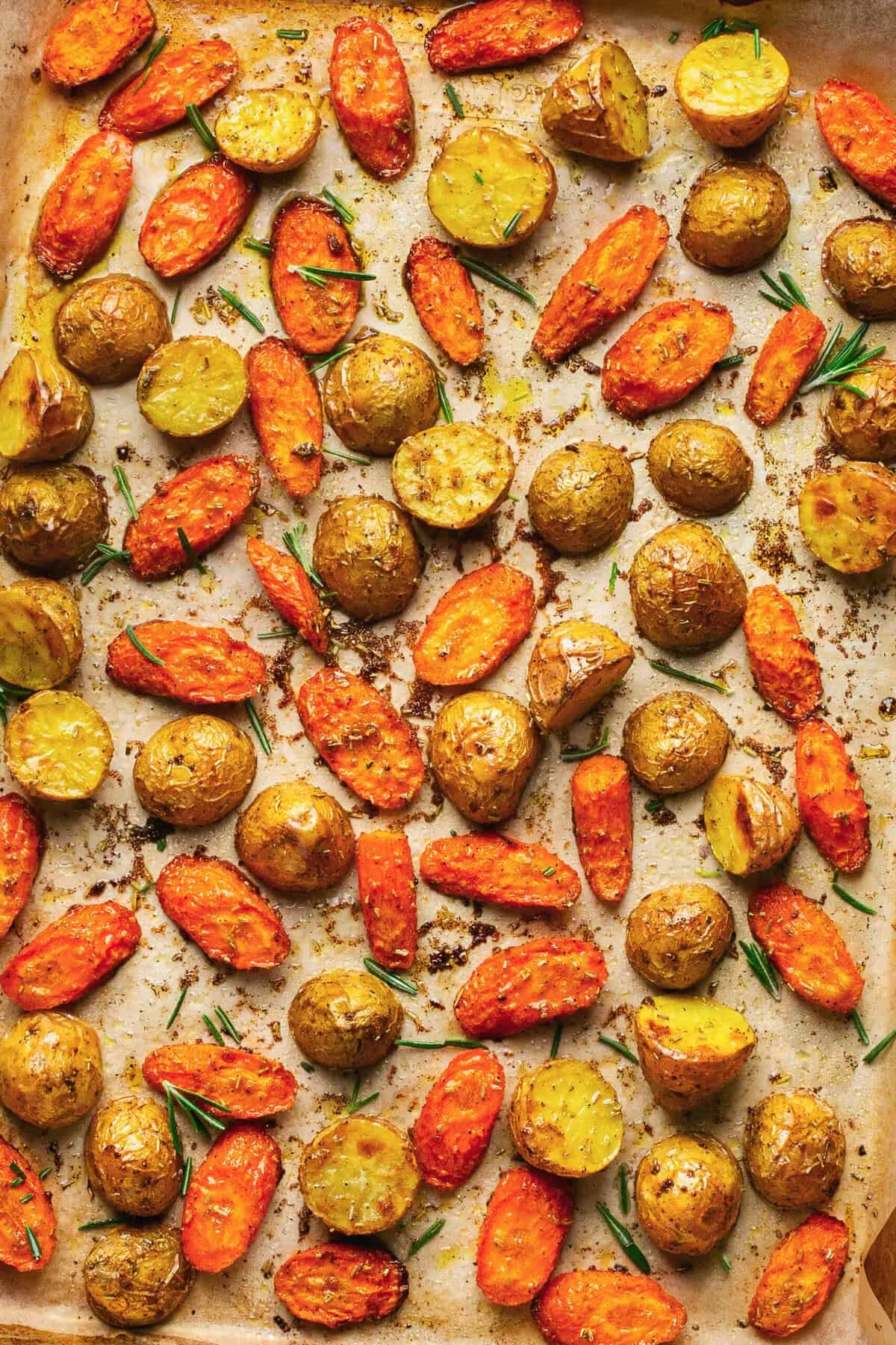
- The Carrots: After being thoroughly washed and peeled, the carrots are cut into one-inch chunks on a bias (diagonal). Slicing on the diagonal increases the exposed surface area of the carrot’s vascular cambium, allowing heat to penetrate the dense core more rapidly and encouraging caramelization along the elongated edges.
- The Potatoes: The baby gold potatoes are washed, dried completely to prevent steaming, and sliced clean in half. Halving the potatoes exposes their starchy interior flesh directly to the hot pan surface, setting the stage for a crispy crust.
Phase 3: The Seasoning Emulsion (Minutes 10 to 12)
The chopped vegetables are transferred to a large mixing bowl. A measured drizzle of extra virgin olive oil is applied, followed by the uniform dispersal of garlic powder, dried rosemary, salt, and pepper. The mixture is thoroughly tossed. This step ensures that the hydrophobic surface of the vegetables is completely coated in a thin layer of fat, which suspends the particulate seasonings and ensures even heat distribution during roasting.
Phase 4: Sheet Pan Configuration and Thermal Exposure (Minutes 12 to 52)
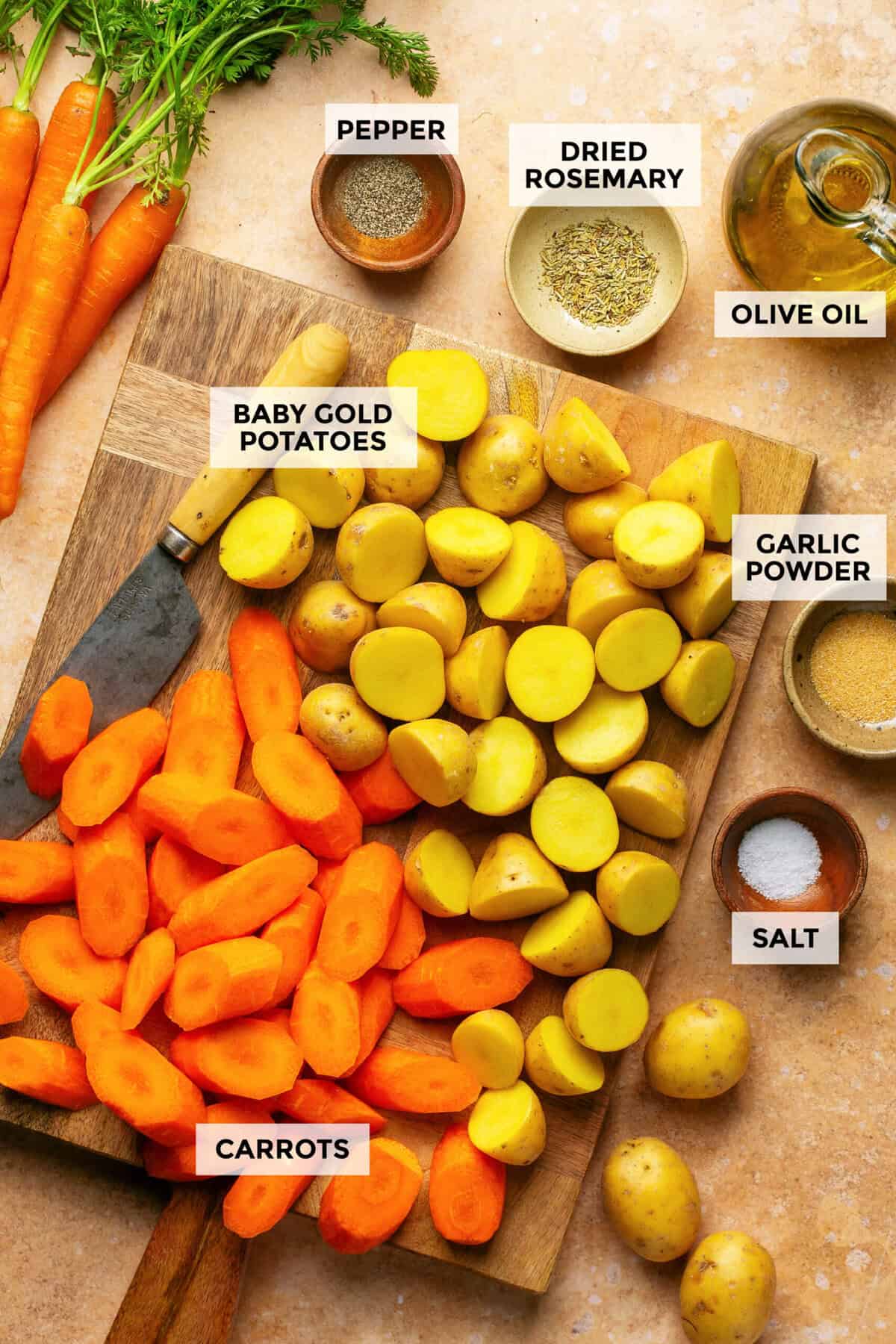
The seasoned vegetables are transferred to the parchment-lined baking sheet. Crucially, they must be arranged in a single, uncrowded layer. If the vegetables overlap, they will trap escaping water vapor, resulting in a soggy, steamed texture rather than a crisp roast.
The sheet pan is placed on the center rack of the oven. The roasting cycle spans approximately 40 minutes. At the 30-minute mark, the vegetables should be evaluated for tenderness using a fork, allowing for slight calibration based on oven variance. Once the edges are caramelized to a deep golden brown and the interiors are soft, the dish is removed from the heat, allowed to rest for two minutes to let the steam subside, and served immediately.
Supporting Data: Nutritional Density and the Physics of Browning
An analysis of the dish’s chemical and nutritional profile reveals why it is both a biological powerhouse and a textbook example of food science in action.
Chemical Reactions: The Maillard Effect and Caramelization
The transformation of raw, bitter root vegetables into sweet, savory bites relies on two distinct thermal phenomena:
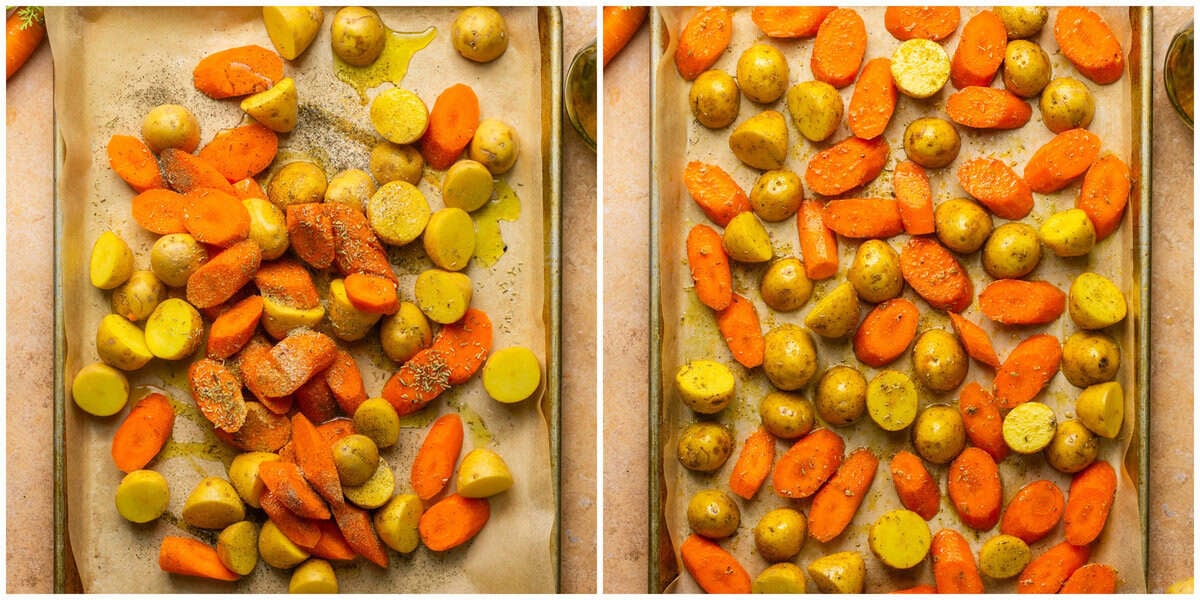
- The Maillard Reaction: Occurring primarily on the exposed starch faces of the halved potatoes, this reaction between reducing sugars and amino acids begins around 284°F (140°C). It produces hundreds of new flavor compounds, giving the potato crust its characteristic deep, nutty, and savory notes.
- Caramelization: This process occurs as the natural sucrose in the carrots breaks down under high heat (beginning at approximately 320°F / 160°C). This pyrolysis of sugars yields volatile compounds that produce a rich, buttery aroma and complex sweetness, offset by the savory garlic and piney rosemary.
The Parchment Paper Factor
A common culinary pitfall is substituting aluminum foil for parchment paper. From a materials science perspective, aluminum foil is an excellent thermal conductor, which can cause the sugars in the vegetables to scorch where they touch the pan before the interiors are fully cooked. Furthermore, starch-rich vegetables easily bond with hot metals, leading to tearing and loss of the crispy skin. Parchment paper, coated with a thin layer of food-safe silicone, provides a non-stick, heat-resistant barrier that regulates heat transfer and preserves the integrity of the caramelized crust.
Comprehensive Nutritional Profile
Based on a standardized four-serving calculation, the nutritional data per serving is detailed below:
| Nutrient Metric | Value per Serving | Daily Value Assessment |
|---|---|---|
| Calories | 248 kcal | Moderate energy density, ideal for a side dish |
| Carbohydrates | 43 g | Primarily complex starches and dietary fibers |
| Dietary Fiber | 7 g | Supports digestive health and blood sugar regulation |
| Sugars | 7 g | Natural sugars from carrots, balanced by fiber |
| Protein | 5 g | Plant-based protein contribution |
| Total Fat | 7 g | Mostly heart-healthy monounsaturated fats |
| Saturated Fat | 1 g | Negligible impact on daily limits |
| Monounsaturated Fat | 5 g | Sourced from premium extra virgin olive oil |
| Sodium | 99 mg | Exceptionally low, supporting cardiovascular health |
| Potassium | 1,135 mg | High concentration, critical for electrolyte balance |
| Vitamin A | 21,388 IU | Massive source of beta-carotene (approx. 427% DV) |
| Vitamin C | 41 mg | High antioxidant support |
| Calcium | 64 mg | Trace mineral support |
| Iron | 2 mg | Essential oxygen transport support |
Expert Culinary Insights: Troubleshooting and Techniques
To understand the mechanics of roasting root vegetables, culinary professionals point to a few essential techniques that separate average home cooking from restaurant-quality results.
Slicing on the Bias: The Geometry of Heat Transfer
A frequent question among novice cooks is why carrots require a diagonal cut. Expert chefs explain that carrots are structurally dense and taproot-shaped, meaning they taper from a thick top to a narrow tip. If cut into straight rounds, the pieces will cook at highly variable rates.
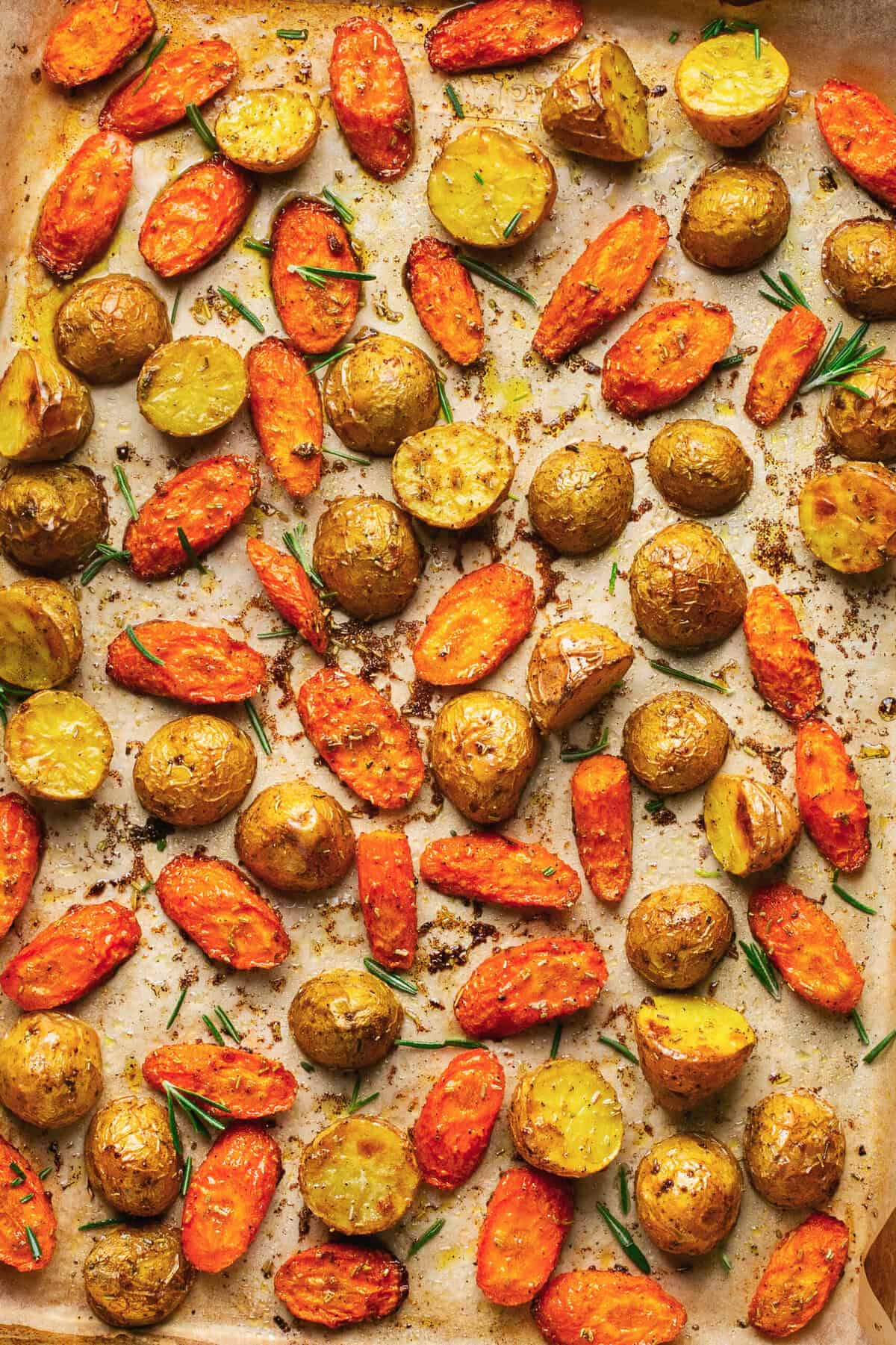
Slicing on the diagonal increases the surface area of each cut relative to its volume. This structural modification exposes more of the carrot’s internal moisture to evaporation, allowing the natural sugars to concentrate and caramelize at a rate that matches the cooking time of the halved baby potatoes.
Moisture Control and the Soggy Veggie Dilemma
When asked why roasted vegetables sometimes turn out soft and soggy, culinary instructors point to three main culprits:
- Overcrowding the Pan: If vegetables are packed tightly together, the moisture they release during roasting cannot escape. It pools on the pan, effectively boiling the vegetables in their own steam.
- Insufficient Roasting Temperature: Roasting at temperatures below 400°F (such as 325°F or 350°F) fails to trigger rapid surface evaporation. The vegetables cook through to the center before the exterior can caramelize, resulting in a mushy texture.
- Excessive Oil: While oil is crucial for heat transfer, too much oil saturates the vegetables and creates a barrier that traps steam inside, preventing a crispy crust from forming.
Broader Implications: The Rise of One-Pan Gastronomy
The popularity of recipes like Tiffany’s roasted potatoes and carrots reflects broader shifts in modern eating habits and food culture.
                  ┌──────────────────────────────┐
                  │   Modern Gastronomic Shift   │
                  └──────────────┬───────────────┘
                                 │
         ┌───────────────────────┼───────────────────────┐
         ▼                       ▼                       ▼
┌─────────────────┐     ┌─────────────────┐     ┌─────────────────┐
│ Plant-Forward   │     │ Macroeconomic   │     │ Efficiency &    │
│ Clean Eating    │     │ Cost-Efficiency │     │ Minimal Labor   │
│ High fiber, low │     │ Stable, cheap   │     │ Single-pan,     │
│ sodium, whole   │     │ root vegetables │     │ low cleanup     │
│ food focus      │     │ amid inflation  │     │ time            │
└─────────────────┘     └─────────────────┘     └─────────────────┘
The Plant-Forward Movement and Whole-Food Nutrition
As consumers increasingly move away from ultra-processed foods, simple, vegetable-centric side dishes are stepping into the spotlight. This recipe fits perfectly into clean-eating frameworks like the Mediterranean, vegan, and gluten-free diets. By relying on whole foods and natural seasonings, it delivers a highly satisfying, nutrient-dense option without the need for artificial additives or heavy dairy-based fats.
Macroeconomic Pressures and Accessible Eating
In an era of rising food costs, root vegetables like carrots and potatoes remain some of the most stable, budget-friendly options in the produce aisle. These ingredients have long shelf lives, minimizing kitchen food waste. This recipe demonstrates that affordable, everyday staples can be transformed into a sophisticated, highly appealing dish through simple, smart cooking techniques rather than expensive ingredients.
Efficiency and the Minimization of Domestic Labor
The modern kitchen is increasingly defined by a desire for efficiency. The rise of "one-pan" cooking reflects a broader push to minimize prep time, kitchen clutter, and cleanup. By utilizing a single mixing bowl and a parchment-lined sheet pan, this recipe delivers a side dish that requires almost no cleanup. This balance of high-quality results and minimal effort explains why simple, well-engineered sheet-pan recipes continue to dominate contemporary home cooking.