Main Facts: The Intersection of Sportfishing and Artisanal Barbecue
When it comes to culinary triumphs, few experiences rival the satisfaction of bringing home a wild-caught trophy from an expedition and transforming it into a masterpiece. In a recent outdoor cooking demonstration that has captivated the barbecue and seafood communities alike, an impressive 20-pound wild Chinook salmon—wrestled from the icy, pristine waters of Canada—journeyed all the way south to Texas. There, it underwent a meticulous transformation, receiving the signature "Meat Church" treatment.
Rather than relying on heavy-handed marinades or masking the pristine flavor of the fresh-caught fish, the preparation leaned into a delicate balance of sweet, savory, and aromatic profiles. The centerpiece of this recipe is cedar-plank smoking on a pellet grill, elevated by a dynamic flavor duo: Meat Church Honey Hog Hot rub (featuring a subtle jalapeño kick) and a finishing glaze of Chef J’s Fire Honey.
Contrary to what the fiery names might suggest, the resulting dish is not an exercise in tongue-burning heat. Instead, it offers a sophisticated, well-rounded profile defined by a sticky, caramelized crust, a rich woodsmoke aroma, and the buttery, melt-in-your-mouth tenderness characteristic of high-grade Chinook salmon. This article explores the anatomy of this recipe, breaking down the chronology of the cook, the mechanics of pellet smoking and cedar-planking, and the broader implications of combining traditional Pacific Northwest seafood with iconic Texas-style pitmaster techniques.
Chronology: Step-by-Step Execution of the Cedar-Plank Hot Honey Salmon
Achieving perfection with a delicate protein like salmon requires precision timing, temperature control, and a strict adherence to sequential steps. Below is the chronological breakdown of how the 20-pound Canadian Chinook was transformed into a backyard barbecue legend.
Phase 1: Pellet Grill Preparation
Before the fish ever touches the heat, the cooking environment must be properly conditioned.
Preheating: The pellet grill (specifically a Traeger model in this demonstration) is preheated to a stable 275°F.
Fuel Selection: Wood choice is paramount when smoking seafood, as heavy woods like mesquite or hickory can easily overpower the delicate oils in the fish. The pitmaster opted for Meat Church Pecan and Cherry blend Traeger pellets. This specific fruit-and-nut wood combination delivers a mild, slightly sweet, and aromatic smoke that gently kisses the exterior of the fish without imparting bitterness.
Phase 2: Seasoning and Resting
With the grill warming up, attention turns to the protein.
Placing the Fish: A large, pristine cut of the Chinook salmon is positioned dead-center on a pre-soaked cedar plank. The plank not only protects the fish from direct radiant heat from below but also infuses the underside with a woody, aromatic steam.
Applying the Rub: The salmon is generously seasoned across all exposed sides with Meat Church Honey Hog Hot BBQ rub.
The Adhesion Window: The seasoned fish is left to rest at room temperature for approximately 15 minutes. This crucial resting window allows the salt and sugar in the rub to draw out a tiny amount of moisture from the fish’s surface, creating a tacky pellicle. This sticky layer ensures the seasoning firmly adheres during the cooking process and forms a savory crust.
Phase 3: The Primary Smoke
Into the Chamber: The loaded cedar plank is transferred to the middle rack of the preheated pellet grill.
The Initial Cook: The salmon roasts and smokes gently at 275°F. At this temperature, the cedar plank begins to smolder slightly on the bottom, releasing fragrant oils.
Milestone Temperature: The fish is monitored closely using a digital meat thermometer until it reaches an internal temperature of 125°F. Under these conditions, this initial phase takes roughly 25 minutes, rendering the flesh opaque, exceptionally moist, and just shy of fully cooked.
Phase 4: The Hot Honey Glaze
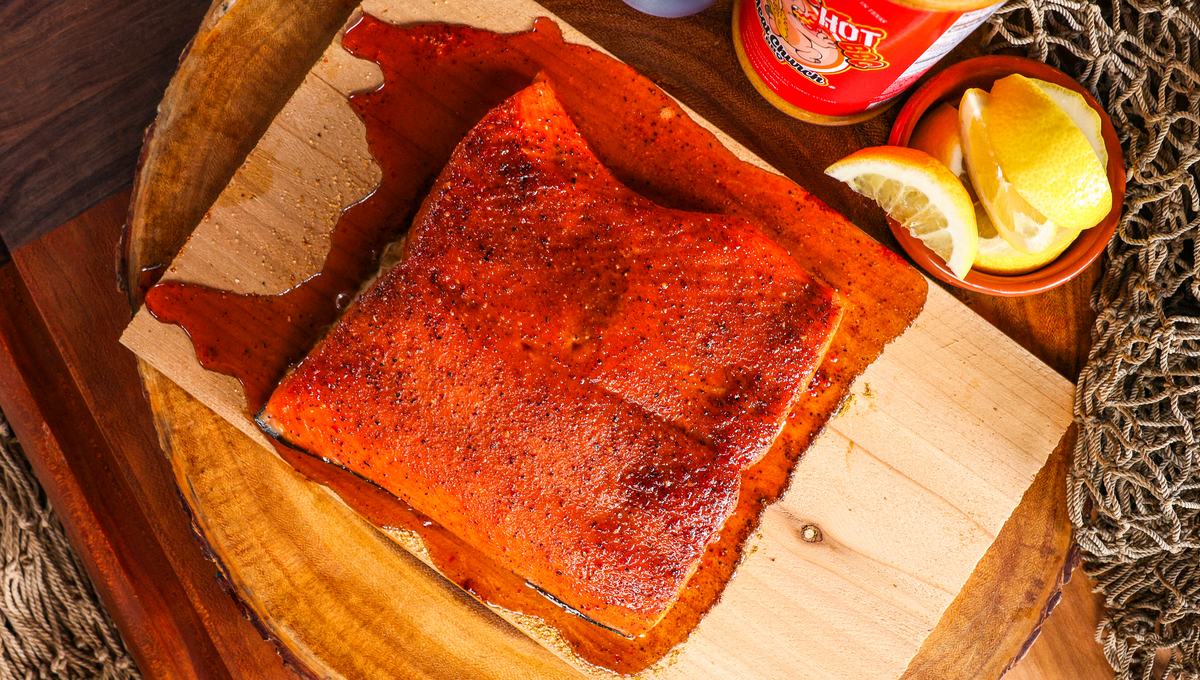
Application: Once the salmon hits the 125°F mark, it receives its defining finish. Chef J’s Fire Honey is drizzled evenly across the top surface of the fillet until the entire golden-pink expanse is coated in a glistening layer.
Caramelization: The plank and glazed fish return to the grill for a final 5 to 10 minutes. During this window, the sugars in the honey heat up, bubble, and begin to caramelize, locking in moisture and mingling with the residual spicy-sweet notes of the underlying rub.
Target Extraction: Cooking continues until the internal temperature registers between 130°F and 135°F. At this precise juncture, the salmon is safely cooked through while maintaining its succulent, flaky texture—avoiding the dry, chalky fate of overcooked fish.
Phase 5: The Rest and Presentation
The Vital Pause: The cedar plank is carefully removed from the smoker and transferred to a cutting board or heat-safe resting area. The salmon is allowed to rest undisturbed for approximately 10 minutes. This pause lets the internal juices redistribute throughout the thick muscle fibers, ensuring every bite is as moist as the last.
Service: The finished product is presented directly on the charred cedar plank, showcasing a deep amber-red glaze, a dusting of colorful spices, and a rich, smoky aroma that bridges the gap between the Pacific wilderness and southern barbecue culture.
Supporting Data: Culinary Mechanics and Flavor Profiles
Understanding why this recipe works requires looking at the science of wood-fired seafood cookery, temperature dynamics, and ingredient synergy.
Temperature Control in Seafood Smoking
While traditional red meats like brisket or pork shoulder thrive in the low-and-slow range of 225°F, fish demands a slightly higher ambient temperature—such as 275°F—to prevent it from sitting in the "danger zone" too long and turning mushy.
125°F Threshold: Pulling the fish at 125°F for the intermediate glaze step ensures that the delicate proteins do not seize up prematurely.
130°F–135°F Final Target: According to culinary safety guidelines, salmon is fully cooked at 145°F, but high-end pitmasters routinely pull quality wild salmon earlier (130°F–135°F). Residual carryover cooking during the 10-minute rest brings the fish safely to its optimal doneness without destroying the precious omega-3 fatty acids and natural oils.
The Anatomy of the Rub and Glaze
The flavor profile relies on a carefully calibrated contrast:
Honey Hog Hot: This rub utilizes the foundational sweetness of honey granules paired with the clean, vegetal heat of jalapeño peppers. Jalapeños provide a mild, warming capsaicin profile that stimulates the palate without causing discomfort, making it universally accessible.
Fire Honey: By layering a second wave of honey over the top during the final minutes of cooking, the sugars undergo the Maillard reaction and simple caramelization. This creates a glossy, sticky barrier that seals in the salmon’s natural moisture while amplifying the savory notes of the rub.
Cedar Plank Infusion: Cedar wood contains natural aromatic oils (such as thujone and cedrol). When heated, these compounds vaporize, permeating the porous flesh of the salmon with a distinctly earthy, woodsy undertone that cuts through the richness of the fish.
Official Responses and Expert Perspectives
The intersection of sportfishing and high-end barbecue has generated significant commentary within the culinary community. Professional pitmasters and outdoor cooking personalities have long debated the merits of smoking fish versus traditional grilling or pan-searing.
The Pitmaster Perspective
According to outdoor cooking advocates who champion the "Meat Church" style of preparation, the key to successful fish cookery on a pellet grill lies in respecting the protein.
"When you’re dealing with a magnificent 20-pound wild Chinook salmon, your primary job as a cook is not to alter the fish completely, but to elevate what nature already provided," notes a senior barbecue technician familiar with the recipe. "By keeping the smoke light—using pecan and cherry instead of heavy hickory—and balancing the heat of the jalapeño rub with the sticky sweetness of hot honey, you bridge two different worlds: the clean, crisp nature of Canadian sportfishing and the soulful, flavorful traditions of Texas pits."
Seafood and BBQ Integration
Culinary historians point out that cedar-planking is an ancient Indigenous technique originating from the Pacific Northwest, where tribes would lash salmon to cedar stakes and roast them over open fires. Adapting this ancestral method to modern pellet grills—and fusing it with Southern-style barbecue rubs—represents a fascinating evolution in regional American cooking. It demonstrates how disparate culinary traditions can merge harmoniously when executed with technical precision.
Implications: The Future of Wild-Caught Seafood on the Backyard Grill
The viral success of this Canadian Chinook salmon recipe highlights several broader trends in modern backyard gastronomy and outdoor cooking culture.
1. The Elevation of Seafood in Backyard Barbecue
Historically, backyard smoking was dominated by beef, pork, and poultry. Fish was often viewed as too delicate, expensive, or finicky for the smoker. However, the rise of digital pellet grills—which offer precise, set-it-and-forget-it temperature control—has democratized seafood smoking. Recipes that combine fruit-wood smoke with sweet-and-spicy glazes are proving that fish can command center stage at any barbecue gathering.
2. Regional Fusion and Ingredient Cross-Pollination
The journey of a fish caught in cold Canadian waters, seasoned with a Texas-formulated jalapeño rub, glazed with artisanal hot honey, and cooked over a cedar plank symbolizes the borderless nature of modern food culture. Consumers are increasingly willing to mix regional techniques—borrowing the smoking methods of the South, the preservation and roasting styles of the Pacific Northwest, and the flavor profiles of Tex-Mex cuisine—to create entirely new dining experiences.
3. Sustainability and Respect for the Catch
Finally, preparing a trophy fish like a 20-pound Chinook underscores the growing appreciation for traceability and respect for wild-caught game. Rather than treating high-end protein as an afterthought, home cooks are investing time, specialized equipment (such as cedar planks and precise digital thermometers), and premium artisanal seasonings to honor the journey of the catch from the water to the table.
In summary, whether you are an avid angler hauling massive salmon out of northern waters or a weekend warrior looking to expand your pellet grill repertoire, the cedar-planked hot honey salmon method offers a foolproof blueprint. By balancing delicate fruit-wood smoke, a measured spicy-sweet rub, and a glossy honey glaze, this recipe proves that when wild adventure meets expert barbecue craft, the results are nothing short of extraordinary.