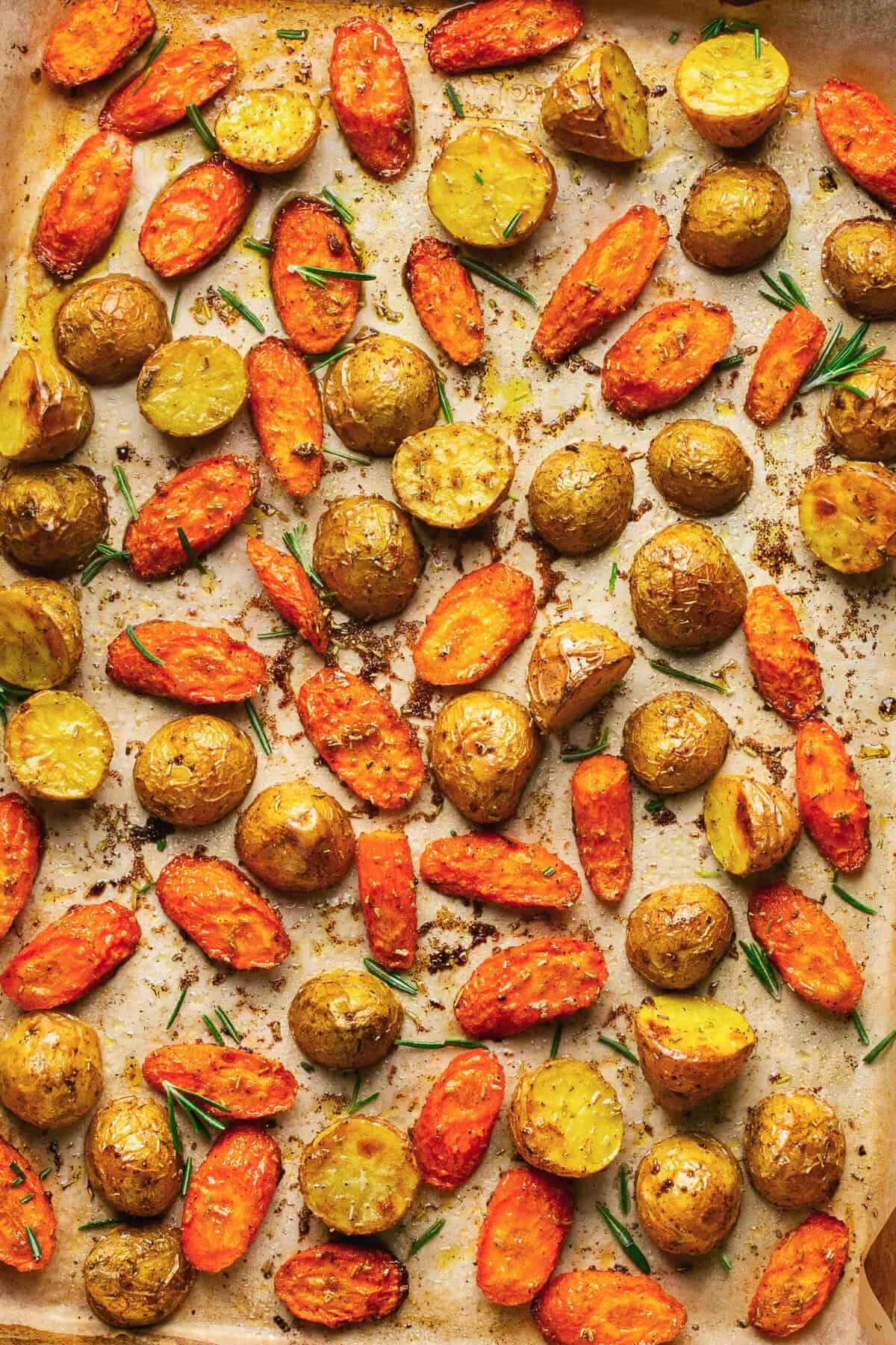
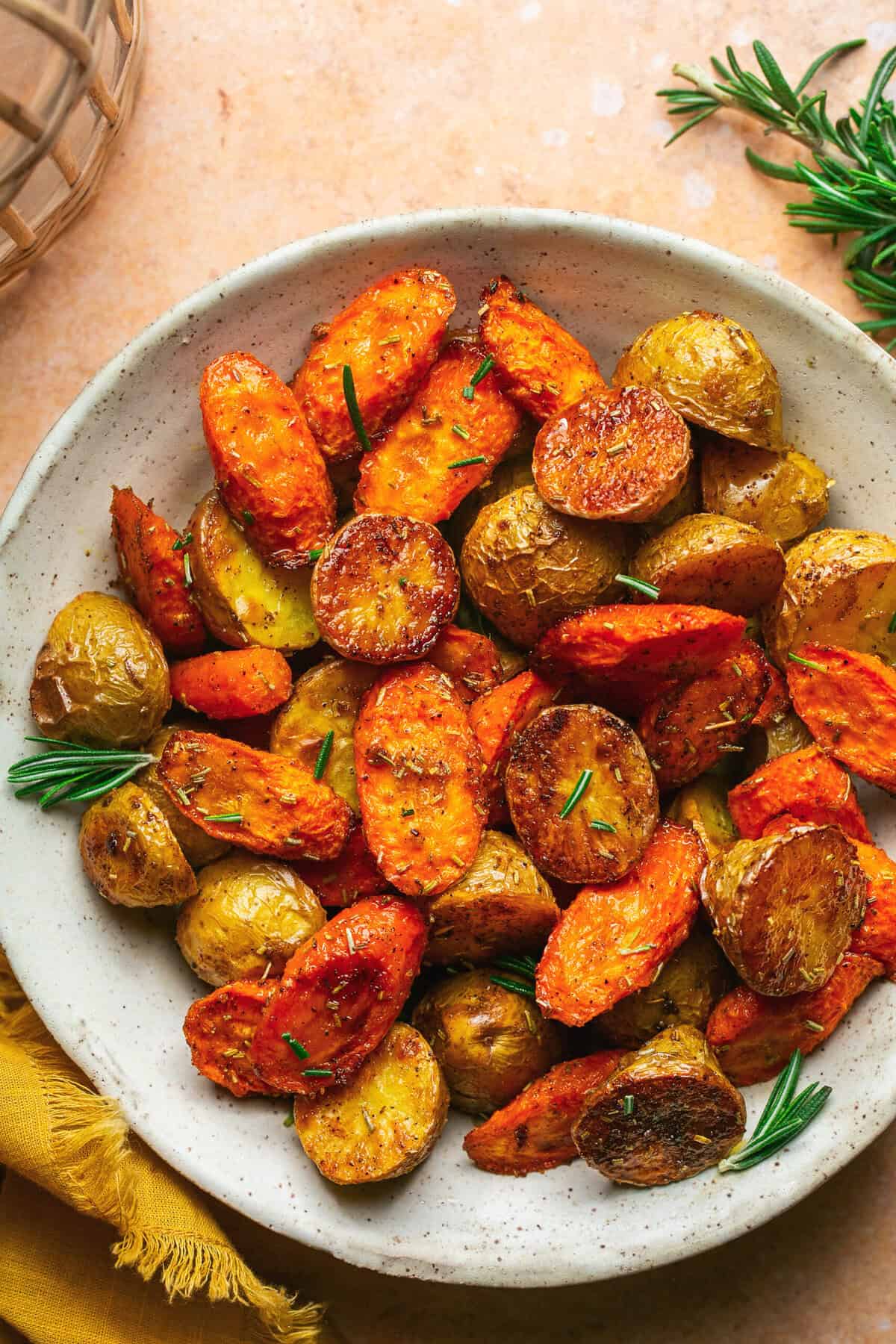
In an era dominated by complex culinary trends and multi-step kitchen appliances, a growing movement of home cooks is returning to the fundamentals of oven roasting. At the center of this movement is a deceptively simple dish: roasted baby gold potatoes and carrots. Developed by culinary expert Tiffany, the creator behind the widely followed food platform Creme de la Crumb, this seven-ingredient, one-pan recipe highlights a broader shift in modern gastronomy toward high-efficiency, nutrient-dense, and low-waste meal preparation.
By focusing on thermodynamic principles, precise knife work, and minimal clean-up, the recipe offers a masterclass in how basic root vegetables can be transformed into a premium side dish. With a preparation time of just 10 minutes and a hands-off roasting period, the formula addresses the primary constraints of contemporary household cooking: time scarcity, nutritional demands, and cleanup fatigue.
Main Facts: The Anatomy of a Minimalist Classic
The success of this roasted potato and carrot dish lies in its structural simplicity. Rather than relying on heavy sauces, batters, or complex cooking techniques, the recipe uses high dry-heat cooking to draw out the natural sugars of the root vegetables while establishing a crisp exterior.
+-------------------------------------------------------------+
|                     RECIPE AT A GLANCE                      |
+------------------------------------+------------------------+
| Active Prep Time                   | 10 Minutes             |
+------------------------------------+------------------------+
| Passive Roast Time                 | 30 to 40 Minutes       |
+------------------------------------+------------------------+
| Cooking Temperature                | 400°F (204°C)          |
+------------------------------------+------------------------+
| Key Equipment                      | Sheet Pan, Parchment   |
+------------------------------------+------------------------+
| Primary Ingredients                | 7 (including spices)   |
+------------------------------------+------------------------+
The Seven-Ingredient Formula
The ingredient profile is strictly curated to maximize flavor output while minimizing shopping lists:
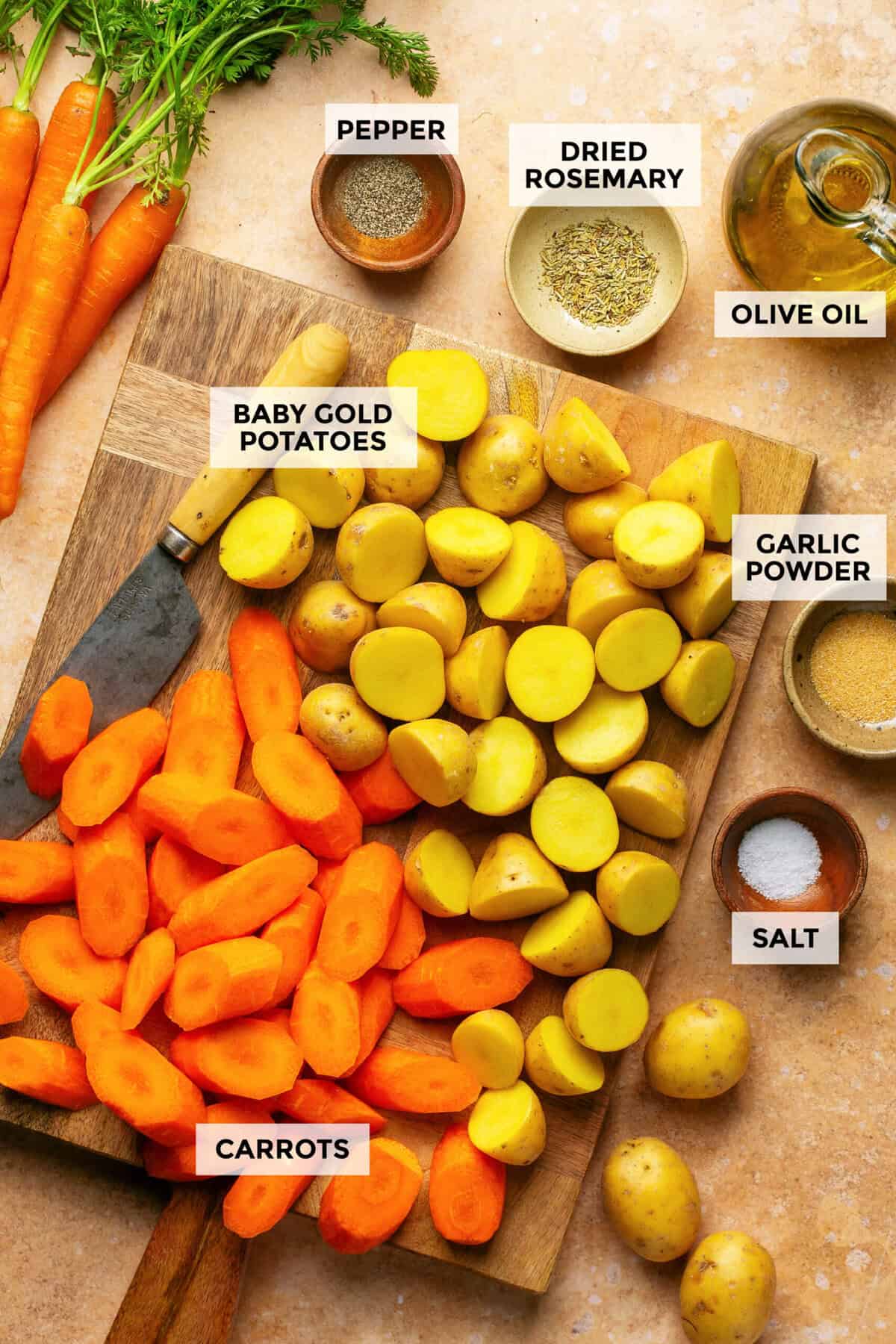
- Carrots: Peeled and cut into one-inch diagonal pieces to expose maximum surface area.
- Baby Gold Potatoes: Halved to match the cooking rate of the carrots.
- Extra Virgin Olive Oil (EVOO): Serves as both a heat-transfer medium and a binder for seasonings.
- Garlic Powder: Provides a savory, caramelized undertone without the risk of burning associated with fresh minced garlic.
- Dried Rosemary: Adds a woody, pine-like aroma that pairs naturally with sweet and starchy root vegetables.
- Fine Sea Salt & Freshly Ground Black Pepper: Essential flavor enhancers that draw out moisture and build crust.
Chronology: The Step-by-Step Culinary Timeline
Achieving the perfect balance of a caramelized, crispy exterior and a soft, pillowy interior requires adhering to a strict chronological sequence. Cooking is ultimately a series of timed chemical reactions; deviating from this timeline can result in either soggy, under-caramelized vegetables or charred, bitter remains.
TIMELINE OF PREPARATION AND ROASTING
[T-10 Min: Prep] -> [T-00 Min: Oven Entry] -> [T+20 Min: Rotate] -> [T+40 Min: Pull & Rest]
Phase 1: The Preparation Window (T-Minus 10 Minutes)
- Oven Calibration: The oven is preheated to 400°F (204°C). This high temperature is critical; lower temperatures will steam the vegetables rather than roast them, leading to a limp texture.
- The Diagonal Cut: Carrots are peeled and sliced on a sharp diagonal into one-inch pieces. Slicing on the bias increases the surface-area-to-volume ratio, allowing the dense carrot fibers to soften at the same rate as the starchier potatoes.
- The Potato Halving: Baby gold potatoes are washed, dried thoroughly, and sliced cleanly in half. Keeping the skin on preserves structural integrity and adds an earthy texture.
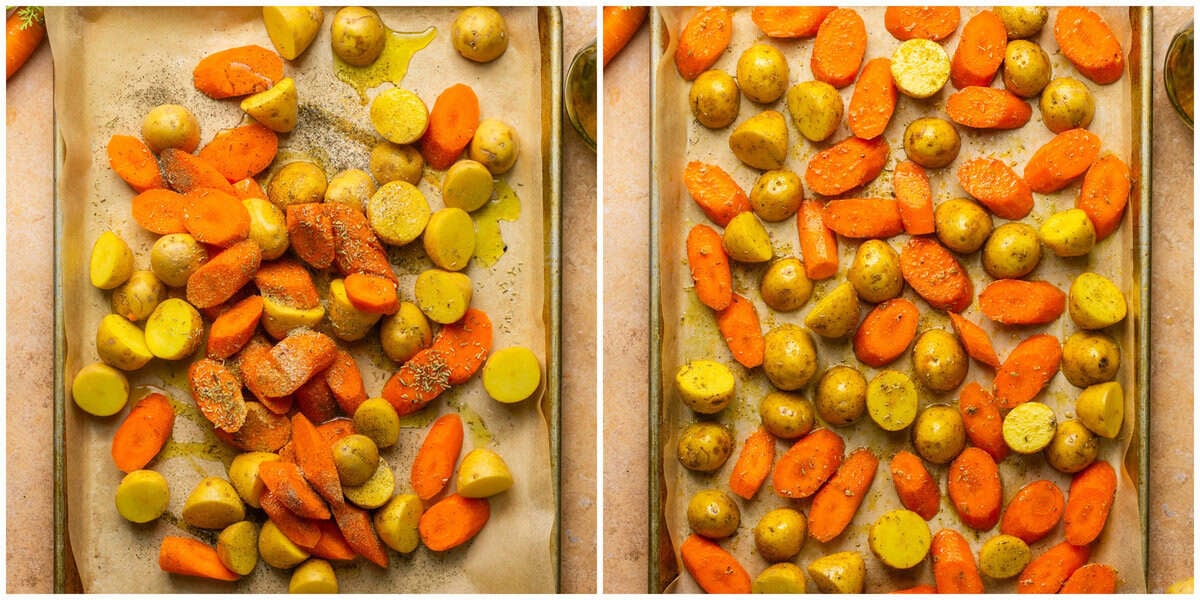
- The Emulsion and Toss: In a large mixing bowl, the potatoes and carrots are combined. They are drizzled with high-quality extra virgin olive oil and tossed with garlic powder, dried rosemary, salt, and pepper until every piece is evenly coated.
- Pan Architecture: A large baking sheet is lined with premium parchment paper. The seasoned vegetables are spread across the sheet in a single, uncrowded layer.
Phase 2: The Roasting Cycle (0 to 40 Minutes)
- Minute 0 (Oven Entry): The baking sheet is placed on the center rack of the oven. The high heat immediately begins vaporizing surface moisture.
- Minute 20 (The Mid-Point Rotation): The sheet pan is removed briefly, and the vegetables are turned using a wide spatula. This ensures that the surfaces in contact with the pan do not burn and that heat distribution remains uniform.
- Minute 30 (The Quality Check): The cook checks the vegetables for tenderness. Smaller cuts may be fully cooked at this stage.
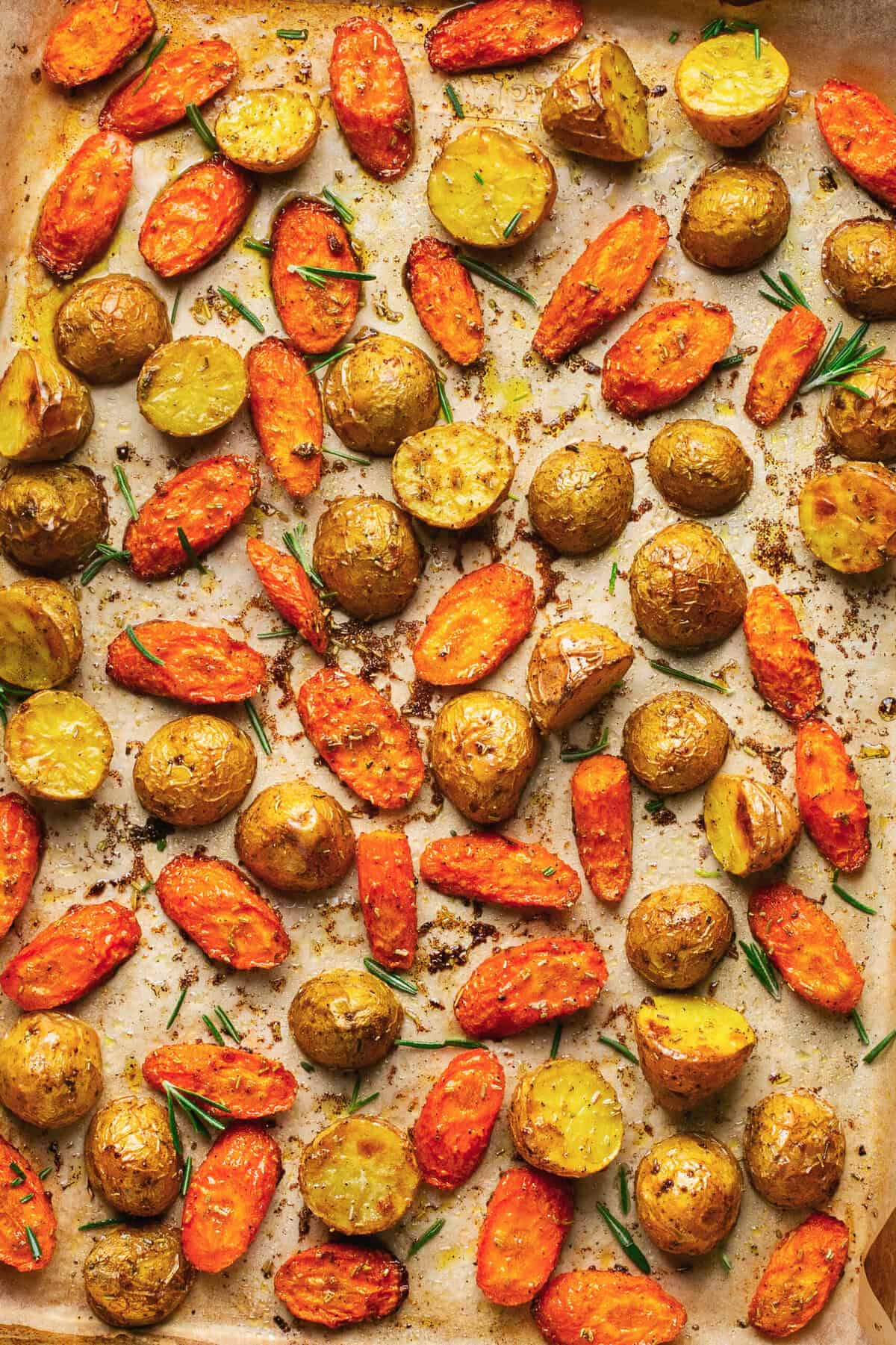
- Minute 40 (The Extraction): Once the edges of both the potatoes and carrots exhibit a deep golden-brown caramelization and the centers are tender when pierced with a fork, the pan is removed from the oven. The vegetables are allowed to rest on the hot pan for two minutes to set their crispy exteriors before serving.
Supporting Data: Nutritional Analysis and Culinary Physics
To understand why this recipe yields such consistent results, it is necessary to examine both its nutritional composition and the physical science of high-heat roasting.
Nutritional Profile
From a dietary perspective, the combination of potatoes and carrots offers a balanced, allergen-free, and nutrient-dense side dish. The following data outlines the nutritional metrics per serving (based on a four-serving yield):
+-------------------------------------------------------------+
|                 NUTRITIONAL DATA PER SERVING                |
+------------------------------------+------------------------+
| Calories                           | 248 kcal               |
+------------------------------------+------------------------+
| Carbohydrates                      | 43 g                   |
+------------------------------------+------------------------+
| Dietary Fiber                      | 7 g                    |
+------------------------------------+------------------------+
| Sugars                             | 7 g                    |
+------------------------------------+------------------------+
| Protein                            | 5 g                    |
+------------------------------------+------------------------+
| Total Fat                          | 7 g                    |
|   - Saturated Fat                  | 1 g                    |
|   - Monounsaturated Fat            | 5 g                    |
+------------------------------------+------------------------+
| Potassium                          | 1,135 mg               |
+------------------------------------+------------------------+
| Sodium                             | 99 mg                  |
+------------------------------------+------------------------+
| Vitamin A                          | 21,388 IU              |
+------------------------------------+------------------------+
| Vitamin C                          | 41 mg                  |
+------------------------------------+------------------------+
| Calcium                            | 64 mg                  |
+------------------------------------+------------------------+
| Iron                               | 2 mg                   |
+------------------------------------+------------------------+
This profile highlights several key health benefits:
- High Potassium: At 1,135 mg, a single serving provides a significant portion of the recommended daily intake, supporting cardiovascular health and fluid balance.
- Beta-Carotene Density: The exceptional Vitamin A content (21,388 IU) comes from the carrots, promoting ocular health and immune function.
- Healthy Fats: The fat content is primarily monounsaturated, derived from the heart-healthy olive oil used to roast the vegetables.
The Physics of Crispiness: Parchment vs. Foil
A common pitfall in home roasting is the substitution of aluminum foil for parchment paper. Food science explains why this choice can ruin a dish:
PARCHMENT PAPER (Recommended)
- Porous structure absorbs microscopic surface condensation
- Low thermal conductivity prevents localized scorching
- Non-stick surface allows clean release of caramelized sugars

ALUMINUM FOIL (Not Recommended)
- High thermal conductivity causes rapid, uneven heating
- Traps moisture underneath, steaming the bottom of the vegetables
- Sugars stick to the metal, stripping away the crispy crust upon removal
When roasting at 400°F, the natural sugars in carrots and potatoes undergo the Maillard reaction and caramelization. Parchment paper acts as a gentle buffer, allowing these sugars to brown slowly without sticking. Foil, by contrast, transfers heat too rapidly, often scorching the contact points before the interior of the vegetable can cook through.
Culinary Expert Commentary and Methodology
Culinary professionals and food scientists agree that cooking root vegetables together requires managing their different densities and water content.
"The primary challenge of sheet-pan cooking is synchronization," explains a culinary arts instructor specializing in vegetable cookery. "Carrots are dense and fibrous, containing roughly 88% water, while potatoes are packed with complex starches. If you cut them into identical blocks, the potatoes will cook through long before the carrots lose their woody bite. Slicing the carrots diagonally solves this problem by exposing more of their interior to direct heat, accelerating cellular breakdown and starch gelatinization."
Tiffany, the recipe developer, emphasizes the importance of potato selection. "It is important to start with baby gold potatoes because they roast up in time with the carrots when cut in half," she notes. "You can also use baby red or fingerling potatoes if you prefer."
The thin, delicate skins of baby gold potatoes also eliminate the need for peeling. This not only preserves dietary fiber but also creates a natural pocket that traps steam inside the potato, yielding a creamy, mashed-potato-like interior while the cut side crisps against the pan.
Implications: The Rise of Minimalist Sheet-Pan Gastronomy
The widespread popularity of recipes like Tiffany’s roasted potatoes and carrots reflects a broader cultural and economic shift in home cooking. As inflation impacts grocery budgets and busy schedules limit kitchen time, the "sheet-pan meal" has transitioned from a passing trend to a fundamental pillar of modern home economics.
THE SHEET-PAN ADVANTAGE
                  ┌────────────────────────┐
                  │  Minimalist Prep Time  │
                  └───────────┬────────────┘
                              ▼
                  ┌────────────────────────┐
                  │ Single-Pan Clean-up    │
                  └───────────┬────────────┘
                              ▼
                  ┌────────────────────────┐
                  │ Broad Dietary Appeal   │
                  └───────────┬────────────┘
                              ▼
                  ┌────────────────────────┐
                  │ Affordable Ingredients │
                  └────────────────────────┘
1. Economic Efficiency
Root vegetables like carrots and potatoes are among the most economical items in the produce aisle. They feature an exceptionally long shelf life, reducing food waste—a major contributor to household financial loss. By transforming these affordable staples into a highly appealing dish through basic roasting techniques, families can lower their overall food costs without sacrificing nutrition or flavor.
2. The Clean-up Revolution
One of the greatest barriers to home cooking is cleanup fatigue. By utilizing a single cutting board, one mixing bowl, and a parchment-lined sheet pan, this recipe reduces post-dinner dishwashing to just a few minutes. This efficiency encourages home cooking over processed, sodium-heavy takeout options.
3. Dietary Versatility
In a landscape where households often have diverse dietary needs, this roasted potato and carrot dish is naturally inclusive. It is inherently gluten-free, vegan, dairy-free, and nut-free, making it an easy choice for school lunches, holiday gatherings, and multi-generational family dinners.
Conclusion: Mastering the Basics
Ultimately, the enduring appeal of roasted potatoes and carrots proves that culinary excellence does not require exotic ingredients or complex equipment. By understanding the relationships between temperature, surface area, and simple seasonings, any home cook can master the science of the oven. This seven-ingredient recipe is more than just a quick side dish; it is a blueprint for efficient, delicious, and accessible home cooking.