CULINARY ARTS & LIFESTYLE — Food traditions carry an undeniable weight. They are anchored in memory, tied to the clinking of silverware on weeknight tables, the strict routines of family dinners, and the comforting aromas that drift from a hot kitchen. For many, Italian-American comfort food represents the peak of culinary nostalgia. Yet, as dietary preferences evolve and home kitchens seek methods that balance rich flavor with modern wellness, classic recipes are undergoing a quiet revolution.
Nowhere is this more evident than in the reimagining of eggplant Parmesan—a dish historically celebrated for its decadence, yet often bogged down by heavy frying pans and oil-saturated breading. By revisiting a beloved family recipe from decades past, contemporary home cooks are proving that comfort food does not need to come at the expense of lightness, nor does it require sacrificing the textures and layers that make it a perennial favorite.
Main Facts: Deconstructing the Modern Eggplant Parmesan
At its core, traditional eggplant Parmesan relies on a precise assembly of ingredients: sliced nightshade vegetables, breadcrumbs, seasoned tomato sauce, and layers of melted cheese. However, the modern iteration of this classic comfort food shifts the execution entirely away from heavy stovetop frying in favor of a cleaner, oven-baked technique.
Key Elements of the Recipe:
The Vegetable Foundation: Fresh, firm globe eggplants sliced into uniform rounds to ensure even cooking.
The Coating: A lighter breading mixture combining panko breadcrumbs with grated Parmesan cheese, elevated by aromatic herbs like thyme and oregano rather than heavy salt or saturated fats.
The Sauce: A scratch-made marinara sauce built from crushed tomatoes simmered for approximately 20 minutes, bypassing processed, jarred alternatives laden with added sugars and preservatives.
The Cheese Component: Slices of fresh, high-moisture mozzarella layered strategically between the eggplant to deliver a rich, gooey melt without an overwhelming greasiness.
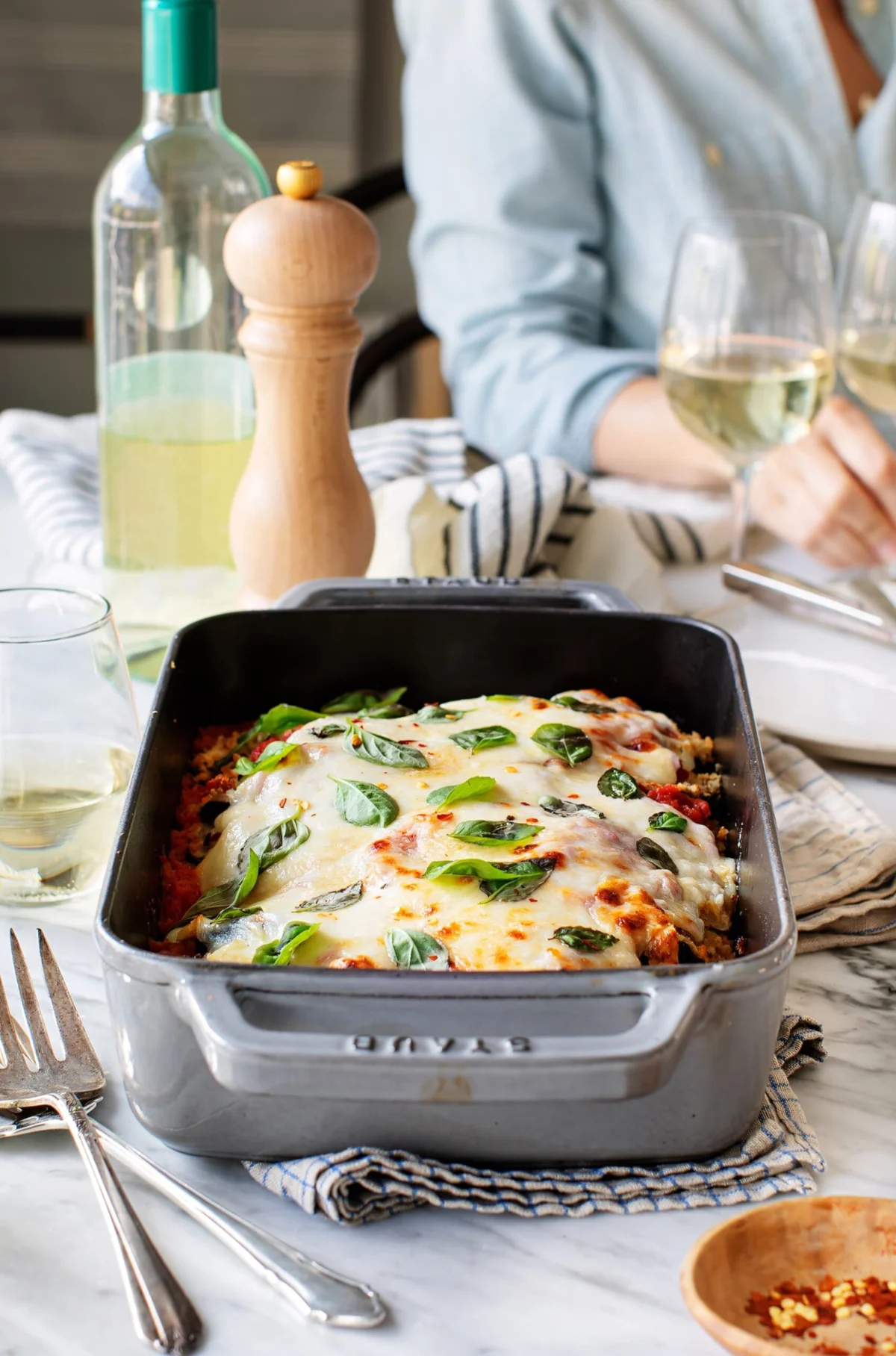
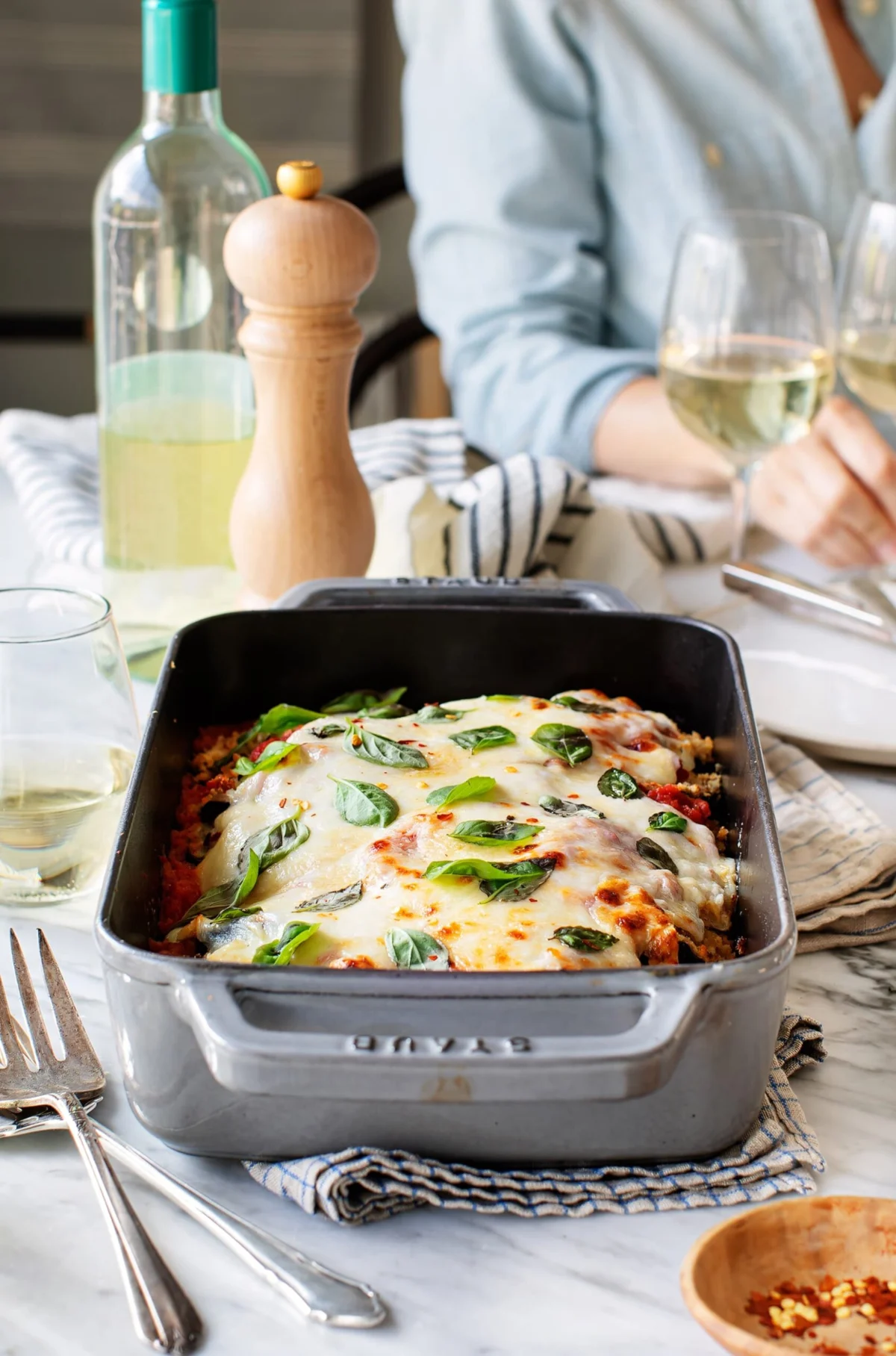
The Finishing Touch: Fresh basil leaves—ideally harvested straight from a home garden—torn and scattered over the dish immediately after it emerges from the oven.
According to nutritional profiles for this baked style, a standard serving (calculated as one-sixth of a full recipe) yields approximately 480 calories, 26 grams of fat (including 14 grams of saturated fat), 32 grams of carbohydrates, 8 grams of dietary fiber, and a robust 31 grams of protein. Total preparation and cooking time spans roughly one hour, making it an approachable project for both weeknight cooking and weekend entertaining.
Chronology: From Childhood Nostalgia to the Kitchen Counter
To understand the evolution of this recipe, culinary historians and home cooks alike often look backward. The narrative of eggplant Parmesan is deeply rooted in generational transfer—a culinary inheritance passed down through family kitchens.
The Era of Scratch Cooking
Decades ago, before the proliferation of pre-shredded cheeses and convenience-oriented jarred sauces, weeknight dinners followed a strict, non-negotiable routine. Meals were prepared entirely from scratch because convenience items were viewed as an unnecessary household expense. Every element, from the simmering of the tomatoes to the dredging of the vegetables, demanded manual labor and careful timing.
The Interruption of Summer
In domestic settings, this routine faced its greatest challenge during the summer months. For children growing up in these households, dinner was frequently viewed as a temporary interruption to far more pressing matters: watching for the local ice cream truck, holding improvised jumping contests on backyard swing sets, and running athletic relays in jelly shoes.
Food was functional; play was paramount. That calculus, however, changed instantly on nights when eggplant Parmesan was on the menu. The distinct, savory scent of bubbling tomato sauce, toasted breadcrumbs, and melting cheese drifting from the oven possessed a unique gravitational pull. It was powerful enough to draw children away from the yard, compelling them to pause their games, wash their hands, and sit down to savor a meal that bridged the gap between everyday nourishment and a genuine culinary event.
The Contemporary Adaptation
Fast forward to the present day, and the recipe has been consciously streamlined. Recognizing that modern home cooks value efficiency just as much as authentic flavor, the preparation has been adapted to fit contemporary lifestyles. The messy, oil-intensive frying stations of the past have been replaced by sheet-pan baking methods, while maintaining the textural contrast of a crisp exterior and a tender interior.
Supporting Data & Recipe Metrics
Culinary success in baking-centric vegetable dishes relies heavily on the management of moisture, temperature, and timing. Eggplant, by nature, is a spongy vegetable that can easily become waterlogged or rubbery if not handled correctly.
Nutritional Breakdown Per Serving (Based on 6 Servings):
Total Calories: 480 kcal (Calories from Fat: 234)
Total Fat: 26g (40% Daily Value)
Saturated Fat: 14g (88% Daily Value)
Monounsaturated Fat: 7g
Polyunsaturated Fat: 2g
Trans Fat: 0.01g
Cholesterol: 160mg (53% Daily Value)
Sodium: 1807mg (79% Daily Value)
Potassium: 928mg (27% Daily Value)
Carbohydrates: 32g (11% Daily Value)
Dietary Fiber: 8g (33% Daily Value)
Sugars: 12g (13% Daily Value)
Protein: 31g (62% Daily Value)
Vitamins & Minerals:
Vitamin A: 1660 IU (33% Daily Value)
Vitamin C: 17mg (21% Daily Value)
Calcium: 661mg (66% Daily Value)
Iron: 4mg (22% Daily Value)
Time Management:
Prep Time: 20 minutes (includes slicing, dredging, and sauce preparation)
Cook Time: 40 minutes (includes baking the eggplant rounds and final casserole assembly bake)
Total Time: 1 hour
Yields: 6 to 8 generous portions
Step-by-Step Methodology: Crafting the Dish
Achieving the ideal balance of crunch and melt requires a methodical approach to preparation and assembly.
1. Preparing the Sauce
Begin by crafting a homemade marinara. Simmer crushed tomatoes over medium-low heat for roughly 20 minutes, allowing the natural sweetness of the fruit to concentrate while losing excess water. Season simply to maintain a bright, clean tomato flavor that will cut through the richness of the cheese.
2. The Dredging Station
Slice the globe eggplants into uniform rounds. Set up a standard breading station: beaten eggs, followed by a dry mixture of panko breadcrumbs, grated Parmesan cheese, and generous pinches of dried oregano and thyme. Coat each slice thoroughly, ensuring an even layer that will crisp up efficiently in the oven.
3. Baking Instead of Frying
Arrange the breaded eggplant slices in a single layer on baking sheets. Rather than submerging them in vats of boiling oil, bake them at a high temperature until the coatings are golden brown and crunchy, and the interior flesh has softened completely.
4. Layering the Casserole
In a baking dish, spread a foundational layer of the homemade marinara sauce. Lay down the crispy baked eggplant slices, followed by torn pieces of fresh mozzarella cheese. Repeat the layers depending on the depth of your dish, finishing with a final blanket of cheese and sauce.
5. The Oven Melt and Final Garnish
Bake the assembled dish until the cheese is bubbling, thoroughly melted, and slightly browned at the edges. Once removed from the oven, immediately scatter freshly torn garden basil leaves across the top. The residual heat will release the herb’s essential oils, perfuming the entire dish.
Official Responses and Culinary Expert Perspectives
Professional chefs and home-cooking authorities have increasingly championed the shift toward baked Italian-American classics. While purists historically defended deep-frying as the only authentic method for achieving texture, modern culinary consensus highlights the functional and health benefits of oven-baking.
"When you eliminate the heavy frying step, you aren’t just cutting calories—you are allowing the clean, vibrant flavors of the tomato and the fresh herbs to take center stage," notes food science literature regarding modern reinterpretations of comfort foods. "Eggplant naturally absorbs cooking fats like a sponge. By baking it with a seasoned panko crust, you achieve the structural crunch you want without masking the delicate flavor of the vegetable itself."
Nutritionists also point out that incorporating fiber-dense vegetables like eggplant into cheese-forward dishes provides a balanced nutritional profile, offering high levels of dietary fiber, potassium, and antioxidants alongside satisfying macronutrients.
Implications: Serving, Storing, and the Future of Family Dinners
As modern households look for meals that satisfy both nostalgic cravings and contemporary health goals, dishes like baked eggplant Parmesan serve as a template for culinary evolution.
Pairing Recommendations
While the dish is hearty enough to stand alone as a vegetarian main course, its robust flavor profile pairs exceptionally well with complementary sides:
Carbohydrates: Freshly baked no-knead crusty bread or a side of al dente pasta.
Vegetable Sides: Simple roasted broccoli, roasted cauliflower, or grilled zucchini.
Salads: Crisp, acidic green salads designed to cut through the richness of the melted mozzarella.
Storage and Reheating Protocols
Refrigerator Storage: Leftovers keep exceptionally well in a covered baking dish or airtight container stored in the refrigerator for up to 4 days. While the breading will naturally soften over time as it absorbs moisture from the sauce, the flavor remains intact.
Freezing: The finished dish can be frozen for up to 3 months. Allow the casserole to cool completely to room temperature, seal tightly in an airtight container, and thaw overnight in the refrigerator before reheating.
Reheating: To restore optimal texture, reheat portions in a 325°F oven until warmed through, or utilize a microwave for convenience.
Ultimately, the enduring appeal of eggplant Parmesan lies in its ability to adapt. Whether recalling childhood memories of summer days and backyard games or discovering the recipe for the first time as a balanced weeknight dinner, this modern baked approach proves that the best culinary traditions are those that grow alongside us.