Main Facts
The landscape of American comfort food is undergoing a quiet revolution, with home cooks and culinary enthusiasts increasingly turning away from heavily processed convenience items in favor of vibrant, scratch-made alternatives. At the center of this movement is a reimagined American classic: the traditional corn casserole. Often associated with holiday tables, family potlucks, and weeknight suppers, this comforting dish has long relied on packaged cornbread mixes and canned creamed corn. However, a fresh approach developed by culinary creators demonstrates that returning to wholesome, simple ingredients yields a side dish that far surpasses its boxed predecessor in both depth of flavor and texture.
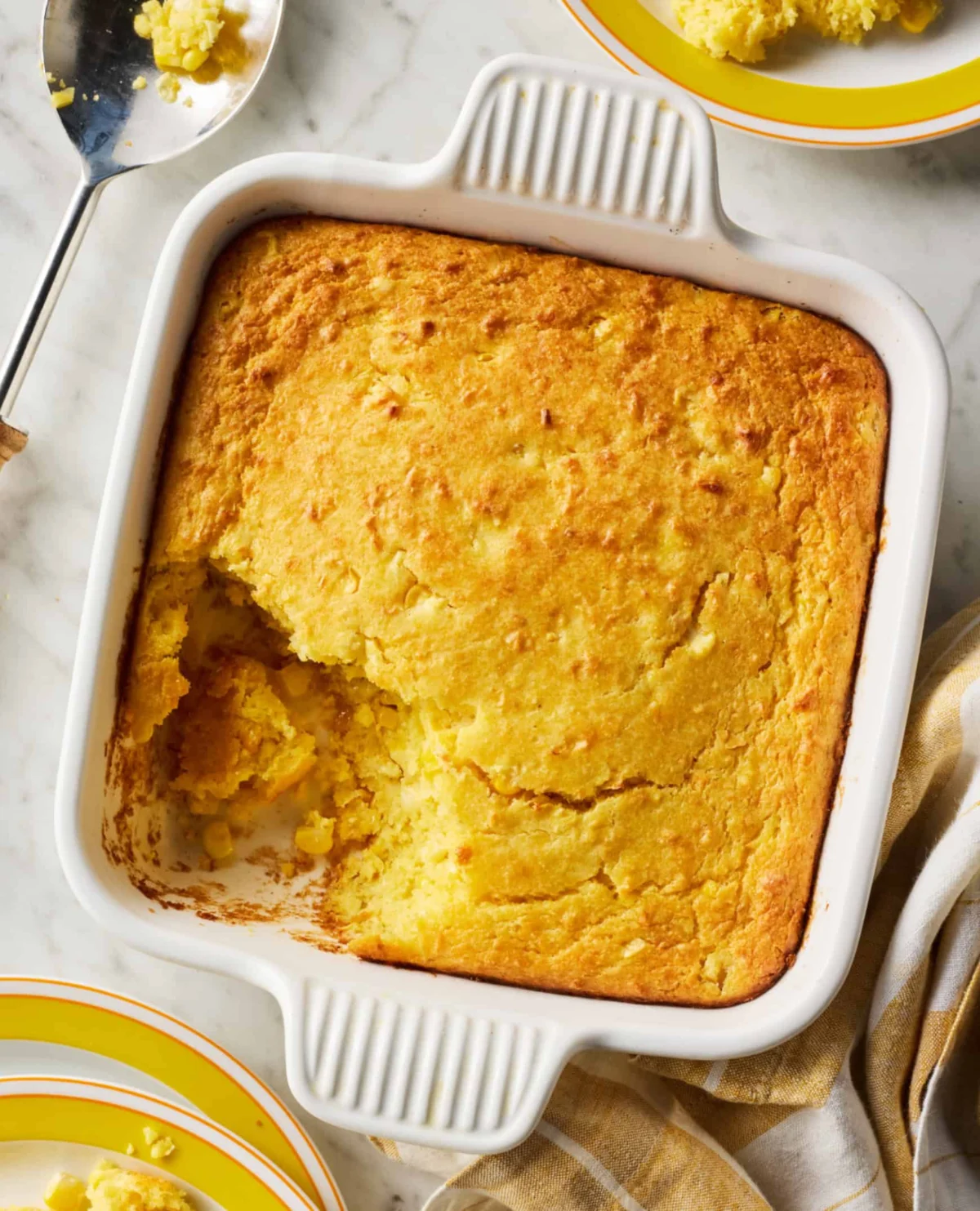
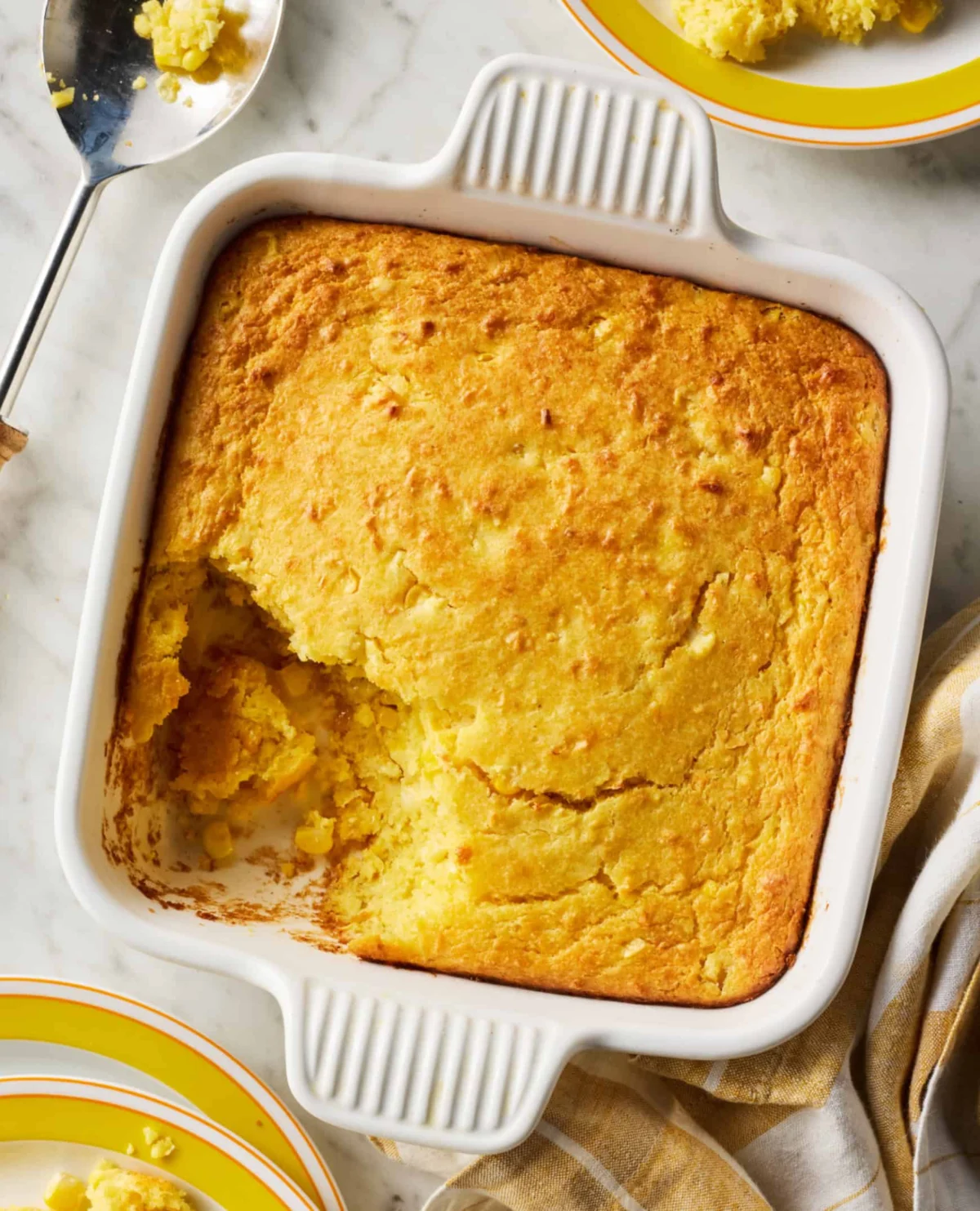
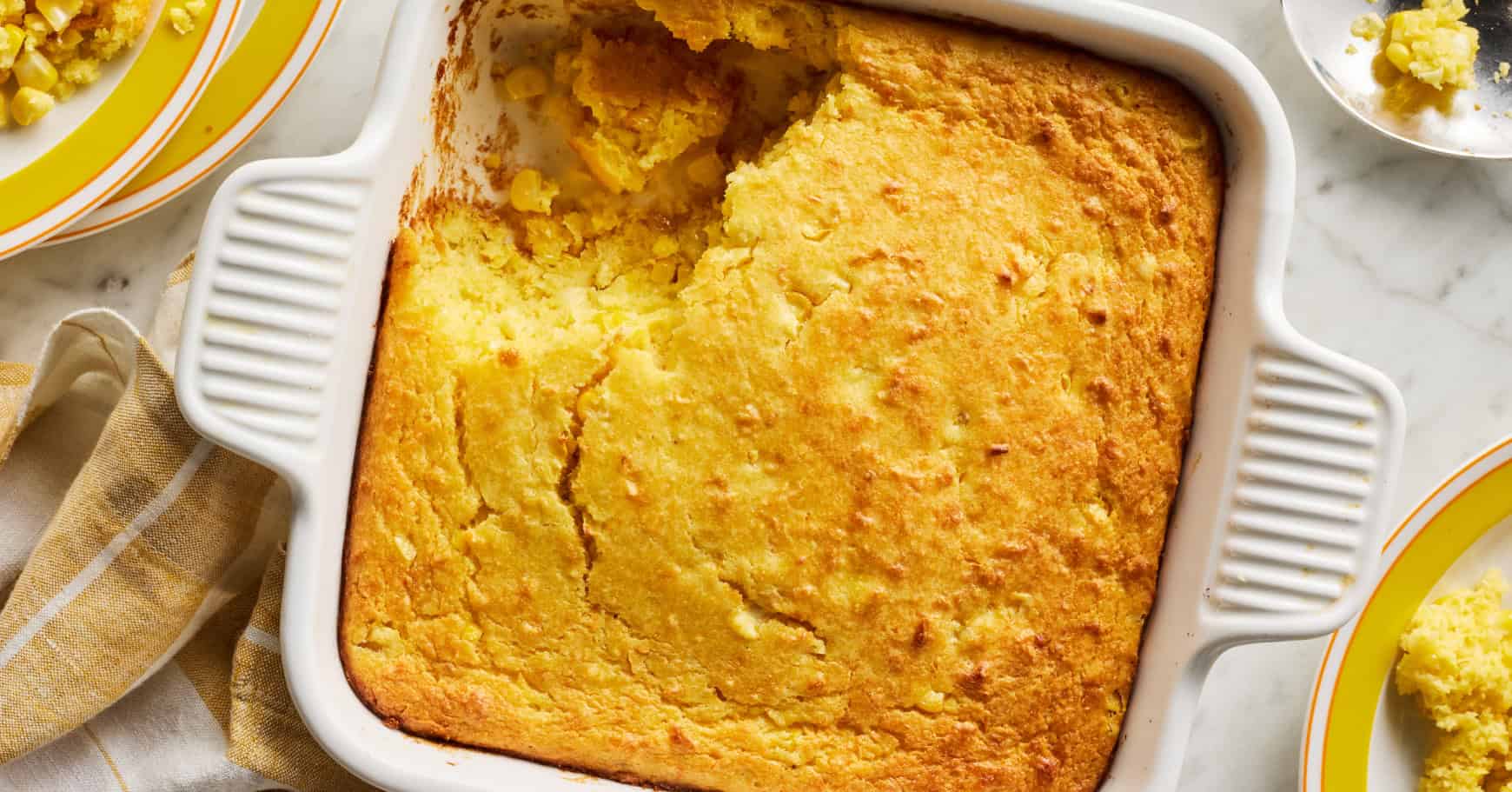
This modern iteration of corn casserole bridges the gap between traditional cornbread and rich, spoonable corn pudding. Characterized by its deeply golden brown, caramelized edges and a lusciously creamy center, the dish features a harmonious balance of sweet and savory notes. Unlike standard recipes that lean heavily on commercially prepared shortcuts, this version stars fresh corn kernels—with a clever culinary technique utilizing a food processor to puree a portion of the corn to mimic the moisture and richness of canned cream-style corn without the artificial additives. Enhanced by a homemade blend of flour, fine cornmeal, baking powder, rich butter, and tangy sour cream, the recipe delivers an elevated dining experience while remaining approachable for cooks of all skill levels.
Furthermore, culinary flexibility remains a cornerstone of the recipe. While optimized for early fall harvests using fresh corn, the dish is inherently adaptable, accommodating frozen or canned corn varieties, as well as classic boxed mixes for time-pressed home cooks. Designed to serve nine generous portions, the casserole requires just 15 minutes of active preparation time and 45 minutes in the oven, establishing it as an exceptionally practical, make-ahead addition to upcoming autumn and winter holiday spreads.
Chronology
To understand the evolution and execution of this standout side dish, it helps to examine the precise sequence required to transform raw ingredients into a golden, custard-like masterpiece. The preparation timeline is straightforward, structured to maximize efficiency and texture control:
Phase 1: Preparation and Dry Ingredient Integration (0–5 Minutes)
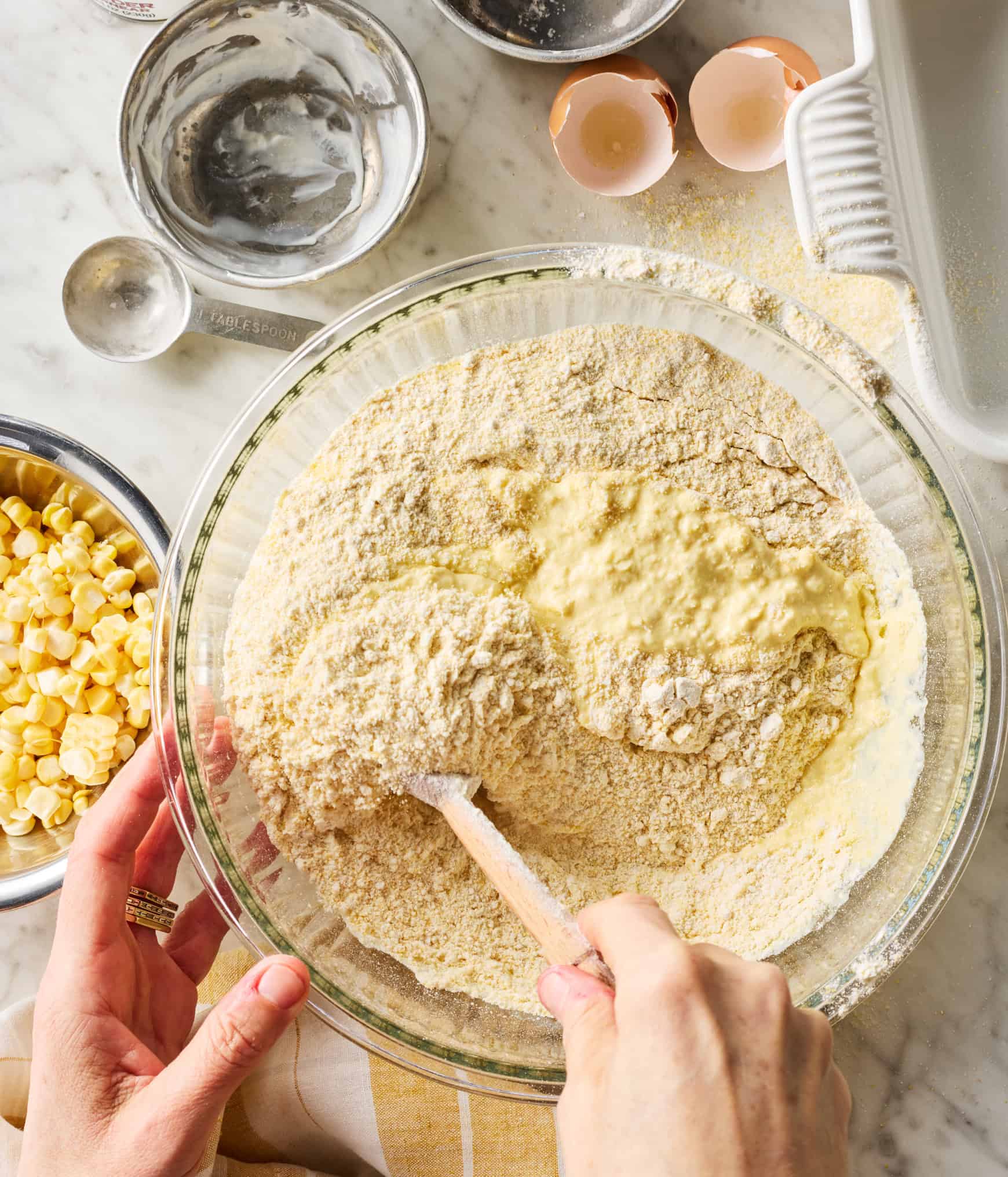
The process begins with the careful assembly of equipment and pantry staples. A standard 9×9-inch casserole dish is greased—often utilizing a small portion of the butter designated for the recipe to streamline the workflow. In a medium mixing bowl, the dry components are whisked together thoroughly: all-purpose flour, cornmeal, granulated sugar, baking powder, and a precise amount of salt. Ensuring these elements are evenly distributed prevents pockets of leavening agents or seasoning in the final bake.
Phase 2: Corn Processing and Wet Mixture Assembly (5–10 Minutes)
The defining step of this recipe involves the corn itself. Three cups of fresh corn kernels are transferred to a food processor and pulsed until smooth. This purée serves a vital functional purpose, replicating the rich, velvety starchiness of canned cream-style corn while injecting natural sweetness and moisture into the batter. The remaining one and a half cups of corn kernels are kept completely intact to provide a delightful pop of texture in every bite.
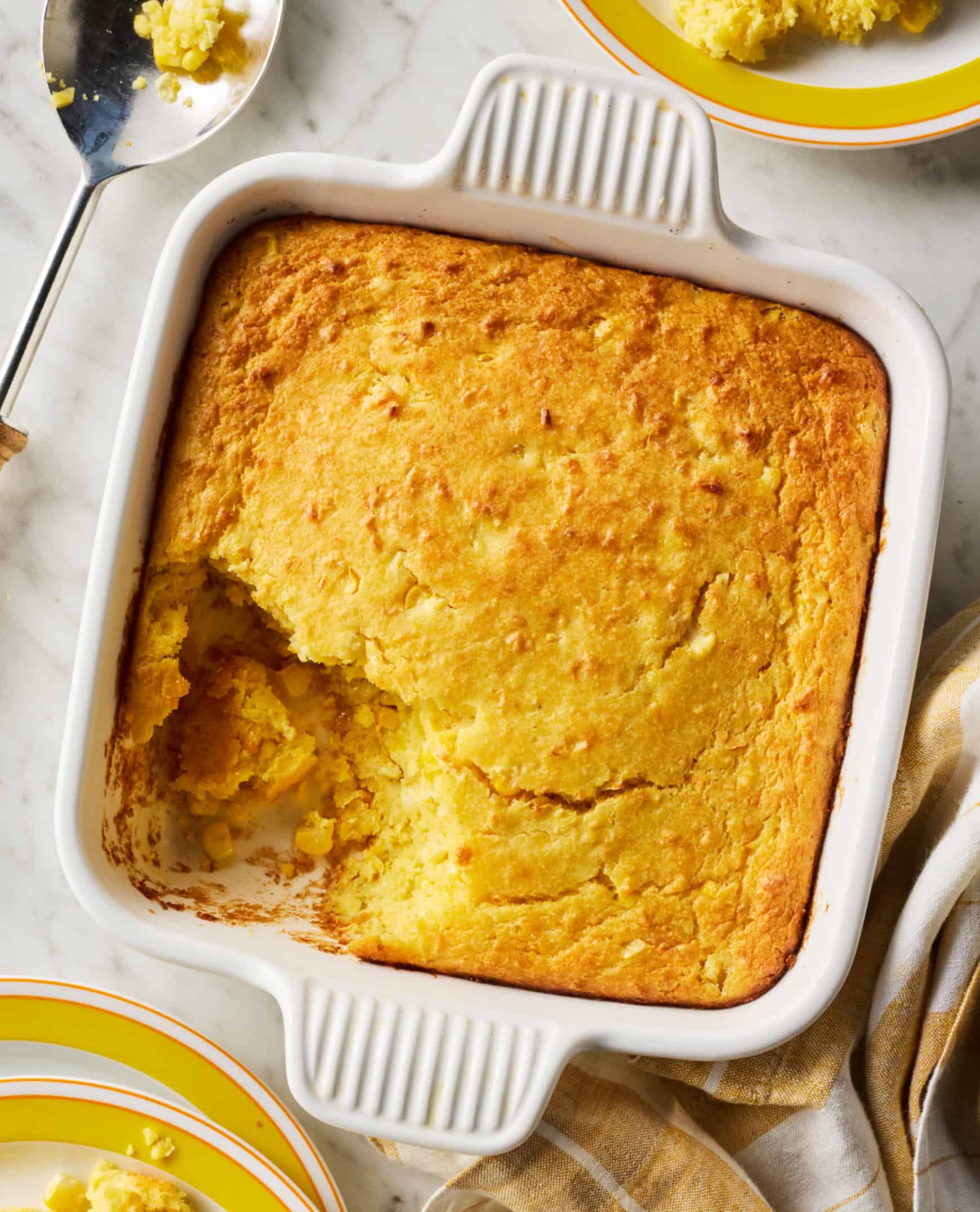
In a separate, larger bowl, whole eggs and melted butter are whisked until emulsified. The homemade corn purée and sour cream are then incorporated into the wet mixture, creating a rich, uniform base.
Phase 3: Batter Formation and Pan Transfer (10–15 Minutes)
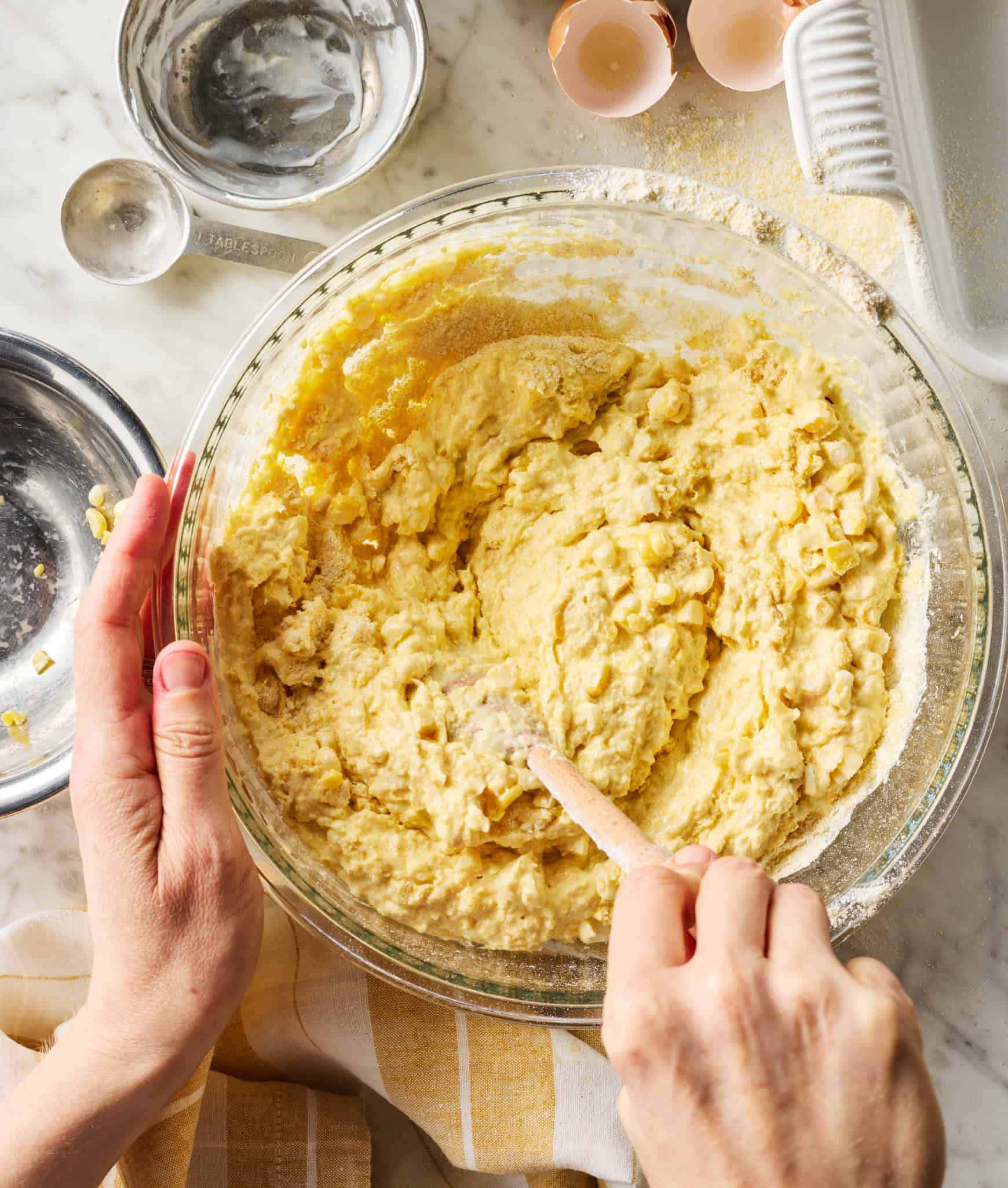
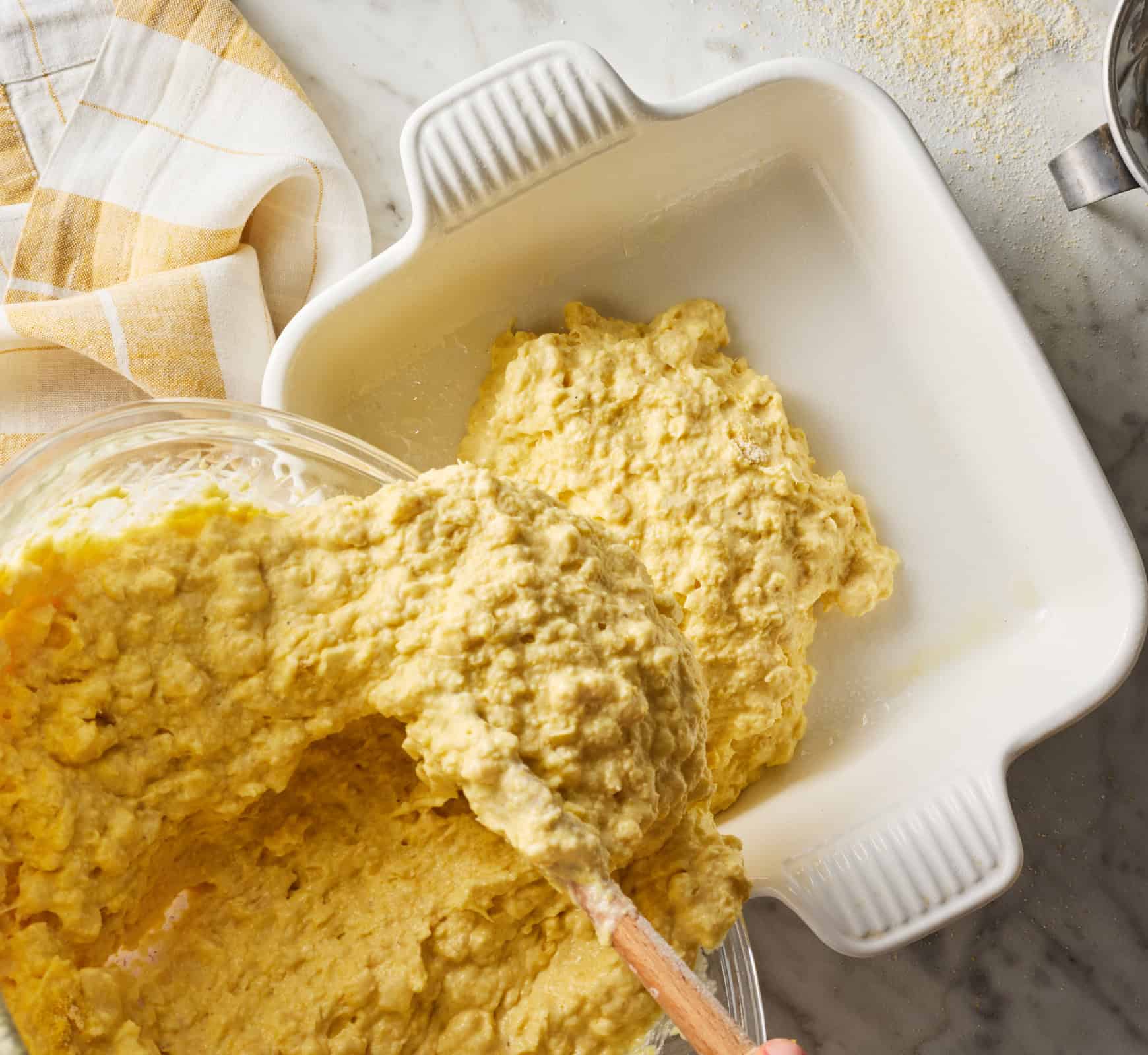
The dry ingredient blend is gently folded into the wet mixture just until combined. Much like preparing delicate pancake batter, culinary experts advise restraint at this stage; overmixing activates the gluten in the flour, which can compromise the tender, melt-in-your-mouth crumb of the casserole. Once a thick, cohesive batter is achieved, the reserved whole corn kernels are folded in gently. The mixture is then poured into the prepared 9×9-inch baking dish and smoothed evenly across the surface.
Phase 4: Baking and The Crucial Rest Period (15–60+ Minutes)
The casserole is baked in a preheated oven at 350°F (175°C) for 45 to 50 minutes. Bakers watch for visual cues: the edges should transform into a rich, golden brown, while the center should remain slightly soft and jiggly, ensuring the interior does not dry out.
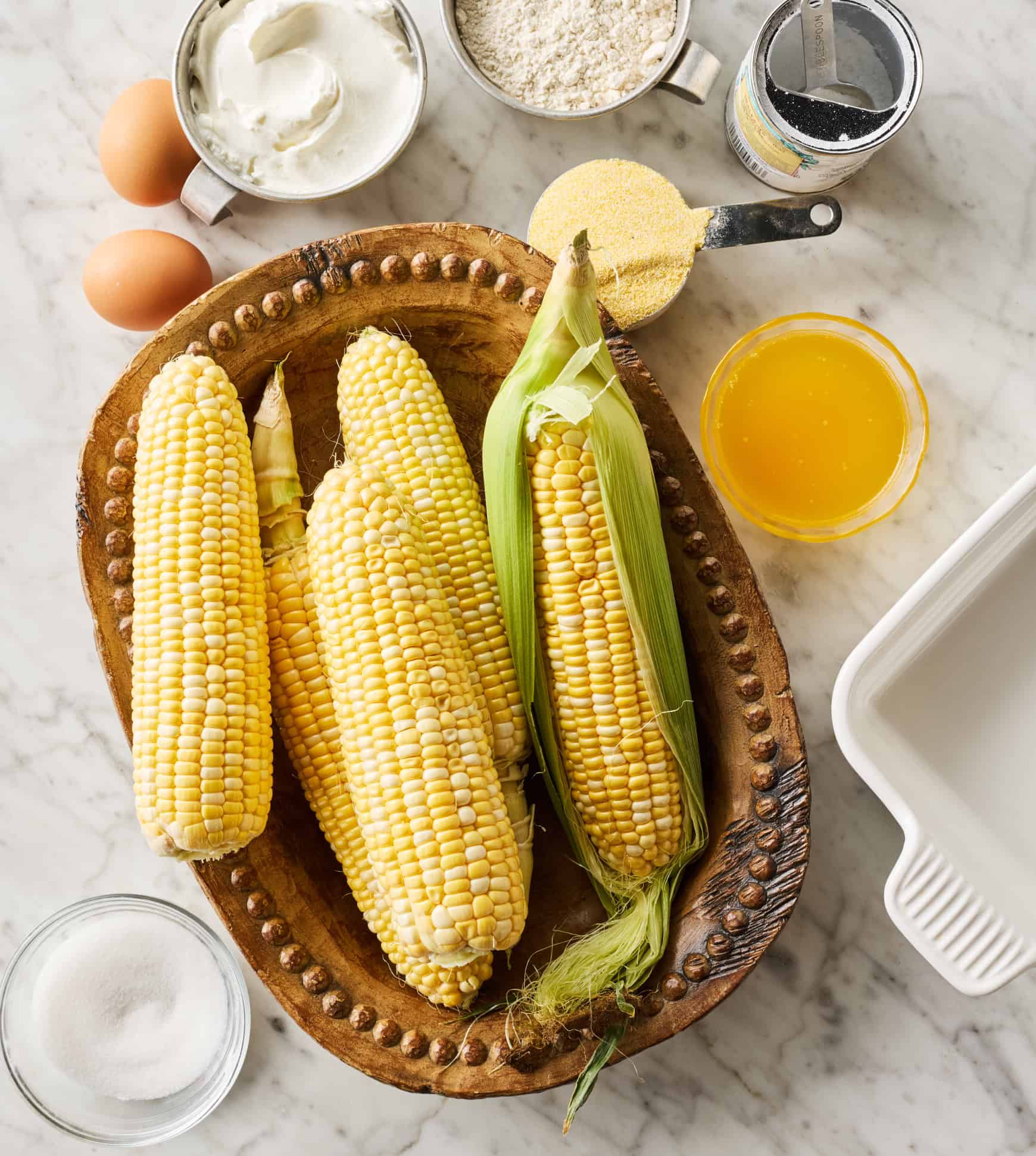
Upon removal from the oven, patience is required. The casserole must rest at room temperature for approximately 10 minutes. This mandatory cooling window allows the starches and dairy proteins to set, transforming an overly fluid hot mixture into a stable, spoonable, and cohesive side dish ready for slicing and serving.
Supporting Data
A closer examination of the nutritional profile and operational metrics reveals why this corn casserole occupies a prominent place in contemporary meal planning. Based on standard nutritional calculations for a recipe yielding nine servings (with one slice constituting a single portion), the dish offers a satisfying balance of energy and flavor:
Nutritional Breakdown Per Serving (1 Slice)
- Total Calories: 292 kcal
- Calories from Fat: 153 kcal
- Total Fat: 17g (26% Daily Value)
- Saturated Fat: 9g (56% Daily Value)
- Trans Fat: 0.4g
- Polyunsaturated Fat: 1g
- Monounsaturated Fat: 4g
- Cholesterol: 75mg (25% Daily Value)
- Sodium: 368mg (16% Daily Value)
- Potassium: 287mg (8% Daily Value)
- Total Carbohydrates: 33g (11% Daily Value)
- Dietary Fiber: 3g (13% Daily Value)
- Sugars: 10g (11% Daily Value)
- Protein: 6g (12% Daily Value)
Key Micronutrients and Vitamins
- Vitamin A: 631 IU (13% Daily Value)
- Vitamin C: 5mg (6% Daily Value)
- Calcium: 110mg (11% Daily Value)
- Iron: 1mg (6% Daily Value)
(Note: Percent Daily Values are calculated based on a standard 2,000-calorie daily diet. Individual nutritional needs may vary depending on specific dietary choices and ingredient substitutions.)
Time and Yield Metrics
- Preparation Time: 15 minutes
- Cook Time: 45 minutes
- Total Time Investment: 1 hour
- Standard Yield: 9 servings (optimized for a 9×9-inch baking vessel)
Official Responses and Culinary Insights
Culinary experts and home economists have long debated the boundaries of comfort food classics, particularly when updating heritage recipes that rely heavily on processed convenience items. The transition from boxed mixes—such as the ubiquitous Jiffy cornbread mix—to scratch-made variations has sparked widespread discussion within the food community.
Proponents of scratch cooking emphasize the autonomy it grants the cook over flavor profiles, sodium levels, and ingredient quality. "When you take the time to process fresh, seasonal sweet corn and blend it with wholesome dairy like real sour cream and butter, you elevate a simple side dish into something genuinely memorable," notes a prominent food publication test kitchen lead. "It respects the heritage of the dish while upgrading its culinary merit."
Conversely, culinary historians and efficiency advocates acknowledge the undeniable cultural footprint of packaged products in mid-century American cooking. Convenience items were designed to democratize baking, allowing busy households to produce comforting meals with minimal friction. Addressing this duality, recipe developers have explicitly tested cross-methodologies. For home cooks pressed for time or operating without access to farm-fresh produce, the recipe includes validated modifications: boxed cornbread mixes, canned whole-kernel corn, and thawed frozen corn can all be seamlessly substituted without compromising the structural integrity of the casserole.
Nutritional specialists also weigh in on the comfort food category, pointing out that dishes featuring dairy fats and complex carbohydrates serve an important psychological and social function during gatherings. By incorporating dietary fiber (3 grams per serving) through whole corn kernels and providing modest protein content (6 grams), the recipe balances indulgence with genuine nutritional substance.
Implications
The growing popularity of elevated comfort food recipes like this homemade corn casserole carries significant implications for modern home cooking, holiday hosting habits, and agricultural consumption patterns.
1. The Revival of Scratch Cooking in Fast-Paced Lifestyles
In an era dominated by meal-delivery kits and ultra-processed convenience foods, the deliberate choice to spend 15 minutes prepping a from-scratch batter reflects a broader cultural longing for authenticity. Consumers are increasingly seeking out recipes that feel grounding and intentional. By demonstrating that scratch cooking does not require hours of labor, such recipes empower novice cooks to step away from packaged shortcuts and build foundational culinary skills.
2. Seasonal Eating and Agricultural Support
The emphasis on utilizing fresh corn during its peak late-summer and early-fall harvest windows aligns with the farm-to-table movement. Encouraging consumers to utilize fresh produce—while still offering adaptable frozen and canned alternatives—promotes agricultural awareness. When home cooks experience the dramatic flavor enhancement of fresh corn purée over canned equivalents, it fosters a deeper appreciation for seasonal eating and local farming markets.
3. Holiday Meal Planning and Efficiency
The holiday season—spanning Thanksgiving, Christmas, and New Year celebrations—demands strategic time management in the home kitchen. The revelation that this corn casserole can be fully baked up to two days in advance, stored safely in the refrigerator, and gently reheated at 300°F provides immense logistical relief for hosts. This make-ahead capability reduces day-of kitchen congestion, allowing hosts to spend less time managing oven space and more time engaging with family and guests.
4. Culinary Inclusivity and Adaptability
Finally, the recipe’s accommodation of various dietary needs and pantry constraints highlights a progressive shift in modern recipe design. By offering clear pathways for ingredient substitutions—whether substituting sour cream with Greek yogurt, utilizing gluten-free flour blends, or reverting to classic convenience mixes—the dish welcomes a diverse audience. It demonstrates that comfort food is inherently democratic, meant to be modified, enjoyed, and shared across diverse households and traditions.