OXNARD, California — When the Dallas Cowboys packed their bags for their annual NFL training camp in Oxnard, California, they brought with them the high-stakes pressure of an upcoming season. But football isn’t the only thing that demands perfection in Texas culture; barbecue is held to an equally rigorous standard. Enter Matt Pittman and the team behind Meat Church, who packed up their signature rubs, sauces, and a massive 767-gallon offset smoker named "Geraldine" to deliver a taste of the Lone Star State straight to the Pacific Coast.
Feeding "America’s Team" requires more than just throwing meat over an open flame. It demands precision, heritage, and the unmistakable flavor profile of traditional Texas pit-cooking. For this special culinary operation, the Meat Church crew opted for old-school smoked BBQ chicken quarters—a dish rooted in simplicity, elevated by meticulous technique, and finished with a modern sweet-and-savory glaze.
Main Facts: Bringing Lone Star Tradition to the West Coast
The cross-country culinary deployment featured a collaboration between renowned barbecue outfit Meat Church and the NFL’s Dallas Cowboys during their intensive summer training camp. The objective was clear: nourish the roster and coaching staff with authentic, wood-smoked Texas barbecue.
The menu centered on premium Greener Pastures chicken quarters. Rather than rushing the cooking process, the team utilized a multi-step artisanal approach:
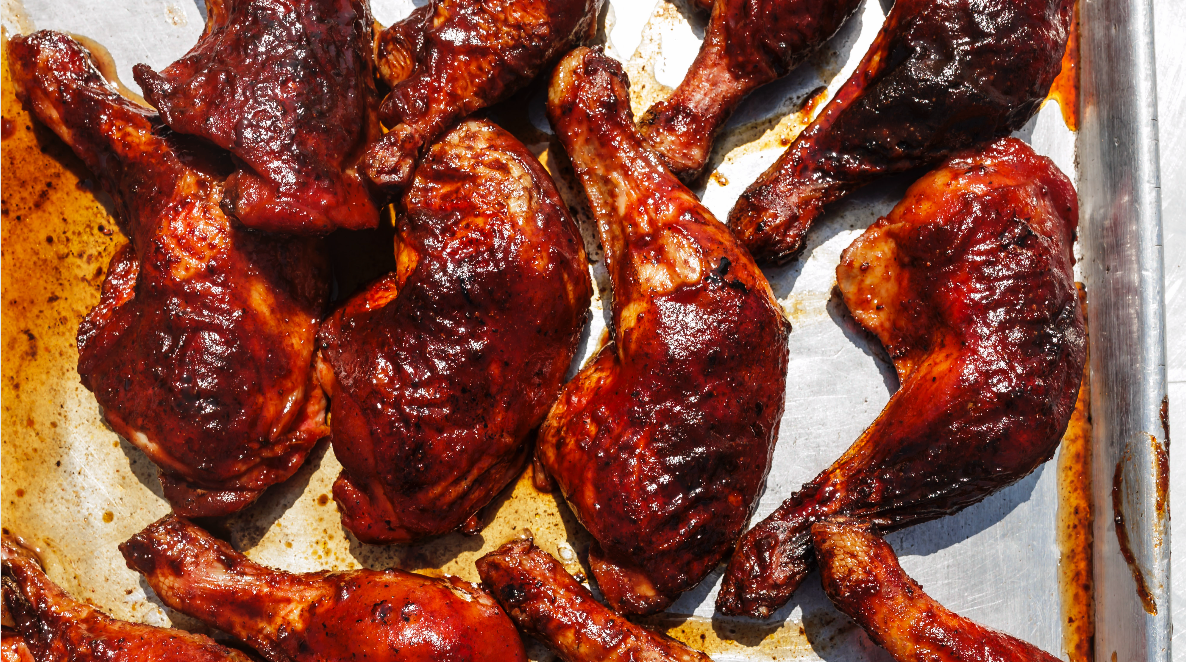
- The Brine: Soaking the poultry in Meat Church Bird Baptism Brine to lock in moisture.
- The Seasoning: Applying an even coat of The Gospel All Purpose BBQ Rub.
- The Smoke: Cooking over post oak wood splits at a steady 250°F on a massive Mill-scale offset smoker.
- The Finish: Glazing the meat with Meat Church Holy Cola BBQ Sauce during the final stages of the cook to create a caramelized, sticky bark.
This high-profile event bridged the gap between professional sports nutrition and regional American comfort food, proving that elite athletes can enjoy traditional, heavy-smoke barbecue when prepared with quality ingredients.
Chronology: The Step-by-Step Execution of Championship BBQ
Achieving competition-level barbecue for professional athletes leaves no room for error. The timeline of the cook required careful coordination, starting hours before the first bite was served.
Step 1: The Brine (4 to 5 Hours Prior)
To ensure the chicken remained remarkably juicy despite the drying environment of a hot smoker, the process began with a rigorous brine. The Greener Pastures chicken quarters were submerged in Meat Church Bird Baptism Brine for four to five hours, strictly adhering to package directions. This step allows salt and aromatic compounds to penetrate the meat fibers, seasoning the poultry from the inside out while breaking down proteins to enhance tenderness.
Step 2: Firing Up the Pit
While the chicken absorbed the brine, the pitmaster prepped the heat source. The smoker—specifically "Geraldine," a custom 767-gallon Mill-scale offset smoker—was brought up to a steady cooking temperature of 250°F. True to Texas tradition, the fuel source of choice was post oak splits, known for providing a clean, balanced smoke that complements poultry without overpowering its natural flavor.

Step 3: Seasoning and Adhesion
Once removed from the brine and patted dry, the chicken quarters were seasoned generously on all sides with The Gospel All Purpose BBQ Rub. The meat was then left to rest for approximately 15 minutes. This crucial resting window allows the dry rub to draw out a small amount of surface moisture, creating a sticky paste (known in the barbecue world as a "slurry") that helps the spices adhere firmly to the skin before hitting the smoke.
Step 4: The Smoking Process
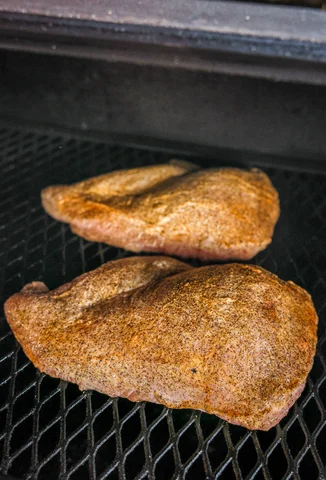
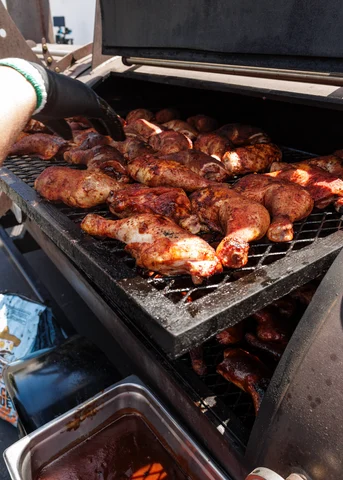
The seasoned quarters were placed directly onto the smoker grates. Cooking low and slow at 250°F, the chicken remained undisturbed until the internal temperature reached 170°F deep within the joint. This phase took just over two hours, during which time the post oak smoke worked its magic, transforming the skin into a deep, mahogany-colored canvas infused with classic Texas flavor.
Step 5: The Glaze and Caramelization
In the final minutes of the cook, the pitmasters applied a layer of Meat Church Holy Cola BBQ Sauce using a basting brush. The chicken was left over the indirect fire for another 5 to 10 minutes. This allowed the sugars in the cola-infused sauce to "tack up," caramelizing into a sweet, sticky finish that contrasts sharply with the savory, peppery notes of the dry rub.
Step 6: Resting, Slicing, and Serving
Patience remains the final virtue of any great barbecue cook. The chicken was removed from the smoker and allowed to rest for at least 15 minutes, ensuring the internal juices redistributed evenly throughout the meat rather than spilling out onto the cutting board. Finally, the quarters were separated into individual thighs and legs at the joint, ready to be served to the hungry football players.

Supporting Data: The Anatomy of Elite Barbecue
Behind every successful barbecue cook lies a specific alchemy of science, equipment, and ingredient selection. Understanding the technical metrics behind the Meat Church menu sheds light on why this particular style of cooking yields such consistent results.
Temperature and Time Metrics
- Smoker Ambient Temperature: Maintained strictly at 250°F to ensure slow rendering of fats without scorching the delicate poultry skin.
- Target Internal Temperature: 170°F measured specifically at the joint. While white meat is traditionally pulled at 165°F, dark meat cuts like thighs and legs benefit from reaching 170°F to 175°F, which breaks down connective tissues and collagen, resulting in a melt-in-your-mouth texture.
- Brining Duration: 4 to 5 hours. Exceeding this timeframe can lead to an overly salty flavor profile or a mushy texture due to the breakdown of muscle proteins by the brining agents.
- Resting Period: Minimum of 15 minutes. This allows internal muscle fibers to relax and reabsorb moisture lost during the peak heat of the cooking chamber.
Equipment and Fuel Dynamics
The choice of equipment is paramount in large-scale barbecue catering. The Mill-scale 767-gallon offset smoker offers massive capacity paired with precise airflow management. Unlike vertical cabinet smokers or pellet grills, a large offset smoker fueled entirely by wood splits requires active management from the pitmaster, who must constantly monitor coal beds, add wood logs, and regulate exhaust dampers.
Post oak wood is universally favored in Central and South Texas barbecue because of its medium smoke intensity. Unlike mesquite, which can impart a bitter, heavy medicinal taste if used excessively, post oak provides a smooth, sweet, and clean smoke profile that lets the natural flavor of the meat and the spices take center stage.
Official Responses and Culinary Philosophy
The convergence of professional football and artisan barbecue generated considerable excitement among both the training camp staff and the online community following the release of the documentary-style cooking video.

Matt Pittman, the driving force behind Meat Church, emphasized the cultural significance of the menu choice. "When you go out to California to feed America’s Team, you want to bring a genuine piece of home with you," Pittman noted during the event preparations. "There is nothing more authentically Texas than feeding folks good, old-fashioned smoked barbecue chicken. It brings people together, breaks down barriers, and fuels you up the right way."
Culinary experts note that professional sports organizations are increasingly paying attention to the nutritional and psychological benefits of high-quality, regionally authentic team meals during grueling pre-season camps. While modern sports science dictates strict macronutrient tracking, the morale boost provided by a thoughtfully prepared, comforting meal cannot be understated.
Coaching staff members and players echoed these sentiments, noting that the combination of the savory herbal notes from The Gospel rub, the clean bite of post oak smoke, and the sticky sweetness of the Holy Cola glaze provided a welcome break from standard institutional training camp menus.
Implications: The Intersection of Sports Culture and Craft Barbecue
The successful deployment of Meat Church to the Dallas Cowboys’ training camp highlights a broader cultural trend: the elevation of craft barbecue into mainstream sports and entertainment culture.

Once viewed strictly as a regional pastime exclusive to backyard enthusiasts and roadside shacks in Texas and the Carolinas, authentic wood-smoked barbecue has transformed into a national phenomenon. Brands like Meat Church have successfully leveraged digital media, high-profile collaborations, and accessible recipe guides to turn traditional pit-cooking into a lifestyle brand.
Key Takeaways for the Industry:
- Brand Synergy: Collaborations between iconic sports franchises and artisan food brands create powerful marketing opportunities that resonate with fans across demographics.
- Technique Accessibility: By detailing the exact steps—from brining with Bird Baptism to glazing with Holy Cola—pitmasters demystify high-level barbecue, encouraging home cooks to replicate professional results in their own backyards.
- The Comfort Factor in Athletics: High-performance athletes face immense physical and mental stress during training camp; comfort foods prepared with uncompromising quality standards serve an important role in team bonding and psychological recovery.
As the Dallas Cowboys continue their pursuit of championship glory on the gridiron, the culinary playbook established in Oxnard proves that success often starts with respecting tradition, honoring quality ingredients, and letting a good wood fire do the heavy lifting.