As the crisp air of autumn settles in, the culinary landscape shifts toward comfort, warmth, and the desire for meals that don’t require hours of labor. For the modern home cook, the challenge has always been balancing the desire for a hearty, restaurant-quality dinner with the realities of a busy schedule. Enter the "Gnocchi with Sausage and Fall Vegetables"—a masterclass in efficiency that is currently dominating the home-cooking scene.
This one-sheet-pan phenomenon isn’t just a recipe; it represents a fundamental shift in how we approach weeknight dining. By combining protein, complex carbohydrates, and seasonal produce on a single surface, home cooks are discovering that the secret to a gourmet dinner isn’t complexity—it’s geometry and heat management.

Main Facts: The Anatomy of a Perfect Sheet Pan Meal
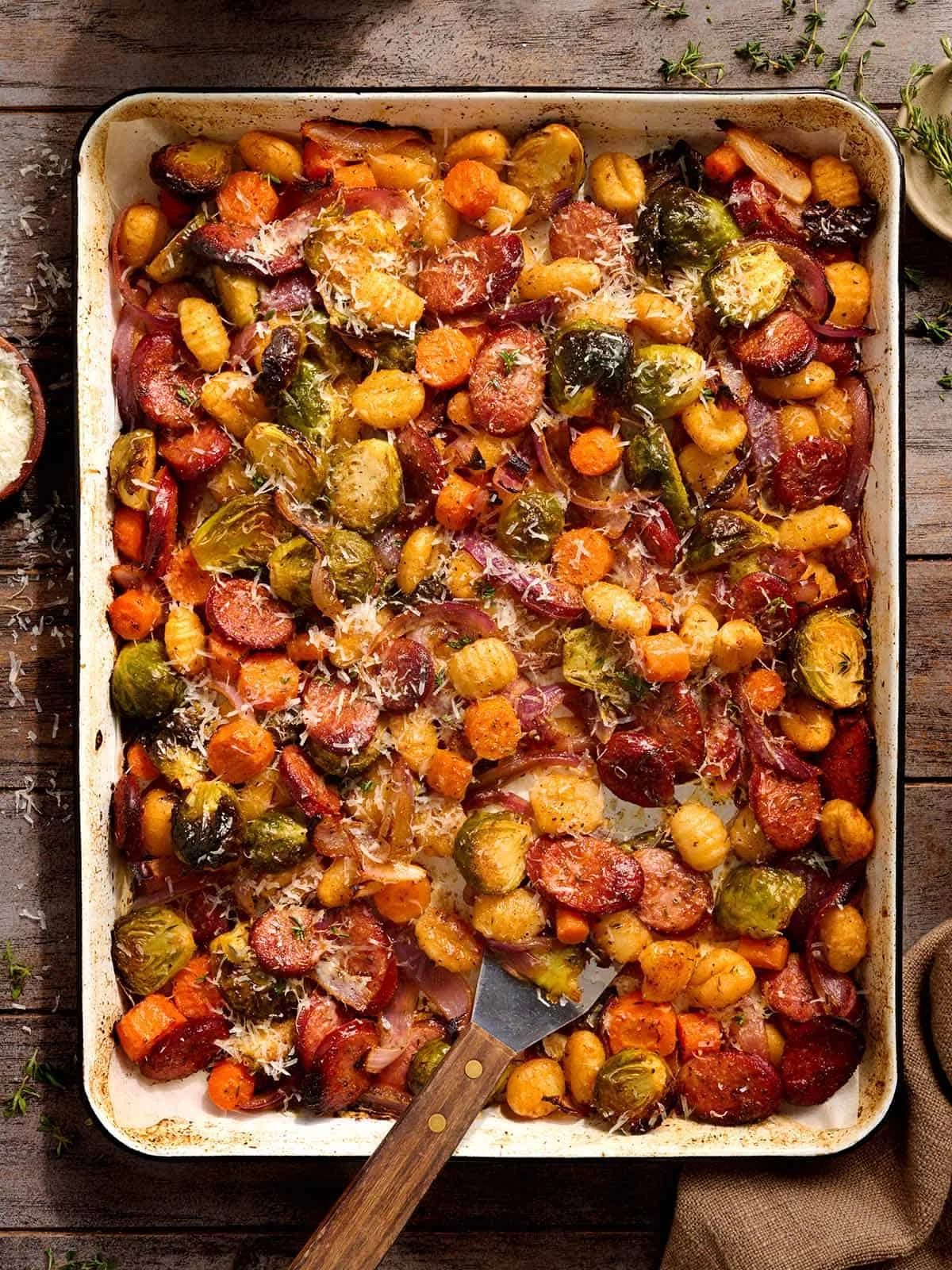
At its core, this dish relies on the transformative power of the oven. Traditional gnocchi preparation usually involves boiling, which often results in a soft, sometimes gummy texture. However, by bypassing the boiling water and roasting the gnocchi directly alongside smoked sausage and root vegetables, the starch undergoes a Maillard reaction. The result is a exterior that is golden and crisp, providing a delightful textural contrast to the pillowy, soft center.
The primary components are as follows:

- The Base: Shelf-stable potato gnocchi.
- The Protein: Smoked sausage (such as Kielbasa, andouille, or chicken sausage), which provides the savory, smoky foundation.
- The Produce: Earthy Brussels sprouts, sweet carrots, and pungent red onions, which caramelize under high heat.
- The Seasoning: A blend of smoked paprika, dried thyme, garlic powder, salt, and pepper, all bound by high-quality vegetable oil.
The dish is finished with a generous dusting of freshly grated Parmesan, which provides a sharp, salty counterpoint to the sweetness of the roasted carrots.
Chronology: The Evolution of the One-Pan Trend
The rise of the sheet pan meal can be traced back to a demand for "minimalist cleanup" culinary movements. Over the past decade, as households have become increasingly time-poor, the "one-pot" and "one-sheet" methodologies have evolved from niche hacks into mainstream kitchen staples.

Earlier this year, the popularity of "Gnocchi with Spring Vegetables" laid the groundwork for this fall iteration. While the spring version focused on tender, quick-cooking greens and peas, this autumnal adaptation requires a more robust approach to roasting. The transition from boiling water to oven-roasting has been the most significant evolution in how gnocchi is prepared in the home kitchen. By rigorous testing in professional test kitchens—such as those located in Nashville—chefs have determined that 450°F is the "sweet spot" for achieving simultaneous caramelization of vegetables and crisping of gnocchi.
Supporting Data: Economic and Nutritional Efficiency
One of the most compelling arguments for this recipe is its economic viability. With an average cost of approximately $12.31 per batch—or roughly $3.08 per serving—it stands as a beacon for budget-conscious families. This efficiency is achieved by utilizing seasonal, cost-effective vegetables and shelf-stable pantry staples.

Nutritionally, the dish offers a well-rounded profile for an active lifestyle:
- Calories: ~675 kcal per serving.
- Protein: 26g, largely provided by the smoked sausage.
- Carbohydrates: 61g, providing sustained energy.
- Fiber: 9g, sourced from the cruciferous vegetables and root crops.
The high sodium content (2,069mg) is a primary consideration, largely stemming from the cured nature of the smoked sausage. Health-conscious cooks are encouraged to opt for lower-sodium chicken or turkey sausage alternatives to mitigate this impact while retaining the smoky profile.

Official Perspectives: The Chef’s Approach to Scaling and Substitutions
Melissa Nolan, a professional chef and recipe developer, emphasizes that the true beauty of this dish lies in its versatility. "The goal of a sheet pan meal is to have everything finish cooking at the exact same moment," Nolan notes. "That requires a delicate balance of vegetable size and moisture content."
According to the test kitchen guidelines, the following rules are essential for success:

- Uniformity is Key: Carrots and Brussels sprouts must be cut to consistent sizes to ensure even cooking.
- The "Halfway Rule": While the primary fall vegetables (carrots, onions, sprouts) handle the full 30–35 minute cook time well, more delicate vegetables like bell peppers or zucchini should be added halfway through the process to prevent them from becoming waterlogged.
- Moisture Management: Avoid high-water-content vegetables like tomatoes or excessive summer squash, as they release moisture that can "steam" the gnocchi rather than roast it, destroying the desired crisp texture.
Implications: The Future of the Modern Kitchen
The implications of this cooking style extend far beyond a single dinner. It encourages a "clean-out-the-fridge" mentality, where leftovers are not waste, but opportunities. The recipe’s success is a testament to the modern cook’s desire for sustainability and resourcefulness. By utilizing what is already in the crisper drawer—be it parsnips, turnips, or beets—home cooks are reducing food waste while mastering the fundamentals of heat application.
Furthermore, this method suggests a shift away from the "meat-and-three" structure of mid-century dining toward a more integrated, "bowl-based" approach. It acknowledges that the modern eater wants ease, but refuses to sacrifice the sensory experience of a home-cooked meal.

Tips for Success
- Equipment: Use a heavy-duty, large-rimmed baking sheet. A crowded pan is the enemy of crispiness; if necessary, use two pans rather than overloading one.
- Temperature: Do not be afraid of the 450°F heat. It is necessary to achieve the "char" that separates a good roasted dish from a mediocre one.
- Storage: While the dish is best enjoyed fresh, leftovers can be stored for up to 4 days. However, avoid the freezer; the structure of the gnocchi and the cell walls of the roasted vegetables will not survive the thawing process, resulting in a loss of texture.
Conclusion: A New Fall Tradition
As we move deeper into the cooler months, the "Gnocchi with Sausage and Fall Vegetables" is poised to become a recurring feature on tables across the country. It satisfies the psychological need for comfort food while meeting the physical demand for a nutrient-dense, protein-packed meal. By stripping away the unnecessary complexity of traditional pasta preparation and focusing on the raw, bold flavors of roasted seasonal produce, this recipe proves that the best meals are often the simplest.
Whether you are a seasoned chef looking for a low-effort weeknight win or a novice cook learning the ropes of sheet-pan roasting, this dish offers a foolproof path to success. It is, ultimately, a celebration of the season—smoky, earthy, and perfectly golden.