Main Facts
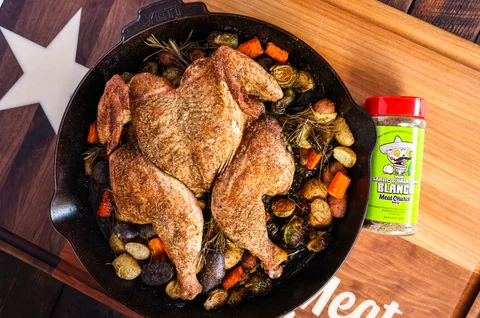
In the ever-evolving landscape of backyard barbecue and outdoor cooking, efficiency and flavor are the ultimate currency. Culinary innovators are constantly searching for methods that minimize cleanup while maximizing depth of taste. Enter the latest masterclass from the pitmasters at Meat Church: a streamlined, one-pan culinary triumph featuring a spatchcocked organic whole chicken roasted directly atop a bed of hearty root vegetables inside a massive cast-iron skillet.
Executed on a pellet smoker at a high-heat setting, this recipe utilizes Von Miller’s Greener Pastures organic whole chicken, elevated by Meat Church’s brand-new Garlic Jalapeño BLANCO seasoning. The mechanics of the dish are brilliantly simple yet profoundly effective. By placing a spatchcocked bird—which lays flat to ensure even cooking—directly on top of diced small potatoes, Brussels sprouts, and carrots within a seasoned cast-iron vessel, the cooking process transforms into a self-basting system.
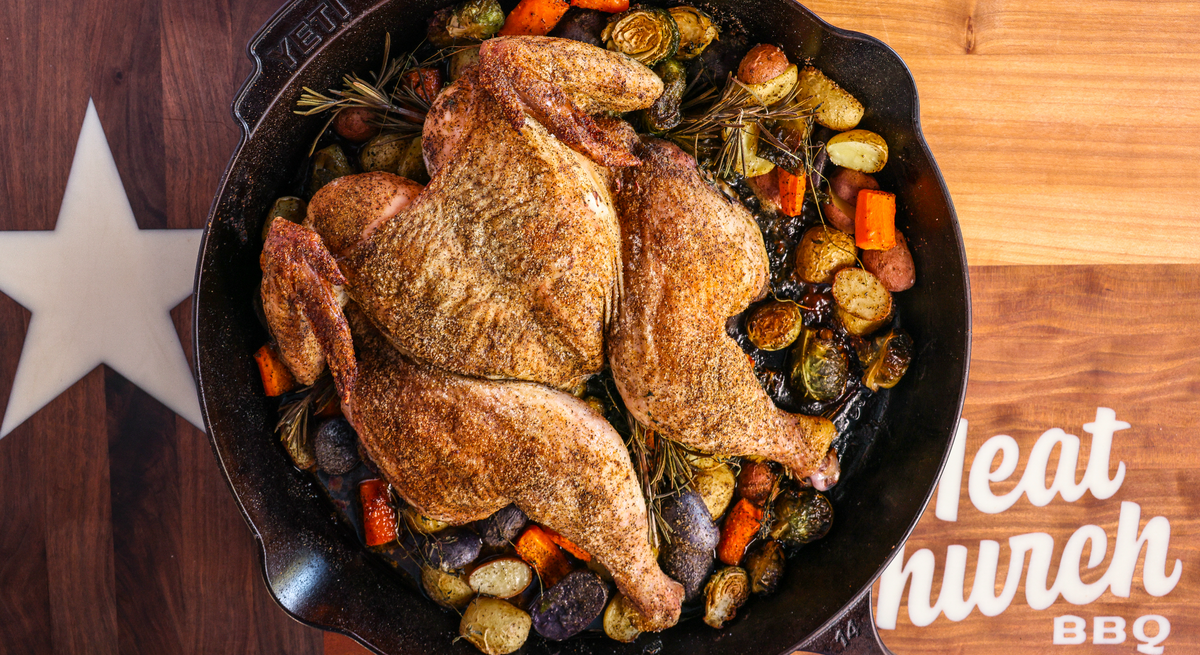
As the chicken roasts, rendering its rich fats and juices, those savory drippings cascade downward. They saturate the vegetables below, infusing them with the herbaceous, garlicky, and mildly spicy notes of the BLANCO rub while they crisp up in the cast iron. The result is a complete, multidimensional meal achieved with minimal hardware, proving that complex flavors do not require complicated kitchen protocols.
Chronology of the Cook: A Step-by-Step Breakdown
Achieving perfection with high-heat pellet smoking and cast-iron roasting requires precision timing and deliberate preparation. Below is the chronological blueprint for executing this dish in your own backyard.

Phase 1: Fire Management and Smoker Setup
The foundation of any great smoked meal lies in clean, consistent heat.
- The Temperature: Preheat your smoker to 400°F. This elevated temperature is crucial; it replicates the high-heat roasting environment of a traditional kitchen oven while introducing the subtle complexity of wood smoke.
- The Fuel: In this specific deployment, pitmasters utilized a Traeger Westwood pellet grill loaded with a blend of Oak and Hickory pellets. Oak provides a neutral, sturdy smoke base, while hickory adds a punchy, traditional barbecue backbone that complements poultry exceptionally well.
Phase 2: Butchering the Bird (Spatchcocking)
To ensure the chicken cooks evenly and fits harmoniously into the cast-iron skillet alongside the vegetables, spatchcocking is mandatory.

- Removing the Backbone: Using heavy-duty poultry shears or a sharp boning knife, cut along both sides of the backbone from tail to neck to completely remove it.
- Removing the Keel Bone: Cut out the keel (breast) bone to allow the bird to lie completely flat.
- Loosening the Skin: Carefully slide your fingers beneath the skin of the breasts, gently separating it from the meat without tearing. This creates pockets for seasoning directly against the muscle, ensuring flavor penetrates deep into the poultry.
Phase 3: Seasoning and Bed Preparation
With the bird prepped, attention shifts to building flavor profiles for both the protein and the side dish.
- Dressing the Chicken: Apply Meat Church Garlic Jalapeño BLANCO seasoning liberally to all exterior surfaces and directly underneath the loosened breast skin. Set the bird aside to let the salt draw in.
- The Vegetable Bed: In a large, heavy-duty vessel—such as a 14-inch Yeti cast-iron skillet or a heavy sheet pan—combine diced small potatoes, halved Brussels sprouts, and carrots. Toss the vegetables generously in extra virgin olive oil and season lightly with another dusting of the Garlic Jalapeño BLANCO rub.
- Assembly: Lay the spatchcocked chicken directly on top of the bed of vegetables. Scatter any fresh herbs evenly around the perimeter of the bird.
Phase 4: The Smoke and Thermal Monitoring
- The Cook: Place the loaded cast-iron skillet into the center of the preheated 400°F smoker. Allow it to roast undisturbed for approximately 45 minutes to 1 hour.
- Pro-Tip Protection: At the 45-minute mark, check the extremities of the bird. To prevent the delicate wing tips from scorching or burning under the intense 400°F heat, wrap them loosely in small squares of aluminum foil.
- Pulling the Bird: Insert an instant-read digital thermometer into the deepest part of the chicken breast. Once the internal temperature reaches 159°F, pull the skillet from the smoker. (Residual carryover cooking will safely lift the internal temperature to the USDA-recommended 165°F while resting).
Phase 5: Resting, Carving, and Presentation
- The Rest: Allow the skillet to sit at ambient temperature until it is cool enough to handle safely (wearing cotton utility gloves is recommended for grip and heat protection).
- The Plating: Carve the juicy, golden-skinned chicken off the bone. Serve immediately, flanked by the caramelized, drippings-soaked potatoes, carrots, and Brussels sprouts.
Supporting Data and Ingredient Metrics
To replicate this exact culinary experience, understanding the components, thermal dynamics, and flavor profiles is essential.

- Cooking Temperature: 400°F (High-heat roast/smoke hybrid).
- Target Internal Meat Temp: 159°F at pull (resting up to 165°F).
- Total Cook Time: 45 to 60 minutes.
- Hardware Requirements:
- Pellet smoker (or any smoker capable of maintaining a clean 400°F).
- 14-inch cast-iron skillet (such as a Yeti cast-iron skillet) or heavy-duty roasting pan.
- Instant-read digital meat thermometer.
- Heavy-duty poultry shears.
- Aluminum foil (for wing protection).
- Core Flavor Profiles:
- Meat Church Garlic Jalapeño BLANCO: A savory, aromatic blend featuring prominent garlic notes balanced by the clean, distinct heat of jalapeño peppers.
- Wood Smoke: Oak and hickory fusion for balanced, traditional depth.
Official Responses and Culinary Insights from the Pitmasters
The philosophy behind this recipe challenges the notion that outdoor cooking must be overly complicated or split across multiple cooking vessels.
According to the culinary team behind the build, the decision to pair a whole organic chicken directly with dense root vegetables in a single cast-iron pan was driven by both chemistry and convenience. "This is one of the easiest ways to make an absolutely killer whole chicken and a complete meal at the same time," notes the lead pitmaster.

The interaction between the cooking chicken and the roasting vegetables is described as a stroke of accidental genius turned intentional technique. "The real magic happens underneath. As that chicken cooks, all those flavorful drippings run down into the potatoes and Brussels sprouts, soaking up that Garlic Jalapeño BLANCO flavor while roasting in the cast iron."
Perhaps the most striking endorsement from the creators centers not on the meat itself, but on the side dishes. "I’m not exaggerating when I say the vegetables might be just as good as the chicken. Crispy potatoes, roasted Brussels sprouts, and juicy chicken all cooked together in one skillet. Simple ingredients. One cast-iron skillet. One seriously delicious meal."

Implications for Backyard Pitmasters and Home Cooks
This streamlined recipe highlights a broader shift in modern outdoor cooking culture. As consumers look for ways to maximize their time without sacrificing gourmet quality, multi-functional cooking techniques are gaining immense popularity.
- Efficiency in Cleanup: By restricting the entire meal—protein, starch, and vegetable—to a single cast-iron skillet, cleanup is reduced to washing one piece of cookware. This lowers the barrier of entry for weeknight smoking sessions that might otherwise be avoided due to the daunting pile of dishes left behind.
- Flavor Synergy: Traditional roasting often separates the protein from its sides, requiring separate gravies or artificial basting to bridge the flavor gap. This method uses physics—gravity and rendered animal fats—to naturally cross-pollinate flavors, elevating humble root vegetables into gourmet accompaniments.
- The Rise of High-Heat Pellet Smoking: Historically, smoking was synonymous with "low and slow" (225°F to 250°F). Recipes utilizing 400°F chambers demonstrate the versatility of modern pellet grills, proving they can double as high-performance convection ovens infused with wood-fired essence.
Ultimately, this recipe bridges the gap between traditional Sunday roast dinners and contemporary backyard barbecue culture, offering a foolproof blueprint for anyone looking to impress guests with minimal stress and maximum flavor.