By Senior Food Science & Culinary Arts Correspondent
1. Main Facts: The Evolution of Clean-Label Pastry Components
In both professional kitchens and domestic spaces, a quiet revolution is taking place over how structural desserts are assembled. For decades, home bakers and mid-tier commercial bakeries relied heavily on mass-produced, shelf-stable canned fruit fillings. While convenient, these commercial products frequently contain high-fructose corn syrup, artificial colorants, and chemical preservatives that mask the natural acidity of the fruit and yield a gelatinous, artificial texture.
Recently, culinary analysts have observed a significant shift toward "clean-label" baking. Consumers are increasingly demanding transparency in ingredients, leading to a resurgence in scratch-made pastry components. A prime example of this movement is the rising popularity of artisanal, starch-stabilized fruit compotes, such as the classic raspberry cake filling.
+-----------------------------------------------------------------------+
|                     CLEAN-LABEL VS. COMMERCIAL FILLINGS               |
+------------------------------------+----------------------------------+
| Scratch-Made (Starch-Stabilized)   | Commercial Canned Fillings       |
+------------------------------------+----------------------------------+
| • Fresh/frozen whole fruit         | • Reconstituted fruit purée      |
| • Natural cane sugar               | • High-fructose corn syrup       |
| • Fresh citrus juice (acid balance)| • Artificial preservatives       |
| • Controlled cornstarch slurry     | • Red Dye 40 / chemical gelling  |
| • Balanced, vibrant fruit flavor   | • Oversweet, artificial taste    |
+------------------------------------+----------------------------------+
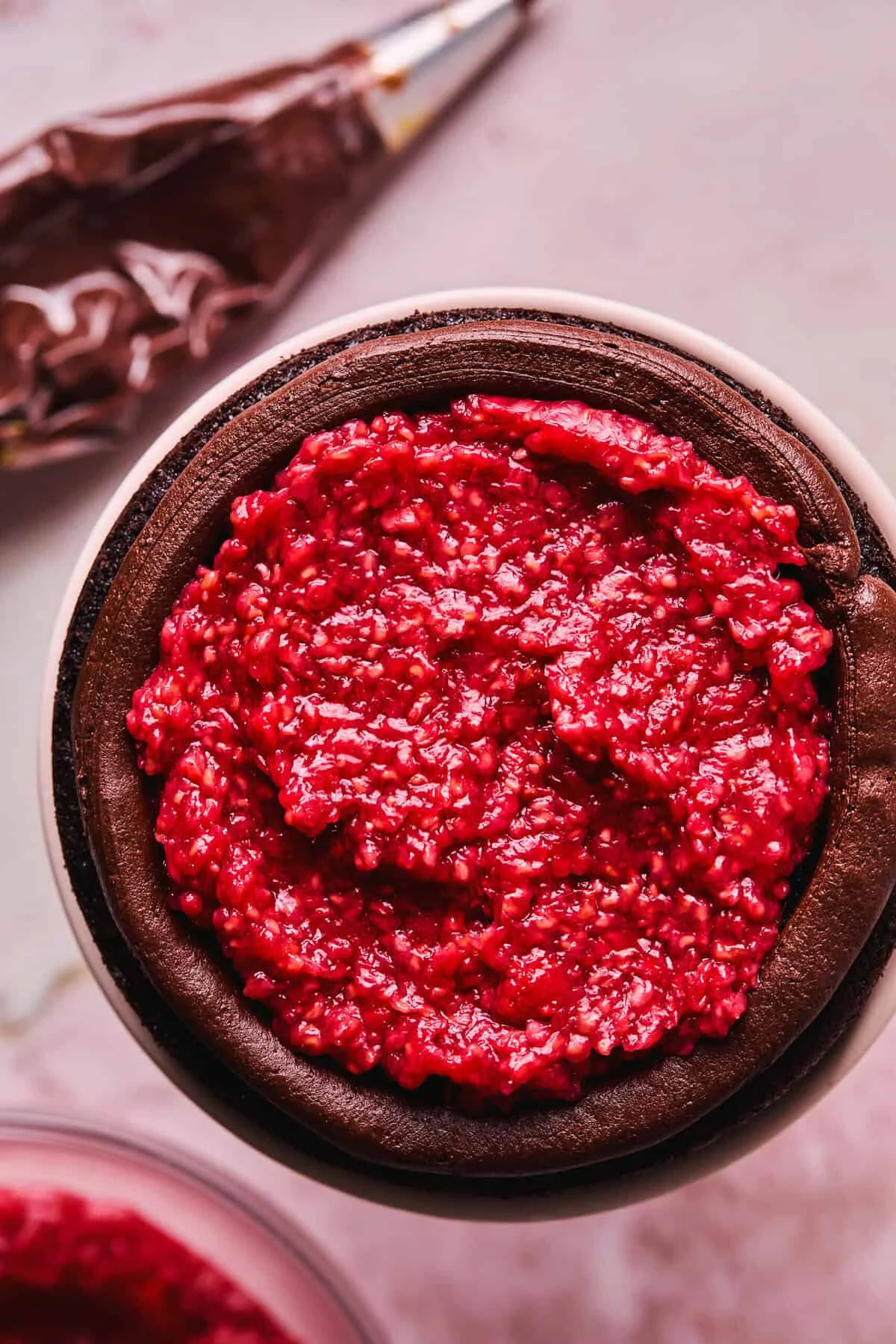
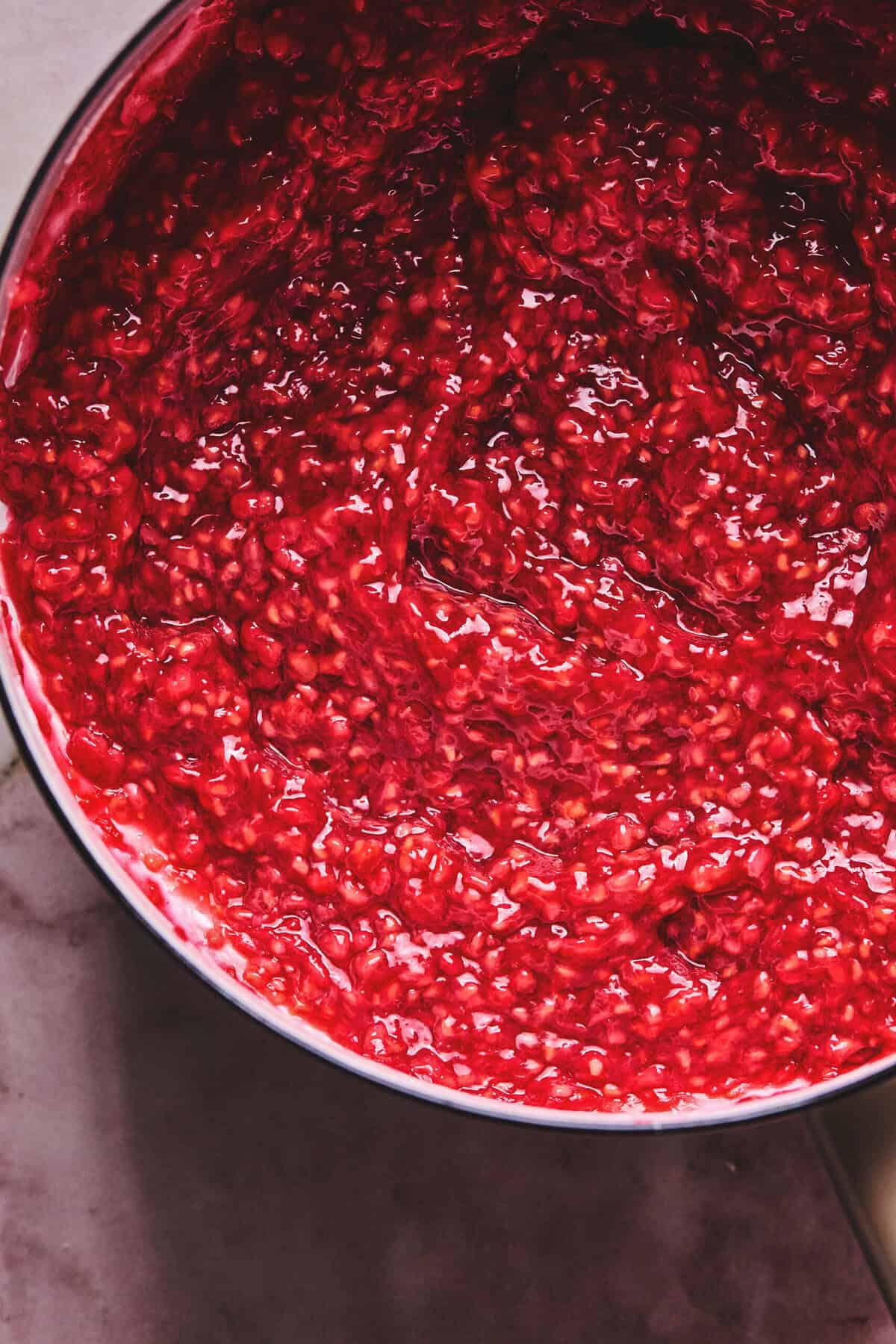
This clean-label filling utilizes a minimalist formula consisting of four primary ingredients: whole raspberries, granulated cane sugar, fresh lemon juice, and cornstarch. By utilizing the natural moisture of the fruit alongside a controlled starch slurry, bakers can create a vibrant, ruby-red filling that strikes a precise thermodynamic balance. It is sweet, intensely tangy, and structurally sound enough to support heavy cake layers without causing lateral shear—the technical term for cake layers sliding apart during assembly.
Beyond its physical utility, the filling represents a highly versatile culinary base. While optimized for chocolate, vanilla, and lemon cakes, its viscoelastic properties make it equally suited for piping into cupcakes, sealing sandwich cookies, swirling into buttercreams, or layering into crumb bars.
2. Chronology: The Thermodynamic and Physical Transformation of the Filling
To understand why this filling behaves so reliably, one must examine the chronological steps of its preparation. The process is a classic study in food chemistry, transforming delicate berries into a stable, sliceable gel.
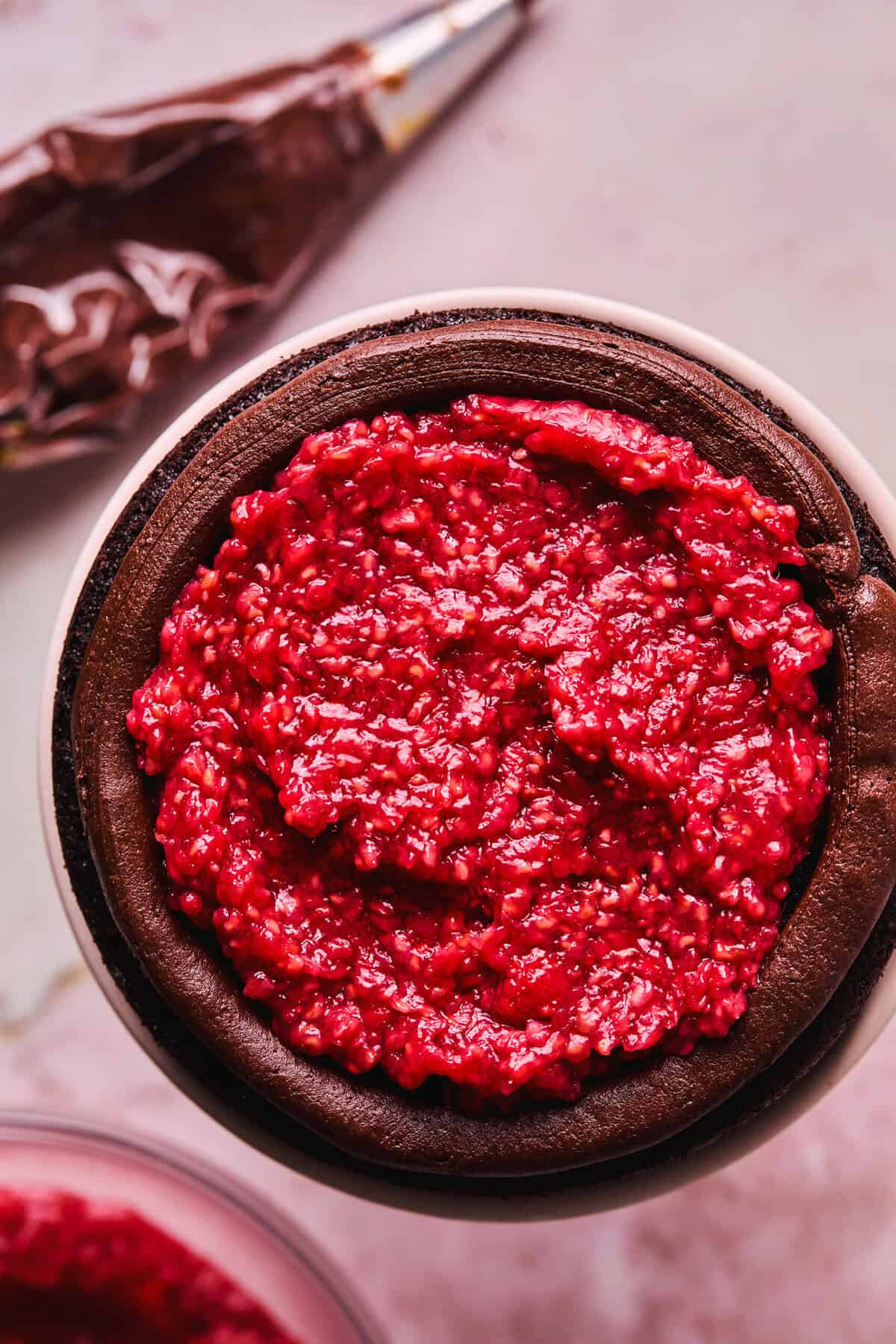
CHRONOLOGY OF VISCOSITY DEVELOPMENT:
[0 Min: Cold Maceration] ➔ [5 Min: Thermal Breakdown] ➔ [10 Min: Starch Gelatinization] ➔ [12 Hours: Retrogradation]
Phase I: Cold Maceration and Thermal Initiation (Minutes 0–5)
The process begins in a cold saucepan, where whole raspberries (either fresh or frozen) are combined with granulated sugar and fresh lemon juice.
- Osmotic Draw: The sugar immediately begins to draw out the natural juices of the berries via osmosis.
- Heat Application: As medium heat is applied, the temperature of the mixture rises toward a simmer. The cellular walls of the raspberries, composed primarily of pectin and cellulose, begin to weaken and rupture, releasing free water, volatile organic compounds, and natural acids into the pan.
Phase II: Starch Hydration and Gelatinization (Minutes 5–10)
Once the fruit has broken down into a loose, bubbling compote, the starch slurry—a cold mixture of cornstarch dissolved in a minimal volume of water—is introduced.
- Preventing Clumping: Dissolving cornstarch in cold water prior to adding it to the hot mixture is critical. If dry starch were added directly to the hot fruit, the outer starch molecules would instantly cook and form a waterproof barrier, leaving raw, dry lumps inside.
- Reaching the Boiling Point: The mixture is brought to a gentle boil. This is the thermal threshold required to activate the cornstarch. As the temperature crosses $62^circtextC$ to $80^circtextC$ ($144^circtextF$ to $176^circtextF$), the starch granules undergo gelatinization. They absorb the free water released by the raspberries, swelling significantly and disrupting the liquid’s flow, which rapidly increases the mixture’s viscosity.
Phase III: Thermal Reduction and Viscosity Optimization (Minutes 10–12)
The mixture is allowed to simmer for a brief period (typically 1 to 2 minutes) under constant agitation. This continuous stirring prevents the starch from scorching on the bottom of the pan and ensures even heat distribution. During this phase, the filling transitions from a cloudy pink to a glossy, translucent ruby-red. This visual change indicates that the starch granules have fully hydrated and ruptured, releasing amylose and amylopectin chains into the liquid matrix.
Phase IV: Cooling, Retrogradation, and Gelation (Hours 2–12)
After reaching the desired thickness, the filling is removed from the heat source and transferred to a shallow container to cool. Once it reaches room temperature, it is sealed and placed in a chilled environment ($4^circtextC$ / $39^circtextF$) for a minimum of 4 hours, though ideally overnight.
During this cold storage phase, a process known as retrogradation occurs. The dispersed amylose chains align and form a continuous, three-dimensional crystalline network that traps water molecules. This transforms the warm, pourable syrup into a firm, spreadable, and structurally stable gel.
3. Supporting Data: The Science of Starch, Acid, and Viscosity
The success of a fruit filling relies on balancing three main components: starch, acid, and sugar.
The Role of Acid in Starch Gelation
A common pitfall in fruit fillings is the degradation of starch caused by high acidity. Raspberries naturally contain high levels of citric and malic acids. When starch is heated in an highly acidic environment, the acid can break down the long starch chains into shorter dextrins through a process called acid hydrolysis. This reduces the starch’s thickening power, resulting in a runny filling.
To prevent this, the ratio of cornstarch to fruit must be carefully calculated. This recipe uses a precise balance: the added lemon juice provides a clean, bright flavor profile that balances the sweetness of the sugar, while the starch concentration is kept high enough to withstand the acid without losing its structure.
STARCH-ACID HYDROLYSIS BALANCE:
High Acid + Low Starch  ➔ Starch Chains Ruptured  ➔ Runny Filling (Shear Failure)
Balanced Acid + Correct Starch ratio ➔ Intact Gel Network ➔ Stable Layer (High Viscosity)
Physical Properties and Stability Metrics
A stable cake filling must exhibit specific physical properties to perform well under the weight of heavy cake layers:
- Yield Stress: The filling must possess a high yield stress. This means it behaves like a solid under low stress (allowing it to sit between cake layers without oozing out) but behaves like a spreadable fluid under high stress (when being spread with a spatula).
- Syneresis Prevention: Syneresis, or "weeping," occurs when a gel network contracts and squeezes out water. This can make cake layers soggy. By fully gelatinizing the cornstarch and allowing it to cool slowly, the amylose network remains stable, preventing syneresis for up to 72 hours under refrigeration.
- Freeze-Thaw Stability: While cornstarch-thickened gels can sometimes experience increased syneresis after freezing due to ice crystal growth disrupting the starch network, this formula maintains its structure for up to 30 days when frozen. This durability is supported by the high sugar content and natural fruit pectin, which act as cryoprotectants.
Nutritional Profile and Yield Data
Below is an approximation of the nutritional and physical yield metrics for a standard batch of homemade raspberry cake filling:
| Metric | Value / Concentration |
|---|---|
| Total Batch Yield | Approx. 350g (1.5 Cups) |
| Active Preparation Time | 10 Minutes |
| Recommended Cooling Time | Minimum 4 Hours (Optimum 12 Hours) |
| Water Activity ($a_w$) | Low-to-moderate (conducive to 3-day refrigerated shelf life) |
| Primary Stabilizer | Cornstarch ($1.5 – 2%$ total weight concentration) |
| Acidifier | Fresh lemon juice (approx. $1.5%$ total weight concentration) |
4. Official Responses: Insights from Pastry Professionals and Culinary Creators
To gather perspective on the practical application of this recipe, we spoke with culinary professionals and recipe developers who specialize in high-stress pastry assembly.
The Creator’s Perspective
Tiffany, the professional chef, photographer, and founder of Crème de la Crumb, developed this formula to address a common frustration among home bakers: the unstable cake layer.
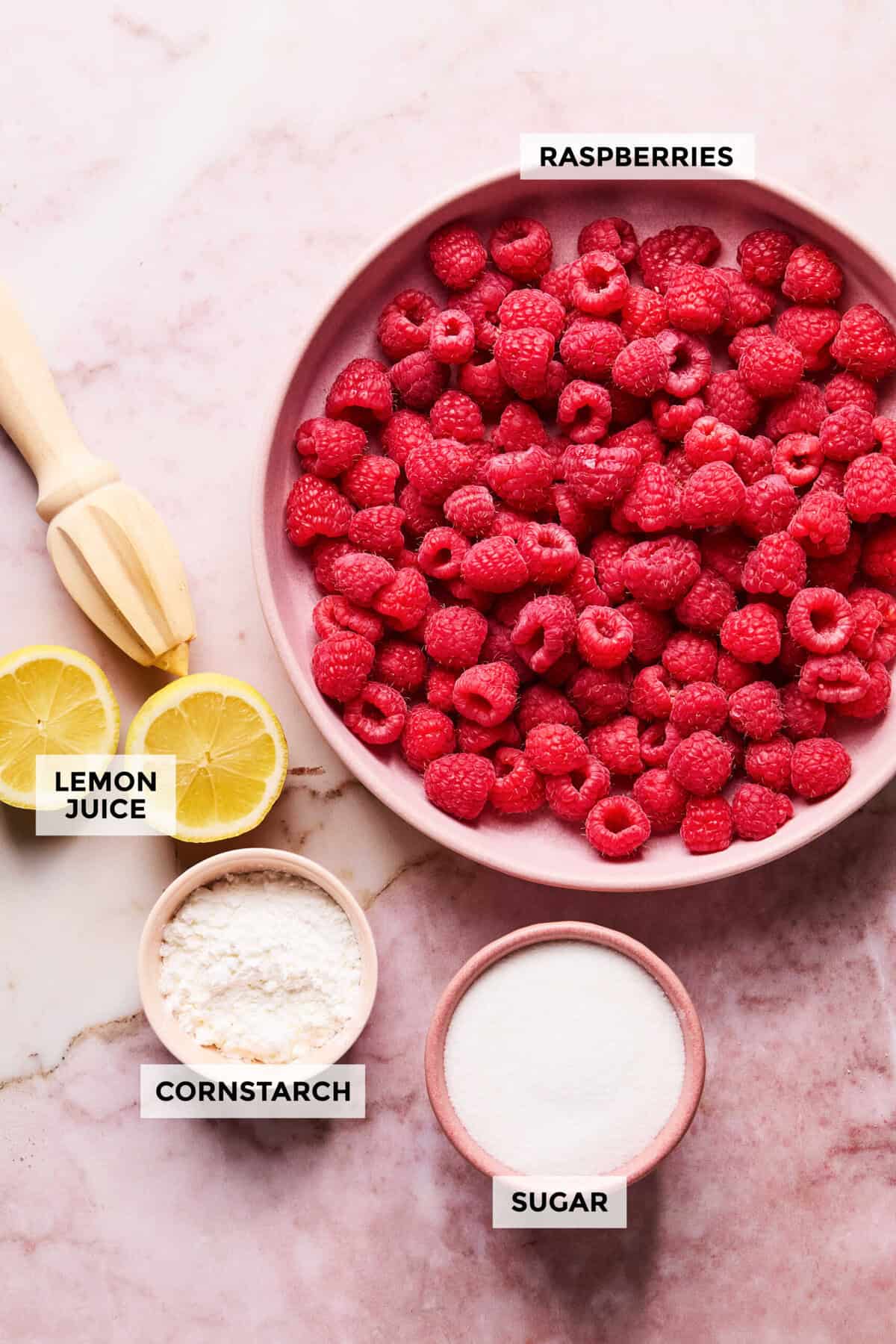
"I’ve had my fair share of cake fillings that were either too runny or too stiff, and it’s so frustrating when the layers slide around," Tiffany explained. "This one sets up beautifully after a night in the fridge. It’s smooth and spreadable but firm enough to hold its shape between cake layers. It makes assembling complex cakes a whole lot less stressful."
Tiffany also highlighted the recipe’s versatility, noting that while it was originally designed for her signature Chocolate Raspberry Cake, it has become a staple for other desserts, such as White Chocolate Raspberry Pie Crumb Bars and Raspberry Crumb Bars.
   "It’s smooth and spreadable but firm enough to hold its shape
    between cake layers. It makes assembling complex cakes a whole
    lot less stressful."
    — Tiffany, Founder of Crème de la Crumb
Professional Pastry Chef Analysis
We also reached out to Marcus Vance, an executive pastry chef based in Chicago, to discuss the structural mechanics of using fruit compotes in multi-tiered cakes.
"When you are building a tiered cake, the filling is often the weakest point of structural failure," Vance noted. "If a baker uses a standard jam, the weight of the upper tiers will squeeze the filling outward, causing the exterior buttercream to bulge or blow out.
By using a starch-thickened filling like this raspberry recipe, you create a stable layer. The addition of cornstarch provides the necessary shear resistance. For best results, I always recommend piping a ‘dam’ of stiff buttercream around the perimeter of the cake layer, then spreading this chilled raspberry filling inside the dam. This double-barrier method ensures the cake remains perfectly level and structurally sound for transport."
Vance also commented on the flavor profile of the recipe:
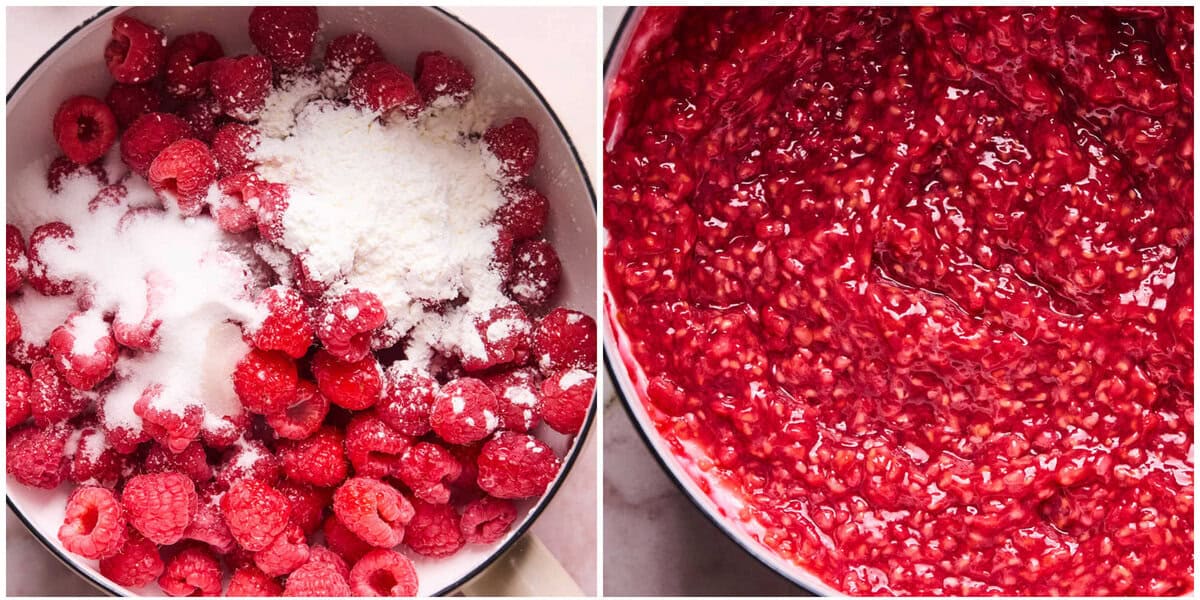
"The addition of fresh lemon juice is crucial. Raspberries are naturally sweet, but heating them can dull their bright notes. The citric acid in the lemon juice restores that fresh, lively flavor, cutting through the richness of heavy chocolate cakes or sweet vanilla buttercreams."
5. Implications: The Future of Home Baking and Commercial Adaptation
The growing popularity of simple, high-quality component recipes like this raspberry filling has broader implications for both the home kitchen and the wider food industry.
               INFLUENCE OF THE CLEAN-LABEL MOVEMENT

  Home Kitchens                           Commercial Bakeries
  • Shift to scratch-made compotes        • Reduction of artificial dyes
  • Use of frozen fruit year-round        • Demand for natural stabilizers
  • Focus on structural integrity         • Transition to clean-label formulas
The Decline of Ultra-Processed Ingredients
As consumers become more aware of the health impacts of ultra-processed foods (UPFs), they are increasingly choosing to make basic baking components from scratch. This raspberry filling demonstrates that premium pastry components do not require complex chemical additives. With just four basic ingredients, home bakers can easily create a filling that tastes fresher and performs better than store-bought alternatives containing modified food starches, sodium benzoate, and artificial colors.
Economic and Environmental Efficiency
This recipe also offers practical economic and environmental benefits. It works equally well with fresh or frozen raspberries, allowing bakers to make high-quality fruit fillings year-round without relying on out-of-season, imported fresh berries.
Using frozen fruit reduces transport emissions and minimizes food waste, as frozen berries are processed at peak ripeness and have a much longer shelf life. Additionally, because the recipe can be made up to three days in advance or frozen for up to a month, it helps home bakers plan their preparation steps more efficiently, reducing last-minute baking stress.
Impact on Commercial Formulations
The success of clean-label recipes online is also influencing commercial food manufacturing. Major ingredient suppliers are now developing clean-label starch alternatives—such as native tapioca and rice starches—that offer the same stability and freeze-thaw resistance as chemically modified starches. This allows commercial bakeries to meet consumer demand for simple ingredients without sacrificing the shelf life and structural integrity of their products.
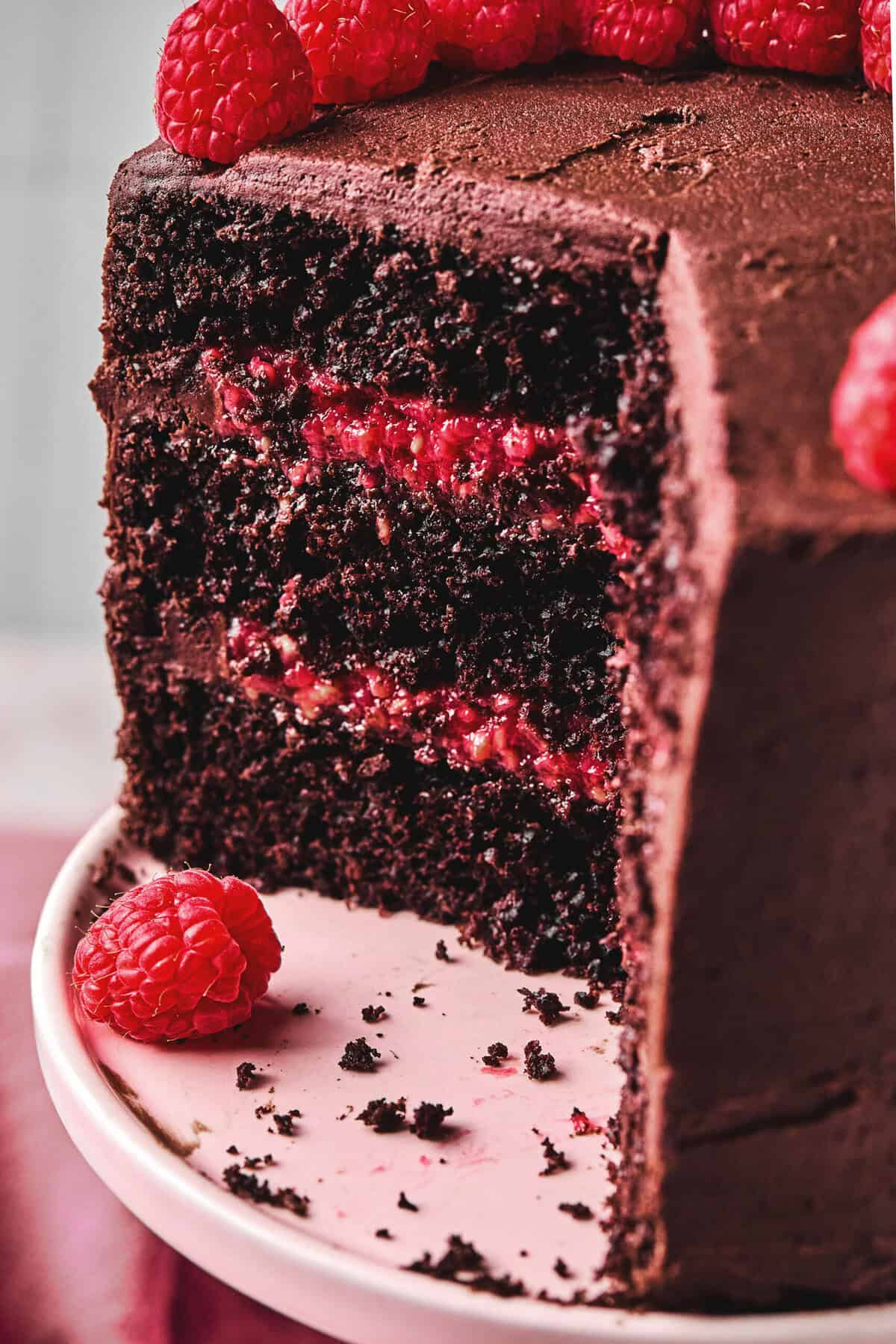
Ultimately, this raspberry cake filling is more than just a quick recipe for a weekend baker. It is a practical application of food science that shows how simple ingredients, when prepared with the right techniques, can elevate both the flavor and structure of modern desserts.