The pecan pie remains an undisputed cornerstone of the American holiday dessert table, particularly within Southern culinary traditions. Characterized by its contrast of toasted, buttery nuts and a rich, gelatinous custard base, the dish represents a complex exercise in food science and pastry technique. However, home bakers frequently struggle with common structural failures, notably an underbaked, runny filling or an overly sweet, one-dimensional flavor profile.
A culinary analysis of the optimized pecan pie formula developed by pastry specialist Tiffany of Creme de la Crumb reveals how modern modifications—such as the integration of browned butter, a dual-sugar stabilization system, and precise thermal management—can systematically resolve these traditional baking challenges. This report deconstructs the mechanics of this highly rated recipe, analyzing its chemical processes, nutritional profile, step-by-step preparation timeline, and food safety protocols.
Main Facts: The Anatomy of a Modern Holiday Classic
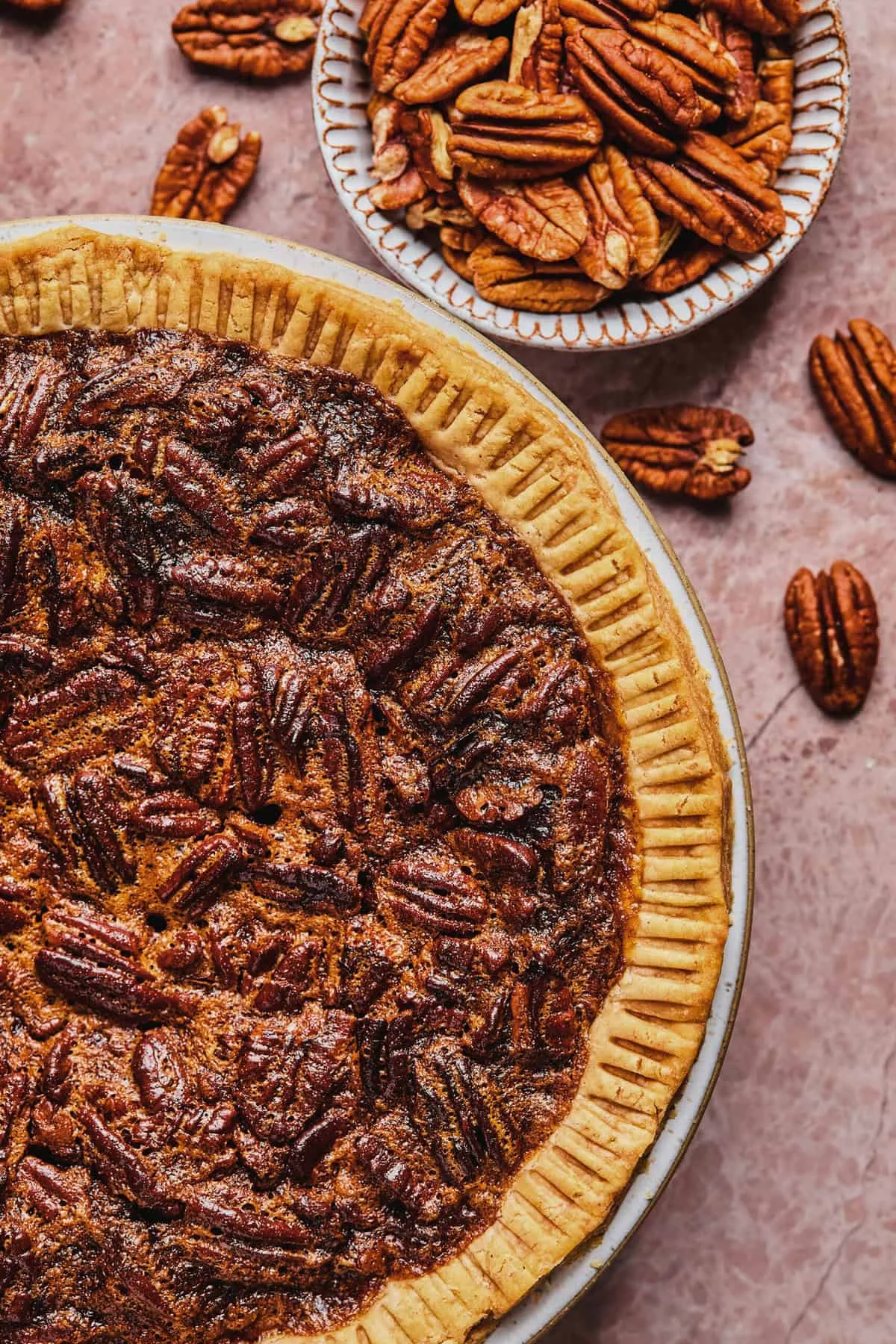
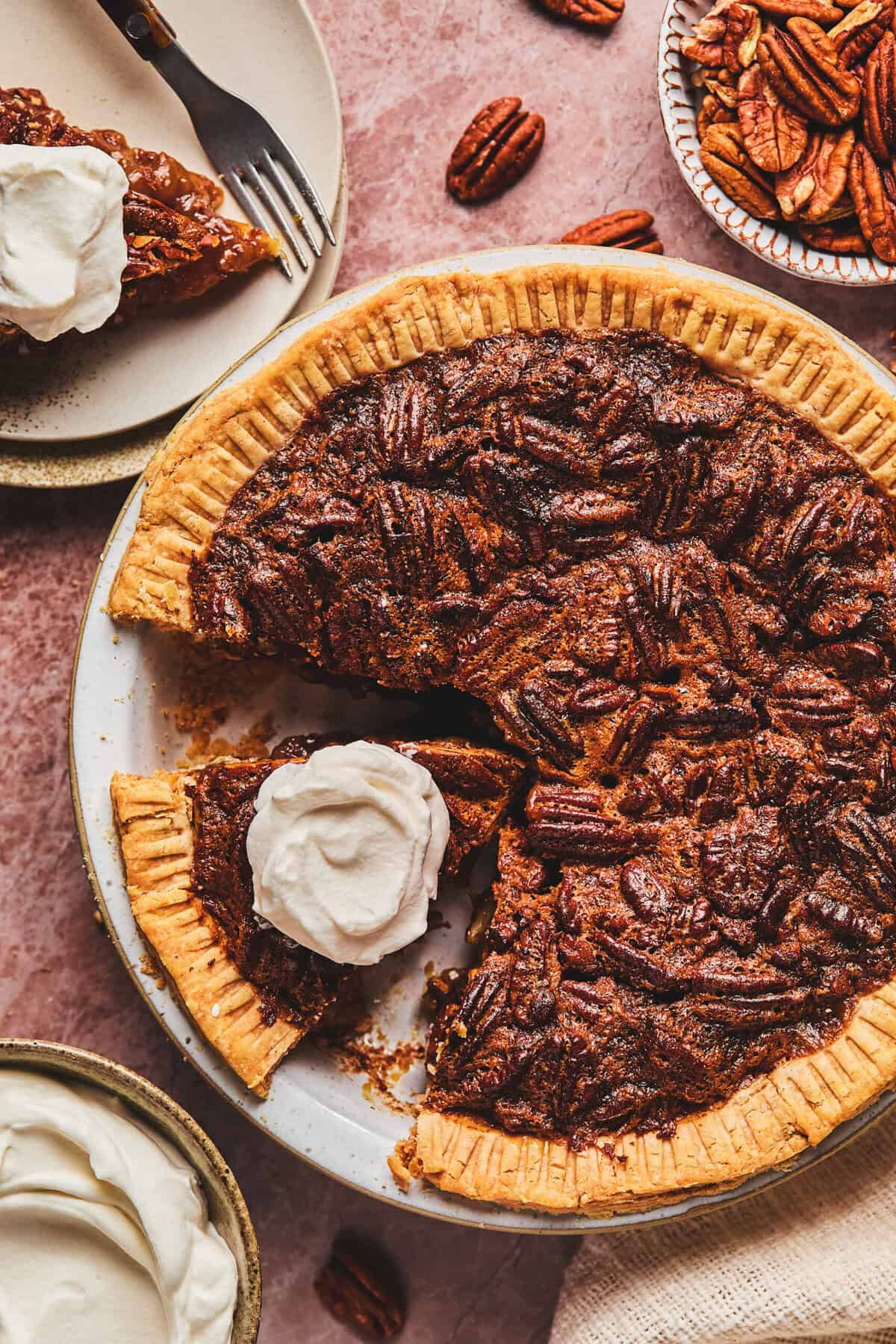
At its core, a pecan pie is an open-faced custard tart utilizing pecans (Carya illinoinensis) as its primary structural and flavor-giving element. The challenge of the dish lies in the transition of the liquid filling into a semi-solid, sliceable custard without overcoagulating the egg proteins, which leads to a rubbery texture, or underbaking, which results in a collapsed, liquid center.
Key Structural Components of the Optimized Formula:
- Active Preparation Efficiency: The recipe is designed to minimize active labor to approximately 15 minutes, relying on strategic ingredient preparation rather than labor-intensive mechanical whipping or par-baking, provided a pre-made or frozen high-quality crust is utilized.
- The Lipid Engine (Browned Butter): Unlike traditional recipes that call for simply melting or creaming butter, this formula mandates browning the butter. This thermal treatment drives off moisture and caramelizes milk solids, introducing a complex, nutty flavor profile that complements the pecans.
- The Dual-Sugar and Viscosity Matrix: By combining dark or light corn syrup with a mixture of brown and white sugars, the recipe creates an invert-sugar environment that prevents crystallization during baking and cooling, ensuring a silky, cohesive mouthfeel.
- Aromatic Enhancements: A subtle integration of ground cinnamon and a specialized maple-infused whipped cream topping cuts through the intense lipid and sugar density of the pie, offering acidity and brightness to the palate.
Chronology of Culinary Execution: From Raw Ingredients to Set Custard
Achieving the ideal structural equilibrium in a pecan pie requires strict adherence to a chronological sequence of thermal and mechanical steps. The following timeline outlines the precise phases required to execute this optimized formula.
[Phase 1: Butter Browning] ---> [Phase 2: Emulsification] ---> [Phase 3: Pecan Integration]
                                                                        |
[Phase 6: Aeration/Serving] <--- [Phase 5: Thermal Cooling] <--- [Phase 4: Baking & Gelation]
Phase 1: Thermal Desiccation and Browning of the Butter (Minutes 1–5)
The process begins on the stovetop. Salted butter is subjected to medium heat in a saucepan. As the temperature rises past 212°F (100°C), the water content within the butter begins to boil off. Once the water is completely evaporated, the temperature of the remaining fat and milk solids rises rapidly, initiating the Maillard reaction. The milk proteins (casein and whey) and lactose toast, turning golden brown and emitting a rich, nutty aroma. This liquid is immediately removed from heat to prevent carbonization.
Phase 2: Constructing the Liquid Emulsion (Minutes 6–10)
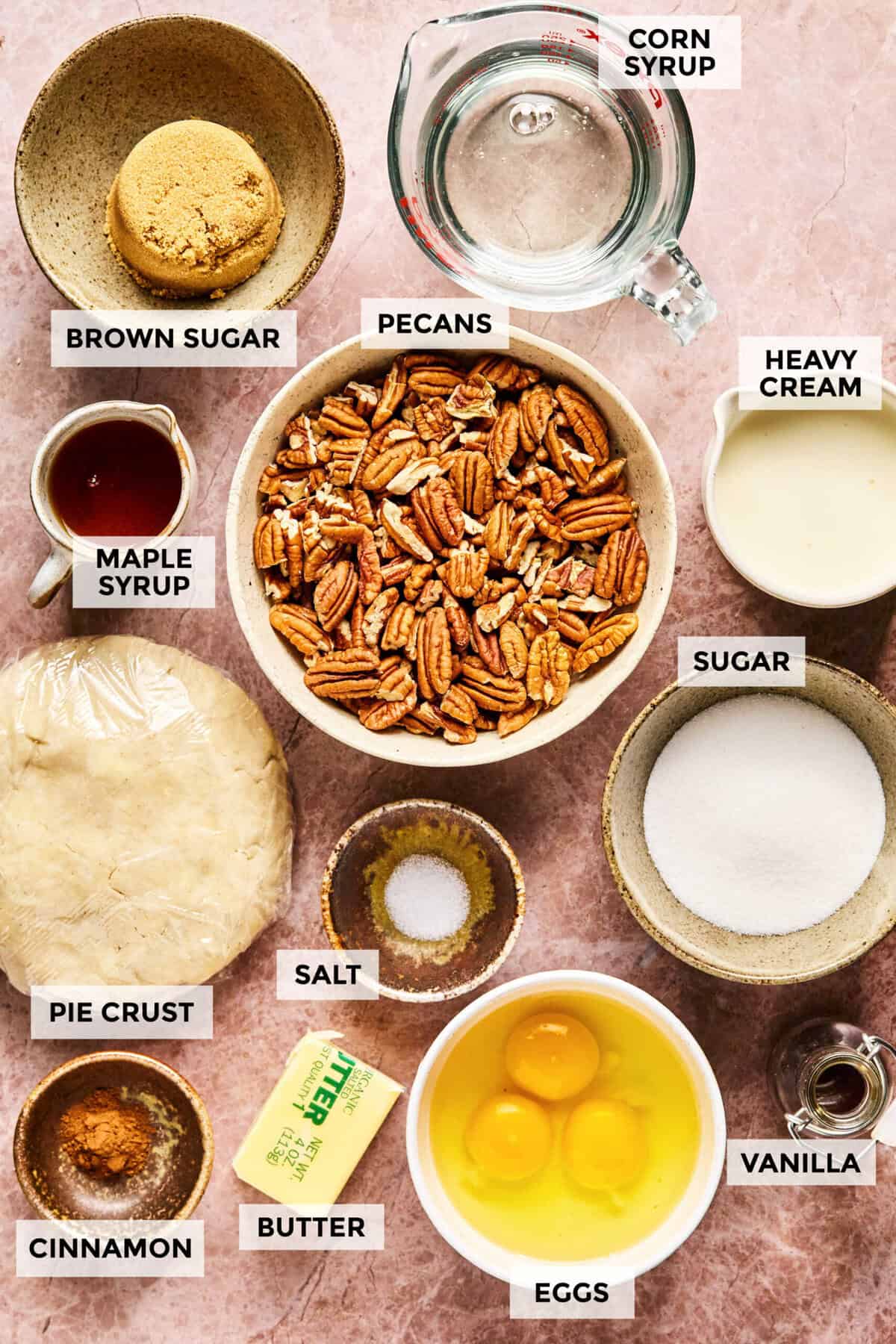
In a primary mixing bowl, the warm browned butter is combined with the corn syrup, dark brown sugar, granulated white sugar, eggs, and a pinch of cinnamon. Vigorous whisking is required at this stage to achieve a stable emulsion. The lecithin present in the egg yolks acts as a natural emulsifier, binding the hydrophobic lipids of the butter with the hydrophilic sugar syrups.
Phase 3: Crust Preparation and Pecan Distribution (Minutes 11–15)
An unbaked 9-inch pie crust—either a meticulously prepared homemade flaky pastry or a high-quality refrigerated commercial crust—is fitted into a pie plate.
The pecans are prepared. While whole pecan halves provide an aesthetically pleasing geometric pattern on the surface of the pie, a combination of whole halves and roughly chopped pieces is distributed evenly across the bottom of the raw crust. This dual-texture approach ensures that every bite contains a dense distribution of nuts, avoiding large pockets of unyielding sugar custard.
Phase 4: Thermal Processing and Gelation (Minutes 15–70)
The liquid syrup emulsion is poured directly over the pecans. Because pecans are less dense than the heavy sugar-egg mixture, they naturally float to the surface, self-arranging into a protective top layer.
The assembled pie is transferred to an oven preheated to 350°F (175°C). The baking duration spans 50 to 55 minutes. During this window, the heat penetrates the pie from the outer crust inward.
- At 140°F–145°F (60°C–63°C): Egg white proteins begin to denature and form a three-dimensional network, trapping the liquid sugars and fats.
- At 160°F (71°C): Egg yolk proteins coagulate, finalizing the structural set of the custard.
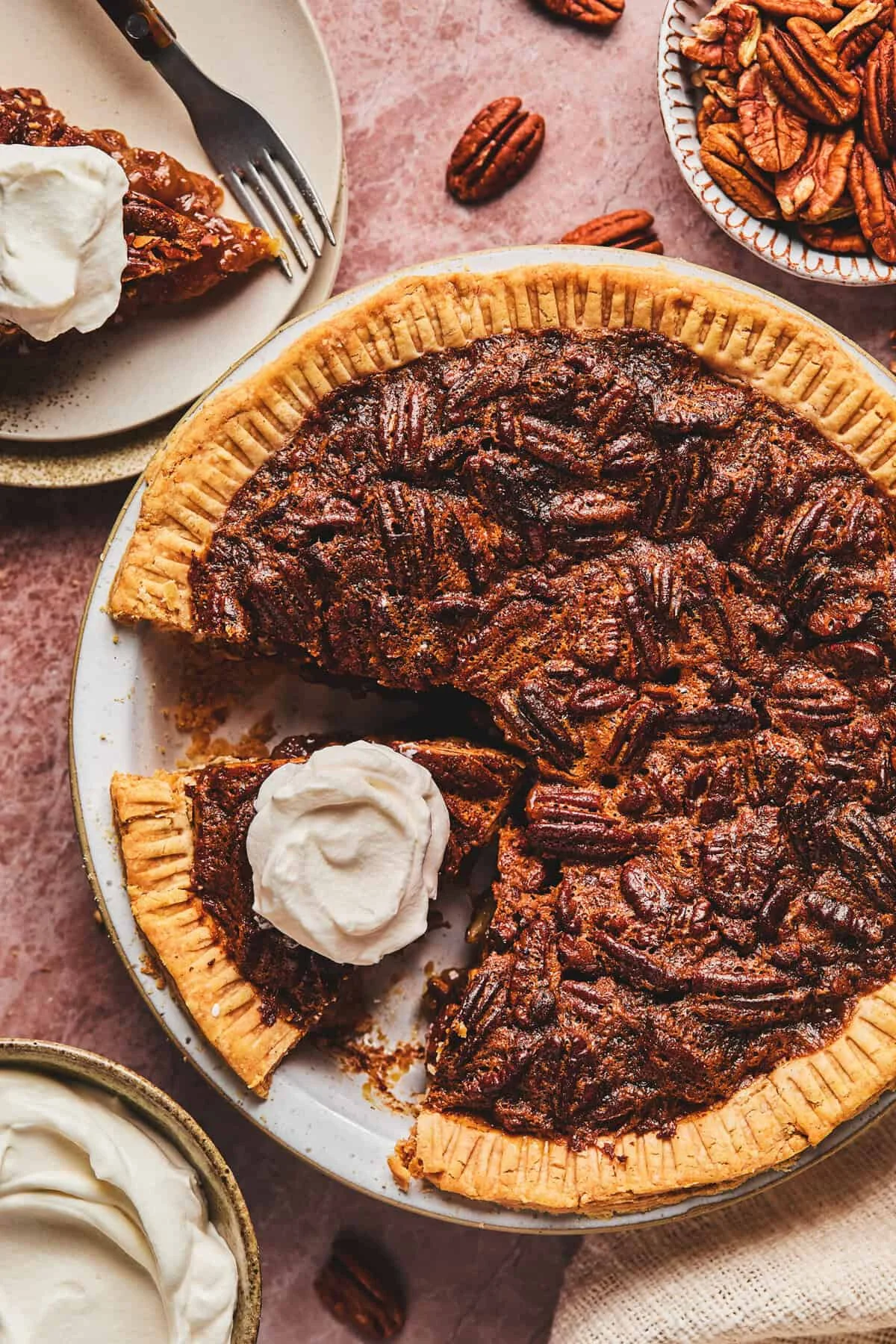
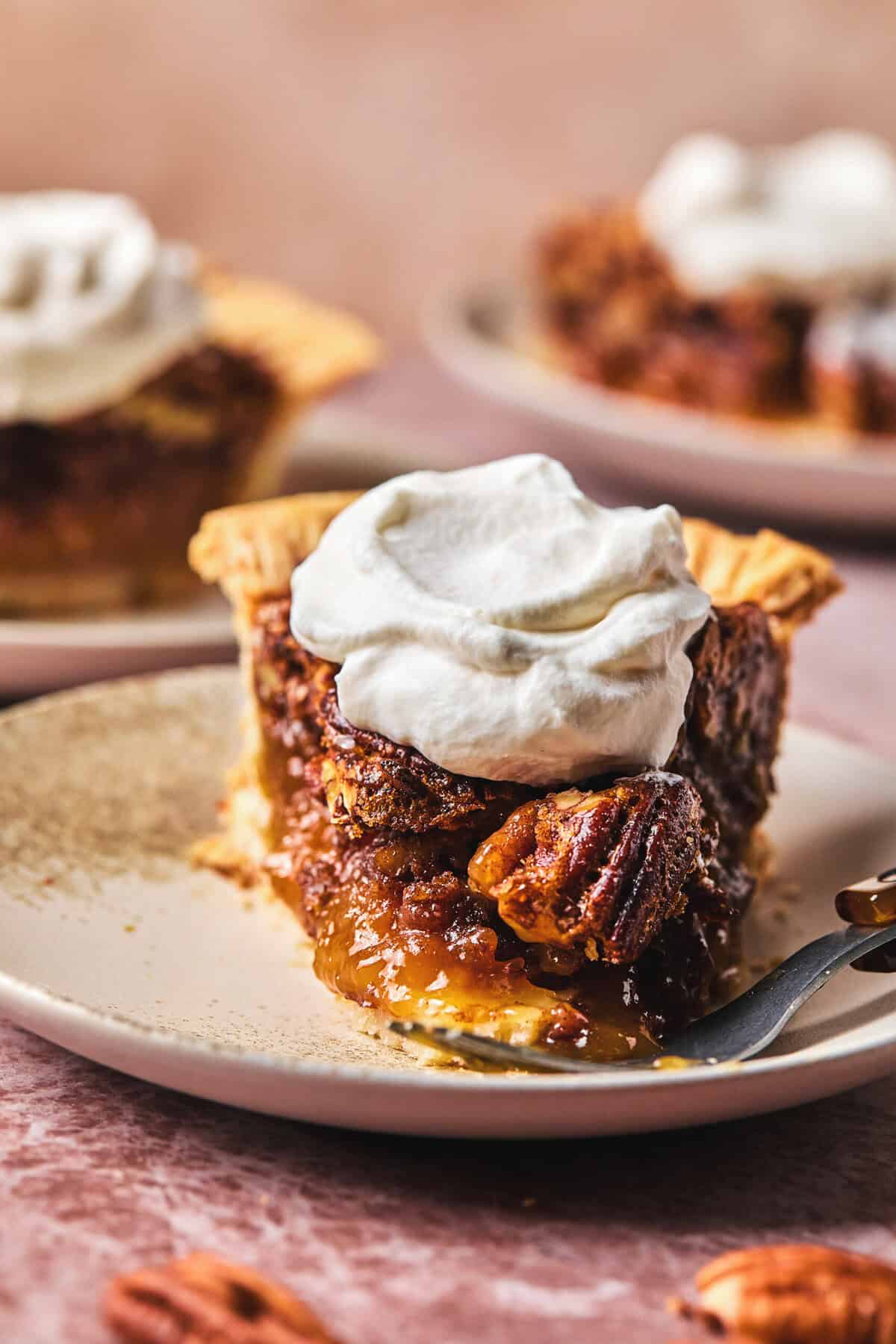
- Monitoring the Set: At the 50-minute mark, the baker must assess the pie’s physical state. The edges should appear slightly puffed and stabilized, while the center should exhibit a slight, gel-like jiggle (resembling set gelatin) when gently shaken, rather than a sloshing liquid motion.
Phase 5: Post-Bake Stabilization and Cool-Down (Hours 1.5–4)
Upon removal from the oven, the pie cannot be cut immediately. The cooling phase is a critical structural step. As the temperature drops, the fats solidify, and the sugar matrix transitions into a highly viscous, semi-solid state. The pie must cool completely at room temperature for a minimum of two hours, followed by refrigeration if it is to be stored or sliced cleanly.
Phase 6: Aeration and Finishing (Minutes 10, Post-Cooling)
Prior to service, the optional Maple Whipped Cream is prepared. Heavy whipping cream, kept at a chilled temperature of under 40°F (4°C) to maintain fat globule rigidity, is whipped mechanically. Once soft peaks form, pure maple syrup is folded in. The cream is whipped to stiff peaks, providing a light, aerated contrast to the dense, rich pie slice.
Supporting Data: Chemical Mechanics and Nutritional Profiles
To understand why this specific formulation yields a superior outcome, one must examine the underlying culinary science and quantitative nutritional metrics.
The Chemistry of Invert Sugars in Custard Stability
A primary defect in poorly formulated pecan pies is the crystallization of sucrose, which leads to a grainy, gritty texture. This recipe mitigates this risk by relying heavily on corn syrup (primarily glucose).
Glucose molecules are smaller and less prone to crystallization than sucrose (table sugar). When corn syrup is combined with sucrose (from the white and brown sugars), the glucose molecules physically interfere with the sucrose molecules, preventing them from binding together into crystals. This chemical interference ensures that the filling remains smooth, gooey, and cohesive even after cooling and refrigeration.
Quantitative Nutritional Analysis
The following database represents the calculated nutritional values per serving, based on a standard 10-serving yield of the finalized pie (including the crust, but excluding the optional whipped cream topping):

| Nutritional Marker | Value per Serving | Daily Value Percentage (% DV)* |
|---|---|---|
| Calories | 558 kcal | 28% |
| Total Fat | 35 g | 45% |
| Saturated Fat | 12 g | 60% |
| Monounsaturated Fat | 14 g | — |
| Polyunsaturated Fat | 6 g | — |
| Trans Fat | 0.3 g | — |
| Cholesterol | 92 mg | 31% |
| Sodium | 226 mg | 10% |
| Total Carbohydrates | 62 g | 23% |
| Dietary Fiber | 2 g | 7% |
| Total Sugars | 51 g | — |
| Protein | 5 g | 10% |
| Calcium | 61 mg | 5% |
| Iron | 1 mg | 6% |
| Potassium | 166 mg | 4% |
*Percent Daily Values are based on a 2,000-calorie diet. Values are approximations calculated via standardized ingredient databases.
Expert Culinary Insights and Food Safety Protocols
Baking experts and food safety authorities emphasize that custard-based pies require specific handling to prevent both physical failure and microbiological contamination.
Diagnostic Troubleshooting for the "Runny" Pie
According to professional pastry instructors, a runny pecan pie is almost exclusively the result of underbaking or premature slicing.
"Home bakers often pull pecan pies from the oven too early because they fear the top pecans will burn," explains one food scientist. "However, because of the high sugar concentration, the boiling point of the filling is elevated. If the internal temperature of the custard does not reach 160°F to 165°F (71°C to 74°C), the egg proteins will not fully cross-link, leaving the center liquid."

If the crust or surface pecans are browning too rapidly before the center has set, experts recommend tenting the pie loosely with aluminum foil for the final 15 to 20 minutes of baking.
       [Excessive Surface Browning?]
                 /
              (Yes)        (No)
               /
 [Apply Aluminum Foil Tent]  [Continue Uncovered]
                            /
          [Bake to Internal Temp of 160°F-165°F]
The Food Safety Mandate for Custard Pies
Because pecan pie contains a high concentration of eggs and dairy, it falls under the United States Department of Agriculture (USDA) guidelines for hazardous foods if left at room temperature.
- The Two-Hour Rule: Once cooled, a pecan pie should not remain at room temperature for more than two consecutive hours.
- Refrigeration Storage: The USDA mandates that egg-rich pies must be stored in a refrigerator maintained at or below 40°F (4°C). Refrigeration not only inhibits bacterial growth (such as Salmonella) but also physically stabilizes the custard matrix, making it easier to slice cleanly.
- Shelf Life: Properly refrigerated, the pie remains safe and structurally sound for 4 to 5 days.
Implications for Contemporary Holiday Baking and Dietary Adaptations
The evolution of the pecan pie recipe reflects broader cultural shifts in home baking, convenience, and dietary needs.
The Acceptance of Convenience Shortcuts
Historically, the hallmark of a skilled home baker was the preparation of a pie crust entirely from scratch. However, modern holiday baking trends show a growing acceptance of high-quality, pre-made refrigerated or frozen crusts. This shift allows bakers to allocate their time and cognitive energy toward optimizing the filling—where complex processes like butter browning and precise thermal gelation occur—without compromising the overall quality of the dessert.

Dietary Adaptations: Gluten-Free and Alternative Sugars
As celiac disease and gluten sensitivities continue to influence holiday menu planning, the adaptability of this filling has become highly relevant. Because the core filling (pecans, eggs, butter, sugars, and corn syrup) is naturally gluten-free, the entire dessert can be rendered allergen-friendly simply by swapping the standard wheat-flour pastry crust for a gluten-free alternative, such as a crust made from rice flour, tapioca starch, or ground almonds.
Furthermore, while corn syrup is chemically essential for preventing crystallization, modern bakers seeking alternatives have successfully experimented with brown rice syrup or agave nectar. While these substitutions slightly alter the viscosity and final flavor notes, they represent a growing demand for ingredient flexibility in traditional American baking.
Ultimately, the success of this modern Southern pecan pie formula lies in its respect for both tradition and science. By understanding the thermal limits of egg proteins, the crystalline properties of sugars, and the flavor-enhancing power of the Maillard reaction, home bakers can reliably produce a holiday dessert that is structurally perfect and exceptionally flavorful.