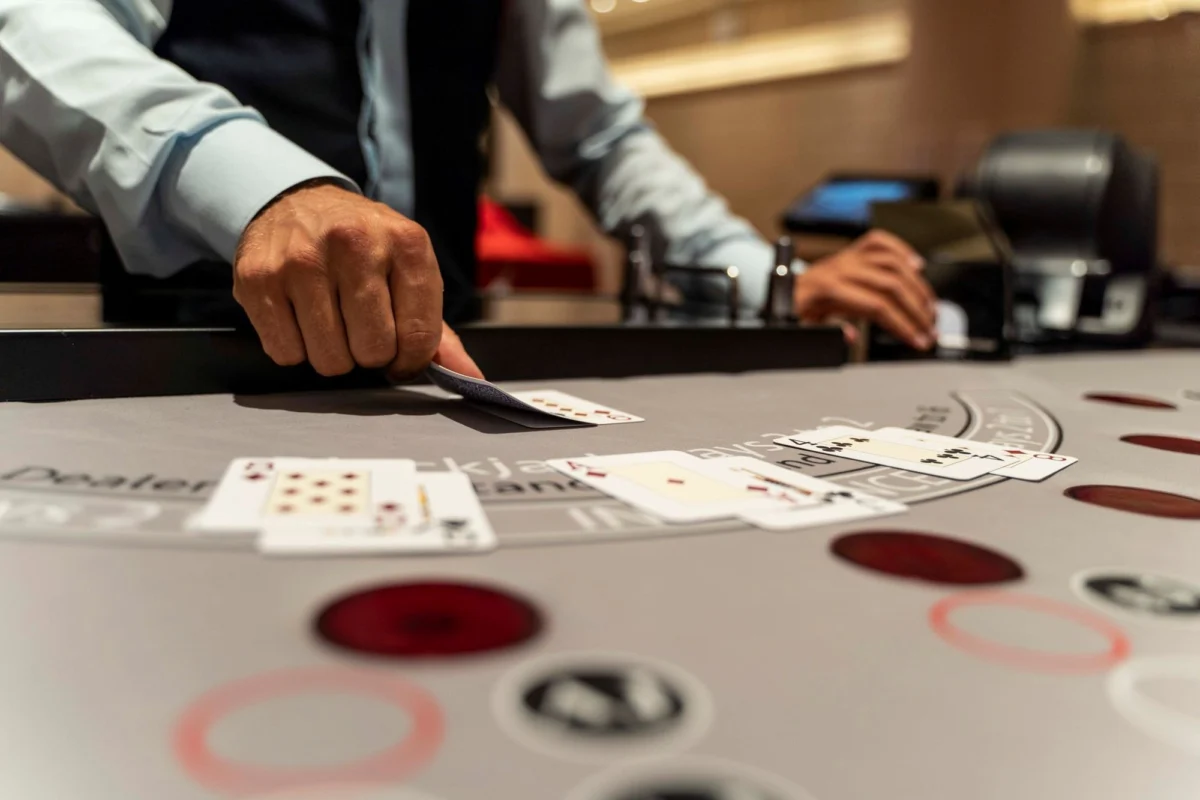
The South African online gambling landscape has witnessed an unprecedented surge in popularity over the past decade. As thousands of players migrate from physical betting shops to digital platforms, the question of fairness has moved to the forefront of the industry conversation. Central to this digital trust is a sophisticated piece of technology known as the Random Number Generator (RNG). Often described as the "heart" of an online casino, the RNG is the silent arbiter that ensures every spin of a virtual slot reel, every deal of a blackjack hand, and every bounce of a roulette ball is devoid of human interference.
For the South African player, understanding the mechanics of RNGs is not merely an academic exercise—it is the key to navigating the digital gaming space with confidence. This article explores the evolution, technical reality, regulatory framework, and implications of RNG technology in the South African gaming market.
The Genesis of Digital Randomness: Main Facts
At its core, an RNG is a sophisticated computer algorithm designed to produce a sequence of numbers that lack any discernible pattern. In the context of online gaming, these numbers are mapped to specific game outcomes. When a player clicks "Spin," the RNG instantly selects a number from a massive pool of possibilities, which the game software then translates into a visual result—be it a winning payline on a slot or a specific card in a poker hand.
The defining characteristic of an RNG is independence. In a fair system, the result of the current round is mathematically unrelated to the results of the previous thousand rounds. This ensures that the "Gambler’s Fallacy"—the belief that a losing streak must eventually be followed by a win—remains a fallacy, as the machine possesses no memory of past outcomes.
Chronology: From Mechanical Gears to Algorithmic Precision
The journey of randomness in gambling has evolved significantly alongside human technology:
- The Era of Mechanical Randomness (Pre-1980s): Randomness was physical. Whether it was the weighted balance of a roulette wheel or the physical shuffling of a deck of cards, the "RNG" was gravity and manual dexterity.
- The Emergence of Early PRNGs (1990s): With the advent of the first online casinos, developers utilized basic algorithms. While functional, these early systems were often criticized for potential predictability if the "seed" number was discovered.
- The Regulatory Standard (2000s–2010s): As the industry matured, international bodies began mandating rigorous, third-party testing. The introduction of standardized, complex encryption and auditing processes moved RNGs from "black box" software to certified, transparent systems.
- The Modern Era (Present): Today’s South African online casinos utilize highly advanced, high-speed PRNGs (Pseudo-Random Number Generators) that are tested millions of times before they ever reach a player’s screen, ensuring a gaming environment that meets global fairness benchmarks.
Technical Architecture: Supporting Data
To understand how these systems operate, one must distinguish between the two primary types of RNGs utilized in the industry.
Pseudo-Random Number Generators (PRNG)
The industry standard for online gaming. A PRNG relies on a complex algorithm and an initial "seed" number. Because the starting point is mathematically defined, it is technically "pseudo-random." However, the algorithms are so incredibly complex and iterate so rapidly that the output is indistinguishable from true randomness for all practical purposes.
True Random Number Generators (TRNG)
TRNGs derive their randomness from physical phenomena, such as radioactive decay or thermal noise. While theoretically superior in terms of pure entropy, they are computationally expensive and difficult to implement at the high speeds required by thousands of concurrent online casino games. Consequently, they remain rare in the standard online environment.
| Feature | PRNG | TRNG |
|---|---|---|
| Source | Algorithmic (Software) | Physical (Hardware) |
| Speed | Extremely Fast | Slower (requires physical input) |
| Implementation | Industry Standard | Highly Rare |
| Practical Fairness | Certified as Fair | Theoretically Perfect |
The Regulatory Framework: Official Responses
In South Africa, the National Gambling Board (NGB) and provincial licensing authorities serve as the primary watchdogs. Their mandate is to ensure that operators licensed within the country adhere to strict technical standards.
The Role of Independent Audits
The most critical check on an RNG is not the operator’s word, but the certificate provided by third-party testing agencies. Companies like eCOGRA, iTech Labs, and GLI (Gaming Laboratories International) are the gold standard. They function as independent auditors that:
- Analyze the Source Code: Ensuring the algorithm is not "weighted" to favor the house beyond the intended house edge.
- Statistical Testing: Running millions of simulated hands or spins to verify that the frequency of outcomes matches the expected mathematical probability.
- Certification: Issuing seals of approval that licensed South African casinos proudly display.
Implications for the South African Player
The widespread adoption of audited RNG technology has profound implications for the safety and integrity of the South African gaming market.
1. The Death of "Rigged" Software
Because modern RNGs are audited, the "rigging" of games—a major concern in the early days of the internet—is now virtually impossible for licensed operators. If an operator were to manipulate the RNG, they would fail their mandatory periodic audits and risk the immediate revocation of their license, effectively ending their business.
2. Equal Opportunity
RNG technology creates a true level playing field. Whether a player has deposited R100 or R10,000, the RNG processes every spin with the same mathematical probability. This removes bias and ensures that luck, not player status or account history, dictates the outcome.
3. The Psychological Shift
Understanding that the game is random helps players maintain a healthier relationship with gambling. When players realize that no amount of "tracking" will predict the next spin, they are more likely to view gaming as entertainment rather than a viable source of income.
Debunking Common Myths
Misconceptions about RNGs continue to circulate in forums and chat rooms. Addressing these is essential for a mature gaming culture.
- Myth: The casino knows when I’m winning and forces a loss.
- Reality: The RNG is decoupled from the player’s account balance. It does not know who is playing, how much they have won, or what their betting history is. It only knows to produce a result.
- Myth: Games have "hot" or "cold" cycles.
- Reality: This is a projection of human pattern recognition. The math behind the RNG ensures that every spin has the exact same probability as the one before it, regardless of the streak length.
- Myth: Long sessions drain the RNG’s accuracy.
- Reality: RNGs do not "tire." They function at the same level of randomness at 2:00 AM as they do at 2:00 PM, and they remain just as effective after 10 hours of play as they are after 10 seconds.
Conclusion: The Future of Fairness
As technology advances, the role of the RNG will only become more integrated into the fabric of the South African online gaming experience. We are moving toward a future where "Provably Fair" technology—which allows players to verify the randomness of a specific hand or spin in real-time—may become the next standard in the industry.
For now, the combination of sophisticated PRNG algorithms, rigorous oversight by the National Gambling Board, and the diligence of independent testing agencies creates a robust ecosystem. South African players can engage in online casino games with the assurance that while the house may hold a mathematical edge, the hand of chance is governed by objective, audited, and strictly regulated code. Fairness is no longer just a promise; it is a calculated, verified reality.