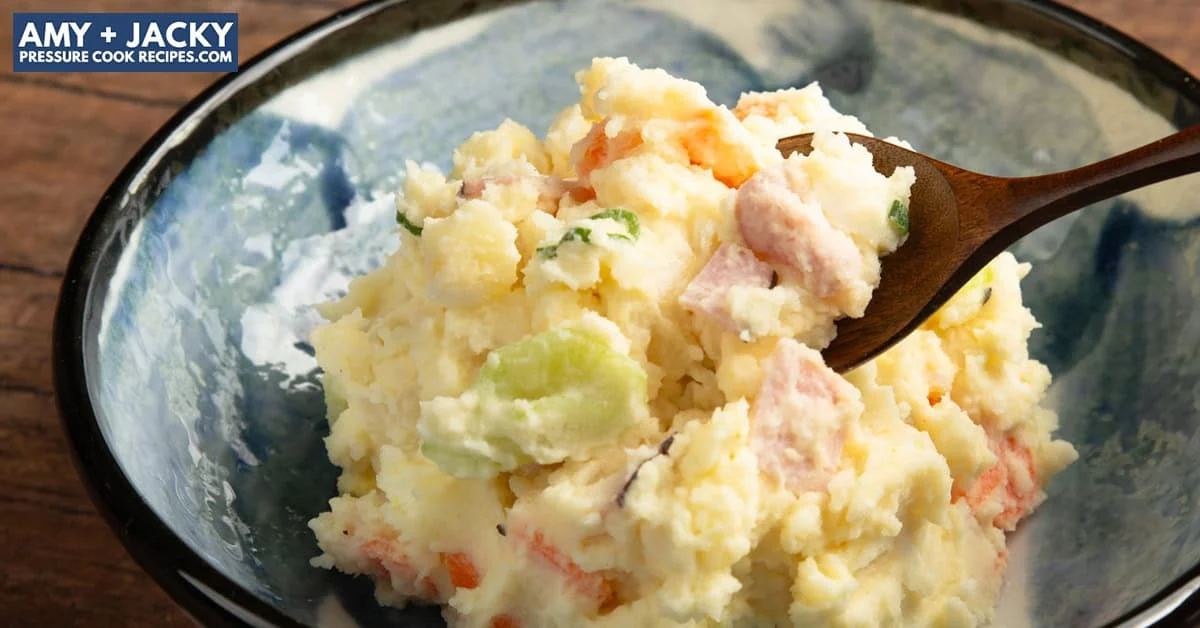
In the landscape of global comfort foods, few side dishes possess the versatility, nostalgic appeal, and refined flavor profile of Japanese Potato Salad (ポテトサラダ). Unlike its Western counterparts, which often rely on a heavy, mustard-forward base and uniform texture, the Japanese iteration is a delicate balance of creamy, fluffy, tangy, and sweet elements. Traditionally a labor-intensive staple of the Japanese yoshoku (Western-influenced) cuisine, a new method utilizing the Instant Pot is revolutionizing how home cooks approach this beloved dish. By leveraging pressure cooking, chefs are now achieving a depth of seasoning and consistency previously reserved for professional kitchens.
Main Facts: The Anatomy of a Perfect Japanese Potato Salad
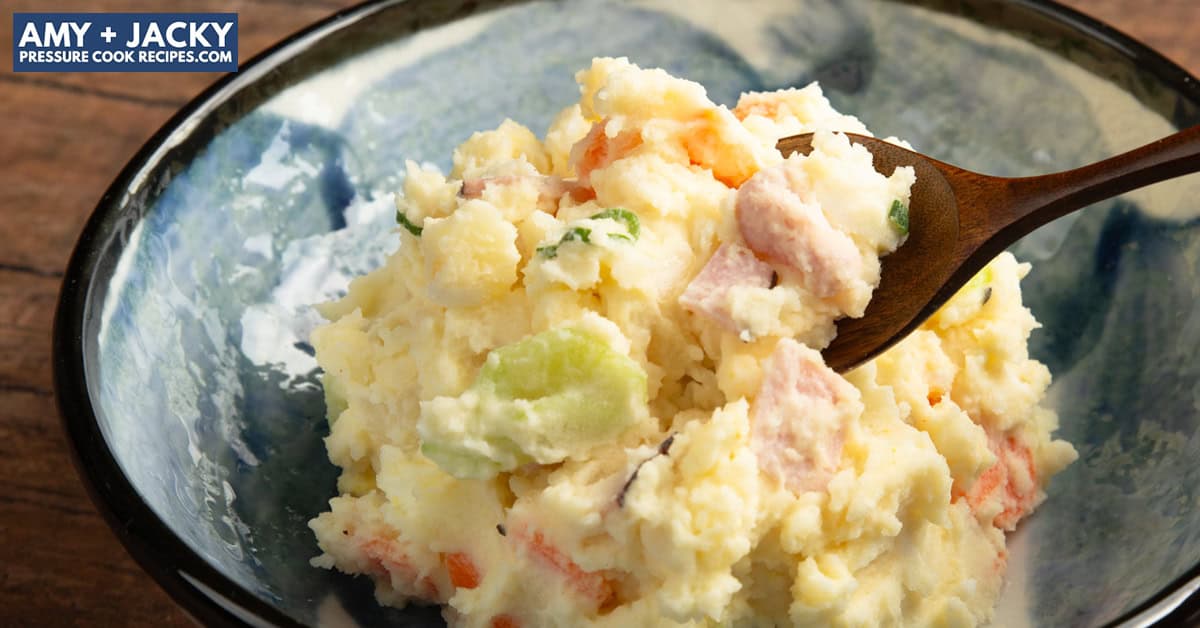
Japanese potato salad is defined by its distinct texture—a "roughly mashed" consistency where some potato chunks remain to provide a satisfying mouthfeel—and its signature dressing. The primary components include starchy Russet potatoes, hard-boiled eggs, thinly sliced vegetables (typically cucumber and onion), and a high-quality Japanese mayonnaise, such as the iconic Kewpie brand.
What sets this version apart is the meticulous preparation of ingredients. The use of Japanese rice vinegar provides a subtle, mellow acidity that cuts through the richness of the mayonnaise, while the inclusion of dashi powder serves as a "secret" umami booster, grounding the salad with a savory, oceanic depth. The dish is not merely a side; it is a staple of obento lunch boxes, a mainstay at summer BBQs, and a popular appetizer in izakaya pubs.
Chronology: A Step-by-Step Evolution of the Process
The transition from stovetop boiling to pressure cooking has fundamentally changed the preparation timeline. Below is the refined, modern methodology for executing this dish with precision.
Phase 1: The Deep Poaching Technique
One of the most critical breakthroughs in this recipe is the "deep poaching" method. Contrary to the standard advice of using minimal water, this recipe calls for four cups of cold tap water. By submerging the potatoes entirely, the heat is distributed more uniformly. This prevents the edges of the potato cubes from disintegrating into a paste while leaving the centers undercooked—a common pitfall of steaming or boiling.
Phase 2: Simultaneous Cooking
Efficiency is the hallmark of the Instant Pot. The recipe dictates that the potatoes should be cubed into one-inch pieces, seasoned with salt, dashi powder, and rice vinegar, and then placed in the pot. The eggs are then layered directly on top of the potatoes. By setting the unit to "Low Pressure" for exactly one minute, the system utilizes the 20-minute "come-up" time to gently cook the eggs to a perfect hard-boiled state while simultaneously softening the potatoes to the ideal texture.
Phase 3: The Moisture Management Strategy
A soggy potato salad is a culinary failure. To combat this, the recipe requires a specific pre-treatment for the fresh produce. Thinly sliced cucumbers and finely diced white onions are sprinkled with salt and left to rest for 10 to 15 minutes. This osmosis process draws out excess moisture. Before final assembly, this liquid is squeezed out, ensuring the dressing remains emulsified and vibrant rather than watery.
Phase 4: Final Assembly and Texture Balancing
The final, and perhaps most crucial, step involves the "roughly mashed" technique. A portion of the cooked potato cubes is set aside before the rest are mashed. This creates a dual-texture profile: a creamy, smooth base interspersed with firm, hearty chunks. Once the cooled eggs are chopped and folded in along with the ham and prepared vegetables, the dish is finished with a binding agent of mayonnaise and Dijon mustard.
Supporting Data: Why This Method Succeeds
The science behind this recipe is rooted in thermal efficiency and ingredient integration.
- Seasoning to the Core: By adding salt, dashi, and vinegar to the poaching water, the potatoes absorb the seasoning during the cooking process. This results in a potato that is flavorful from the inside out, rather than one that relies solely on surface-level dressing.
- The Umami Factor: Dashi powder provides a concentrated form of glutamates, which, when combined with the fats in the Japanese mayonnaise, creates a synergistic umami effect. This makes the dish taste significantly more "gourmet" without requiring extra effort.
- Nutritional Profile: For a six-to-eight-serving batch, the recipe yields approximately 265 calories per serving. With 7g of protein and 13g of fat, it serves as a nutrient-dense side dish that fits well within a balanced meal plan. The potassium content (786mg) is particularly high due to the use of starchy Russet potatoes.
Official Perspectives: The "Amy + Jacky" Pro Tips
Culinary experts Amy and Jacky, proponents of this pressure-cooking technique, emphasize that the goal is flexibility. Their professional advice highlights that while Russet potatoes provide the best "fluffy" texture, the salad is highly versatile.
They note that the "Low Pressure" setting is non-negotiable for the delicate balance of starch and protein. "The building pressure stage is where the magic happens," they explain. By not over-pressuring the potatoes, the cook maintains the structural integrity necessary for that signature "rough mash." Furthermore, they suggest that while Kewpie is the gold standard for Japanese mayonnaise, the recipe can accommodate variations, though the flavor profile will shift from rich and savory to slightly lighter or more acidic depending on the brand used.
Implications: The Versatility of the Dish
The beauty of this Japanese Potato Salad lies in its adaptability. While the core recipe relies on ham, cucumbers, and onions, it serves as a canvas for seasonal creativity.
Customization Options
- The Crunch Factor: Many home chefs now add finely diced apples to provide a crisp, sweet contrast to the savory potato base.
- Protein Variations: Beyond traditional ham, smoked bacon or imitation crab meat can be substituted to alter the flavor profile.
- Vegetable Inclusions: Peas, sweet corn, and blanched string beans are common additions that add both color and nutritional variety to the dish.
Serving Versatility
The temperature of the salad is a matter of personal preference, but it significantly impacts the flavor experience. Served warm, the potato salad highlights the creaminess of the egg and the richness of the dashi. Served chilled, the vinegar notes become more pronounced, making it a refreshing option for hot summer days or outdoor picnics.
Conclusion: A Modern Essential
The Instant Pot Japanese Potato Salad represents a perfect fusion of traditional Japanese flavor profiles and modern convenience. By shifting away from the stovetop and embracing the precision of pressure cooking, the home cook can consistently produce a dish that is texturally superior and deeply seasoned. Whether it is being packed into a child’s lunch box or served as a crowd-pleasing dish at a potluck, this recipe proves that with the right technique, the most humble of ingredients—the potato and the egg—can be transformed into something truly sophisticated.