By Staff Food Science Correspondent
Published: October 2023
Main Facts
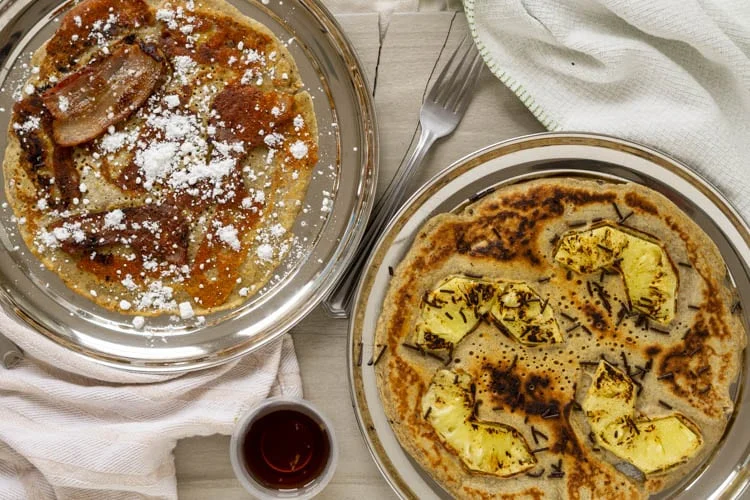
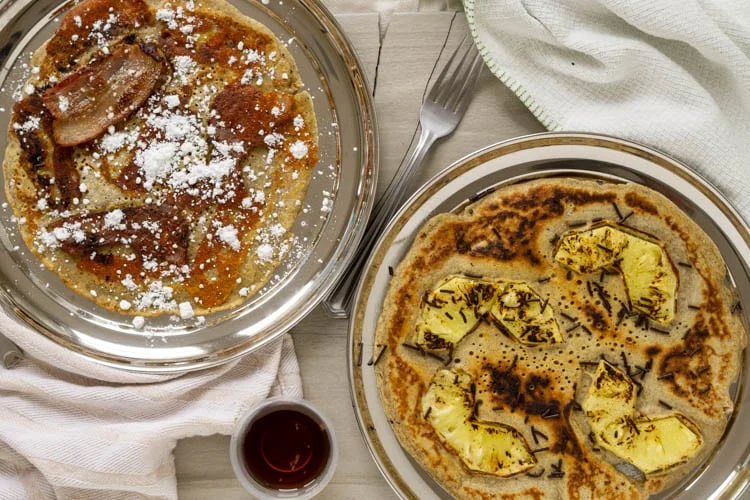
When a food scientist spends a Saturday morning in her kitchen, the result is rarely a standard breakfast. Recently, one such culinary experiment yielded what is being dubbed the "regenerative pancake." By substituting half of the traditional all-purpose wheat flour with a blend of rye and buckwheat—all sourced from regeneratively farmed plots managed by agricultural innovators like Graanbroeders—the resulting breakfast proved that sustainable eating does not require compromising on texture or taste.
However, the implications of this kitchen experiment stretch far beyond a cozy weekend breakfast. Transforming our agricultural system to embrace regenerative farming cannot be achieved by focusing solely on wheat. To heal depleted soils, sequester carbon, and foster biodiversity, farmers must rotate their fields and cultivate diverse crops such as rye, buckwheat, and other heritage grains.
Yet, a fundamental economic and logistical bottleneck stands in the way: farmers will only grow these alternative crops if there is a stable, commercial market for them. Conversely, consumers and food manufacturers will only utilize them if they integrate seamlessly into everyday products, supply chains, and kitchen habits. While home cooks can easily swap out flours on a whim, scaling this practice up to feed millions presents a complex labyrinth of industrial processing challenges, supply chain economics, and consumer market dynamics.
Chronology: The Journey of a Pancake Mix
To understand why standard supermarket aisles remain dominated by monoculture wheat products, one must follow the intricate journey of how a commercial pancake mix is manufactured on an industrial scale.
1. The Silo and the Pipeline
The production process typically begins outside a nondescript, industrial-style factory building, right next to a towering, neutrally colored metal silo. This massive structure holds thousands of pounds of plain, commodity wheat flour. When the production line calls for flour, it is pneumatically sucked out of the silo and hurtled through a complex network of closed ceiling pipes. These pipes snake through the factory, distributing flour not just for pancakes, but for a vast array of baked goods and dry mixes.
2. The Industrial Hopper and the Mixer
Once the flour reaches the specific pancake packaging line, it drops into a stainless steel hopper—a holding system that regulates the flow of dry ingredients. After a brief pause, the flour falls into an industrial-grade mixer. Here, it is combined with precise doses of chemical leavening agents like baking powder and a pinch of salt. Depending on the factory’s automation level, these secondary ingredients are either piped in automatically or added manually by a factory worker.
3. Packaging and Distribution
After thorough blending, the dry mix is weighed, portioned, and funneled into carton boxes. These boxes are then palletized, shrink-wrapped, and shipped off to grocery distribution centers, ultimately landing on supermarket shelves for hungry consumers.
This streamlined process is designed for maximum efficiency. Every added ingredient, specialized storage unit, or separate pipeline introduces friction, capital expenditure, and potential points of failure into the manufacturing ecosystem.
Supporting Data and Market Analysis
A closer examination of consumer habits and industrial constraints reveals distinct patterns in how flour-based products are marketed and produced across different regions.
The Dominance of Wheat in Global Recipes
A review of online culinary platforms and recipe blogs reveals that the vast majority of pancake recipes rely exclusively on all-purpose wheat flour. Wheat’s gluten structure provides dependable elasticity, trapping carbon dioxide bubbles efficiently to yield high, fluffy pancakes. Because wheat is globally commodified, it is cheap, universally understood by home cooks, and technically simple for food manufacturers to process.

The Dutch Supermarket Exception
Interestingly, consumer markets show varying degrees of openness to alternative grains. In the Netherlands, for instance, supermarket shelves display a surprisingly diverse array of ready-to-eat pancakes and dry batter mixes incorporating rye and buckwheat.
+-------------------------------------------------------------+
|          COMMON INGREDIENTS IN DUTCH PANCAKE MIXES          |
+------------------------------+------------------------------+
| Ingredient                   | Estimated Market Prevalence  |
+------------------------------+------------------------------+
| Standard Wheat Flour         | Dominant (>70% of products)  |
| Buckwheat Flour              | High (Traditional usage)     |
| Rye Flour                    | Moderate                     |
| Pumpkin Puree (>40%)         | Niche / Specialty            |
| Carrot Puree (30%)           | Niche / Specialty            |
+------------------------------+------------------------------+
Buckwheat holds a historical place in traditional Dutch cuisine, which likely explains why local manufacturers face less consumer resistance when introducing multi-grain variations. Furthermore, modern product developers are pushing boundaries even further; market surveys have uncovered commercial pancake lines featuring upwards of 40% pumpkin puree or 30% carrot puree, demonstrating that consumers are occasionally willing to accept radical ingredient substitutions when marketed effectively.
The Economic and Logistical Hurdles of Alternative Flours
Despite these encouraging anomalies, scaling alternative grains faces severe systemic barriers:
- Infrastructure Costs: Silos are exceptionally expensive capital investments. Food processing plants cannot afford to install dedicated silos and piping networks for every minor crop variety. Consequently, less common flours must be manually weighed and added by workers or stored in smaller, less efficient holding systems.
- Raw Material Pricing: Because wheat is grown at a massive, industrialized scale, it remains artificially inexpensive. Buckwheat and rye are produced in much smaller volumes, making them significantly more expensive per kilogram. This cost differential directly impacts the final retail price of the product.
- Shelf Life and Spoilage: Alternative flours often have higher oil contents or unique moisture properties that make them more susceptible to rancidity and insect infestation if not turned over rapidly. Factories and home pantries alike must account for the risk of product spoilage.
Official Responses and Expert Perspectives
Agricultural economists and food system analysts agree that transforming the agricultural sector requires holistic changes that bridge the gap between farm fields and processing plants.
Dr. Aris Thorne, a leading agricultural transition specialist, notes: "For decades, agricultural policy has subsidized high-yield monocultures like corn and wheat. Regenerative farming asks us to flip the script by prioritizing soil health, crop rotation, and biodiversity. However, asking a farmer to grow rye or buckwheat without a guaranteed supply chain buyer is financial suicide. The food processing industry must evolve in tandem with the farming sector."
Food industry consultants point out that corporate risk aversion is one of the primary roadblocks to widespread adoption. Major food brands operate on razor-thin profit margins where supply chain predictability is paramount. Introducing variable crop yields—which fluctuate based on weather patterns and the complexities of regenerative crop rotations—introduces supply chain volatility that corporate boards are often reluctant to embrace.
Proponents of sustainable food systems argue that overcoming these challenges requires coordinated public-private initiatives. By offering tax incentives to food manufacturers that incorporate a percentage of regeneratively grown alternative grains into their product lines, governments can help offset the initial capital costs of retrofitting factories and managing complex supply inventories.
Implications for the Future of Food
What happens in a home kitchen on a Saturday morning often serves as a micro-cosmos for broader societal trends. When a food scientist successfully bakes light, fluffy "regenerative pancakes" using a 50-50 blend of wheat, rye, and buckwheat, it proves that culinary success is entirely possible. The barrier is not flavor, nor is it technical baking performance; the barrier is systemic.
To achieve a truly regenerative food system, transformation cannot be restricted to the farm gate. Shifting the burden entirely onto farmers—asking them to alter their entire operational model while leaving downstream food processors and supermarket supply chains untouched—is a recipe for failure.
Instead, the entire value chain must pivot:
- Farmers must diversify their crop rotations to restore soil vitality.
- Food Scientists and Manufacturers must redesign factory pipelines, hopper systems, and product formulations to seamlessly accommodate multi-grain blends without driving retail prices out of reach.
- Retailers and Marketers must champion alternative grains, educating consumers on the environmental benefits of eating beyond wheat.
- Consumers must expand their palates, embracing pancakes and baked goods made from diverse, regionally adapted crops.
As food scientists continue to experiment in their kitchens and share their findings, the path forward becomes clearer. Whether through a weekend pancake breakfast or a multi-million-dollar corporate supply chain overhaul, the journey toward a sustainable future begins with a single, deliberate choice about what we grow, how we process it, and what we put on our plates.