Main Facts: A Monumental Compendium of Modern Drink Culture
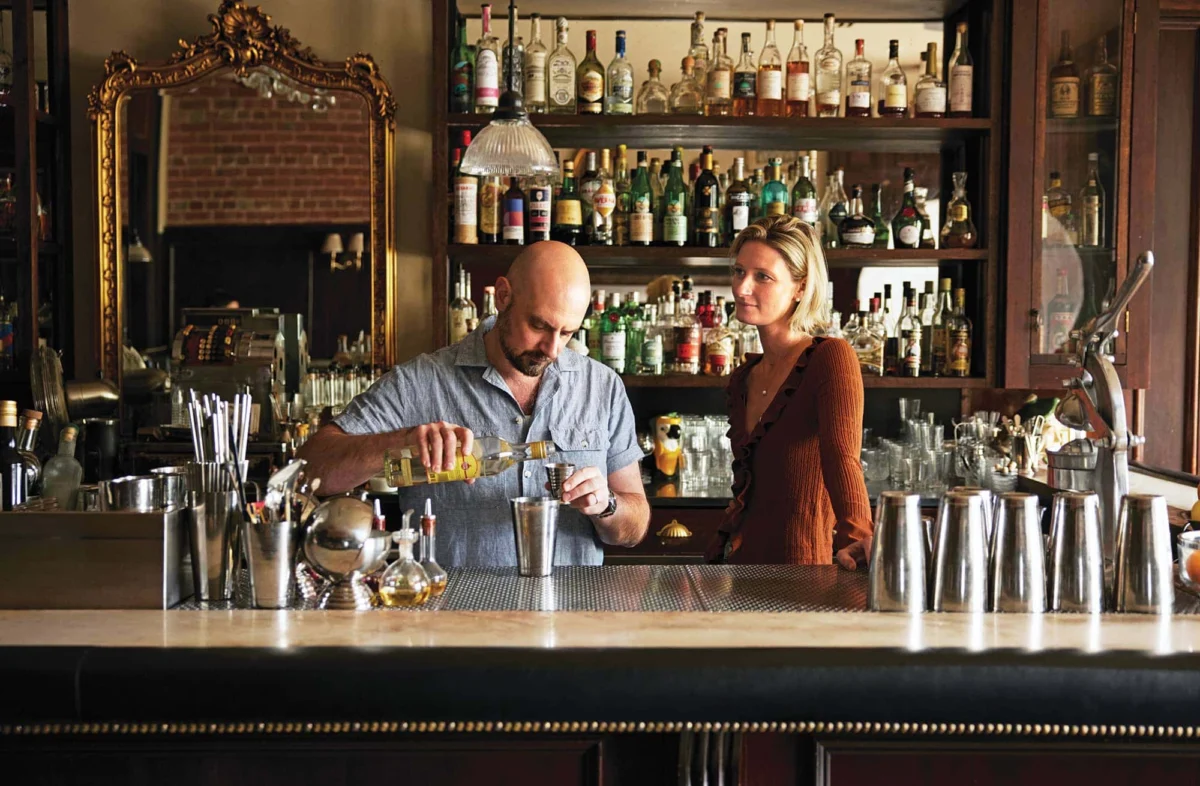
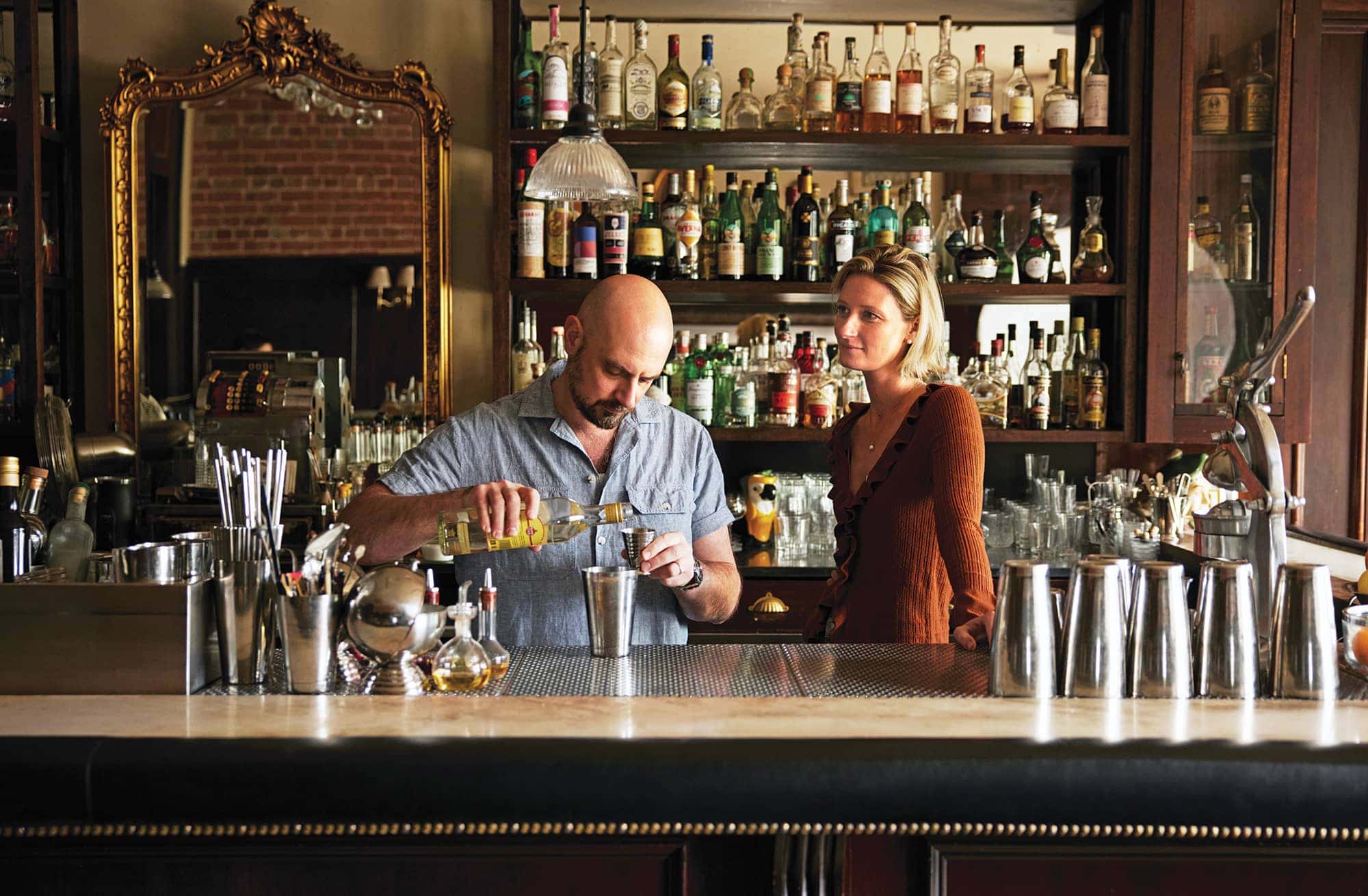
No human being can memorize thousands of distinct drink recipes or intuitively synthesize centuries of shifting cocktail history overnight. Recognizing this monumental challenge, industry veterans Michael and Zara Madrusan have drawn upon more than 25 years of collective, high-level experience inside some of the world’s most esteemed watering holes to author The Madrusan Cocktail Companion.
Published in late 2026, this ambitious, highly comprehensive volume compiles more than 2,800 drinks. Rather than presenting an overwhelming, unorganized list of ingredients, the book makes sense of this vast culinary bounty through an ingenious system of cocktail “branches.” Michael Madrusan originally conceived this organizational framework while working behind the stick at Milk & Honey, the legendary New York City institution that helped birth the modern craft cocktail movement.
Weighing in as both an encyclopedic reference and a practical training manual, the book features critical insights and recipes contributed by heavy-hitters of the global beverage industry, including Alex Day of Death & Co, Speed Rack creator Lynnette Marrero, and a host of other luminaries. Together, they have forged a roadmap that maps out the origins, evolution, and future trajectory of modern cocktail culture.
Chronology: Tracing the Roots of the Craft Cocktail Revolution
To understand the architecture of The Madrusan Cocktail Companion, one must look back at the crucible in which its foundational ideas were forged.
The Early 2000s: The New York Underground
In the early years of the 21st century, Michael Madrusan stepped behind the bar at Milk & Honey in New York City. At the time, the landscape was vastly different than it is today.
“It was such an exciting time. There was so much exploration,” Michael recalls. When he joined Milk & Honey, only a small, tight-knit group of bars—both in New York and globally—cared deeply about quality ingredients, fresh citrus, artisanal ice, and classic cocktail heritage.
The internet was in its infancy compared to its modern iteration, meaning access to historical recipes and technical information was scarce. Finding a rare text felt like unearthing buried treasure. “When you’d find something, you’d tell everyone about it—like, ‘Oh my god, I don’t believe it, I just got a soft copy edition of [David A. Embury’s] The Fine Art of Mixing Drinks!’” Michael remembers. Bringing such a text to a colleague’s bar was treated with near-sacred reverence.
The Evolution of Modern Classics
Out of this era of scarcity and intense experimentation came a wave of drinks that the world now regards as modern classics, such as the Paper Plane (invented by Sam Ross) and Naked & Famous (created by Joaquín Simó).
“At that time, especially in New York, there was a lot of room for experimentation,” Michael explains. Places like Death & Co and PDT took historic foundations and ran with them. According to Michael, modern classics are born when a bartender deeply understands classic drink structures, tweaks them in a clever way, and catches a cultural zeitgeist where the flavors resonate widely with consumers.
Spreading the Wings: The Global Diaspora
The small circle of pioneers from early 2000s New York eventually scattered across the globe, planting the seeds of modern cocktail culture everywhere they went:
Enzo Errico ventured to Ischia, off the coast of Naples, to open his own concepts.
Chad Solomon and Christy Pope headed to Texas to launch Dallas’s Midnight Rambler, heavily influencing the "low-and-slow" cocktail movement and founding Cooper Spirits.
Sam Ross became one of the most prolific modern creators, establishing institutions like Attaboy.
Richard Boccato opened Dutch Kills in Queens alongside Hundredweight Ice.
Eric Alperin took the ethos to Los Angeles via Little Branch and The Varnish.
Michael and Zara Madrusan moved to Australia to open The Everleigh in Melbourne in 2011, earning the enthusiastic blessing of the late Sasha Petraske.
Supporting Data: The Mechanics of the "Branch" System
The Madrusan Cocktail Companion relies on an educational framework that breaks down 2,800-plus recipes into digestible, logical categories.
How the Branches Work
According to Zara Madrusan, the branch system operates similarly to the concept of a "mother cocktail"—the simplest, most historically significant formulation of a well-known drink template upon which countless variations are built.
"It’s a step-by-step understanding of how cocktails fit together," Zara explains. "When bartenders see how many drinks are riffing off of other drinks—these are five riffs on a Manhattan, or these are five Collins variations—it blows their minds."
For the professional, this offers an unmatched technical training tool. For the everyday consumer or bargoer, it acts as an interactive guide. If a guest realizes they love a Whiskey Sour, navigating the branches reveals the structural DNA of that drink, pointing them toward related styles like Fizzes and Sours across different base spirits.
Handling Outliers: The "By Popular Demand" Section
Not every drink fits neatly into a single historical lineage. Recognizing this, the authors integrated a pragmatic section titled "By Popular Demand."
If a patron is simply looking for a coffee-spiked cocktail or a tropical libation to sip during wintertime, they can locate it immediately without having to decode an obscure historical category. Furthermore, the Madrusans view the branch taxonomy as an evolving organism, noting that as new drink styles emerge, future editions of the book will likely feature adapted maps.
Official Responses: Insights from Michael and Zara Madrusan
In an exclusive interview surrounding the book’s release, the authors elaborated on their philosophies of hospitality, education, and community.
Bridging the Gap Between Pros and Enthusiasts
When asked whether industry professionals and home bartenders will utilize the book differently, Zara emphasizes its universal appeal. While the text speaks the technical language of a working bar program, its format and prose remain intentionally approachable.
"I love the idea that people can use this book with some kind of interest in what they already drink, but then they’re also able to use it to get deeper into drinks and discover things that they’ve never tried before," says Zara.
Redefining Hospitality: Showing You Care
Beyond recipes and ratios, The Madrusan Cocktail Companion places a heavy emphasis on the philosophy of service. Drawing from their time at Milk & Honey and The Everleigh—particularly through interactive concepts like the "Bartender’s Choice," where guests specify flavor profiles rather than ordering off a static menu—the authors stress that hospitality is fundamentally emotional.
"It’s not about showing somebody how much you know," Michael notes. "It’s about showing somebody how much you care. That’s a really big takeaway from the book, too. We have a whole section on how to be a bartender and what hospitality really looks like."
The Ethos of Mutual Uplift
Reflecting on the early days of the craft movement, Michael highlights the supportive ecosystem that allowed global cocktail culture to scale. Rather than operating in a hyper-competitive vacuum, early craft bartenders viewed themselves as a collaborative family.
"You were excited to be lifting up your peers, not chopping anyone down," Michael reflects. "And that small network really branched out… The tree just keeps on growing, which is really cool."
Implications: How The Madrusan Cocktail Companion Shapes the Future of Drinking
The release of The Madrusan Cocktail Companion arrives at a pivotal moment in beverage history. As cocktail culture continues to saturate mainstream dining—with exceptional drinks now common even in neighborhood pubs—the need for foundational literacy has never been higher.
Democratizing Mixology: By breaking down thousands of recipes into intuitive structural branches, the book bridges the gap between elite professional technique and home bartending curiosity.
Preserving Craft Heritage: By archiving the lineages of both historic classics and modern creations, the Madrusans have ensured that the foundational knowledge accumulated during the early 21st-century renaissance will not be lost to time.
Elevating Global Hospitality Standards: Beyond liquid ingredients, the book’s inclusion of dedicated instructional text on service and hospitality reinforces the core tenet that great bartending is rooted in empathy, care, and human connection rather than mere technical ostentation.
Ultimately, The Madrusan Cocktail Companion is much more than a collection of 2,800 recipes; it is a dynamic blueprint for the past, present, and future of how the world drinks.