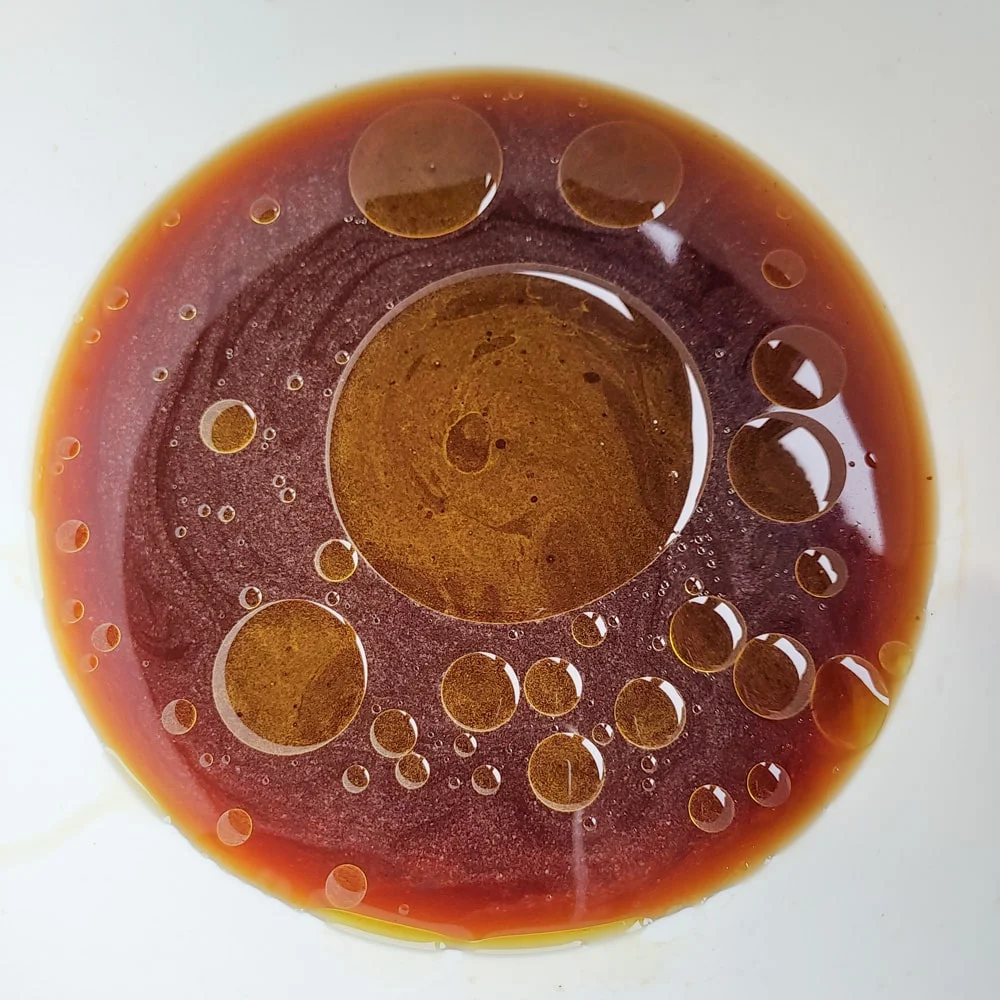
LONDON — No matter how long a home cook or industrial manufacturer whisks olive oil and balsamic vinegar, the mixture inevitably yields to physics. Within moments of ceasing agitation, the two liquids pull apart, leaving a golden slick floating above a dark, acidic pool. The same fugitive behavior plagues vegan whipped creams made from coconut oil and sugar syrup, and poorly formulated mayonnaises where the oil-to-water ratio outstrips the mixture’s structural integrity.
Water and oil simply do not mix. This fundamental thermodynamic truth represents one of the most persistent, high-stakes challenges in commercial food product development. When salad dressings split on grocery store shelves, or when caramels bleed an oily film, consumer confidence plummets. Unstable emulsions look unappealing, feel greasy or watery in the mouth, and ultimately face rejection in a hyper-competitive marketplace where visual perfection drives purchasing decisions.
To bridge the gap between thermodynamics and commercial viability, food scientists rely on a specialized class of compounds known as emulsifiers. Far from being mere chemical additives, emulsifiers are the invisible architects of modern gastronomy, holding together everything from velvety ice creams and spreadable margarines to smooth chocolates and low-fat dairy alternatives.
Food Science 101: The Battle of Immiscible Liquids
To understand the utility of emulsifiers, one must first examine the nature of an emulsion. When two immiscible liquids—such as water and oil—are forced together through mechanical mixing, tiny droplets of one liquid become dispersed within the other. However, each liquid thermodynamically prefers to associate with its own kind. Water molecules hydrogen-bond tightly with one another, while non-polar oil molecules clump together to minimize their contact with water.
Without intervention, these dispersed droplets collide, merge, and eventually cause the system to phase-separate entirely.

Enter the emulsifier. When culinary staples like mustard are whisked into an oil-and-vinegar dressing, or when lecithin is introduced to a caramel batch, the separation process halts or slows dramatically. These substances act as molecular peacemakers, positioning themselves precisely at the microscopic intersection—the interface—between the water and oil phases.
By altering the surface tension of the dispersed droplets, emulsifiers lower the energy barrier that drives phase separation. They effectively coat the droplets, rendering them "comfortable" in their alien environment and preventing them from coalescing upon contact.
The Amphiphilic Advantage
The secret to an emulsifier’s success lies in its dual nature. Most food-grade emulsifiers feature a distinct amphiphilic structure: one half of the molecule is hydrophilic (water-loving), while the other half is hydrophobic (fat-loving).
During manufacturing, the emulsifier orients itself so that its hydrophilic head plunges into the aqueous phase, while its hydrophobic tail anchors itself firmly within the lipid phase. By surrounding individual oil or water droplets with this protective molecular monolayer, emulsifiers create a stable mechanical and electrostatic barrier that permanently inhibits droplet merging.
The Multifaceted Benefits of Emulsification in Modern Food Systems
While the primary function of an emulsifier is stabilization, the strategic use of these molecules unlocks a cascade of secondary benefits for food manufacturers, ranging from nutritional profiling to industrial efficiency.

1. Enabling Fat Reduction Without Sacrificing Mouthfeel
Consumers increasingly demand foods that are lower in calories and fat, yet they refuse to compromise on sensory experience. Fats impart richness, creaminess, and a luxurious mouthfeel that is notoriously difficult to replicate.
By utilizing stable emulsions, food developers can craft "reduced-fat" alternatives that swap a significant portion of pure fat for water droplets trapped within a stable matrix. This technique allows manufacturers to slash caloric density while maintaining the creamy texture consumers expect, relying on emulsifiers to lock the high water content into a stable, rich-feeling structure.
2. Improving Production Stability
A formulation that looks pristine in a static laboratory beaker often undergoes brutal physical trauma on an industrial processing line. High-shear mixing, pumping through narrow valves, fluctuating temperatures, and prolonged holding times can easily cause an emulsion to break mid-production.
Incorporating robust emulsifiers ensures that food formulations withstand the rigors of commercial manufacturing, reducing waste, preventing equipment clogging, and guaranteeing batch-to-batch uniformity.
3. Functional Enhancements in Confectionery and Baking
Emulsifiers extend far beyond simple salad dressings. In chocolate manufacturing, for instance, ingredients like lecithin or polyglycerol polyricinoleate (PGPR) are routinely added to control viscosity. By modifying how cocoa butter and sugar crystals interact, these emulsifiers ensure that molten chocolate flows smoothly during enrobing and molding, preventing the formation of fat blooms on finished confectionery shelves.

Navigating the Selection Process: Key Technical Considerations
Selecting the correct emulsifier is rarely a matter of plug-and-play chemistry. Formulators must evaluate a complex matrix of variables before locking in a recipe.
Evaluating Natural Emulsifiers and Ingredient Interactions
Many traditional ingredients arrive pre-packaged with natural emulsifying agents. Egg yolks, for example, are naturally rich in lecithin, a powerful bio-emulsifier that makes traditional mayonnaise possible. If a product formulation already contains substantial quantities of egg, dairy proteins, or soy derivatives, additional synthetic or isolated emulsifiers may be entirely unnecessary. Conversely, stripping out a natural emulsifier—such as removing eggs from a vegan mayonnaise substitute—requires formulators to engineer a sophisticated replacement system from scratch.
Water-in-Oil (W/O) Versus Oil-in-Water (O/W) Emulsions
A fundamental fork in the road for product developers is determining whether the target product is an oil-in-water emulsion (like milk, where fat droplets float in water) or a water-in-oil emulsion (like butter or margarine, where water droplets are trapped inside a continuous fat phase).
An emulsifier optimized for an oil-in-water system will almost certainly fail in a water-in-oil matrix. The rule of thumb relies on the balance of the molecule’s affinities:
- Oil-in-Water (O/W): Requires a higher hydrophilic affinity.
- Water-in-Oil (W/O): Requires a dominant hydrophobic presence.
To quantify this balance, food scientists rely on the HLB (Hydrophile-Lipophile Balance) value:

- HLB values of 3 to 7 indicate lipophilic emulsifiers best suited for water-in-oil systems.
- HLB values of 8 to 16 designate hydrophilic emulsifiers ideal for oil-in-water applications.
Processing Realities and Thermal Thresholds
Laboratory success stories frequently crumble on the factory floor if processing conditions are overlooked. An emulsifier that maintains stability at room temperature may denature, lose its surface activity, or undergo phase inversion when subjected to pasteurization temperatures exceeding 70°C (158°F) or intense mechanical shear forces. Comprehensive stress-testing under simulated industrial conditions is mandatory.
Global Regulatory Frameworks
The use of food additives is subject to stringent legal oversight across international markets. Regulatory bodies—including the U.S. Food and Drug Administration (FDA) and the European Food Safety Authority (EFSA)—maintain strict positive lists of approved emulsifiers, often imposing maximum usage limits depending on the specific food category. Compliance and legal harmonization must be factored in from the earliest stages of product conceptualization.
A Structural Taxonomy of Food Emulsifiers
From a structural standpoint, food emulsifiers can be categorized by the molecular architecture that grants them their surface-active properties:
- Proteins: Large, complex macromolecules found abundantly in milk (such as caseins) and plant sources. Proteins unfold at oil-water interfaces, creating a thick, viscoelastic film. While effective, they are often used in tandem with smaller molecules for maximum stability.
- Lecithin: Extracted primarily from soybeans, sunflower seeds, and egg yolks, lecithin is the industry workhorse. Its distinct zwitterionic structure features both hydrophilic and hydrophobic regions, making it versatile across multiple applications. However, different botanical sources and processing methods yield distinct functional profiles; interchanging lecithins without testing can lead to catastrophic batch failure.
- Mono- and Diglycerides: Derived from standard dietary fats (triglycerides), these molecules feature a traditional fatty acid tail paired with a smaller glycerol head. Highly tunable through chemical and enzymatic processes, they dominate bakery, dairy, and confectionery formulations.
- Particle-Stabilized Emulsions (Pickering Emulsions): A cutting-edge area of food science involves using finely divided, insoluble solid particles rather than traditional amphiphilic molecules to stabilize interfaces. Though less ubiquitous in legacy foods, Pickering emulsions represent the frontier of clean-label formulation.
Implications for the Future of Food Technology
As consumer demand shifts toward cleaner ingredient labels, plant-based diets, and reduced-calorie foods, the pressure on food scientists to innovate within emulsion technology has never been higher. The transition away from traditional animal-derived stabilizers requires a sophisticated understanding of biopolymer interactions and particle-stabilized systems.
Ultimately, mastering the physics of immiscible liquids is no longer just an academic pursuit—it is the cornerstone of commercial survival in the modern food industry. Whether formulating a shelf-stable vinaigrette or engineering a creamy, dairy-free spread that behaves identically to its traditional counterpart, the humble emulsifier remains the microscopic bridge connecting culinary ambition with scientific reality.