In the ever-evolving landscape of home cooking, few dishes occupy the sacred space of "ultimate comfort" quite like a well-executed chowder. While New England clam chowder has long held the regional monopoly on creamy, potato-based soups, a new contender has emerged, blending rustic heartiness with a refined, contemporary flair. Developed by cookbook author and culinary influencer Erin Clarke, the latest iteration of "Salmon Chowder" is currently redefining what home cooks expect from a weeknight meal. Combining the smoky indulgence of bacon, the sweetness of corn, and the delicate, buttery profile of fresh salmon, this recipe has moved beyond a simple soup to become a social media phenomenon.
Main Facts: A Modern Twist on a Maritime Classic
At its core, this salmon chowder serves as a masterclass in flavor layering. Unlike traditional chowders that rely solely on the salinity of shellfish, this recipe utilizes the richness of cold-water salmon, providing a more robust protein source that pairs exceptionally well with the smokiness of pan-fried bacon.
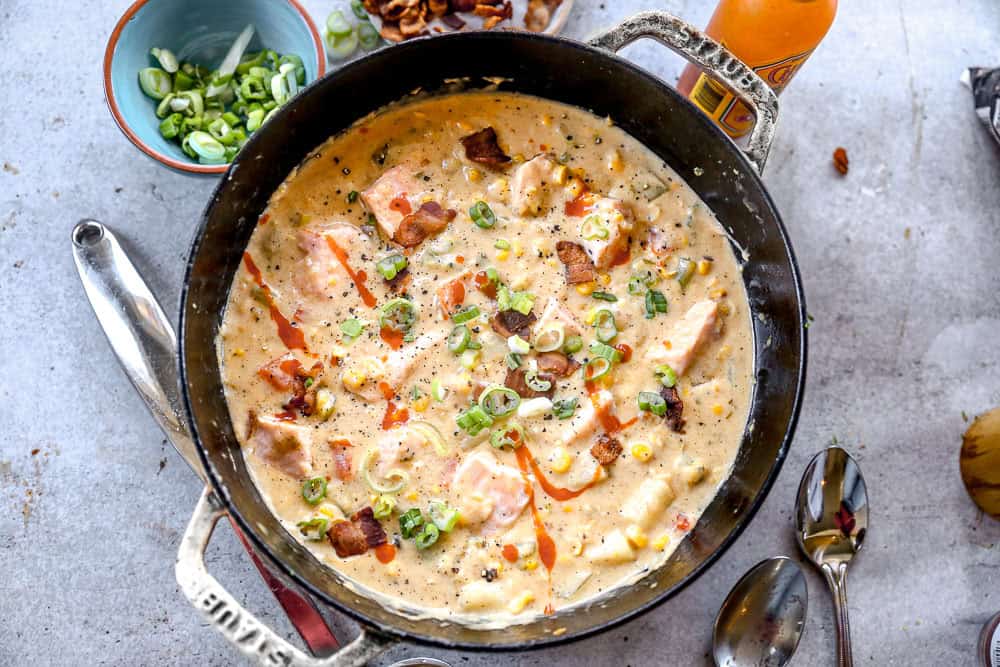
The dish is defined by several key components:
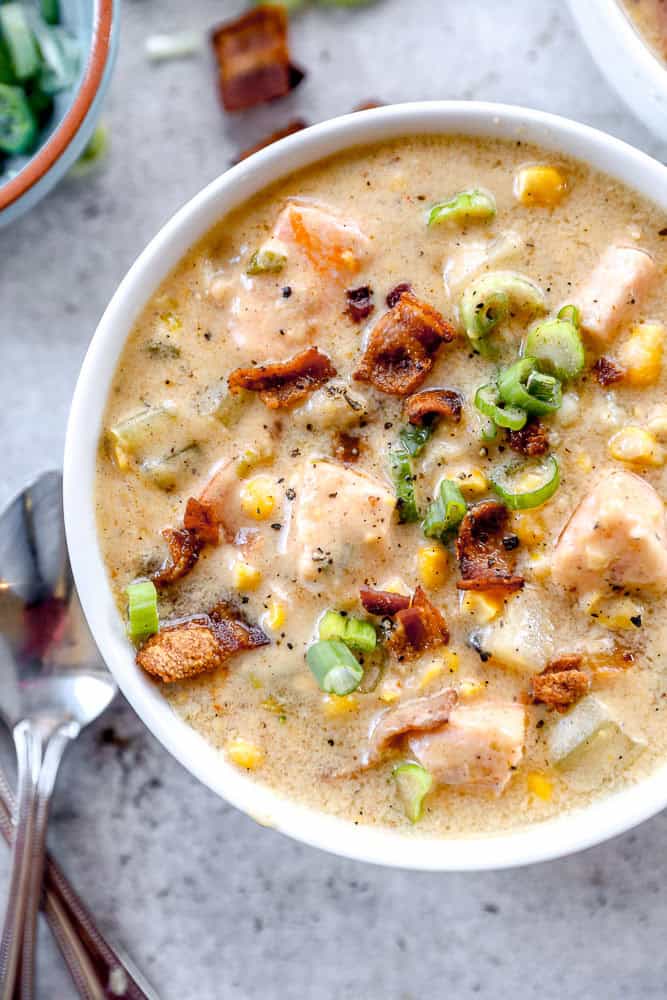
- The Protein: Fresh, high-quality salmon, which is added toward the end of the cooking process to ensure it remains tender and flaky rather than overcooked.
- The Texture: A balance of starchy potatoes and two types of corn—whole kernels for bite and cream-style corn for body—creating a velvety consistency that avoids the heaviness of traditional flour-based thickeners.
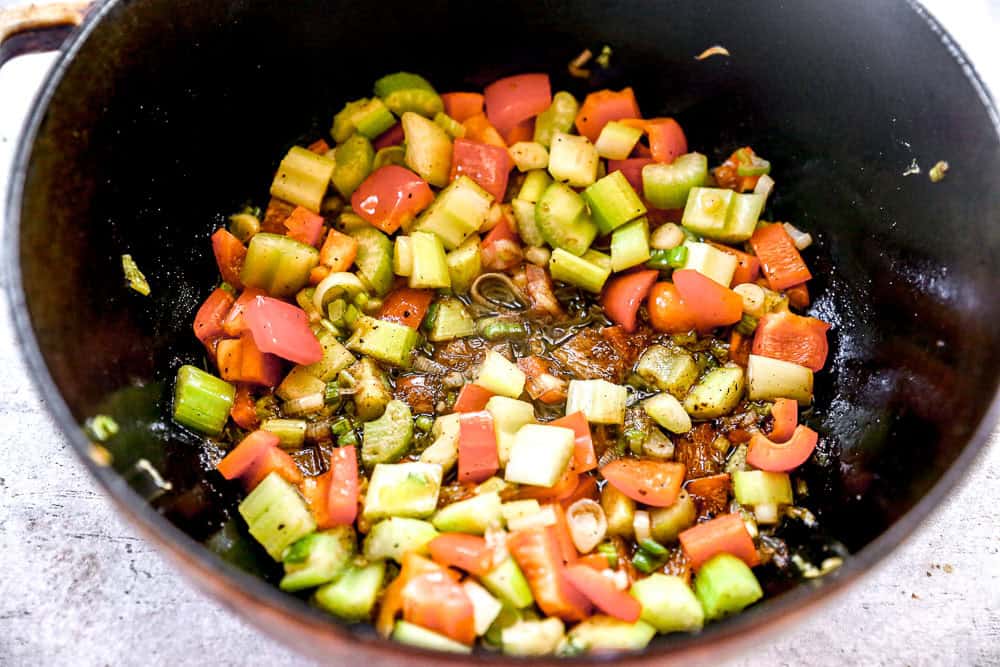
- The Flavor Profile: A subtle, aromatic backbone provided by celery, bell peppers, and green onions, finished with a distinctive "kick" from a curated Cajun spice blend.
The result is a dish that manages to be both heavy enough for a mid-winter ski trip recovery meal and bright enough to serve as a staple during the transition into warmer spring months.
Chronology: From Concept to Kitchen Staple
The development of this recipe followed a rigorous testing process typical of modern professional food blogging. Erin Clarke, known for her commitment to healthy, approachable recipes, sought to replicate the experience of high-end bistro dining within the constraints of a standard residential kitchen.
- Initial Iteration: Clarke began with a foundation inspired by her previous seafood chowder successes, focusing on a base of rendered bacon fat to impart deep, savory notes.
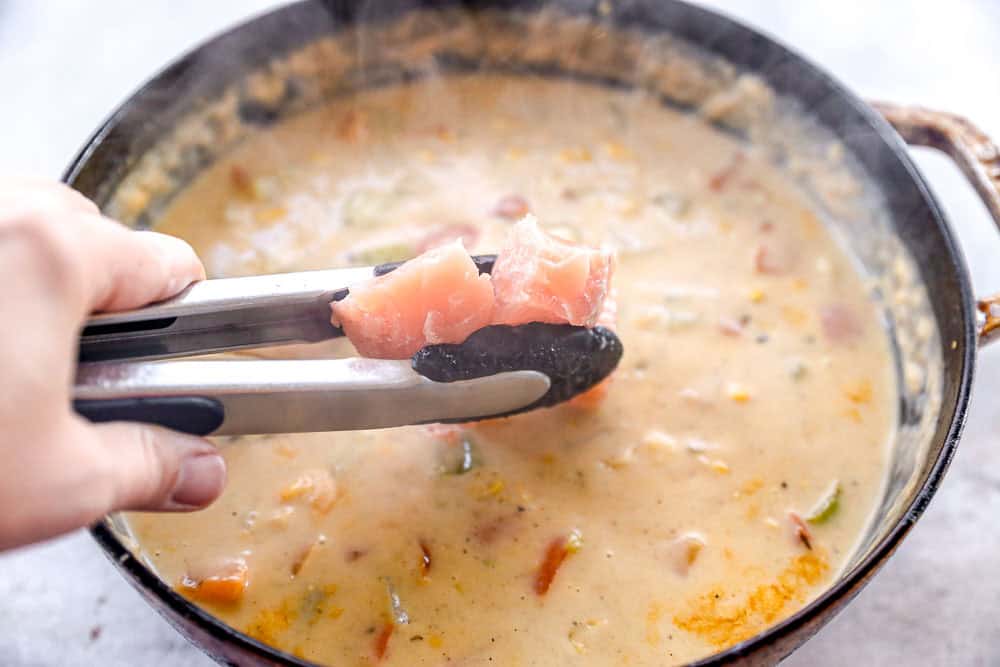
- Refinement Phase: The primary challenge was the timing of the salmon. In early trials, the salmon often became rubbery. By adjusting the simmer time and introducing the salmon only after the broth had thickened and the potatoes were tender, the texture was successfully preserved.
- The "Cajun" Integration: The addition of Cajun seasoning was a strategic choice to cut through the richness of the cream and bacon. This addition transformed the soup from a one-note comfort dish into a more complex, multi-dimensional culinary experience.
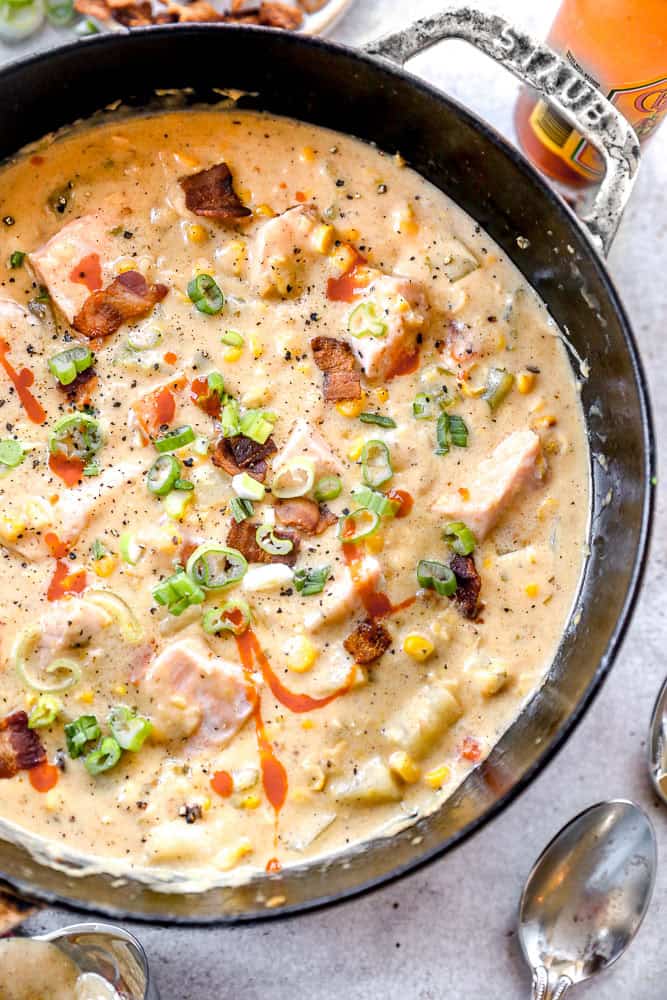
- Final Polish: The garnish strategy—reserved green onion tops, extra crispy bacon, and a final dash of hot sauce—was established to add essential freshness and acidity, balancing the heavier elements of the soup.
Supporting Data: Nutritional and Economic Impact
For the health-conscious home cook, the nutritional profile of this chowder is compelling. With roughly 604 calories per serving, the dish is calorie-dense but nutritionally significant. It provides a substantial 36 grams of protein, largely sourced from the salmon, which is rich in omega-3 fatty acids.

Furthermore, the fiber content (4g) and the inclusion of potassium (1,398mg) make this a more nutrient-dense option than many traditional cream soups. While the sodium content is high (961mg), this is standard for chowder-style recipes and can be moderated by adjusting the added salt and the choice of chicken broth (low-sodium alternatives are frequently recommended).
From an economic perspective, the recipe is designed to be scalable. By utilizing frozen or canned corn when fresh is out of season, the cost-per-serving remains relatively low, particularly when compared to dining out at a seafood restaurant, where a bowl of similar quality might retail for $15–$25.
Official Commentary: The Philosophy Behind the Bowl
Erin Clarke describes the popularity of this dish as a "problem" she is happy to have. "When you develop recipes for a living, it is a problem when you want to make the same one again and again," she explains. This sentiment speaks to the broader trend in modern home cooking: the desire for "restaurant-worthy" food that doesn’t require professional training or an exhaustive list of inaccessible ingredients.
Clarke emphasizes that the goal of the recipe is not just to provide instructions, but to provide a blueprint for versatility. The recommendation to swap fresh corn for canned or frozen, or to adjust the level of Cajun spice, empowers the home cook to claim ownership over the dish. By focusing on the "how" rather than just the "what," the recipe encourages home cooks to experiment with their own flavor preferences while maintaining the structural integrity of the chowder.
Implications: The Shift Toward Elevated Home Cooking
The success of this salmon chowder signals a broader shift in consumer behavior. As food costs rise and dining out becomes a less frequent luxury, consumers are turning toward "elevated comfort food." They are no longer satisfied with simple soups; they want meals that offer a narrative, a depth of flavor, and a sense of occasion.
The Role of Digital Culinary Media
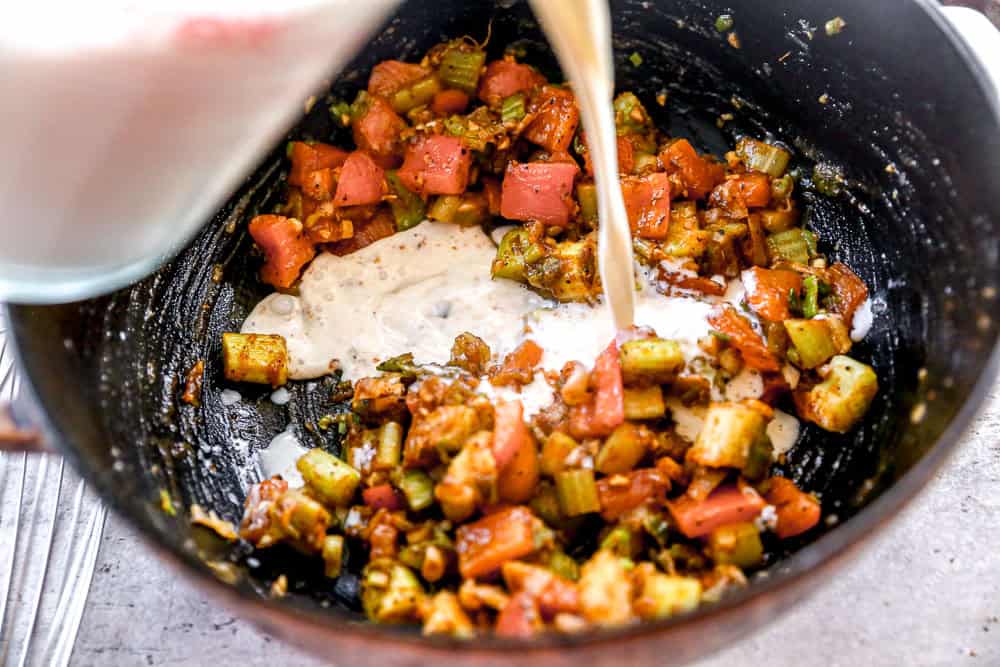
Platforms that provide detailed, step-by-step photography—as seen in the preparation of this chowder—are becoming the new standard for culinary education. By visualizing the sautéing process, the incorporation of the milk-based roux, and the final folding in of the salmon, the reader is given a level of guidance that was previously only available through in-person cooking classes.
Seasonal Adaptation
The recipe’s adaptability is perhaps its most significant implication. By highlighting the seasonal shift from winter (skiing fuel) to summer (fresh corn season), the recipe maintains year-round relevance. This "perennial" recipe strategy is a hallmark of modern successful food content, ensuring that a single dish can occupy a place on a family’s menu throughout the entire calendar year.
Conclusion: A New Standard for Soup
Ultimately, the salmon chowder represents a triumph of balance. It bridges the gap between the rustic, bacon-heavy tradition of the American Northeast and the bold, spice-forward flavors of the South. Whether one is a novice cook looking for a reliable "wow" factor for a family dinner, or a seasoned home chef seeking a high-protein, satisfying soup, this dish stands as a testament to the fact that great cooking doesn’t have to be complicated—it just has to be thoughtful.
As more home cooks continue to refine their repertoires, dishes like this will undoubtedly remain at the forefront, proving that with the right combination of fresh ingredients and a few expert techniques, the best restaurant in town is often the one already in your kitchen.