NEW YORK — As the crisp winds of autumn sweep across North America, signaling the transition from vibrant summer abundance to the comforting, earthy tones of the colder months, home kitchens and professional restaurants alike undergo a seasonal transformation. At the center of this culinary shift is a quiet revolution happening in the produce aisle: the resurgence of winter squash, led triumphantly by the humble yet versatile acorn squash.
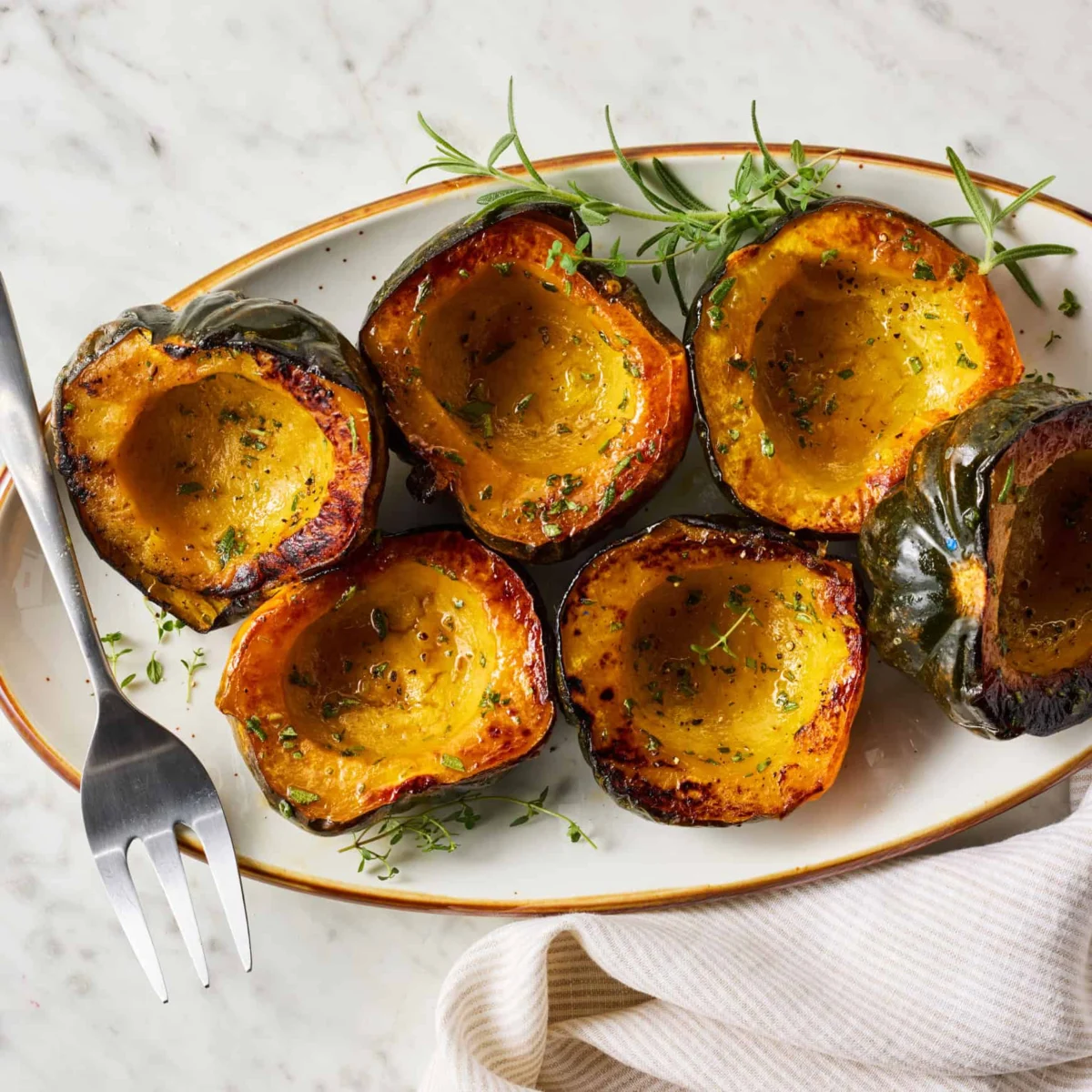
Long relegated to the background of holiday centerpieces or misunderstood as a strictly decorative gourd, acorn squash (Cucurbita pepo var. turbinata) has stepped into the spotlight. A masterclass in culinary simplicity—highlighted by a widely popular preparation featuring olive oil, pure maple syrup, and fresh herbs—has elevated this dark-green, ridged vegetable from a rustic staple to a sophisticated cornerstone of contemporary seasonal gastronomy.
Culinary historians and home economics experts point to this specific preparation—halved, seeded, brushed with oil and maple, and roasted until fork-tender and caramelized—as the gold standard for introducing novice cooks to winter squashes. Beyond its immediate sensory appeal, this foundational recipe serves as an essential gateway to a broader repertoire of autumnal cooking, inspiring everything from velvety soups to robust, grain-stuffed main courses.
Main Facts: Anatomy of a Seasonal Phenomenon
The appeal of roasted acorn squash lies at the intersection of nutritional density, culinary versatility, and straightforward execution.
The Flavor Profile and Technique
Acorn squash possesses a naturally mild, nutty flavor and a fine-grained, creamy texture that develops a luxurious mouthfeel when subjected to high heat. Roasting is the undisputed preferred cooking method, as dry oven heat evaporates excess moisture while simultaneously triggering the Maillard reaction and caramelizing the natural sugars within the flesh.
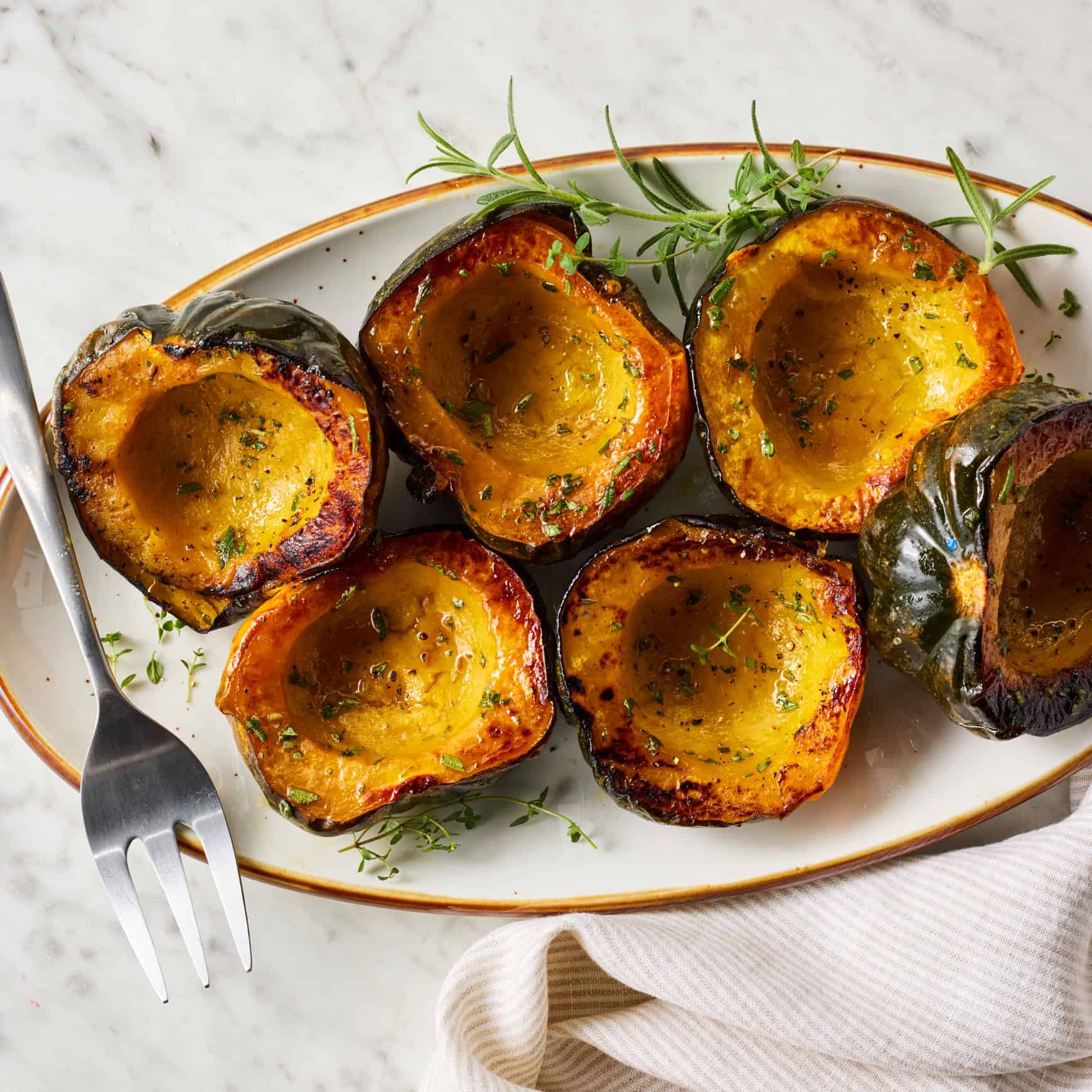
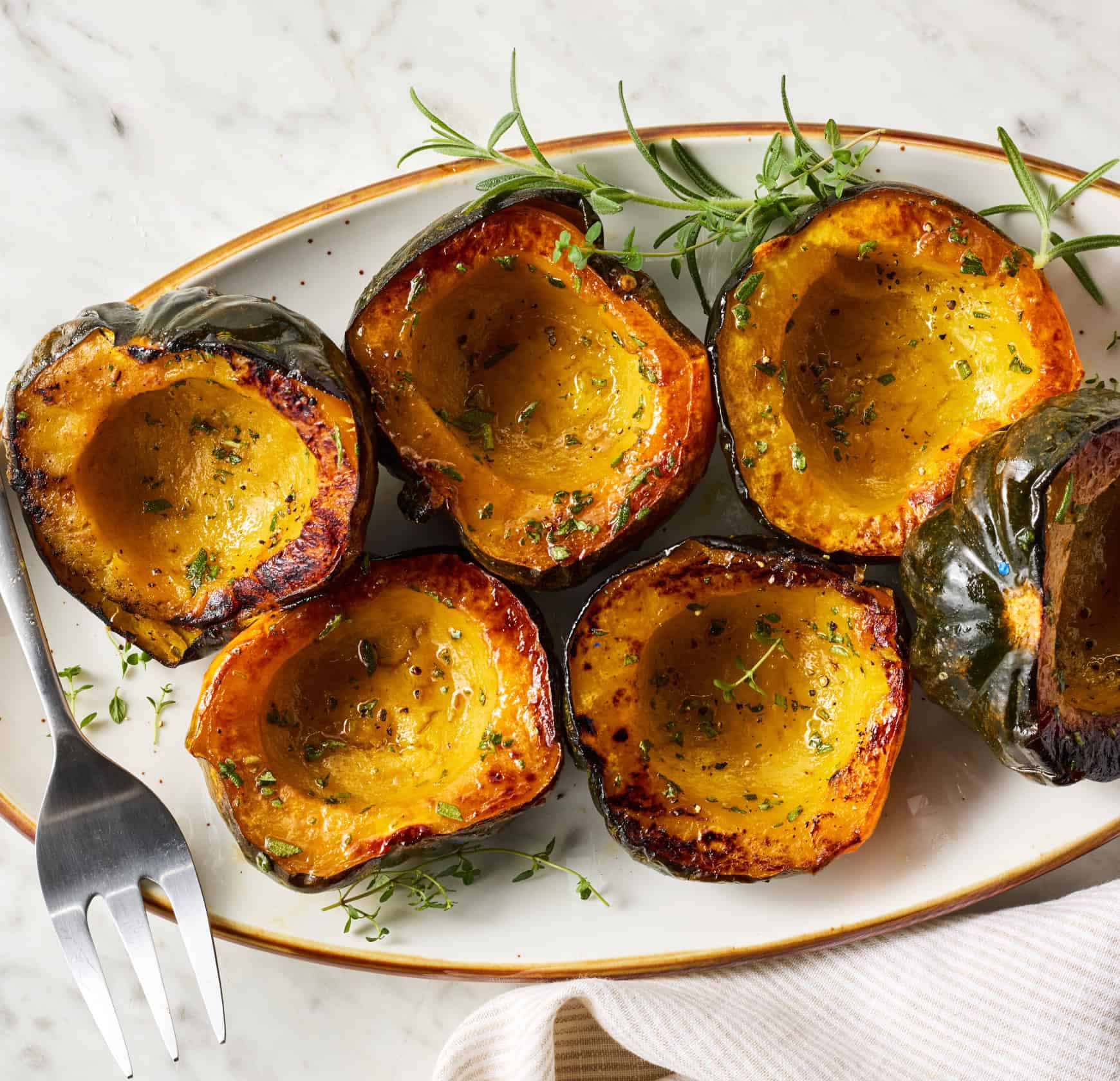
The addition of pure maple syrup acts as a flavor catalyst. Rather than overwhelming the vegetable, the natural sweetness complements the squash’s earthy undertones. A finishing touch of fresh aromatic herbs—such as thyme, rosemary, or sage—adds aromatic complexity, bridging the gap between sweet and savory.
Nutritional Superiority
Beyond its comforting taste, acorn squash is a nutritional powerhouse. According to nutritional data verified for standard 1-squash-half servings (approximately 145 calories), the vegetable delivers an impressive array of macro and micronutrients:
- Dietary Fiber: Providing 3 grams per serving (13% of the daily recommended value), it supports digestive health and sustained energy.
- Vitamins and Minerals: It is exceptionally rich in Vitamin C (29% DV) and Vitamin A (16% DV), bolstering immune function during cold and flu season. Furthermore, it boasts significant potassium levels (763 mg, or 22% DV) and iron.
- Macronutrient Balance: Low in sodium (56 mg) and containing a modest 5 grams of total fat (primarily heart-healthy monounsaturated fats from olive oil), it fits seamlessly into a wide variety of dietary frameworks, including vegetarian, gluten-free, and clean-eating regimens.
Chronology: From Farm to Table
Understanding how to prepare acorn squash is a rite of passage for autumn cooking enthusiasts. Culinary experts break down the process into an accessible, four-step chronological timeline that ensures perfect results every time.
Phase 1: Selection and Preparation (Pre-Heat)
The process begins in the market, where cooks select firm, heavy-for-their-size acorn squashes with a matte, dark-green skin (a small orange patch where the squash rested on the ground is entirely normal and indicates ripeness).
Prior to cutting, the exterior must be thoroughly washed. Because acorn squash features a notoriously tough outer shell, safety and leverage are paramount. Cooks place the squash securely on one of its flat, ridged sides on a sturdy cutting board. Using a sharp chef’s knife, the squash is sliced vertically from the stem end to the pointed tip, dividing it cleanly into two symmetrical halves.

(Note: For particularly stubborn squashes, culinary professionals recommend softening the exterior by piercing the skin several times with a fork and microwaving it on high for one minute, or baking it whole at 425°F for 10 minutes).
Phase 2: Excavation
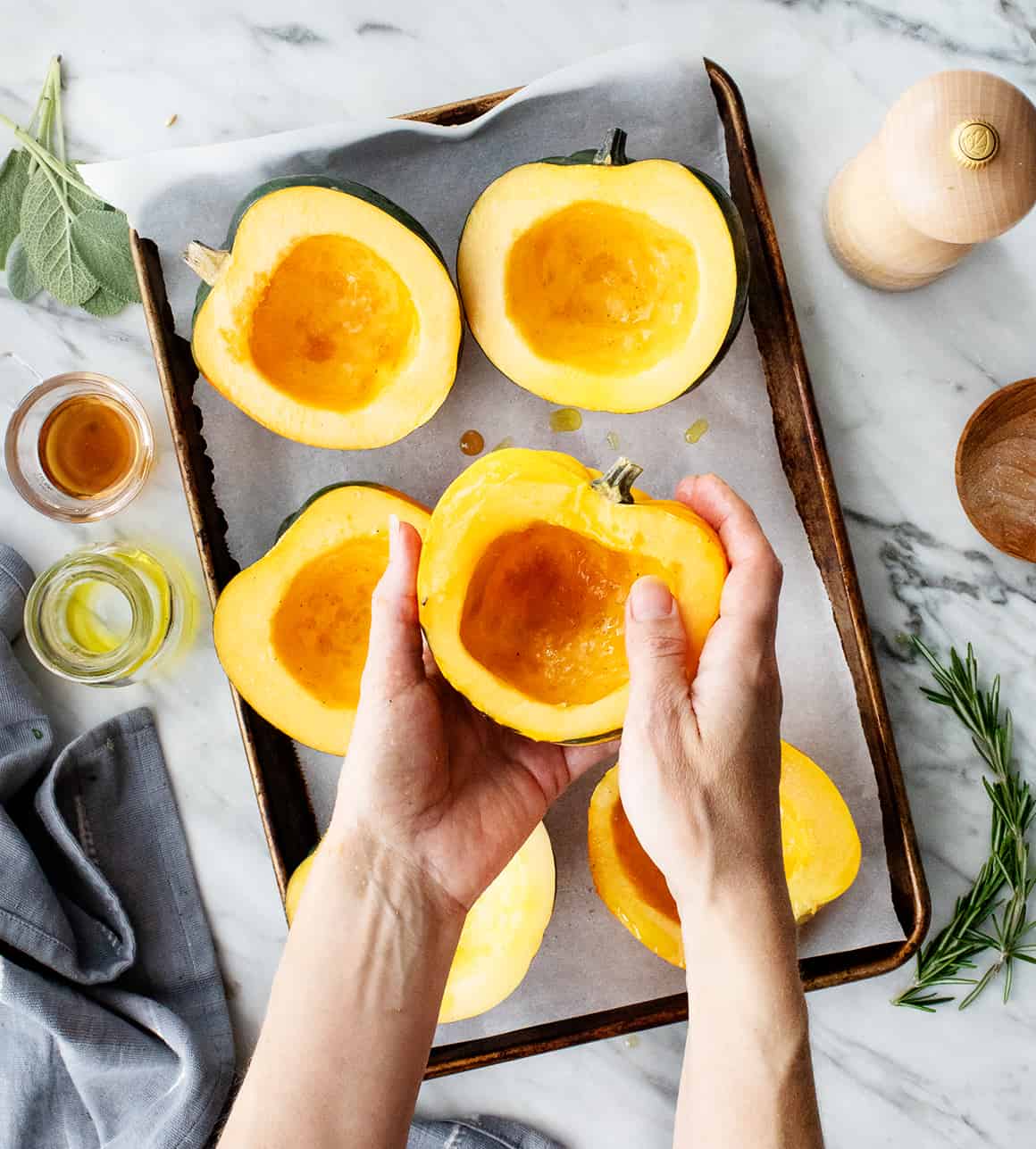
Once halved, the inner cavity reveals a web of fibrous pulp and seeds. Using a large metal spoon or a specialized grapefruit spoon with a serrated edge, the cook scrapes out the seeds and stringy membranes until the interior cavity is completely smooth and clean. The seeds, much like pumpkin seeds, can be seasoned and roasted separately as a crunchy snack.
Phase 3: Seasoning and The Maillard Reaction
The cleaned halves are arranged cut-side up on a rimmed baking sheet lined with parchment paper for easy cleanup. Each cavity and exposed edge is generously brushed with extra-virgin olive oil, followed by a drizzle of pure maple syrup. A pinch of kosher salt and freshly cracked black pepper grounds the sweetness, while finely minced fresh herbs—such as sage or thyme—are scattered across the surface.
Phase 4: Roasting and Caramelization
The baking sheet is placed into a preheated oven—typically set between 400°F and 425°F—and roasted for approximately 35 to 40 minutes. The cooking time ensures that the interior flesh achieves a fork-tender, melt-in-your-mouth consistency while the undersides and edges develop a rich, golden-brown caramelization.
Supporting Data: Culinary Integration and Versatility
The true genius of mastering basic roasted acorn squash lies in its adaptability. Market research and recipe analytics from leading culinary platforms indicate that simple roasted vegetable sides have surged in popularity as consumers seek wholesome, plant-forward meal components.

The Edible Skin Debate
A common point of inquiry among novice cooks is whether the skin of the acorn squash is edible. Culinary consensus confirms that yes, the skin is entirely edible. When roasted, the skin of an acorn squash—much like that of its relative, the delicata squash—softens significantly and can be consumed alongside the tender flesh. For varieties with exceptionally thick skins, the roasted flesh can easily be scooped out with a fork right at the dinner table, eliminating the hazardous task of peeling raw winter squash entirely.
Culinary Pairings and Holiday Integration
Roasted acorn squash serves as a versatile anchor for multi-course meals:
- Holiday Tables: It holds its own alongside Thanksgiving centerpieces, pairing harmoniously with traditional side dishes like savory herb stuffing, creamy mashed potatoes, and tart cranberry sauce.
- Weeknight Dinners: Its sweet-savory profile bridges the gap between comfort food and refined dining. It pairs exceptionally well with rich pasta dishes, warm grain bowls, and blended autumn soups.
- Advanced Preparations: Once a cook masters the basic roasted half, the recipe opens the door to complex variations, including stuffed acorn squash (filled with wild rice, lentils, dried cranberries, and goat cheese) or puréed acorn squash soup infused with ginger and coconut milk.
Official Responses and Expert Perspectives
Professional chefs, food scientists, and agricultural extension agents have weighed in on the enduring appeal of winter squashes, noting a cultural shift toward seasonal, locally sourced eating.
"Winter squash represents everything we crave as the weather turns colder," notes Chef Elena Vance, a prominent culinary instructor and cookbook author. "It provides psychological comfort through its warmth and natural sweetness, but it also offers incredible nutritional density without feeling heavy. When you roast an acorn squash with a touch of maple syrup and good olive oil, you aren’t masking the vegetable; you are amplifying its inherent qualities."
Nutritional scientists echo these sentiments, emphasizing the role of root and vine vegetables in balanced autumn diets. Dr. Marcus Holloway, a nutritional biochemist at the Institute for Culinary Wellness, highlights the significance of the squash’s phytonutrients.
"Carotenoids, which give winter squash its vibrant yellow and orange undertones beneath that dark green exterior, are powerful antioxidants," Dr. Holloway explains. "Pairing these vegetables with healthy fats like extra-virgin olive oil—as this recipe does—significantly enhances the body’s ability to absorb fat-soluble vitamins like Vitamin A. It’s a textbook example of culinary tradition aligning perfectly with nutritional science."
Agricultural economists report steady increases in autumn squash yields across regional farms, driven largely by consumer demand at local farmers’ markets and community-supported agriculture (CSA) programs. Growers attribute this trend to the rise of home cooking shows and digital food media, which have successfully demystified the preparation of hard-skinned gourds.
Implications: Storage, Longevity, and Future Trends
As food sustainability and minimizing household waste become paramount concerns for modern consumers, the logistical advantages of winter squash cannot be overstated.
Storage and Shelf Life
Unlike fragile summer squashes or leafy greens, raw acorn squash boasts an impressive shelf life. When stored in a cool, dark, and well-ventilated space, whole acorn squashes can last anywhere from one to three months, making them an ideal pantry staple for the autumn and winter seasons.
Once cooked, leftover roasted acorn squash can be stored safely in an airtight container in the refrigerator for up to four days. Reheating is straightforward: leftovers can be quickly warmed in the microwave or restored to their original texture in a 325°F oven.
The Future of Plant-Forward Dining
Looking ahead, culinary trend forecasters predict that winter squashes will continue to anchor the plant-forward dining movement. As chefs and home cooks alike experiment with global flavor profiles—such as incorporating harissa, curry spices, or miso-maple glazes onto the basic roasted squash template—the humble acorn squash is proving to be a blank canvas for limitless culinary creativity.
Ultimately, whether served as a simple weeknight side dish brushed with maple and herbs or transformed into an elaborate, grain-stuffed holiday centerpiece, roasted acorn squash remains a testament to a timeless culinary truth: the most extraordinary dishes often arise from treating simple, wholesome ingredients with respect, care, and a touch of seasonal inspiration.