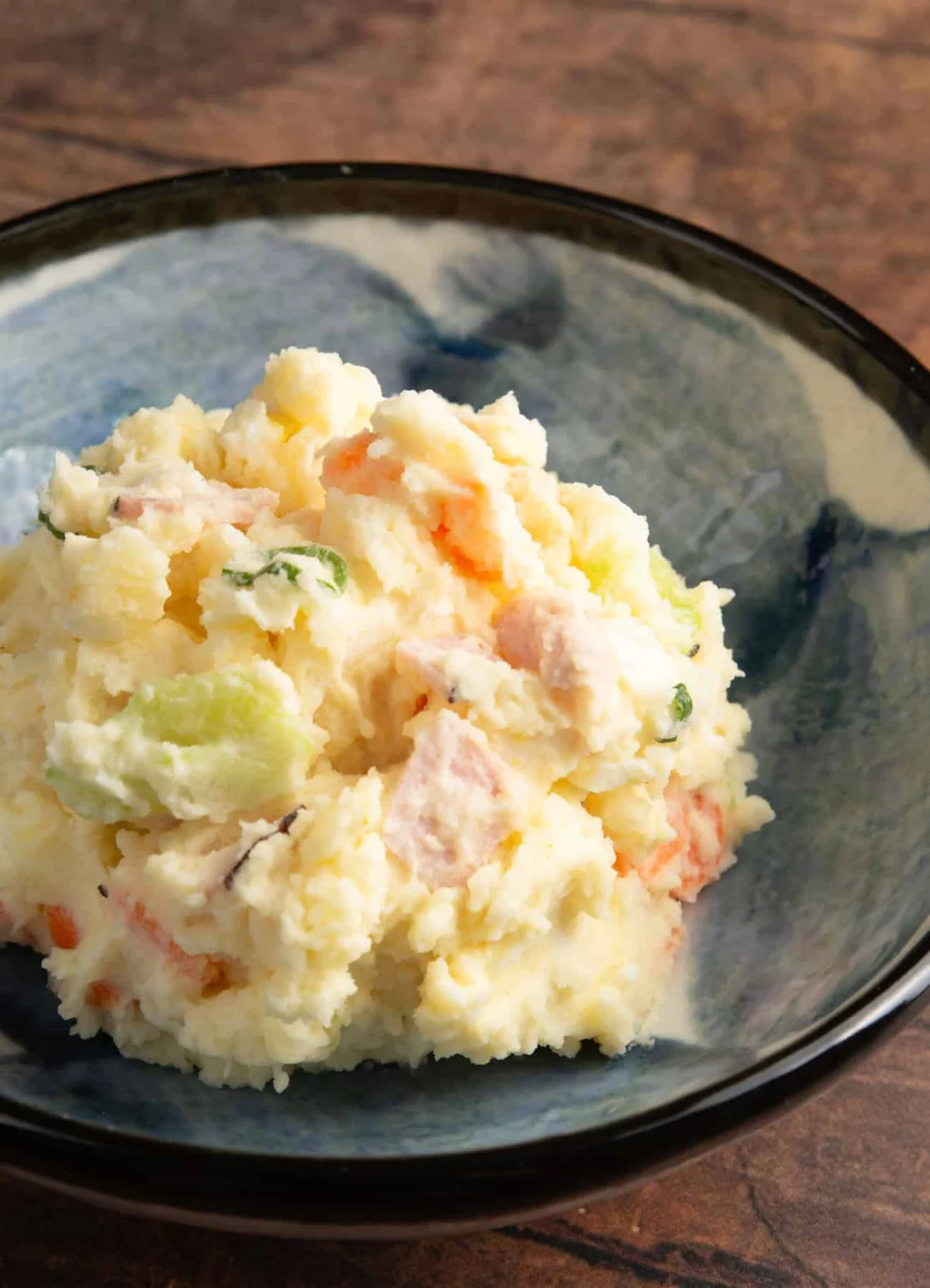
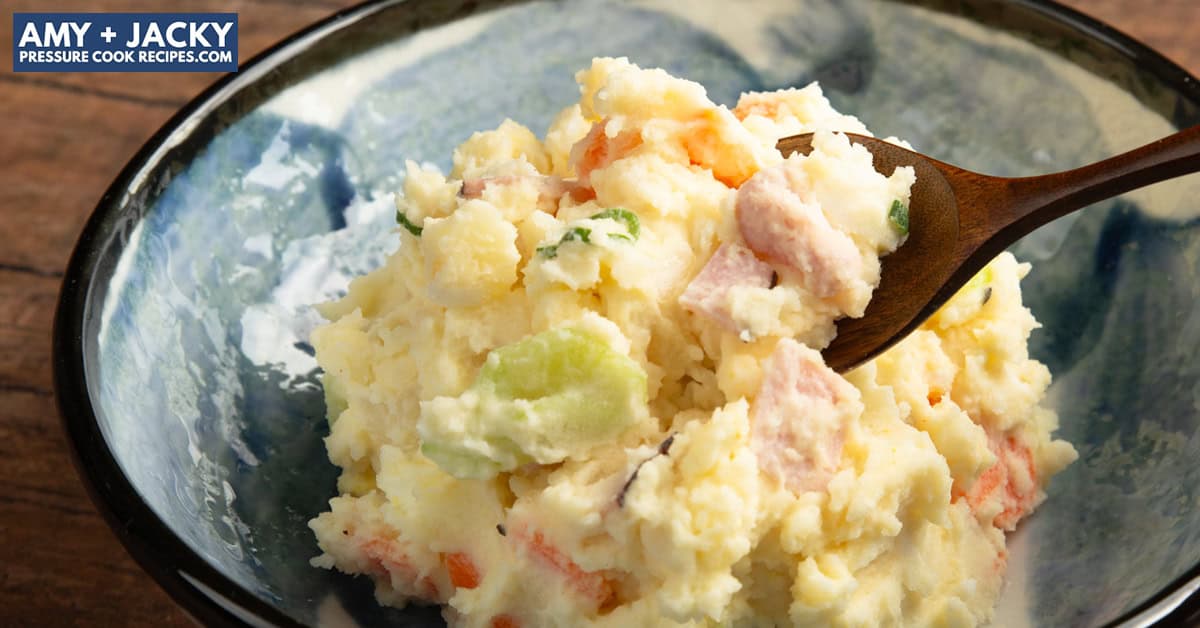
Japanese potato salad (potesara) is a culinary paradox: it is at once humble comfort food and a sophisticated exercise in texture and balance. Unlike the chunky, vinegar-forward American version or the mustard-heavy German varieties, the Japanese iteration is characterized by its signature "roughly mashed" consistency—a delicate blend of creamy, fluffy, and umami-rich notes.
In the modern kitchen, achieving the perfect balance of seasoning and texture has been revolutionized by the Instant Pot. By utilizing a specific "deep poaching" technique, home cooks can now produce a restaurant-quality potesara that is seasoned to the core, with eggs that are perfectly cooked alongside the potatoes in a single, efficient cycle.
Main Facts: The Anatomy of Japanese Potato Salad
At its core, Japanese potato salad is defined by its specific ingredients and preparation philosophy. While Western versions rely on heavy mayo dressings and distinct, firm potato cubes, the Japanese style favors a softer, more integrated profile.
- The Potatoes: Starchy varieties like Russets are preferred. Their high starch content allows for that essential "fluffy-creamy" texture that defines the dish.
- The Dressing: The backbone of the flavor profile is Japanese mayonnaise—most notably Kewpie—which is richer and more eggy than its American counterparts due to a higher concentration of egg yolks and the use of rice vinegar.
- The Umami Factor: A unique addition to this recipe is the use of dashi powder. By introducing this savory extract during the boiling process, the potatoes absorb a deep, oceanic umami flavor that elevates the dish beyond simple boiled starch.
- The Texture Balance: A common pitfall in potato salad is the inclusion of watery vegetables. This recipe mitigates that by salting and "sweating" the cucumbers and onions, ensuring they add crunch without diluting the creamy dressing.
Chronology: The Evolution of the Pressure-Cooked Method
The transition from traditional stovetop boiling to pressure cooking represents a significant shift in home cooking efficiency. For years, the standard method involved boiling potatoes, draining them, and then separately boiling eggs.
Phase 1: The Deep Poaching Breakthrough
Experimentation with the Instant Pot has revealed that the "deep poaching" technique—using a substantial volume of water (4 cups) during the pressure-cooking stage—yields superior results. When potatoes are submerged rather than steamed, they cook more evenly, preventing the "soggy-outside, raw-inside" trap common with smaller amounts of water.
Phase 2: The One-Pot Simultaneous Cook
The most efficient evolution is the "Low Pressure, 1-Minute" method. By placing eggs atop the potatoes, the Instant Pot uses the 20-minute "building pressure" phase to gently cook the eggs to a perfect hard-boiled state while the potatoes soften. This saves significant time and reduces cleanup.
Phase 3: The Assembly and Tempering
Following the quick pressure release, the immediate transition to an ice bath for the eggs is critical for texture. The potatoes, once drained, are treated with rice vinegar while still warm. This "pickling" step allows the vinegar to penetrate the starch, providing a bright, acidic contrast to the rich mayonnaise that is added only after the potatoes have cooled to room temperature.
Supporting Data: Why the Ingredients Matter
The success of this dish relies on the quality and preparation of specific components.
The Role of Japanese Rice Vinegar
It is imperative to use unseasoned Japanese rice vinegar. Many store-bought varieties are "seasoned" with sugar and salt, which can throw off the delicate balance of the recipe. Because different brands possess varying acidity levels, the cook must act as the final arbiter, adjusting to taste to ensure the salad remains tangy rather than sweet.
Cucumber and Onion Moisture Control
The moisture content in a salad is its primary enemy. Finely slicing Persian cucumbers and dicing white onions—then letting them sit with a pinch of salt—is not merely a suggestion; it is a chemical necessity. This process, known as osmosis, draws out excess water, which would otherwise turn the salad into a soup within hours of refrigeration.
The "Secret" Ingredient: Dashi
Dashi powder serves as the "umami booster." It bridges the gap between the earthiness of the potatoes and the sweetness of the carrots and ham. When dissolved into the poaching water, it ensures every bite of the potato is seasoned internally, rather than just coated by the dressing.
Professional Insights: The "Amy + Jacky" Approach
Culinary experts, such as the renowned developers behind this specific technique, Amy and Jacky, emphasize that this recipe is a canvas for personalization.

- Rough Mashing: Do not puree the potatoes. By reserving a quarter of the cubed potatoes and adding them back in at the end, the chef creates a contrast in texture. The "mashed" portion provides the creaminess, while the "cubed" portion provides the bite.
- The Versatility of Mix-ins: While ham is the traditional inclusion, the recipe is highly adaptable. Chefs often incorporate sweet corn, imitation crab, peas, or even thin slices of crisp apple for a modern, refreshing twist.
- Serving Temperature: While many prefer the salad chilled, it can be served warm. When warm, the texture is softer and more "melt-in-your-mouth." When chilled, the flavors meld, and the structure becomes more cohesive, making it ideal for lunch boxes or picnics.
Implications: The Future of the Family Meal
The rise of the "Instant Pot Japanese Potato Salad" signifies a broader shift in home cooking trends toward global fusion and technological reliance.
Kid-Friendly Nutrition
This recipe is an excellent vehicle for introducing vegetables to children. Because the carrots, cucumbers, and onions are finely sliced and folded into a familiar, creamy format, the harsh edges of raw vegetables are softened. It provides a balanced nutritional profile, offering carbohydrates, protein from the eggs and ham, and essential vitamins from the fresh produce.
The "Potluck" Solution
For social gatherings, the structural integrity of this salad is a major advantage. Unlike leafy salads that wilt or mayo-based American potato salads that can become overly heavy, this Japanese version maintains its texture and freshness even when transported. Its ability to hold up in a bento box or at an outdoor BBQ makes it a staple for modern, busy lifestyles.
Economic and Culinary Sustainability
By utilizing pantry staples like rice vinegar, dashi powder, and readily available root vegetables, this dish is economically accessible. It is a prime example of how "home cooking" is becoming more refined without becoming more expensive. It demonstrates that the secret to high-end, restaurant-style flavor isn’t necessarily expensive ingredients, but rather the mastery of technique—specifically, how we treat starch, acid, and moisture.
Conclusion
The Instant Pot Japanese Potato Salad is more than just a side dish; it is a testament to the power of precision in the kitchen. By moving away from the "boil-and-drain" mentality and embracing the science of pressure-poaching, home cooks can create a dish that is deeply satisfying and consistently delicious. Whether served at a sophisticated dinner party or packed into a child’s lunchbox, this dish stands as a perfect example of how traditional techniques can be elevated through modern innovation. The next time you find yourself with a bag of potatoes and a desire for something extraordinary, remember: the secret lies in the dashi, the ice bath, and the gentle, careful fold.