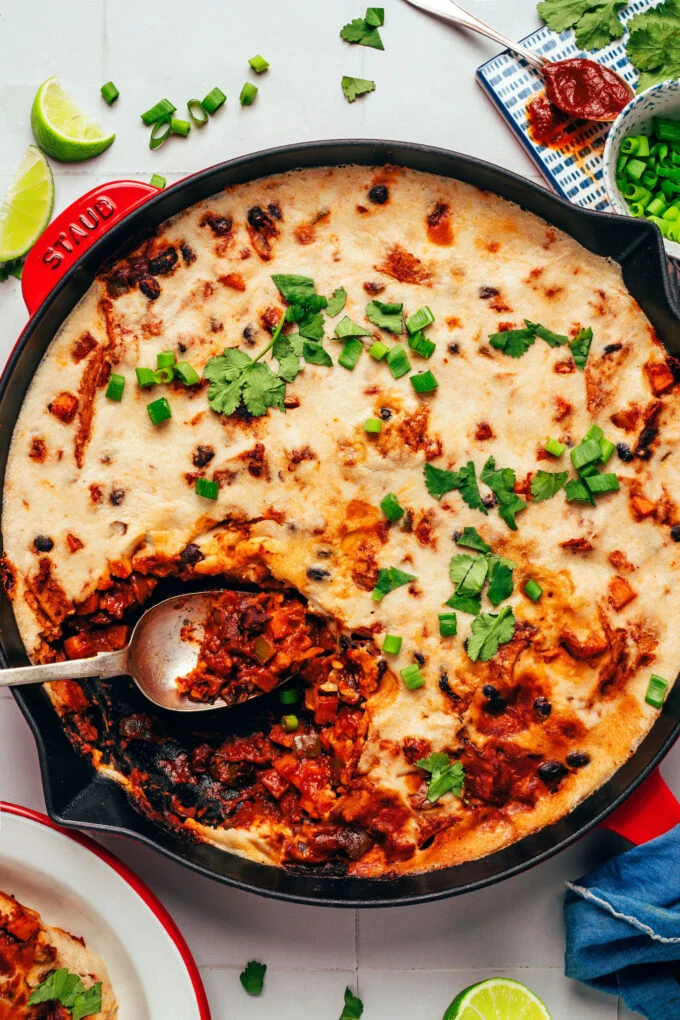
In the landscape of contemporary home cooking, efficiency is no longer merely a preference—it is a necessity. As professional schedules tighten and the demand for nutrient-dense, plant-based meals rises, home cooks are increasingly turning toward "deconstructed" versions of traditional comfort foods. The latest culinary innovation to capture this zeitgeist is the Cheesy Vegan Enchilada Skillet, a dish that manages to distill the complex, labor-intensive process of traditional enchilada preparation into a streamlined, 30-minute, one-pan experience.
This article examines the structural evolution of the enchilada, the methodology behind this modern iteration, and the broader implications of "skillet-style" cooking for health-conscious, time-strapped households.
The Evolution of a Mexican Staple: From Tradition to Efficiency
The enchilada is a dish with a storied history, deeply rooted in the culinary traditions of Mexico. Historians generally trace the origins of the dish to ancient Mayan practices, specifically a preparation known as papadzules, which involved dipping tortillas in a pumpkin seed sauce. By the time the first written documentation appeared in the 1831 cookbook El Cocinero mexicano, the dish had evolved into the format recognized today: corn tortillas filled with a variety of ingredients—ranging from shredded meats and seafood to beans and potatoes—drenched in chili-based sauce and baked.
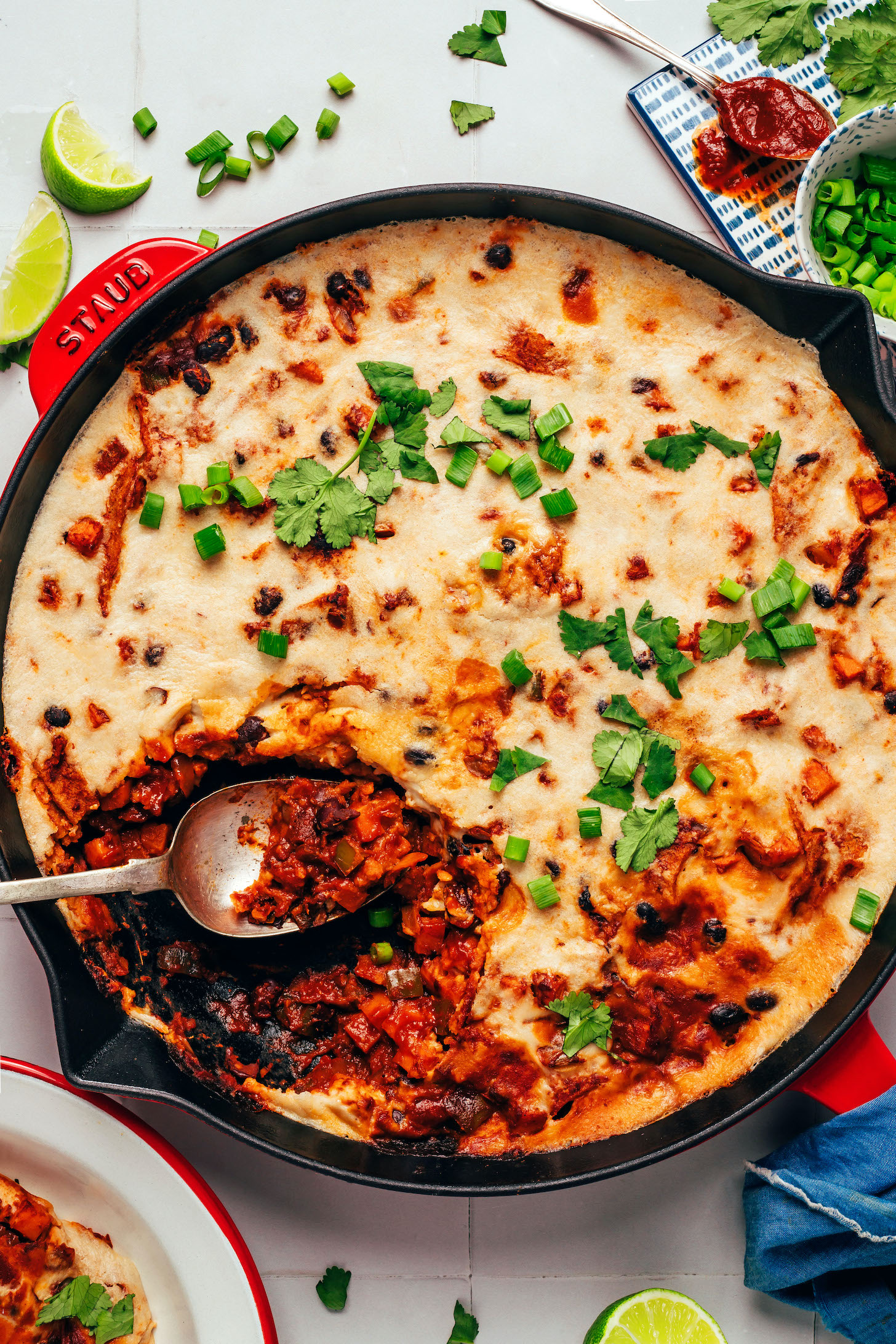
For generations, the traditional method has required a multi-step process: preparing the filling, lightly frying the tortillas to prevent tearing, stuffing each tortilla, rolling them neatly into a baking dish, and finally, baking them until the cheese is bubbling. While undeniably delicious, this process is time-consuming and labor-intensive.
The "Enchilada Skillet" represents a departure from this rigid structure. By shifting from a roll-and-bake format to a sauté-and-simmer method, the dish bridges the gap between traditional flavor profiles and the pragmatic needs of the 21st-century kitchen.
The Anatomy of the 30-Minute Skillet
The success of the vegan enchilada skillet lies in its minimalist approach to technique without compromising on the complexity of flavor. The recipe relies on a specific sequence of operations designed to maximize efficiency.
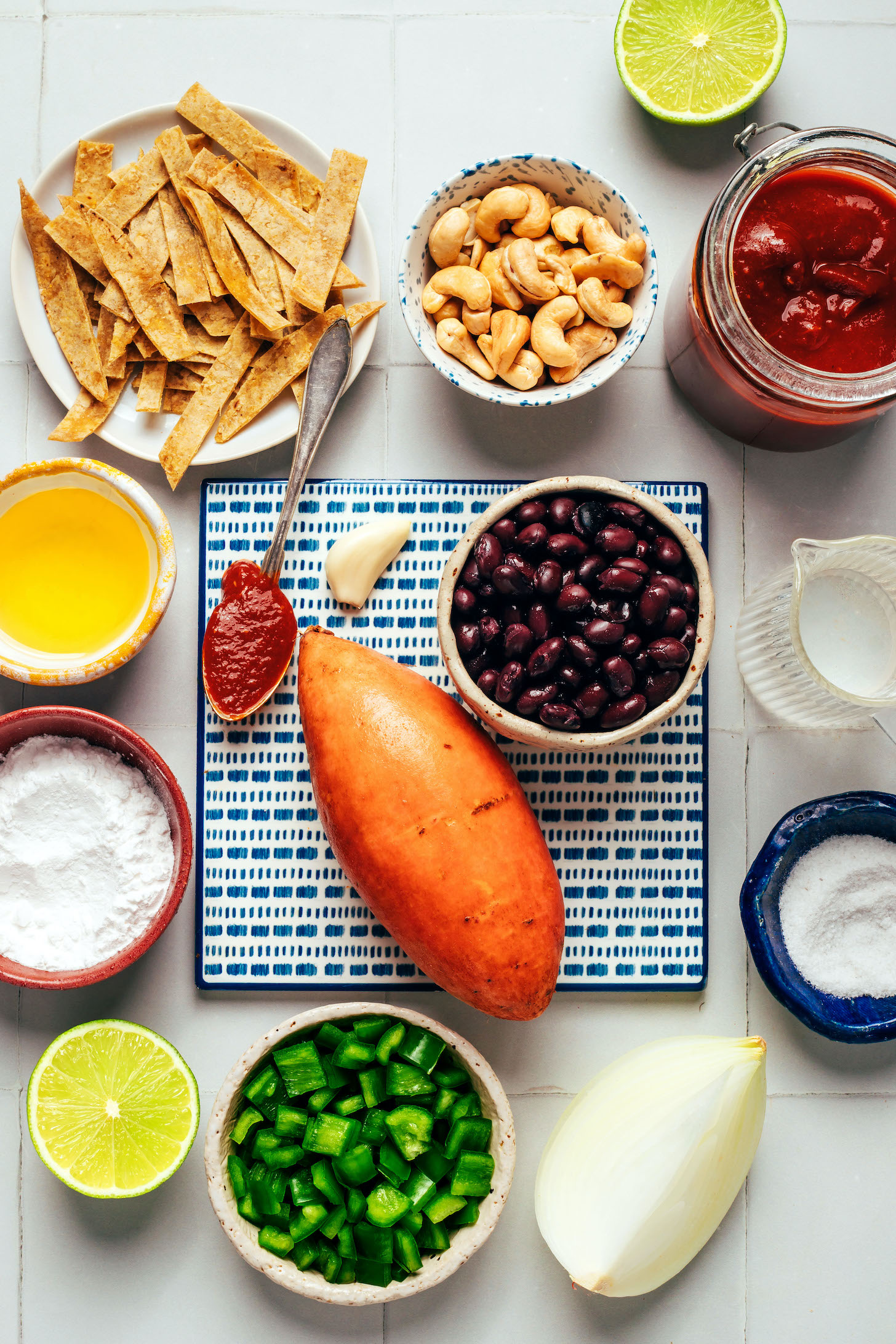
Phase 1: The Flavor Base
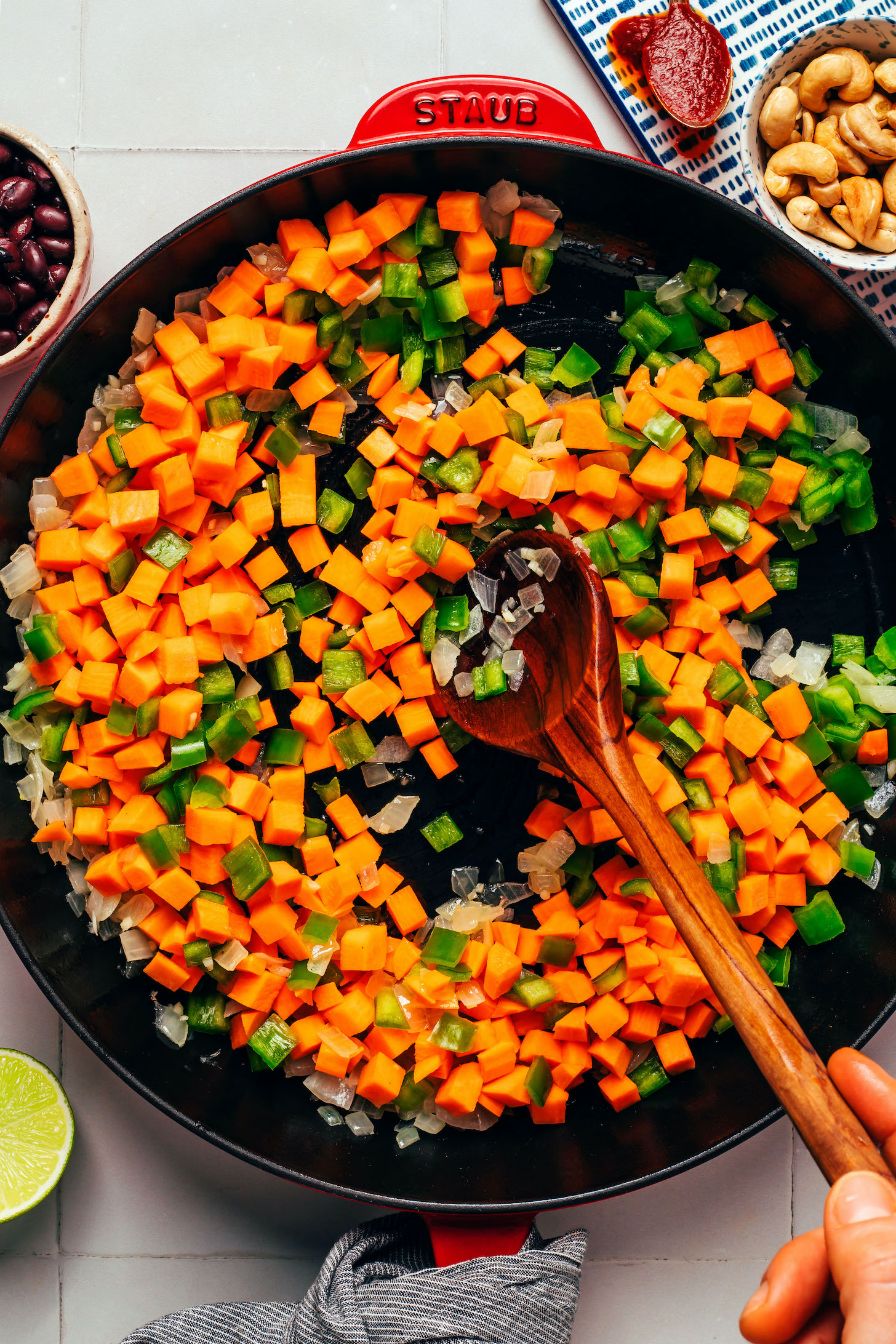
The foundation of the dish begins with a classic aromatic sauté. By caramelizing onions and garlic, the cook creates a savory depth that is essential to offsetting the sweetness of the primary vegetables—typically cubed sweet potatoes or seasonal winter squash. The inclusion of poblano peppers adds a characteristic mild, smoky heat that is essential for an authentic flavor profile.
Phase 2: Structural Integration
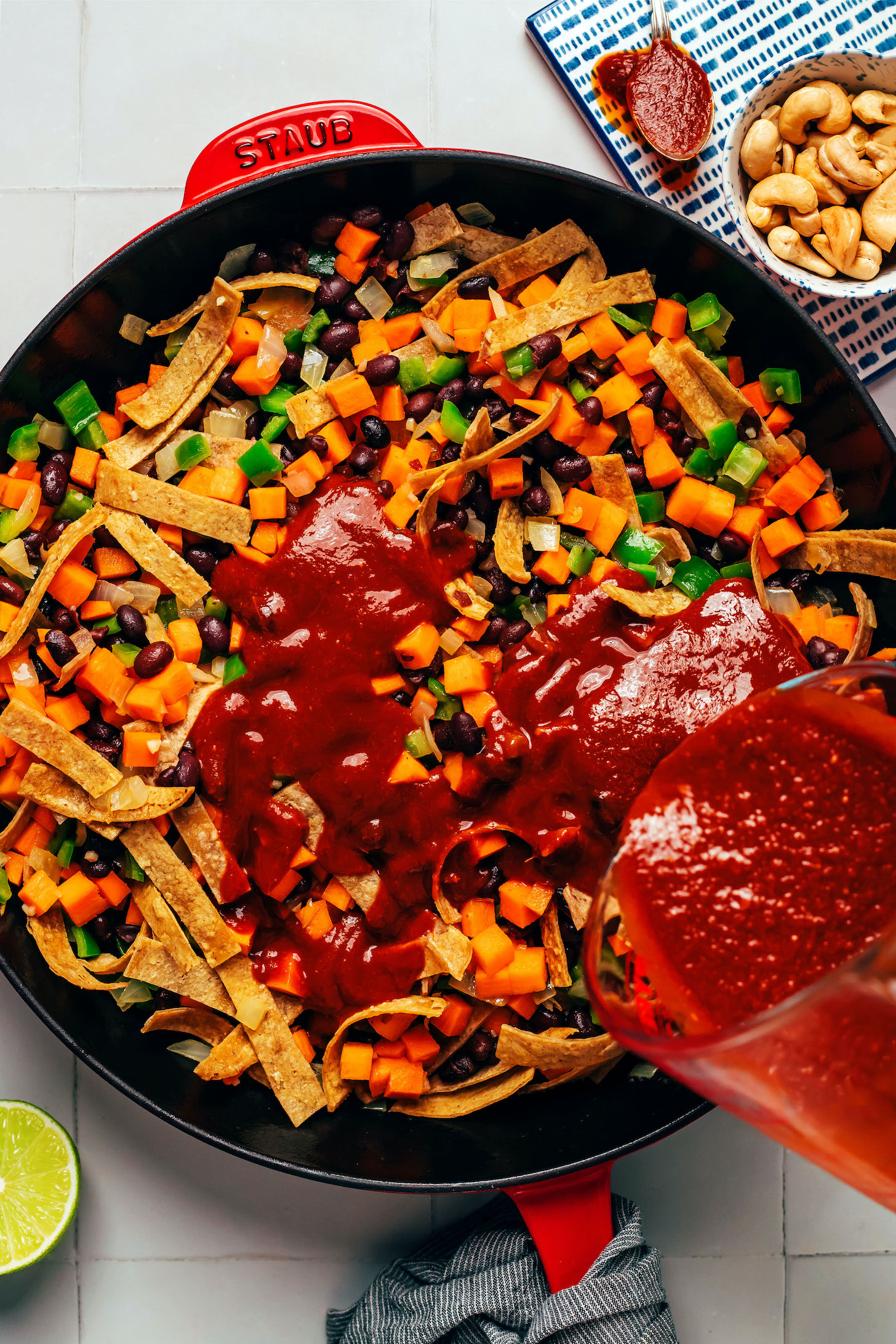
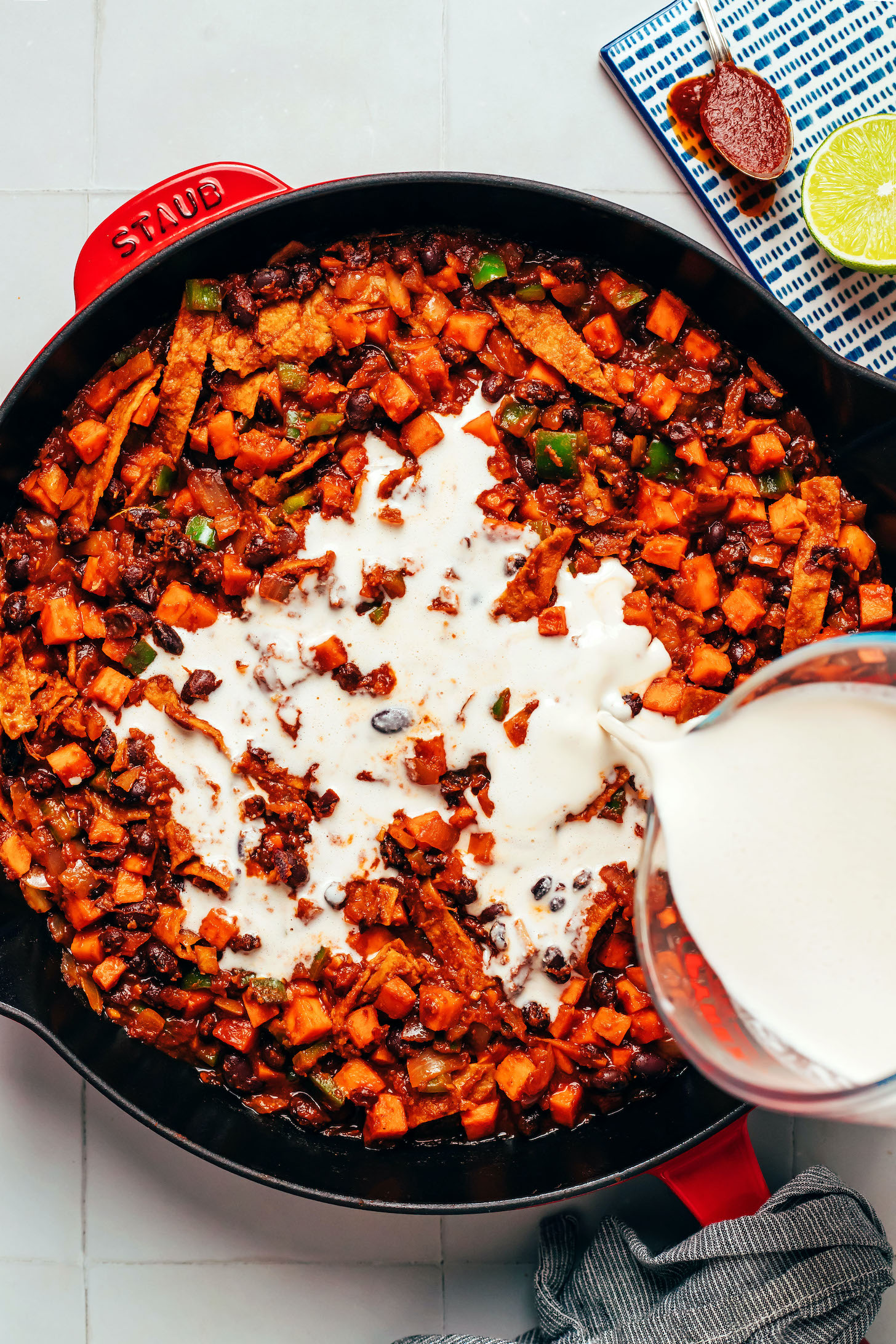
Unlike traditional enchiladas, where the tortilla acts as a vessel, the skillet method treats the tortilla as a textural element. By slicing corn tortillas into strips and folding them directly into the simmering mixture of black beans, vegetables, and red enchilada sauce, the tortillas absorb the liquid. This results in a cohesive, casserole-like consistency that maintains the "saucy" nature of an enchilada without the structural failure of improperly rolled corn tortillas.
Phase 3: The "Cheese" Innovation
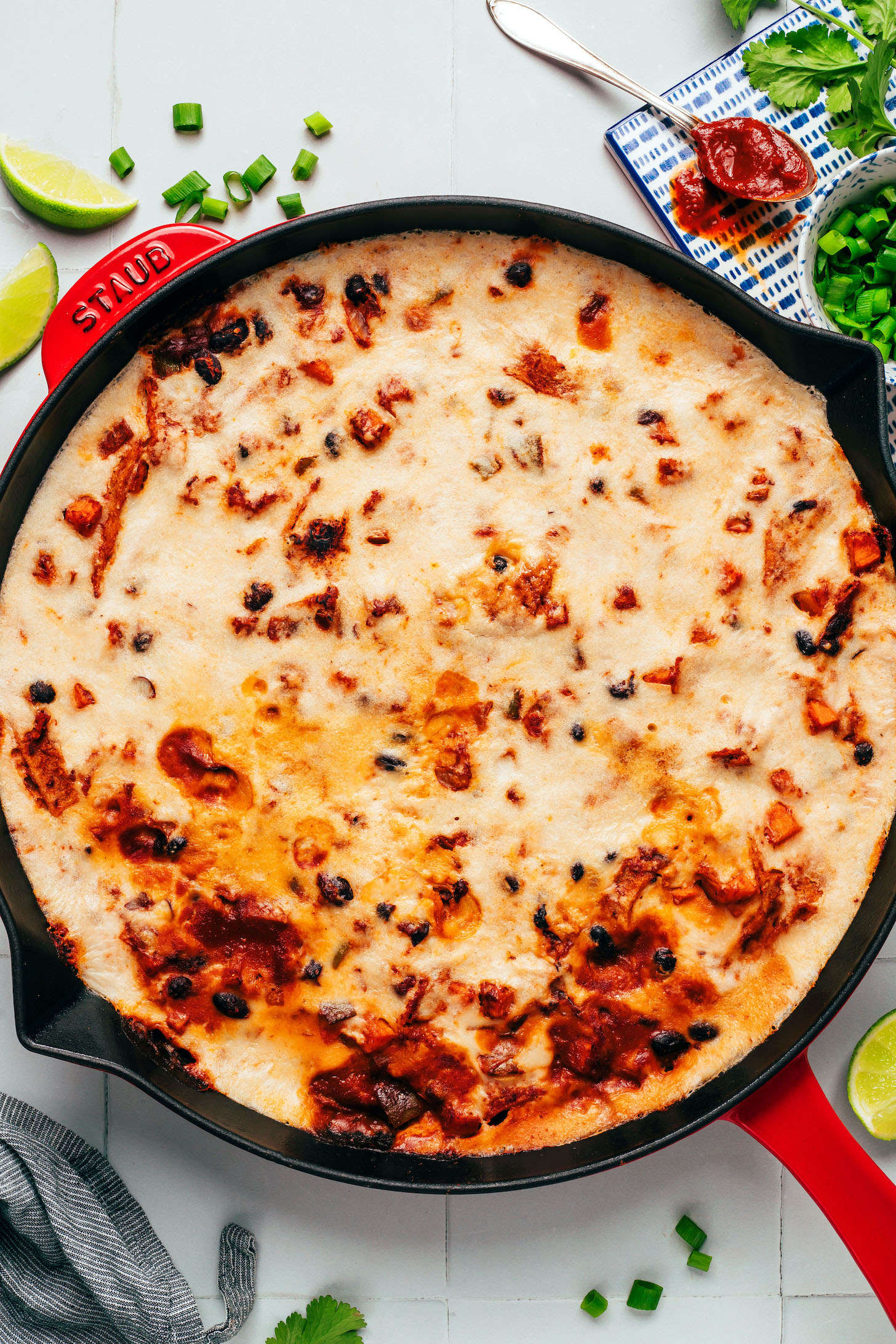
Perhaps the most significant development in this recipe is the use of a plant-based cashew sauce. Utilizing a blend of raw cashews, water, lime juice, garlic, and tapioca starch, this sauce mimics the melt-and-stretch properties of traditional dairy. When heated, the tapioca starch gelatinizes, creating a rich, creamy topping that satisfies the palate’s desire for the "cheesy" finish synonymous with Mexican-inspired comfort food.
Supporting Data: Nutritional Profile and Scalability
From a nutritional perspective, the skillet model offers a significant advantage over many traditional meat-heavy enchilada preparations. A single serving contains approximately 416 calories, with a robust 13.6 grams of protein and 14.3 grams of fiber, largely derived from the black beans and nutrient-dense sweet potatoes.
Data regarding the recipe’s efficiency metrics highlight why this dish is trending among home cooks:
- Total Time: 30 minutes (10 minutes prep, 20 minutes cook).
- Ease of Cleanup: One-pan methodology reduces post-cooking labor by approximately 70% compared to traditional baking methods.
- Versatility: The dish is inherently modular. It can be adapted to include seasonal greens like kale or spinach, or protein boosters like shredded tofu or leftover chicken, depending on the dietary requirements of the household.
Expert Perspectives and Community Reception
Culinary experts and nutritionists have noted that the "skillet" movement is part of a larger trend toward functional convenience. In professional test kitchens, the focus has shifted from recreating exact replicas of traditional dishes to capturing the "spirit" of the flavor profile through modern, accessible techniques.
"The goal is to maintain the soul of the dish while stripping away the unnecessary friction," says one prominent food blogger and recipe developer. "When you remove the need to roll twenty individual tortillas, you aren’t just saving time—you’re making the act of preparing a home-cooked, vegetable-forward meal a daily possibility rather than a weekend chore."
The community response, measured through social media engagement and recipe ratings, suggests that the substitution of cashew-based sauces for dairy is gaining mainstream acceptance. Even among those who do not adhere to a strictly vegan diet, the cashew "cheese" is praised for its ability to provide a clean, savory finish that avoids the heaviness often associated with processed cheeses.
The Broader Implications for Home Cooking
The rise of the 30-minute enchilada skillet carries significant implications for the future of domestic food consumption. As households face the dual pressures of rising grocery costs and time scarcity, recipes that emphasize pantry staples—beans, tortillas, onions, and root vegetables—are becoming the new standard.
Sustainability and Accessibility
The reliance on plant-based proteins and seasonal vegetables aligns with a growing global shift toward more sustainable food practices. By reducing dependence on animal products, the environmental footprint of the meal is substantially lowered. Furthermore, the reliance on corn tortillas and black beans ensures that the recipe remains accessible across different socioeconomic brackets, as these items are among the most affordable and shelf-stable ingredients in the modern grocery store.
The "One-Pan" Philosophy
The success of this dish underscores a wider trend in kitchen hardware and culinary strategy: the prioritization of "one-pan" cooking. This philosophy reduces the complexity of meal management, encouraging home cooks to experiment with flavors they might otherwise find too intimidating to prepare from scratch. When a recipe is framed as a "30-minute" endeavor, the psychological barrier to entry is lowered, leading to a higher frequency of home cooking and a corresponding reduction in reliance on processed, pre-packaged, or delivery-based meals.
Conclusion
The Cheesy Vegan Enchilada Skillet is more than just a quick dinner recipe; it is a testament to the power of culinary evolution. By synthesizing the historical elements of Mexican cuisine with the modern demands of efficiency, sustainability, and plant-based nutrition, it provides a blueprint for the future of home cooking.
As we look toward the future, the popularity of such dishes suggests that the most successful recipes will be those that respect tradition while embracing the speed, simplicity, and health-conscious focus required by today’s busy, informed, and ethically conscious consumer. Whether you are a dedicated vegan, a fan of Mexican-inspired flavors, or simply someone looking to streamline your weeknight dinner rotation, this skillet represents a balanced, satisfying, and remarkably effective approach to feeding the modern family.