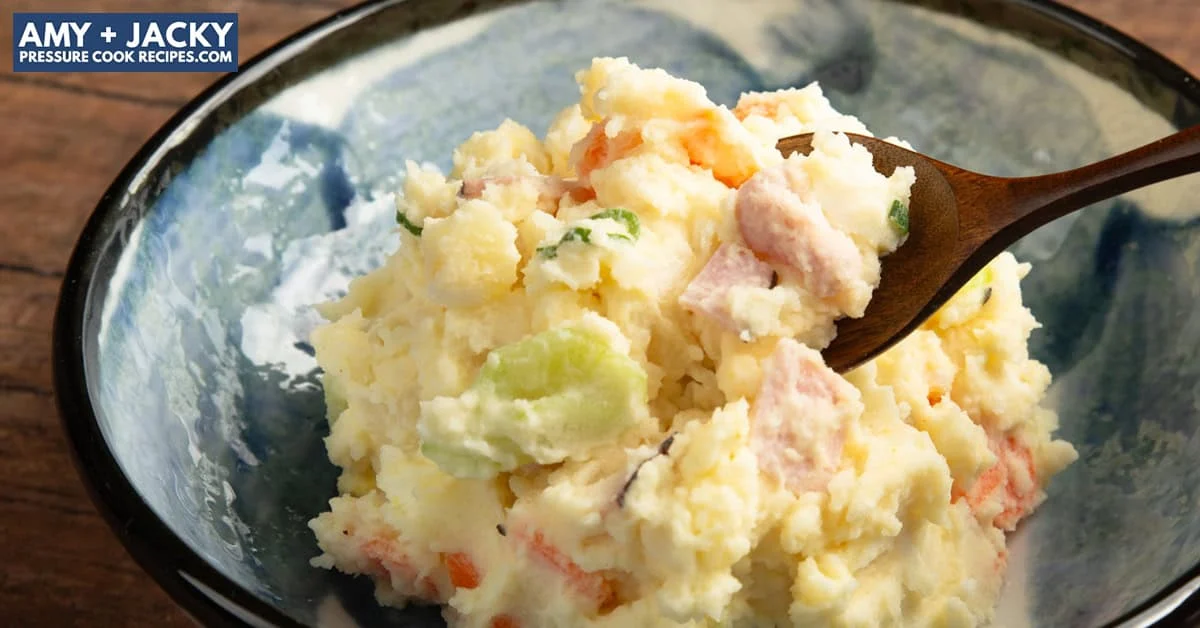
In the world of Japanese comfort food, few side dishes hold as much cultural weight or culinary charm as poteto sarada (Japanese potato salad). Unlike its Western counterpart, which often relies on a heavy, mustard-forward profile and chunky textures, the Japanese version is a delicate balance of umami, subtle sweetness, and a signature creamy-fluffy texture.
While home cooks have traditionally spent hours boiling, peeling, and mashing potatoes on the stovetop, a new wave of culinary innovation has emerged. By leveraging the “deep poaching” technique within an Instant Pot, home chefs can now achieve a consistent, restaurant-quality result that transforms pantry staples into a sophisticated appetizer. This guide explores the meticulous science and step-by-step methodology behind perfecting this iconic dish.
Main Facts: The Anatomy of a Classic
Japanese potato salad is defined by its specific texture and flavor profile. It is rarely served as a heavy main; instead, it is a quintessential izakaya staple, a lunchbox favorite, and a reliable companion at summer potlucks.
The foundational difference lies in the treatment of the potato. While American recipes often favor a waxy potato that holds its shape, the Japanese style prioritizes a fluffy, slightly mashed consistency that acts as a canvas for the creamy dressing. The inclusion of Japanese rice vinegar provides a bright, acidic counterpoint to the richness of Japanese mayonnaise—typically Kewpie—which is made with egg yolks rather than whole eggs, resulting in a deeper, more savory flavor.
Furthermore, the addition of finely sliced vegetables (carrots and cucumbers) and diced ham introduces a necessary crunch, preventing the salad from becoming one-dimensional.
The Chronology: Mastering the Instant Pot Method
The transition to pressure cooking for this recipe is not merely for convenience; it is a technical upgrade. The traditional boiling method often results in waterlogged potatoes or uneven cooking. The "Deep Poaching" method, however, ensures uniform heat distribution.
Phase 1: The Deep Poaching Technique
The process begins by peeling and roughly cubing russet potatoes. A common misconception is that the amount of water used matters little. In this method, 4 cups of water are essential. This creates a poaching environment where the potatoes are completely submerged, allowing the seasoning—salt, dashi powder, and rice vinegar—to penetrate the starch to its very core during the cooking process.
Phase 2: Pressure Cooking and Timing
The Instant Pot is set to "Low Pressure" for exactly one minute. This may seem counterintuitive given the density of the potatoes, but the real magic occurs during the 20-minute "building pressure" stage. This phase acts as a gentle, extended steam-poach, cooking both the potatoes and the eggs placed on top of them simultaneously. A quick release at the one-minute mark prevents the eggs from overcooking and the potatoes from losing their structural integrity.
Phase 3: The Assembly
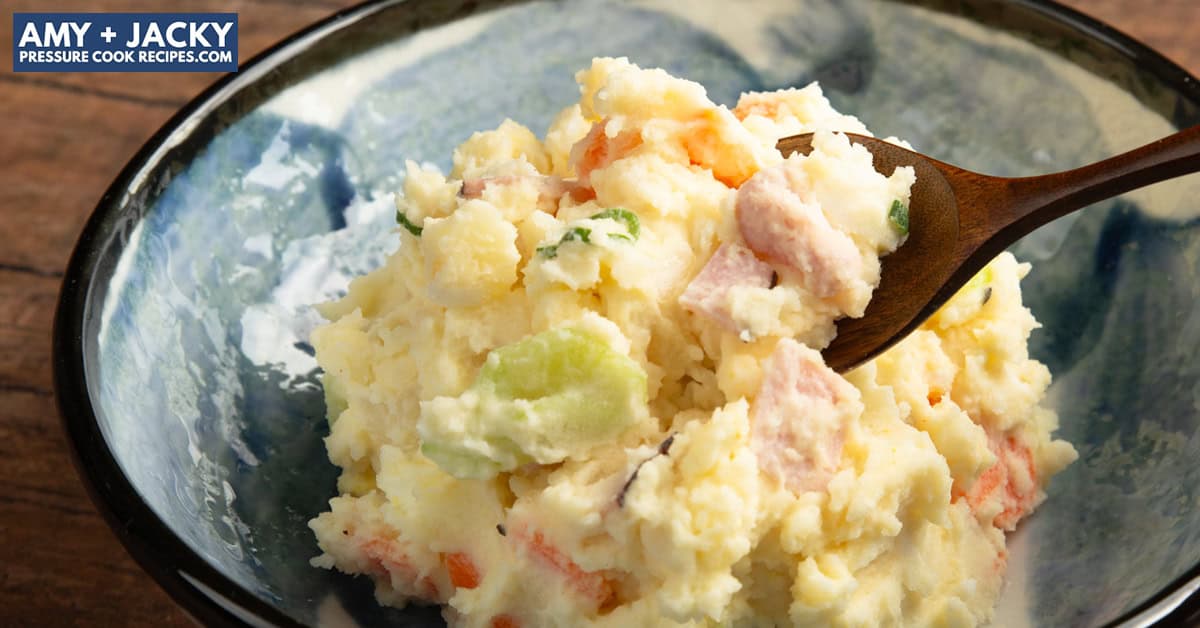
Once the potatoes are drained, they must be allowed to cool slightly before the "rough mash." By setting aside a quarter of the cubed potatoes before mashing the rest, the chef ensures a complex mouthfeel—a mix of creamy, smooth potato and distinct, firm cubes. The final step involves folding in the prepared vegetables (which have been salted and squeezed to remove excess water) and the chopped hard-boiled eggs, followed by the emulsification of mayonnaise and Dijon mustard.
Supporting Data: Why This Technique Wins
Scientific testing confirms why this specific workflow is superior.
- Uniformity: By utilizing the pressure build-up time, the interior of the potato reaches the ideal temperature for starch gelatinization without the exterior turning into mush.
- Seasoning Penetration: Cooking the potatoes in a liquid containing dashi (a foundational Japanese stock) and vinegar ensures that the umami notes are not just a surface-level addition, but are baked into the potato’s cellular structure.
- Moisture Control: The critical step of salting the cucumbers and onions for 10 to 15 minutes and then manually squeezing them prevents the dreaded "soupy" potato salad. Excess water from vegetables is the primary cause of breakdown in any potato salad; by removing it, the salad maintains its creamy consistency for days in the refrigerator.
Official Perspectives and Expert Tips
Culinary experts Amy and Jacky, who have pioneered this Instant Pot adaptation, emphasize that precision is the key to success. They argue that the choice of ingredients is paramount:
- Dashi Powder: While often considered optional, it is the "secret umami booster." It bridges the gap between the earthiness of the potato and the richness of the mayo.
- Rice Vinegar: It is vital to use unseasoned Japanese rice vinegar. Seasoned varieties often contain sugar or salt, which can throw off the carefully calibrated balance of the dish.
- The Mayo Factor: While egg-free alternatives exist, authentic Kewpie mayonnaise is recommended for its high-fat, high-umami yolk content, which is the soul of the dish.
Implications for the Home Cook
The shift toward using the Instant Pot for side dishes like this has broader implications for family meal planning. The ability to cook proteins (eggs) and starches (potatoes) in the same vessel simultaneously reduces cleanup time and energy consumption.
Furthermore, the versatility of this recipe cannot be overstated. Once the base—the perfectly seasoned, semi-mashed potatoes—is achieved, the salad becomes a blank slate. Variations can include adding corn kernels for sweetness, imitation crab for a seafood flair, or even diced apples to provide a crisp, refreshing bite.
By mastering this method, the home cook elevates a humble side dish into a sophisticated component of a meal. It reflects the Japanese culinary philosophy of shun (seasonality and simplicity) combined with modern technology to ensure that the texture and flavor are perfect every single time.
Whether served warm as a comforting bowl of mashed potatoes or chilled as a refreshing salad during a summer BBQ, the Instant Pot Japanese Potato Salad stands as a testament to how traditional recipes can be refined, improved, and streamlined for the modern kitchen. Through the meticulous application of heat and the careful balancing of umami-rich ingredients, the result is more than just a side dish—it is a study in texture, technique, and taste.